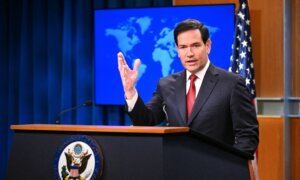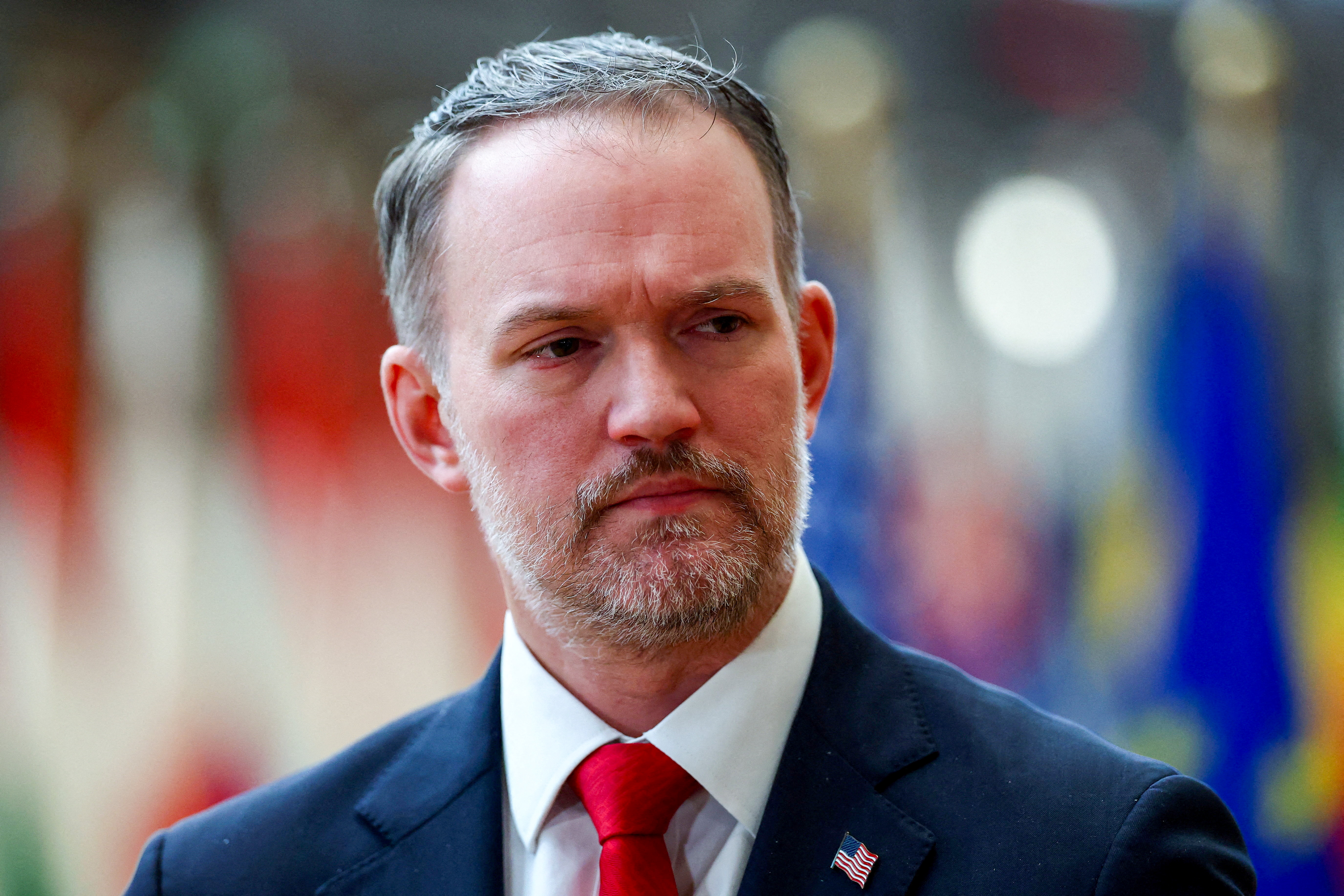

The United States is hoping for little change in trade with China in the short term, U.S. Trade Representative Jamieson Greer signaled on March 13, ahead of his Paris trip for the first cabinet-level sit-down since the Supreme Court struck down one method of implementing the president’s tariffs.
“We want to ensure continued stability in the U.S.–China relationship. It’s one of the most important economic relationships in the world,” Greer said on CNBC.
“We want to make sure that we continue to get the rare earths we need for our manufacturing base, and they keep buying the kinds of things they should be buying from us, and that the leaders get a chance to get together and make sure that the relationship is going the way we want it to go.
“When you look at where we are with China versus one year ago, we have a much more balanced relationship with China.”
After months of escalating trade actions between the United States and China last year, the two nations reached a much hoped-for trade détente during a bilateral meeting in October 2025 between President Donald Trump and Chinese Communist Party (CCP) leader Xi Jinping.
In addition to committing to resuming U.S. purchases, Beijing had agreed to roll back aggressive trade measures against not just the United States but the global market at large, such as sweeping restrictions on the sale of critical minerals.
Greer added that the United States wants China to continue purchases of “non-sensitive goods.” For example, the United States has export controls on advanced technologies related to artificial intelligence to China, but sells high volumes of agricultural products like soybeans.
“Our trade deficit with China in goods has gone down 30 percent over the past year,” he said. “That’s a big change. Our imports from China in January were the lowest they’ve been since 2004.
“Again, that’s not to say we’re not going to trade with China, we certainly are, but it’s getting to a much more balanced situation.”
Greer also said that the war in Iran doesn’t affect U.S.–China relations “directly” but has had an impact on the energy market. Sidestepping the fact that Chinese refineries are the primary buyer of sanctioned Iranian crude exports, he said the United States would be keeping an eye on whether the supply of feedstocks in China will limit its ability to manufacture at scale.
“You can’t talk about trade without the Iran war coming up and the effect of oil and gas,” he said. “I think we’re talking about a matter of weeks. Our expectation is that any effects we see will be short-lived.”
On March 11, the U.S. trade representative announced trade investigations into China, the European Union, Singapore, Switzerland, Norway, Indonesia, Malaysia, Cambodia, Thailand, South Korea, Vietnam, Taiwan, Bangladesh, Mexico, Japan, and India. On March 12, it opened an additional 60 investigations regarding forced labor in the supply chain.
The Trump administration had said after the Supreme Court ruling that tariffs matching existing trade agreements would be forthcoming under other statutes, such as these Section 301 investigations, to replace the trade agreements already struck.
The administration has also said that trade partners have not sought to renegotiate terms post-ruling, but some have asked for reassurance that they would not see higher tariffs under the new framework.
Tariffs are paid by importers, so some U.S. companies and states have sued for refunds, which are expected to be paid soon.
Greer said he hopes the companies use their refunds to pay U.S. workers bonuses and raises, as the tariffs were aimed at reshoring manufacturing.
“The American people should get it, and the companies should give it to their workers,” he said.