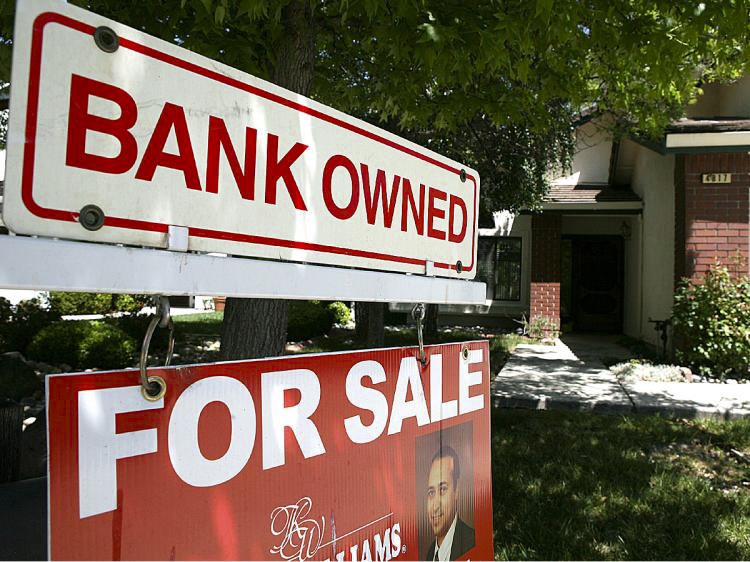

There were 36,128 properties with foreclosure filings in July across the United States, up 11 percent from June and 13 percent from a year ago, real estate analytics company ATTOM said in an Aug. 15 statement.
One in 3,939 housing units nationwide faced a foreclosure filing last month, the company said. Nevada had the highest rate, with one in every 2,326 housing units filing for foreclosure. This was followed by Florida, Maryland, South Carolina, and Illinois.
Among major metropolitan areas with populations higher than 1 million, Houston had the highest rate, with one in every 1,882 housing units filing for foreclosure, ATTOM said. Jacksonville, Florida, came second, followed by Las Vegas; Riverside, California; and Cleveland.
“While rising home prices are helping many owners maintain equity, the steady climb in filings suggests growing pressure in some markets,” Rob Barber, CEO at ATTOM, said.
The July increase in foreclosure filings continues the rising trend in the first half of the year. In the first six months of 2025, foreclosure filings were up 5.8 percent from the same period a year ago, the analytics company said in a July 17 statement.
The “persistent rise” points to financial challenges faced by homeowners in the current economic environment, Barber said.
High mortgage rates put pressure on many homeowners with adjustable rates, increasing the risk of foreclosures.
To put this into context, the average weekly rate on a 30-year fixed-rate mortgage is 6.58 percent, up from 2.86 percent four years ago, according to Freddie Mac data. Since mid-September 2022, rates have consistently remained above the 6 percent level.
The percentage of properties considered to be “seriously underwater”—properties with loan balances that are at least 25 percent higher than their estimated market value—increased in the second quarter, according to ATTOM data.
In the second quarter, 2.7 percent of outstanding mortgages were deemed as seriously underwater, up from 2.4 percent in the same quarter last year.
Louisiana topped the list of states with the highest share of such mortgages, followed by Kentucky, Mississippi, Iowa, and Oklahoma.
Lawmakers have taken action to tackle the issue of foreclosure pressure facing military veterans.
The VA Home Loan Program Reform Act, introduced by Rep. Derrick Van Orden (R-Wis.) in March, was passed by the House in May and by the Senate last month. President Donald Trump signed it into law on July 30.
Veterans make up 13 percent of the homeless adult population in the United States, according to the National Coalition for Homeless Veterans. Among homeless males, 20 percent are veterans. Moreover, 51 percent of homeless veterans have disabilities.
“The VA Home Loan program has helped millions of veterans achieve the American Dream of owning a home. However, we know that veterans—like all Americans—can fall on hard times and may need a safety net in place to avoid foreclosure on their home,” Rep. Mike Bost (R-Ill.) said.
“The VA Home Loan Program Reform Act addresses that need head-on.”
The recent decline in monthly mortgages is a silver lining in the sector.
The median monthly mortgage payment in the United States declined to $2,631 for the four weeks ending Aug. 10, the lowest level in seven months, according to real estate brokerage Redfin.