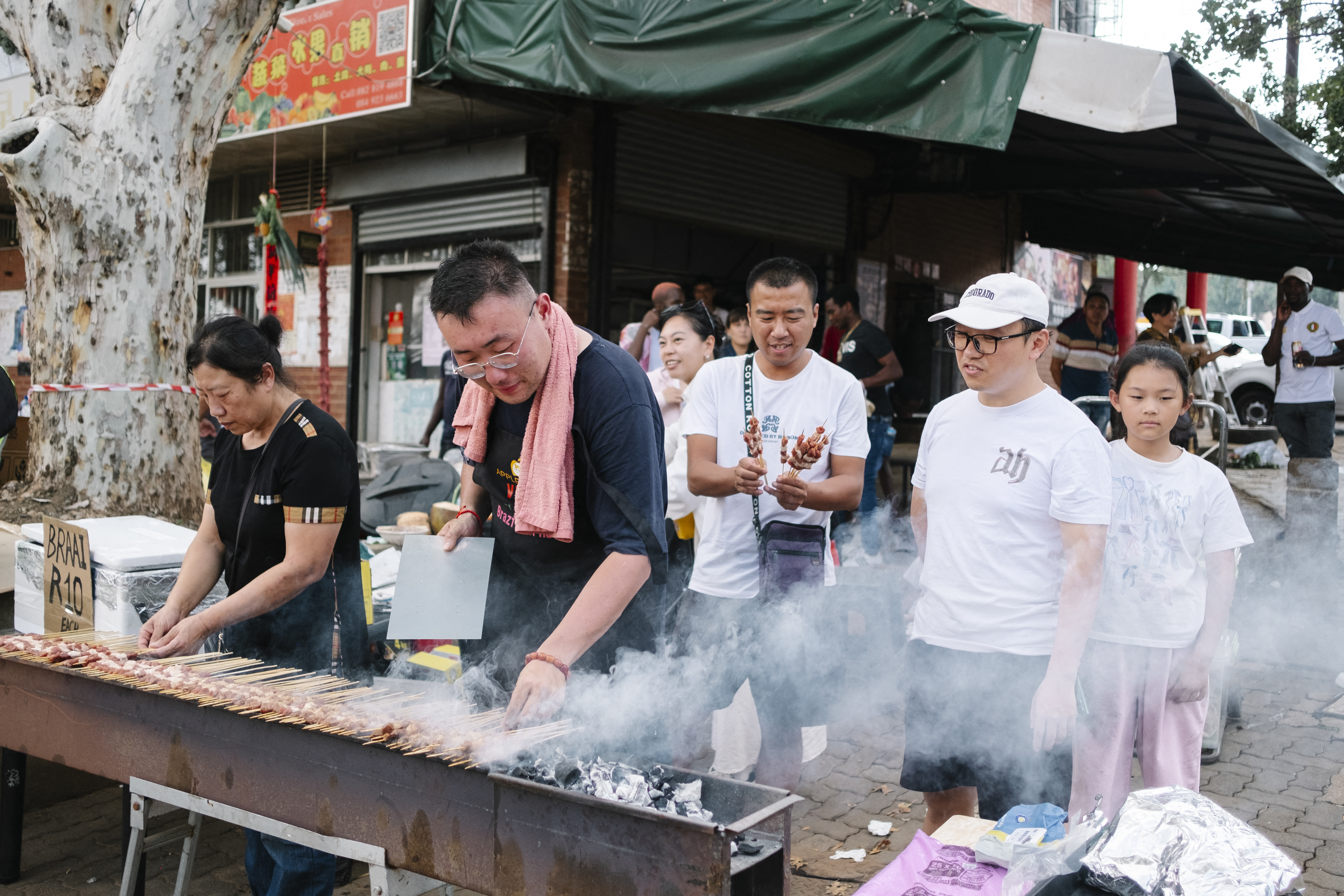

As China’s economy struggles and job pressure remains high, even a one-month barbecue training course has become fiercely competitive.
More than 4,000 people applied for just 30 spots at Yueyang Barbecue Academy in Hunan Province, according to Chinese state-owned Chao News. The school, described as China’s first barbecue industry academy, opened enrollment on March 9 for an “advanced talent training class.” By the time registration closed on April 9, demand had far exceeded expectations.
The acceptance rate was less than 0.75 percent. Among those competing for a seat at the vocational secondary-school-level program were graduates of four-year universities.
U.S.-based economist Davy J. Wong said the phenomenon points to a deeper strain in China’s labor market. When university graduates turn to barbecue jobs, he said, it shows that China’s higher-end industries can no longer absorb enough of them, and knowledge workers are being pushed into lower-level service jobs.
“It also shows that people’s expectations for society have become more conservative,” Wong told The Epoch Times. “They no longer fantasize about entering the wealthy class, but are instead shifting into survival mode.”
The course costs 5,800 yuan, or about $800, and runs for one month. Students who complete the training receive an official certificate as a “barbecue culinary chef.”
Jiang Zongfu, vice president of Yueyang Open University, which helped launch the academy, said the program drew interest from well beyond Hunan.
“I thought they would mostly be locals, but 80 percent came from outside the area,” Jiang told Chao News. “Applicants came from all over the country. There were actually fewer locals than expected.”
Some applicants were graduates of Wuhan University of Technology and Shuda College of Hunan Normal University, Jiang said.
Jiang said the school admitted only 30 students to protect the quality of instruction and allow hands-on training. Another reason, he said, was that the academy’s dormitories are still being renovated. For now, students stay in hotels, paying 50 yuan per night out of pocket, with the school covering the rest.
The academy was established in July through a partnership between Yueyang Open University and the Yueyang Barbecue Association. Yueyang alone has more than 2,000 barbecue restaurants and about 50,000 people working in the industry.
The reports sparked debate on Chinese social media. Some users questioned whether the school was taking advantage of job seekers by charging 5,800 yuan ($800) for a one-month course. Others in the barbecue industry said regional styles vary widely across China, making it difficult for one local academy to represent the entire industry.
Yueyang Barbecue Academy is part of a wider trend in which local officials and schools have created specialized colleges around regional foods and service jobs.
In December 2025, Guangdong’s Department of Education and JD.com launched what was described as China’s first Modern Delivery Rider Academy, aimed at training full-time food delivery riders and couriers. In September 2025, Shenyang Polytechnic College in Liaoning Province established a Bathing, Leisure, and Health Management Industry Academy, which Chinese internet users jokingly called the country’s first “Bath Scrubbing Academy.”
Other examples include the Navel Orange Academy in Ganzhou, Jiangxi Province; the Crayfish Academy in Qianjiang, Hubei Province; the Grilled Fish Academy in Wanzhou, Chongqing; and the Luosifen Rice Noodle Academy in Liuzhou, Guangxi Province.
Wong said the rise of such schools shows how relatively low-end service industries are being repackaged as if they were highly technical or knowledge-heavy fields. In his view, officials are not discovering a new gold mine. He said they’re trying to “sell shovels,” or find ways to profit off of a new trend, during an already low-end consumer market.
Yi Fan contributed to the report.