
J.R.R. Tolkien and C.S. Lewis are best known today as beloved authors of fantasy and science fiction novels. Tolkien wrote “The Hobbit” and “Lord of the Rings,” and Lewis is known for the Perelandra Trilogy (also called the “Space Trilogy”) and the Narnia series.
These books go beyond mere entertainment. They defended traditional Christian values, demonstrating the continuing relevance of wisdom, courage, virtue, and faith.
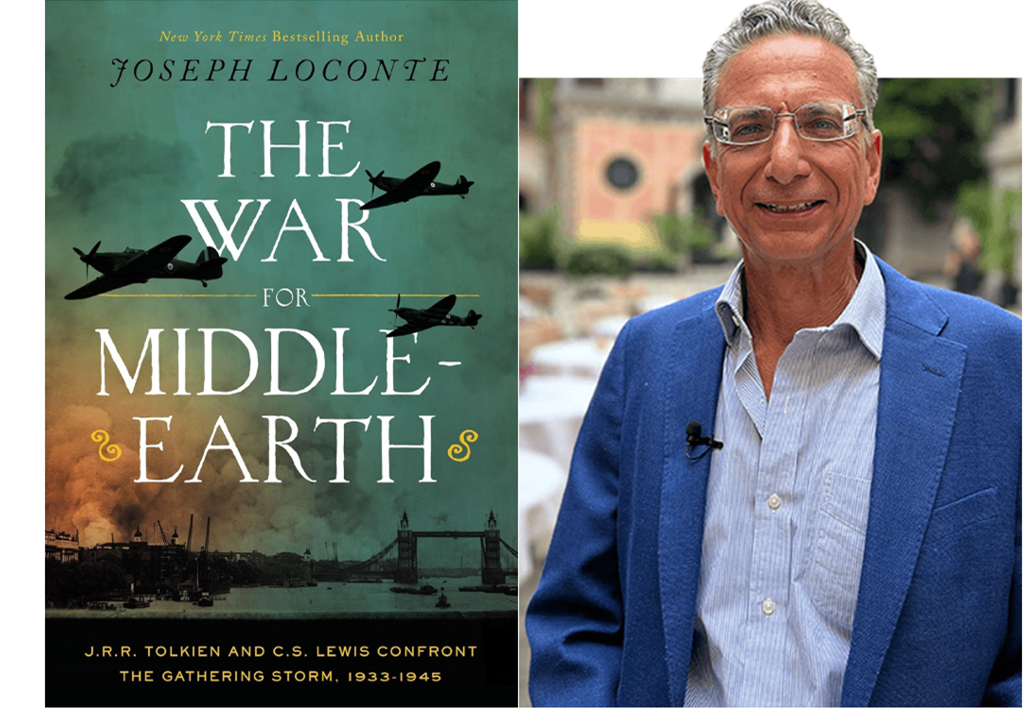
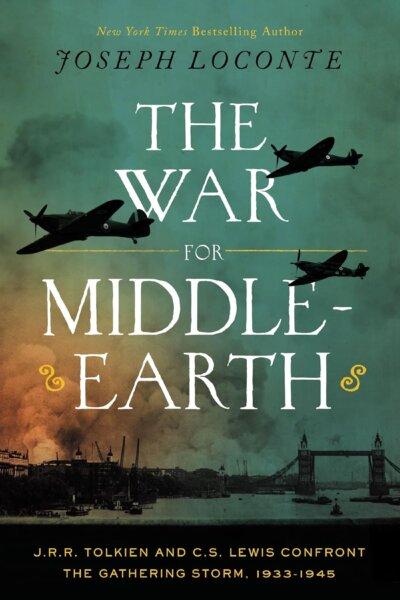
“The War for Middle-Earth: J.R.R. Tolkien and C.S. Lewis Confront the Gathering Storm, 1933–1945” describes how these years affected the writing and thinking of these two scholars. The two were deeply affected by the two wars they lived through, World War I and World War II. Both fought in the front lines in WWI.
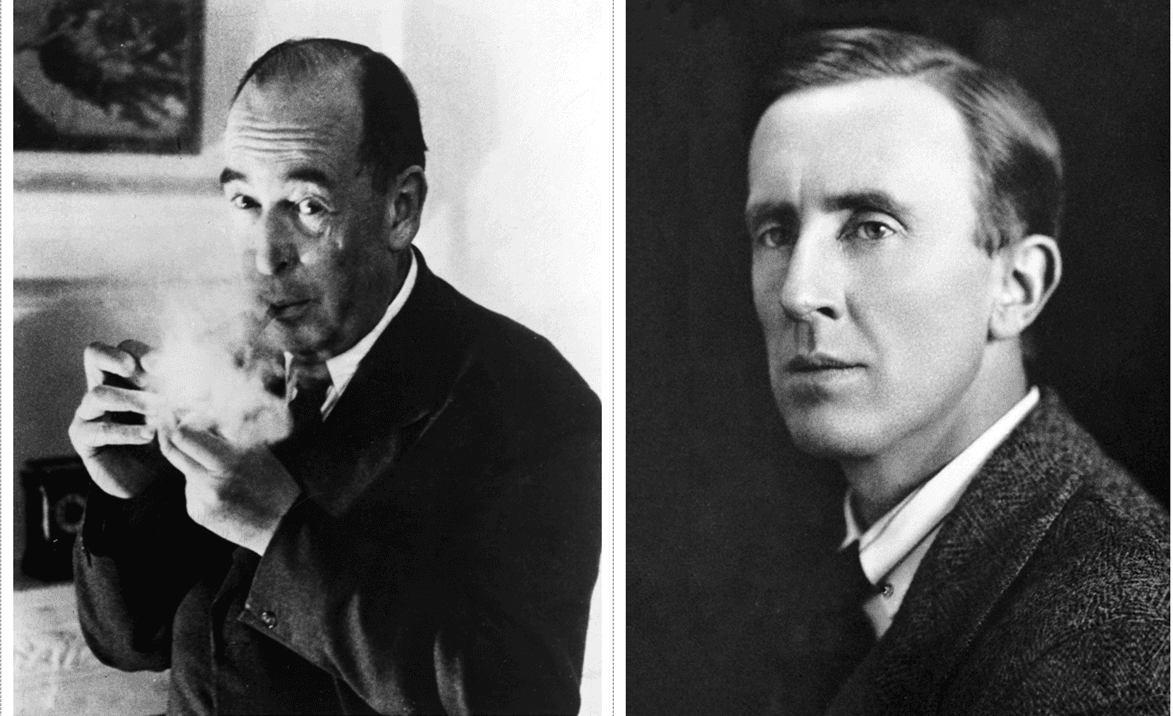
(Left) C.S. Lewis, circa 1957. (PD-US) (Right) J.R.R. Tolkien, circa 1925. (Public Domain)
In many ways, though, while not combatants in WWII, they did participate. As this book shows, their greatest works were forged through their WWII experiences. Tolkien’s Ring Trilogy was changed by the war. Much of Lewis’s Christian apologetics, including the Narnia tales, “The Screwtape Letters,” and “Mere Christianity,” resulted from it.
Reintroducing Tradition
Loconte showed how Tolkien and Lewis were deeply countercultural figures. They fought mainstream culture’s rejection of Christianity and Judeo-Christian ethics by the mainstream. The pair also rejected the materialism and utilitarianism embraced by intellectuals and academics in the early 20th century. Both men saw myth as a way to reintroduce traditional values to a society being guided away from these values by the public elite.
The book opens showing the effect of WWI on European civilization. The horrendous physical toll was dwarfed by the psychic cost on men’s minds, hearts, and souls. The foundations of European civilization—Christianity, the liberal tradition, and enlightened thought—were thrown into doubt, discredited.
In their place materialism and utilitarianism flourished. Representative government, especially in Europe, was denigrated. Governments seized upon different breeds of Marxism (fascist and communist) as anodynes. Marxism would solve the world’s problems, perfect mankind, and lead to an earthly paradise, without the need for God. Society rejected religion as religious belief was seen as a mental illness.
The book opens by showing how the two reacted to these currents. Both lost close friends on the battlefield, had their academic careers interrupted by war, and had difficulty picking up their civilian careers. Neither rejected tradition, however.
Tolkien showed the first glimpse of Middle Earth in a 1920 lecture to Exeter College’s Essay Club. He read the tale he wrote in the trenches, “The Fall of Gondolin,” set in what became Middle Earth.
Lewis, then a Materialist (evidenced by his 1919 poetry collection “Spirits in Bondage”), had begun his journey to Christianity. The transformation began after discovering 19th-century author George MacDonald’s romantic writings.
Once Rivals
The book shows how the two met as academics at Oxford. Ironically, they started as rivals. In a curriculum debate, Lewis favored starting English literature after Chaucer, while Tolkien defended starting with ancient and medieval English works.
The contentious beginning soon grew into friendship as the two realized how much they shared, including a common interest in myth and legend. They both felt the romantic epic was a tool by which the importance of individual dignity could be reintroduced to the modern mind.
The book follows the progress of the two through the 1920s and 1930s. While both men are advancing their academic and literary careers and emerging as brilliant scholars, the book shows how the world was spiraling out of control.
Totalitarianism was on the march worldwide. Liberal democracies and representative governments were in retreat. Horrors like eugenics and race-theory were wrapped in scientific clothing, and sanctified by utilitarianism. Individual dignity and the value of human life was discarded.
Through these years, Tolkien and Lewis raised their voices against these currents. Loconte showed how their published works, like “The Hobbit” and the Perelandra trilogy, promoted the old values while exposing the horrors of the new.
The years between two world wars greatly affected C.S. Lewis and J.R.R. Tolkien.
The trends of the 1920s and 1930s led inevitably to WWII. Loconte showed how this war transformed the writing of both Tolkien and Lewis. Tolkien’s sons served in the military. Both men were threatened by bombing.
Yet, both reacted with a surge of creativity. Tolkien finished “Lord of the Rings,” his sequel to “The Hobbit,” in 1949. What started out as a children’s book transformed into a heroic epic, a mythical history of England. Lewis gave radio lectures on Christianity that were later republished as some of his most powerful arguments. He also wrote “The Screwtape Letters,” a commentary on modern values, during WWII.
“The War for Middle-Earth” offers a look at the worst excesses of the 20th century seen through the lens of two English dons. They recognized those excesses, and Loconte showed how they launched a literary counterattack against them.
Their writings made the world a better place that echoes today. “The War for Middle-Earth” is a great way to learn more about Tolkien and Lewis and the 20th-century world in which they lived.
‘The War for Middle-Earth: J.R.R. Tolkien and C.S. Lewis Confront the Gathering Storm, 1933–1945’
By Joseph Loconte
Thomas Nelson: Nov. 18, 2025
Hardcover, 288 pages
What arts and culture topics would you like us to cover? Please email ideas or feedback to features@epochtimes.nyc