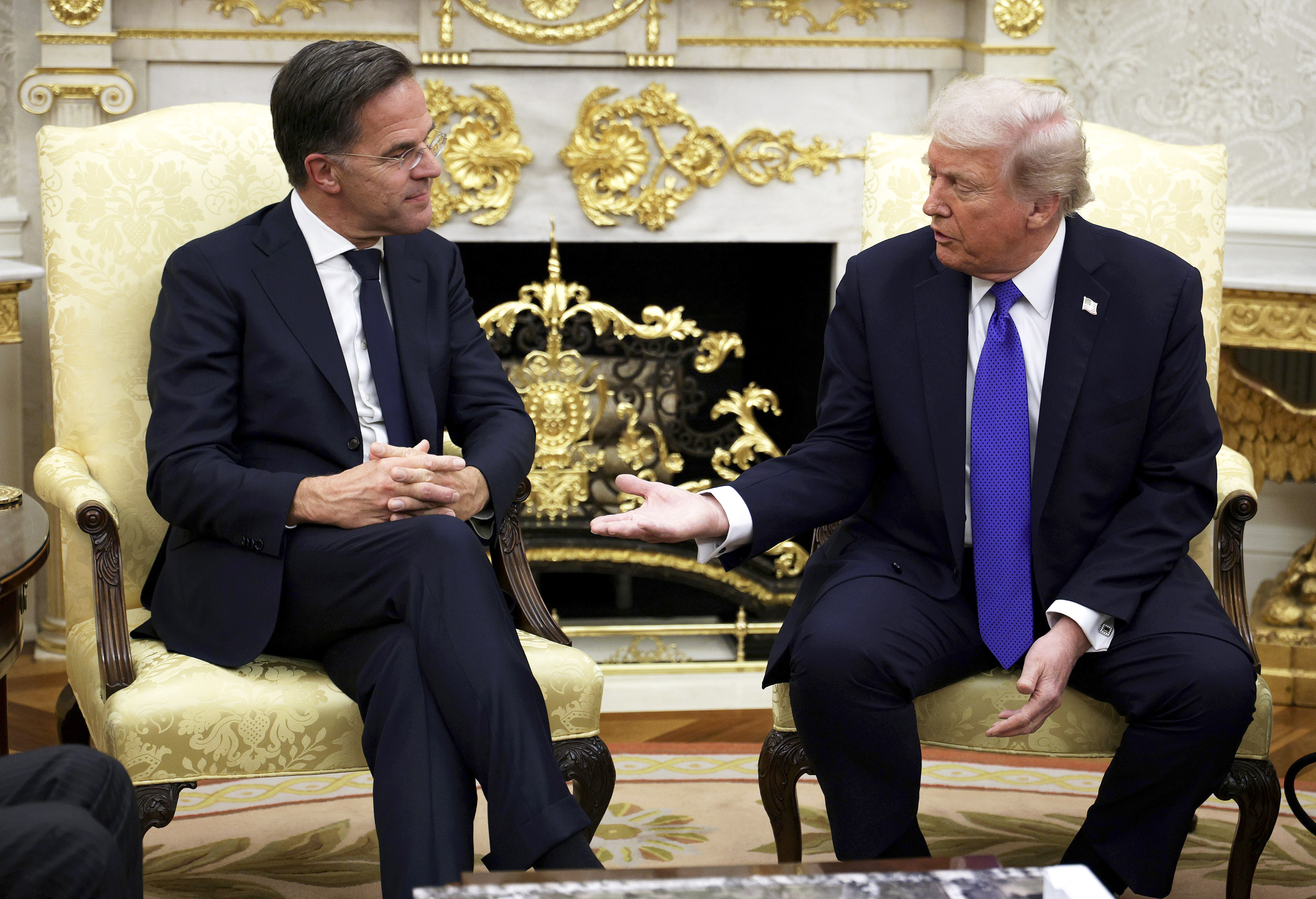

WASHINGTON—U.S. President Donald Trump hosted NATO Secretary General Mark Rutte at the White House on Oct. 22 to discuss the ongoing war in Ukraine.
Rutte thanked Trump for “breaking the deadlock” with Russian President Vladimir Putin by reopening dialogue in February.
“We’ve had some very good discussions today,” Trump said, adding that efforts to end the war in Ukraine are “going along pretty well,” while highlighting the new U.S. sanctions on the Russian energy sector.
Shortly before the meeting, Treasury Secretary Scott Bessent said the United States was preparing to impose tougher sanctions on Russia.
In a statement later Wednesday, the United States announced new sanctions targeting the country’s two largest oil companies, Rosneft and Lukoil, in an effort to limit the Kremlin’s ability to fund its war machine.
The sanctions were imposed by the Treasury’s Office of Foreign Assets Control (OFAC) on Wednesday. “Now is the time to stop the killing and for an immediate ceasefire,” Treasury Secretary Scott Bessent said in a statement.
The visit marked Rutte’s fourth meeting at the White House since Trump took office. During the meeting, Rutte discussed with Trump a 12-point peace plan prepared by European nations and Kyiv aimed at ending Russia’s war in Ukraine. The plan calls for increasing pressure on Moscow through tougher sanctions.
On Oct. 21, Trump canceled a meeting with Putin in Budapest, Hungary, calling it “a waste of time.”
Europe’s 12-Point Plan
Europe’s plan to end the war calls for a cease-fire based on current battle lines—similar to what Trump recently proposed.
“They should stop where they are,” Trump wrote on Truth Social on Oct. 18 after hosting Ukrainian President Volodymyr Zelenskyy at the White House.
“Let both claim Victory, let History decide! No more shooting, no more Death, no more vast and unsustainable sums of money spent,” Trump said.
Europe’s framework also calls for the return of deported children and prisoner exchanges, security guarantees for Ukraine, a war-recovery fund, and a clear path for Ukraine to join the European Union. It also proposes providing more military aid to Kyiv.
Trump’s decision to cancel a potential summit with Putin followed a phone call between U.S. Secretary of State Marco Rubio and Russian Foreign Minister Sergey Lavrov.
The two diplomats were expected to meet this week to prepare for a possible leaders’ summit, but the White House determined the meeting was “not necessary” after the call.
The president has “no plans” to meet with Putin in the immediate future, the White House said.
In August, Trump and Putin held a meeting in Alaska, which failed to generate a breakthrough for peace. After the summit, Putin agreed to hold a meeting with Zelenskyy, but the meeting hasn’t taken place.
Rutte-Trump Relations
On Aug 18, Rutte visited the White House to join a multilateral meeting with Trump, Zelenskyy, and other European leaders.
Both leaders also came together at the NATO summit in June at the Hague in the Netherlands, where their close relationship was notable.
Rutte praised Trump’s leadership in pushing NATO allies to ramp up defense spending and his “decisive action” in dismantling Tehran’s nuclear capabilities.
During their bilateral meeting on the sidelines of the summit on June 25, Rutte likened Trump to a “daddy,” which quickly went viral.
Rutte defended his remarks, calling Trump “a good friend” and adding, “I think he deserves all the praise.”
A staunch supporter of Ukraine, Rutte has served as NATO’s secretary general since Oct. 1, 2024. He has been a driving force behind Europe’s military support for Ukraine since Russia’s 2022 invasion.
Rutte was also instrumental in helping Trump secure a commitment from NATO members to increase military spending to 5 percent of GDP by 2035. This represented a significant increase from the previous 2 percent target.