
WASHINGTON—Americans have become familiar with the H-1B visa, a skilled worker visa that has sparked heated debates among conservatives.
But there’s a key feeder for the visa that many Americans may not know—one that is meeting increased scrutiny from Congress ahead of possible reforms from the Trump administration.
Optional practical training (OPT) allows foreign nationals on student visas to work in the United States before or, in many cases, after they have completed their studies. Although some have touted its provision of skilled labor, concern has grown about potential displacement of American tech workers by the program, which has grown to more than 400,000 participants as of 2024.
Letters between Sen. Eric Schmitt (R-Mo.) and Homeland Security Secretary Kristi Noem suggest it could be changed soon.
Here’s how optional practical training could change and why some think it should.
How OPT Works
There’s no cap on participants in the program, which emerged and expanded over many presidential administrations with no involvement from Congress.
Companies that hire its beneficiaries generally save on payroll taxes as well as Social Security and Medicare contributions.
“That comes to a significant amount of money,” Ira Mehlman of the Federation for American Immigration Reform told The Epoch Times.
That work period in their area of study can last up to three years in the case of STEM (science, technology, engineering, and mathematics) optional practical training.
“It’s kind of the bridge between being a foreign student and getting an H-1B visa,” Mark Krikorian, the executive director of the Center for Immigration Studies, told The Epoch Times.
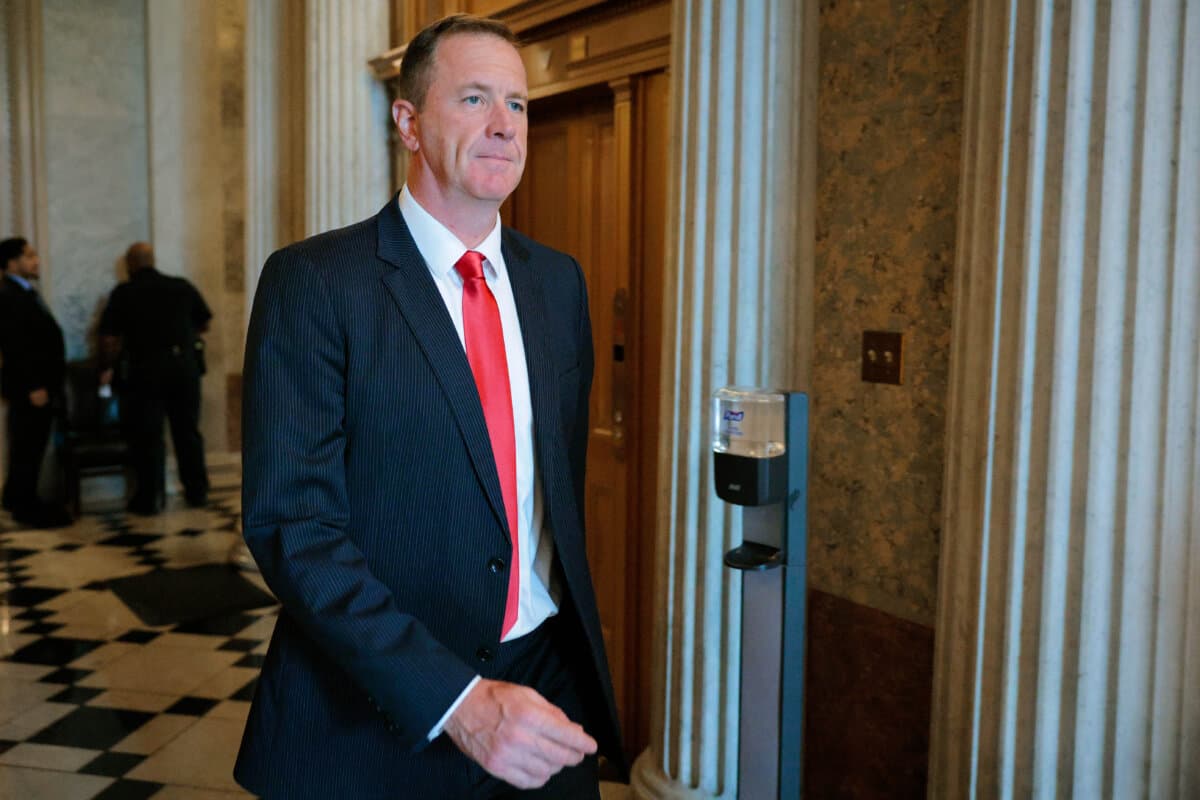
Sen. Eric Schmitt (R-Mo.) leaves the Senate Chamber following a vote in Washington on Aug. 1, 2025. (Chip Somodevilla/Getty Images)
In June 2025 House testimony, Alex Nowrasteh of the Cato Institute described optional practical training as a link in a chain of benefits and legal statuses that ultimately enables foreign students to become skilled American workers.
Kevin Lynn of U.S. Tech Workers told The Epoch Times that Americans are generally unaware of STEM optional practical training because it was created through regulation, not Congress.
“There was no kind of debate on this anywhere,” he said.
The Pipeline Widens
The modern story of optional practical training begins in 1992, when George H.W. Bush’s administration introduced a program that enabled those visa holders to work for one year after graduation.
The program broadened further in 2008, when George W. Bush’s administration created STEM optional practical training and made other changes that liberalized the benefit. President Barack Obama lengthened the maximum duration for STEM degree holders to 36 months.
Mehlman attributed the program’s expansion to “the power of big business and especially the tech sector.”
Ahead of its Bush-era growth, Microsoft was among the tech giants lobbying heavily for more high-skilled immigration.
Then-Homeland Security Secretary Michael Chertoff cited the testimony of Microsoft’s Bill Gates in the 2008 rule expanding optional practical training.
The number of workers authorized for optional practical training has ballooned. It increased from 154,522 in 2007 to 418,718 in 2024, according to an analysis from the Congressional Research Service.
Between 2020 and 2024, 35 percent of its participants came from India, and 24 percent came from China.
The Debate
Optional practical training defenders say it helps the United States retain top technical minds, making the country more innovative and competitive.
Critics worry about swelling participant numbers at a time of high unemployment for some recent American STEM graduates and layoffs in the tech industry.
Researchers from the Mercatus Center at George Mason University have defended the benefit, citing studies that did not link it to unemployment among American STEM workers.
“The United States has been one of the leading recruiters of global talent, and ending the program would undermine this advantage and impose costs on the American economy,” Liya Palagashvili and Jack Salmon wrote.
Nowrasteh, in his House testimony, told lawmakers, “If we want to have the benefits of high-skilled immigrants and entrepreneurs, people like Elon Musk ... then we need to maintain a large, open student visa system, because it’s the first link in that chain.”
In the 2008 rule, Chertoff said tech leaders have warned that challenges in getting H-1Bs for students “continue to result in the loss of skilled technical workers to countries with more lenient employment visa regimes, such as Canada and Australia.”
Yet relatively high unemployment rates among recent American STEM graduates have caused concerns about the rule’s effects.
Nearly 8 percent of recent computer engineering graduates, 7 percent of recent computer science graduates, and 6.6 percent of recent physics graduates were unemployed as of 2024, according to the latest available statistics from the Federal Reserve Bank of New York.

Stanford University in Palo Alto, Calif., on July 31, 2025. (John Fredricks/The Epoch Times)
“The dial should be flashing red at the Department of Labor right now, because we’ve got a big problem,” Lynn said of the unemployment rate among recent computer science graduates.
Tech sector layoffs against the backdrop of artificial intelligence’s growth have made the landscape even more daunting for young American STEM workers.
“Those young Americans are competing for entry-level, first career jobs with subsidized foreign students,” Krikorian said.
Meanwhile, lawmakers’ concerns about foreign student espionage in the United States, including by students linked to the Chinese Communist Party, have mounted in recent years.
“Foreign STEM students often take tech jobs that give them access to sensitive technologies,” Sen. Chuck Grassley (R-Iowa) warned in March 2025 floor remarks.
A Push for Reform
In late February, Schmitt publicized a letter he received from Noem about the program.
Both Schmitt and Sen. Jim Banks (R-Ind.) wrote Noem in November 2025 seeking action on the training program. Many of their proposed changes to it would fall under the purview of the U.S. Citizenship and Immigration Services (USCIS).
A 2025 regulatory agenda had revealed that her department was mulling a new rule that would amend existing guidance on practical training.
The changes, per the agency, are intended to protect American workers, combat fraud, boost internal oversight, and lower national security risks.
In her Jan. 9 reply to Schmitt, Noem reiterated her plan to handle the program the same way it was created—through rulemaking in the executive branch.
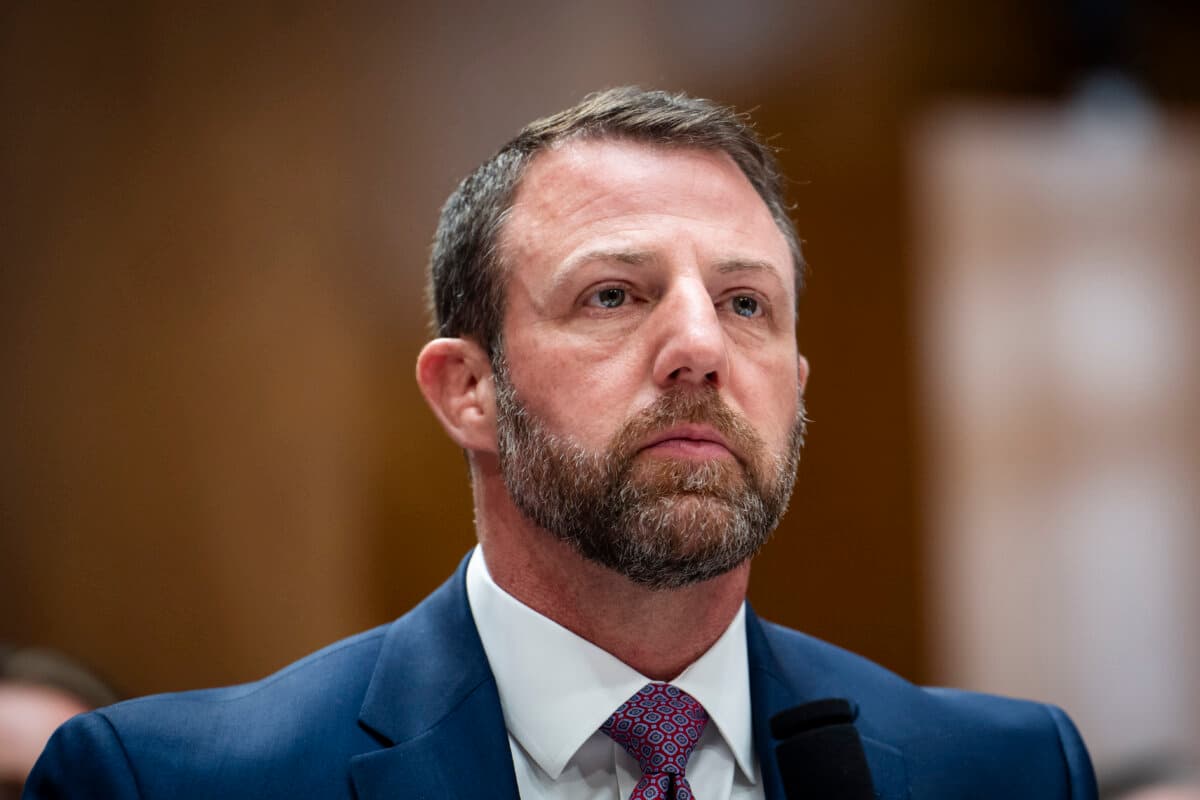
Sen. Markwayne Mullin (R-Okla.) testifies during his confirmation hearing to lead the Department of Homeland Security on Capitol Hill in Washington on March 18, 2026. (Madalina Kilroy/The Epoch Times)
In an emailed statement to The Epoch Times, Schmitt said the agency should “correct its mistake by overhauling—or ending—the OPT program.”
Banks declined to comment on his correspondence with Noem but stressed his support for President Donald Trump’s efforts.
“No president in my lifetime has been a stronger ally than President Trump has when it comes to standing up for American workers,” he wrote in an emailed statement to The Epoch Times.
Noem’s January letter to Schmitt suggested that optional practical training is still on the DHS’s radar.
For now, though, the agency is effectively shut down, as Republicans and Democrats are at an impasse over funding.
And Noem is on her way out. Trump hopes to replace her with Sen. Markwayne Mullin (R-Okla.), who was endorsed by the Main Street Caucus—a wing of the party that includes relative moderates on immigration.
In the past, Mullin has criticized H-1B visas, telling Fox News that they “were designed to help grow” other economies.
While Trump praised H-1Bs late last year, his administration has also introduced a $100,000 fee for new petitions, along with other changes that trend in a more restrictive direction.
In testimony at his 2025 nomination hearing, USCIS Director Joseph Edlow voiced concerns with the Biden administration’s treatment of the program.
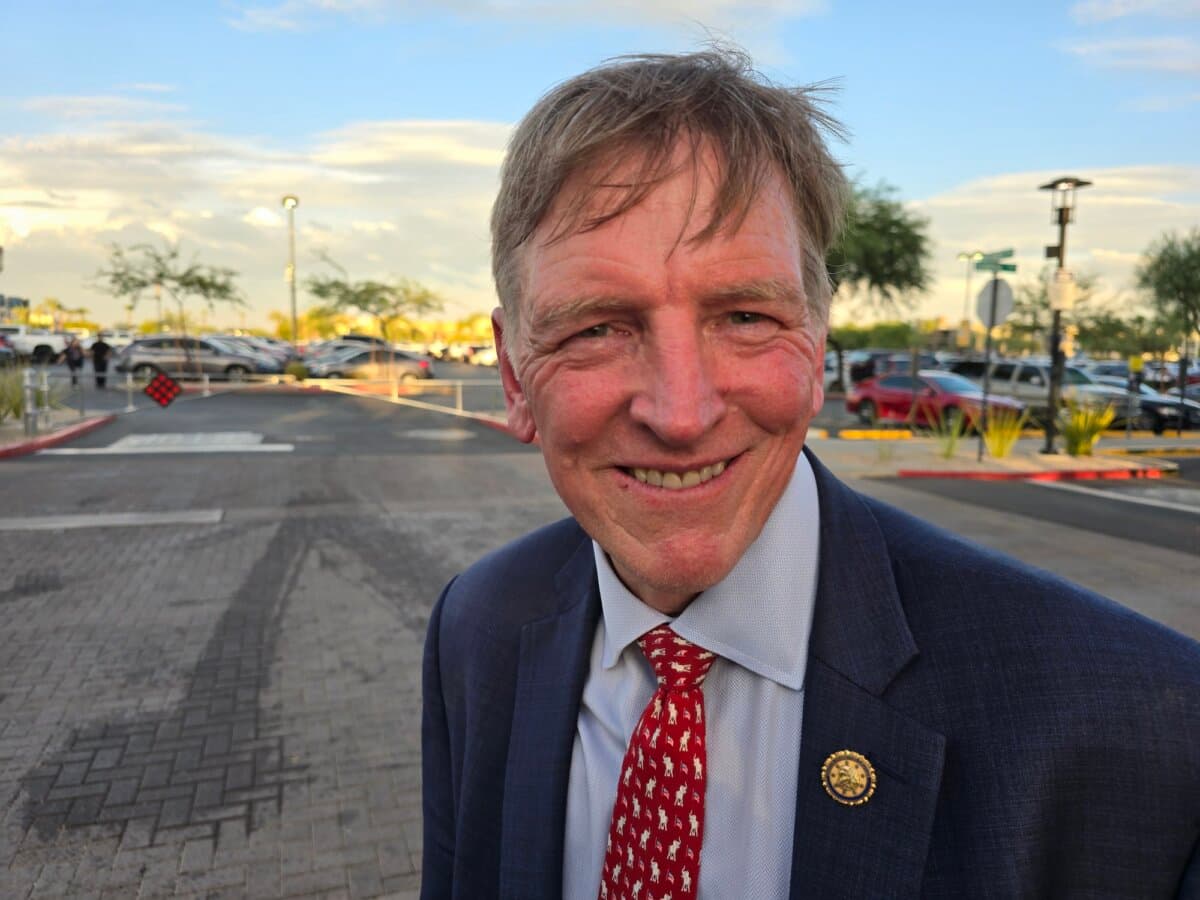
Rep. Paul Gosar (R-Ariz.) outside a rally in Glendale, Ariz., on Aug. 23, 2024. (Allan Stein/The Epoch Times)
He said he would like to be able to scuttle the employment authorizations for student visa holders once they leave school.
Some lawmakers now awaiting optional practical training reform from the administration have made their own proposals.
Banks and Rep. Paul Gosar (R-Ariz.) have introduced bills that would eliminate the program altogether.
“If we are serious about protecting workers and restoring fairness to our labor market, we need a permanent solution,” Banks said.
Krikorian and Mehlman have both said they want to eliminate the tax carveouts that give companies an incentive to hire OPT participants.