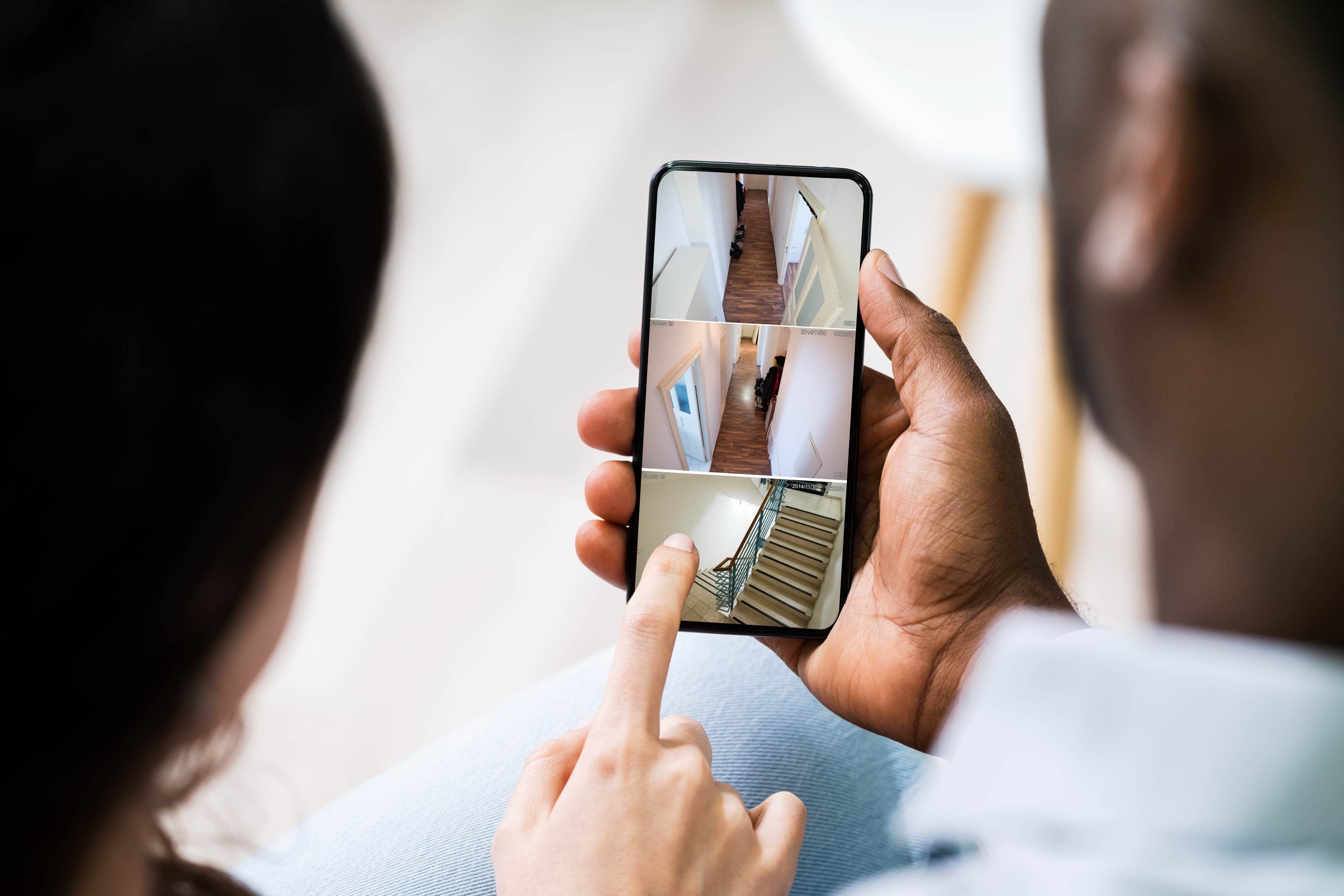

Scared about the high-crime rate in their neighborhood, husband and wife Albert and Marie Van Brittan Brown came up with a genius solution to keep their family safe at home. The Browns’ first design of a home security system incorporated many new technologies, including closed circuit television (CCTV). And even though their idea never came to fruition during their time, many of their principles are used in home and commercial security systems today.
Van Brittan was born on Oct. 22, 1922 in the Jamaica neighborhood of the borough of Queens, New York to a father from Massachusetts and a mother from Pennsylvania. Not much is known about her early years, but she ended up marrying Albert Brown and having two children. In the 1960s, Marie worked as a nurse, and Albert was employed as an electronics technician.
Between 1960 and 1965, the rate of serious crimes in Queens, where the Browns still lived, spiked nearly 32 percent. Since both of them had careers with demanding hours, they were forced to work at all times of the day with varying schedules. Often, Van Brittan felt vulnerable at night.
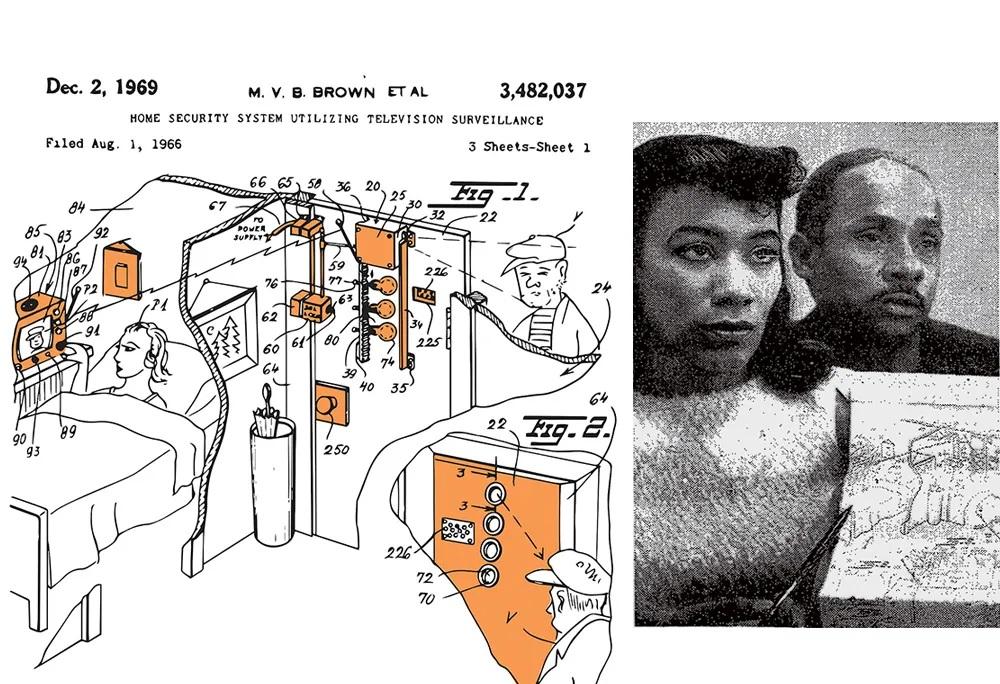
The Browns' 1969 patent (L) plan for an elaborate home security system suggested safety and relaxation can go hand in hand. Marie Van Brittan Brown and Albert L. Brown. (U.S. Patent and Trademark Office)
As crime rates rose, Van Brittan worried that something might happen. Since the crime rate was so high, she knew that it often took police an unusually long time to respond to emergencies. She was especially worried about an unwanted intruder coming up and knocking on the door of her Queens’ apartment.
Van Brittan soon got to work to come up with a solution. She envisioned a video security system that would enable her to see who was at the door.
Her first design encompassed a door with multiple sealed glass peepholes that enabled her to see various height levels outside to tell who was at the door, whether it was a large person or a small child. But instead of looking through the holes herself, Van Brittan rigged a video camera that could slide between each peephole.
She then wired the camera to a monitor she placed in her bedroom. She could now see who was knocking on her door without leaving her room. But, her ingenuity didn’t stop there.
A Two-Way Mic
Van Brittan’s invention also included a two-way microphone so that she could communicate with the person at her door. Her creation included two buttons. If she welcomed her guest she could hit a button and open the door with an automatic lock to let them in. If she didn’t like what she saw at her front door, she could hit another button that would directly alert authorities.
After drafting the design, she went to her husband Albert to use his electronic genius to make it all work. The duo then filed a patent in 1966, with Van Brittan as lead inventor. It was approved three years later.
Four days after the patent was issued on Dec. 2, 1969 the couple was featured in a New York Times article with their pictures. “With the patented system, a woman alone in the house could alarm the neighborhood immediately pressing a button, and installed in a doctor’s office it might prevent holdups by drug addicts,” Van Brittan said in an interview for the paper.
She was also given an award from the National Scientists Committee for her invention. However, the Browns didn’t profit from the invention in their lifetime. Van Brittan Brown passed away in Queens on Feb. 2, 1999. During the 1970s, the technology was not quite advanced enough yet. Implementing the Browns’ system widely would have been costly.
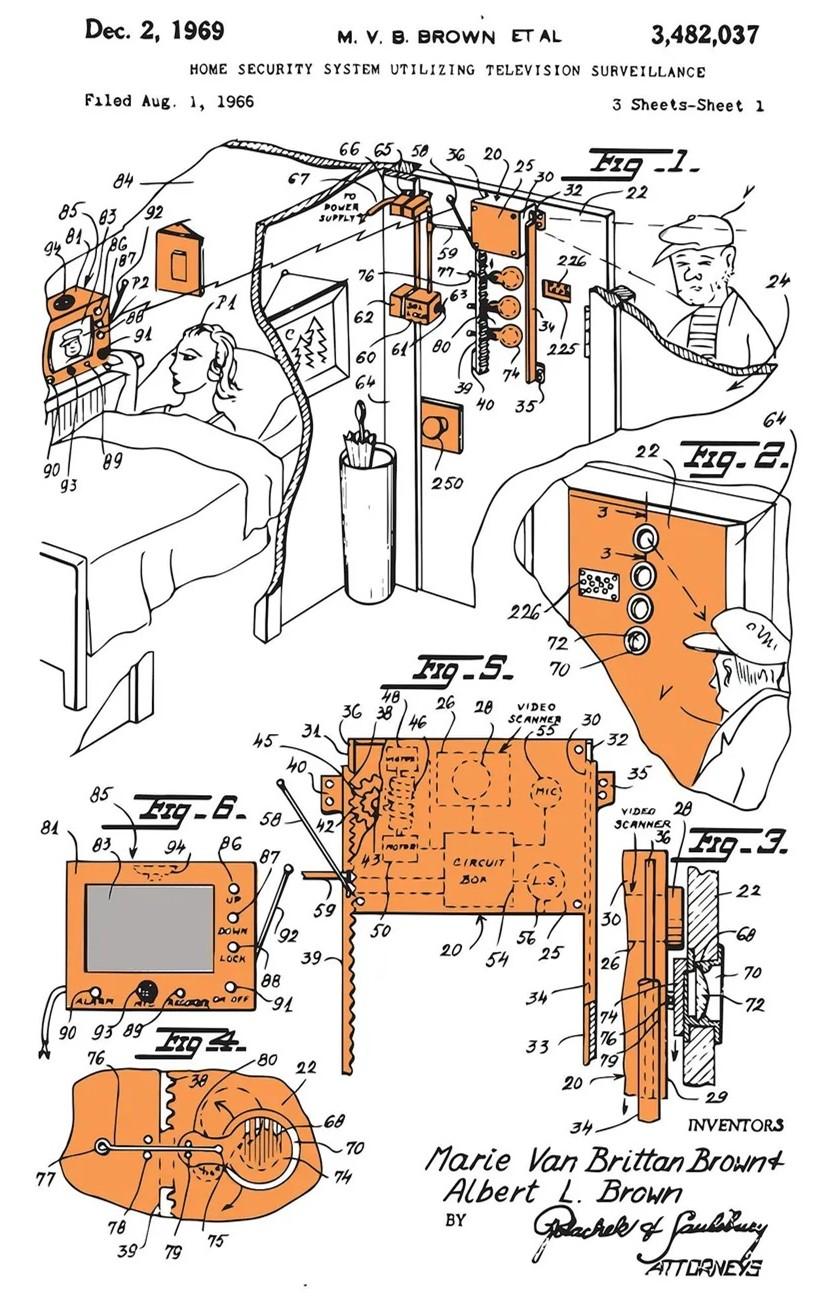
A Queens, N.Y. couple developed a unique home security system. Marie Van Brittan Brown and Albert L. Brown. (U.S. Patent and Trademark Office)
In fact, it would be several decades before the technology would catch up and their invention and be put into widespread use. To date, nearly 40 patents (mostly having to do with home security systems) have referenced the Browns’ work in some way.
Their most recent mention came in 2021, when Amazon referenced the Browns about a patent they filed for “wireless speaker devices for audio/video recording and communication devices.”
What arts and culture topics would you like us to cover? Please email ideas or feedback to features@epochtimes.nyc