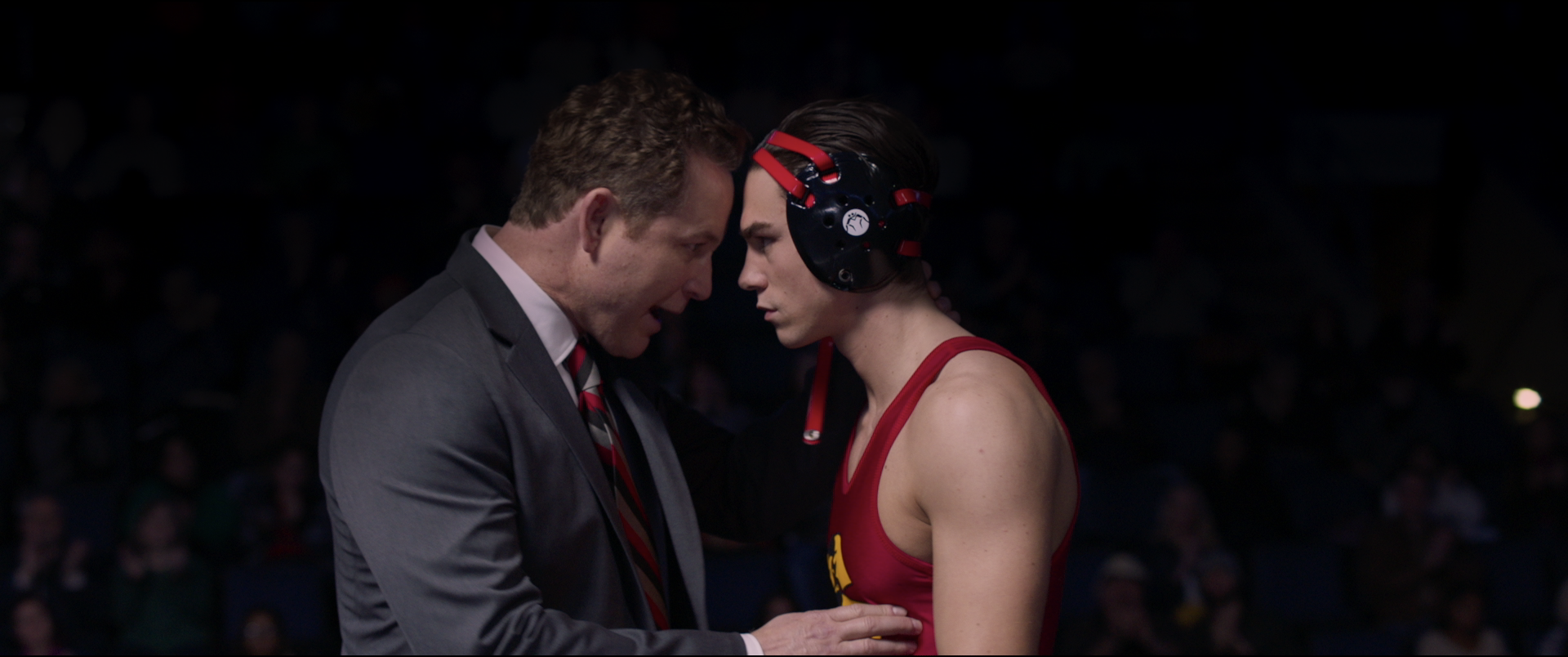

“The Last Champion” (2020) is a family affair in more ways than one. It was written and produced by Glenn Withrow, wife Hallie Todd (who also acted in it), and daughter Ivy Withrow. Mr. Withrow also directed the film. Together, they show how families are vulnerable to drifting apart and how it’s worth fighting to keep them together.
John Wright (Cole Hauser) is the last wrestler from his town to win an Olympic gold medal. Shamed by a doping scandal, he’s ostracized himself for years. Now, his mother’s death forces his return to hostile townsfolk who haven’t forgiven him for disgracing them, never mind that he hasn’t forgiven himself.
Meanwhile, high school wrestling coach Frank Stevens (Peter Onorati), who was always kind to his former protege John, dies, leaving behind a widow, Annie (Jeanine Jackson).

Michael Miller's mother, Melinda (Hallie Todd), in “The Last Champion.” (Redburn Street Pictures)
John ends up coaching the town’s senior high school boys, including Frank’s new protege, Michael Miller (Sean H. Scully). Michael has it tough, not just on the wrestling mat but at home, too. His chain-smoking, alcoholic, philandering mother, Melinda (Todd), deserts him, his grown sister, Joanna (Taylor Dearden), and kid sister Katie (Florence Schiff).
The self-loathing John chickens out of defending Michael when the young man is attacked by jealous schoolmates. Then, Pastor Barnes (Bob McCracken), his daughter, Elizabeth (Annika Marks), and a few townsfolk show a dispirited John that all’s not lost, especially if he and they surrender to God.
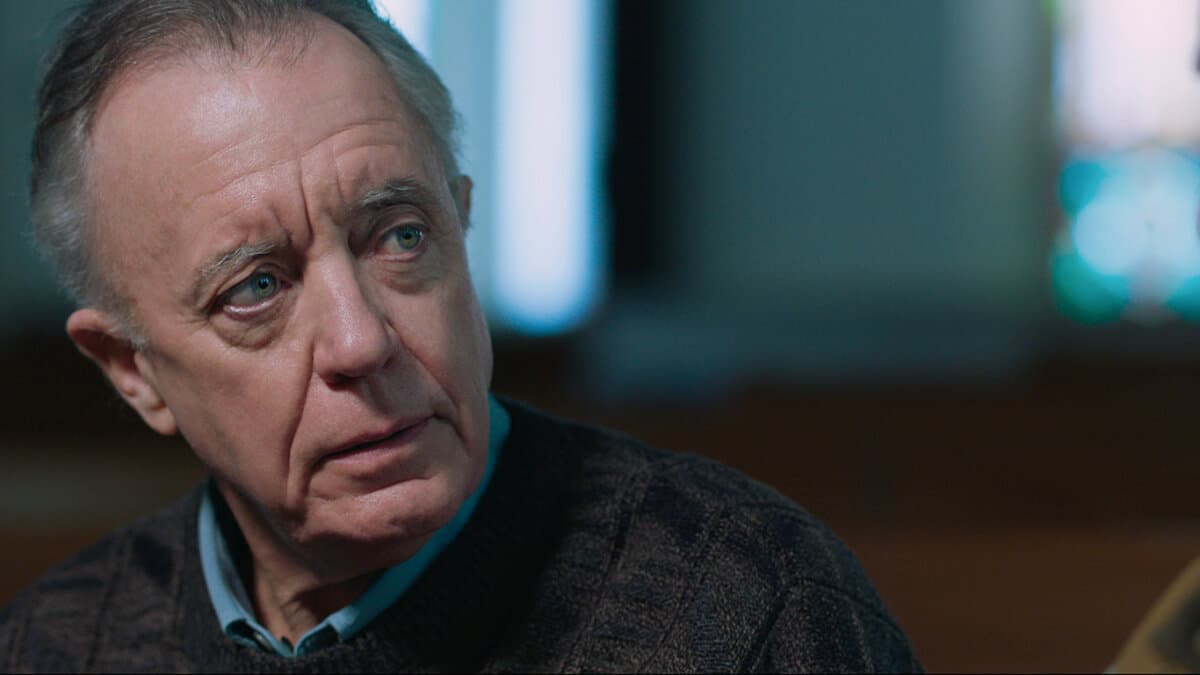
Pastor Barnes (Bob McCracken), in “The Last Champion.” (Redburn Street Pictures)
Owning Up
John cheated as a young man because he believed sporting success meant quick, easy access to fame, money, and power. He figured steroids would ensure it. Now, older and wiser, he brings his life lesson as a coach to his young wards entering championships.
If they can bring to the contest mat the hard work, honesty, guts, determination, and discipline they showed on the practice mat, that’d be good enough for him. No talk of medals. He’s had his fill of those. He doesn’t want them messing up their heads with misguided motivations.
John witnesses the assault on Michael from a distance and, at first, does nothing. He stays silent out of self-preservation. It’s only later that he wonders what sort of self he’s preserving if there’s not much of his self, and his soul, left to preserve.
Michael’s jealous schoolmate Scott Baker (Casey Moss) is the unrepentant ringleader, but his accomplices eventually confess how cowardly they too were in having aided and abetted the attack. They could’ve dismissed it all as Scott’s doing or put it down to the heat of the moment.

Scott Baker (Casey Moss, L) gets advice from wrestling coach Frank Stevens (Peter Onorati), in “The Last Champion.” (Redburn Street Pictures)
Instead, they own up to their calculated cowardice as individuals and publicly apologize to Michael. In doing so, they teach John a bit about humility and character. Sometimes, courage is simply a refusal to stay cowardly.
Self-Forgiveness
When Melinda deserts her family, neither Michael nor Joanna plays the resentful victim. Both start part-time jobs to ensure little Katie is cared for. When John looks for Michael because he’s missing wrestling practice too often, Michael says he’ll have to quit school to keep his family together: “I’m not giving up my family.” His private championship ambitions as coach aside, John is equally firm: “No, of course not. Family first.”
John would like to guide the fatherless Michael, but he claims he doesn’t know how. Pastor Barnes gives it to him straight. What Michael needs most is “a good man to look up to.” He needs someone he can respect and trust.
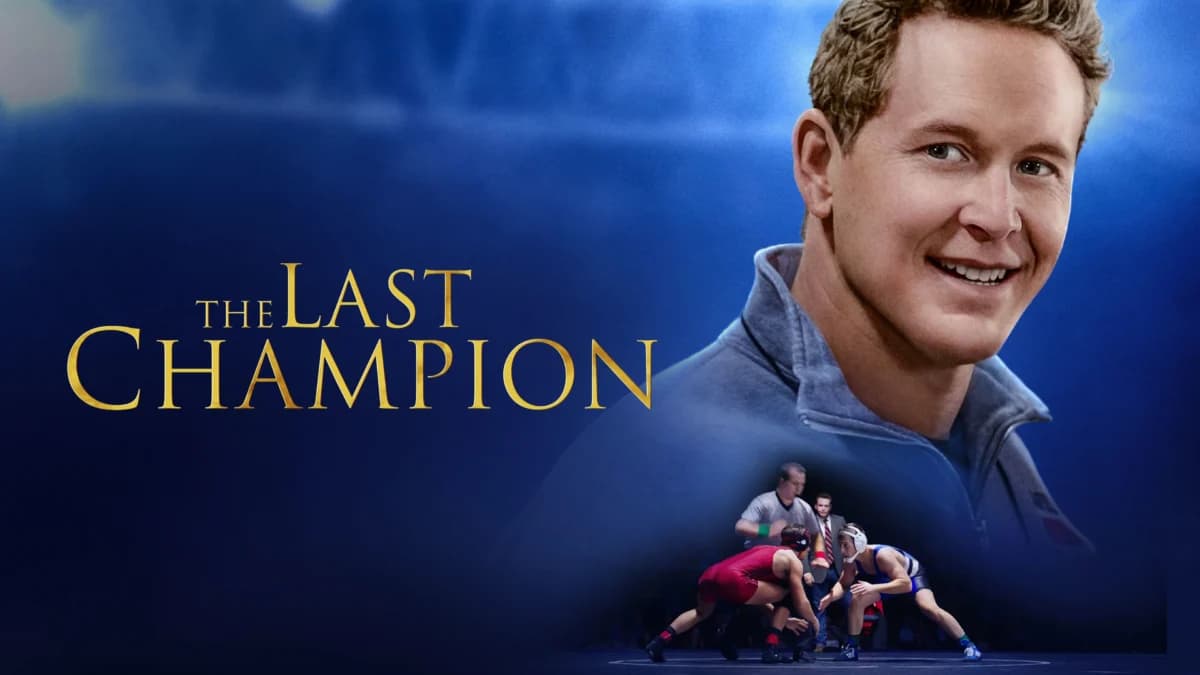
Media poster for “The Last Champion.” (Angel Studios)
John insists that his mistakes—and his failure to own up to them—make him unworthy of that fatherly role. He believes that he lost one-too-many of life’s bouts himself to play mentor to Michael.
Again, it’s Barnes who reminds John that the consequences of sin, no matter how sour, don’t mean condemnation. They’re part of life, not the end of it. If John’s truly repentant and begs God’s forgiveness, he has to trust that God has forgiven him. Only then can he move forward with his life.
Families that forgive, however imperfectly, copy God, who forgives perfectly. This echoes Frank’s parting warning to John not to travel backwards: “We all make mistakes.”
The turning point here is refreshingly unspectacular. Rejection gets to John. Basking in self-pity, he turns to the bottle, but briefly. His despair leads him to prayer. It’s a simple, two-word prayer, which can barely be heard when he mutters it to a snowy Garfield skyline: “Help me!”
Check the Internet Movie Database website for plot summary, cast, reviews, and ratings. You can watch “The Last Champion” on Roku, Vix, and YouTube.
These reflective articles may interest parents, caretakers, or educators of young adults, seeking great movies to watch together or recommend. They’re about films that, when viewed thoughtfully, nudge young people to be better versions of themselves.
What arts and culture topics would you like us to cover? Please email ideas or feedback to features@epochtimes.nyc