
A federal judge declined on March 31 to hear a settlement pact that sought to allow churches to endorse political candidates without losing their tax-exempt status.
U.S. District Court for the Eastern District of Texas Judge John Campbell Barker ruled he had no authority to enter a settlement agreement proposed by the IRS and the plaintiffs that would have required the court to declare the Johnson Amendment, a 70-year-old federal law, unconstitutional.
Barker said he didn’t have the authority to approve the proposed judgment.
Congress “'is the appropriate body to weigh the relevant, policy-laden considerations, such as the harshness of the present law, the consequences of an unjustified revocation of [tax-exempt] status, and the number of organizations in any year threatened with such revocation,’” the judge wrote in the order.
Americans United for Separation of Church and State applauded the court ruling as a “victory for church-state separation and the integrity of charitable organizations and elections.”
“We’re glad that the Johnson Amendment will remain a strong bulwark to stop religious extremists from exploiting houses of worship,” said Americans United president and CEO Rachel Laser. “Tax-free giving to charities should fund charitable work, not partisan politics.”
The judge dismissed the case without prejudice, meaning it can be refiled.
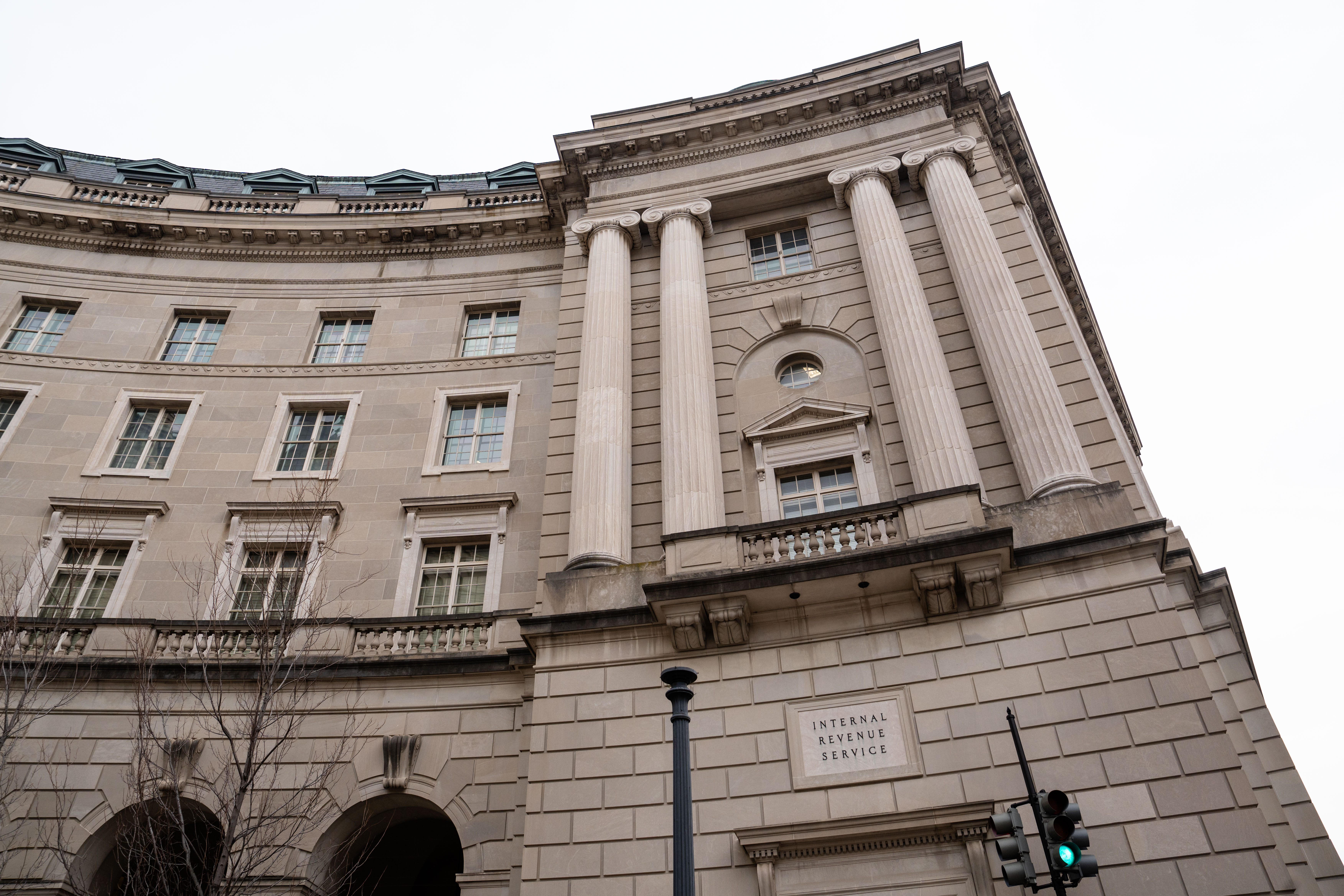
A lawsuit was filed in 2024 by several Texas churches and National Religious Broadcasters (NRB) against the Internal Revenue Service (IRS) seeking to overturn the 1954 Johnson Amendment, which restricts tax-exempt entities such as religious groups from endorsing candidates or political campaigns.
Congress grants religious, educational, and public-interest organizations tax-exempt status, and allows private donations given to those entities to be tax-deductible. The organization needs to have a purpose, a nonprofit status, but is unable to “carry on propaganda,” influence legislation, or participate in any political campaign or promote any candidate for public office.
If such an organization engages in political activity, it can potentially lose its tax-exempt status.
A proposed consent judgment was filed in July 2025 by the NRB and IRS Commissioner William Long, who served from June 2025 to August 2025 after allegedly clashing with Treasury Secretary Scott Bessent.
The agreement would have required the judge to rule that the Johnson Amendment violated the First Amendment rights of the church groups and the exercise of religion, due process of law, and equal protection under the law.
If approved by the judge, the agreement would have required the Treasury secretary to agree not to act against a house of worship that speaks out about moral or political issues, and prohibit the federal government from enforcing the Johnson Amendment.
Michael Farris, general counsel for the NRB, said the organization will appeal the judge’s dismissal.
The NRB and Texas churches involved in the lawsuit “believe that well-established precedent, including decisions by the Supreme Court, mandates a different outcome,” Farris said. “The plaintiffs will file an appeal to the United States Court of Appeals for the Fifth Circuit shortly.”
President Donald Trump said during the National Prayer Breakfast in 2017 that he would take action to repeal the Johnson Amendment.
“No American should be forced to choose between the dictates of the federal government and the tenets of their faith,” Trump said. “Under this rule, if a pastor, priest, or imam speaks about issues of public or political importance, they are threatened with the loss of their tax-exempt status—a crippling financial punishment. Very, very unfair.”
On May 4, 2017, Trump signed an executive order “Promoting Free Speech and Religious Liberty” easing the enforcement of the Johnson Amendment, but it was heavily contested in legal challenges.