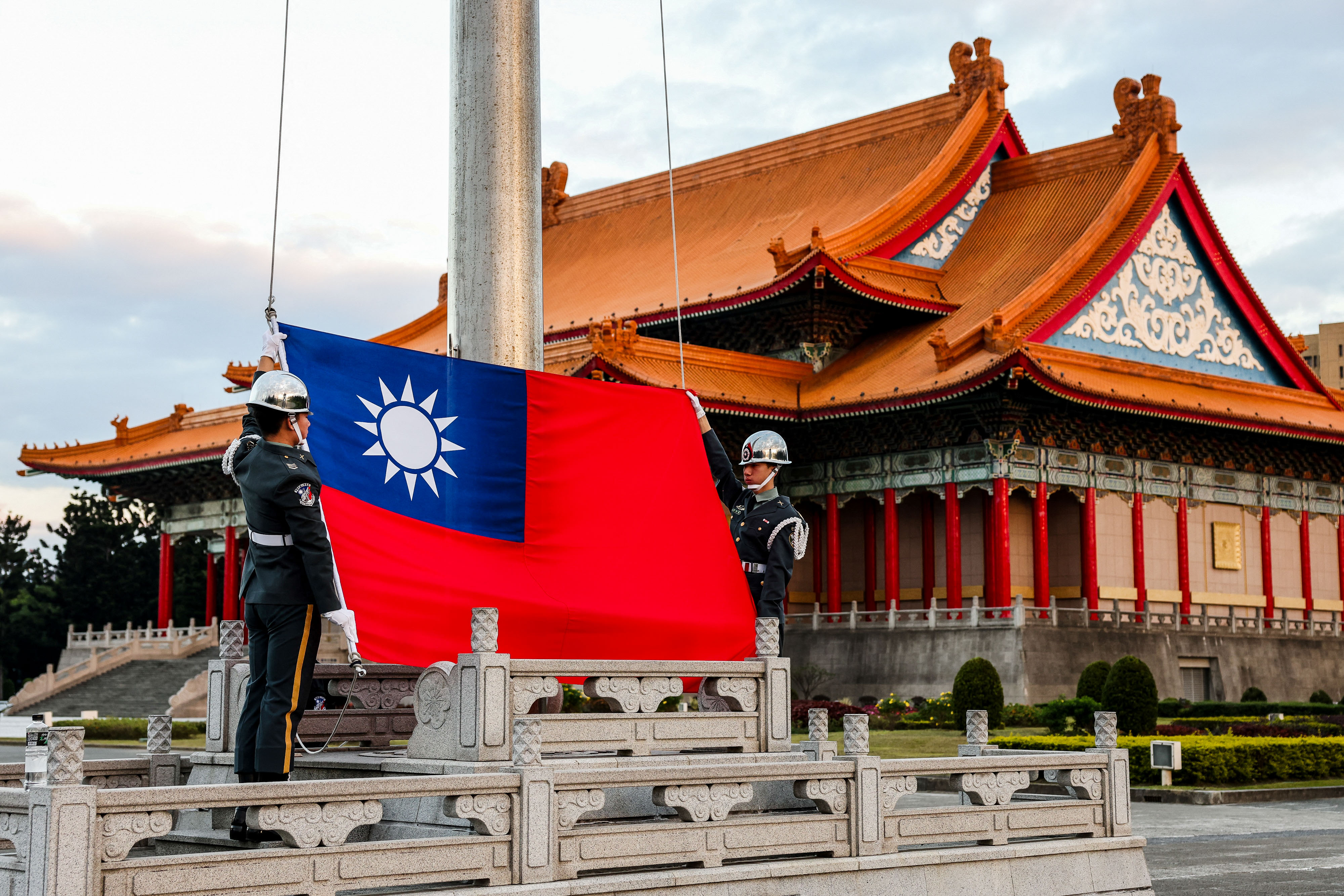

TAIPEI, Taiwan—Taiwan has pulled out of a ministerial conference of the World Trade Organization (WTO) scheduled for later this week in Cameroon, after the host country chose to designate the island as a “Province of China” in visa documents for members of Taiwan’s delegation.
Taiwan’s Ministry of Foreign Affairs condemned Cameroon’s decision in a statement on March 20, calling the erroneous designation on travel documents “seriously demeaning Taiwan’s status.”
The ministry noted that this marks the first time since 2001—when Taiwan acceded to the WTO—that it has not attended a ministerial conference.
“Cameroon’s subservience to China and disregard for the long-standing practice of host members respecting Taiwan’s status as a member not subordinate to any other member has severely infringed on Taiwan’s right to equal participation in the WTO,” the ministry stated.
The ministry said it had lodged a “formal protest” with the WTO secretariat and Cameroon’s mission to the WTO.
The 14th WTO Ministerial Conference is scheduled to take place from March 26 to March 29 in Cameroon’s capital, Yaoundé. The previous ministerial conference was held in Abu Dhabi, the capital of the United Arab Emirates, in early 2024.
According to the ministry, Taiwan’s delegation was originally to be headed by Yang Jen-ni, minister without portfolio, who is also the island’s chief trade negotiator.
Taiwan formally became a member of the WTO in January 2002, a month after China joined the organization. The island’s official name at the world body is the “Separate Customs Territory of Taiwan, Penghu, Kinmen and Matsu (Chinese Taipei).”
The ministry added that Taiwan’s WTO mission had engaged the WTO secretariat and director general over the issue, with assistance from the United States, Japan, and the island’s diplomatic allies. However, the efforts did not bear fruit as Cameroon said that the designation was a “matter of its foreign policy,” according to the ministry.
“By prioritizing bilateral policy considerations over the collective interests of the WTO as a multilateral organization, Cameroon not only violated long-standing conventions regarding entry and visa procedures for delegation members from Taiwan, it also neglected to provide Taiwan with the fair, impartial, and reasonable treatment that Taiwan is entitled to as a WTO member,” the ministry added.
The ministry expressed hope that future hosts of the WTO ministerial conferences can “provide formal assurances that similar incidents undermining the equal rights of members will not recur.”
On March 24, Taiwan’s mission to the WTO said in a statement that it had received an email from its Cameroonian counterpart at the international body. The email, received on March 20 after Taiwan had announced its withdrawal from the upcoming event, included a “visa exemption document” for Taiwan’s delegation members.
Taiwan’s mission said the document “contains many gross errors,” including misspellings of Taiwanese delegation members’ names, adding that the errors were “incomprehensible and unacceptable” and expressing concern about whether the document “can effectuate” the delegation’s entry to Cameroon.
As a result, Taiwan’s mission said that the decision not to participate in the upcoming event will stand.
At a daily briefing in Beijing on March 24, foreign ministry spokesperson Lin Jian accused Taiwan’s ruling Democratic Progressive Party of engaging in “political manipulation” over its decision to withdraw, and called Taiwan an “inseparable part” of China.
The Chinese Communist Party (CCP) considers Taiwan part of its territory and has expressed intentions to bring the island under its control, through military action if necessary.
Cameroon has signed up to China’s infrastructure platform, the Belt and Road Initiative. In May last year, Chinese state-run media outlet Xinhua touted a China-built deep-seaport in Cameroon’s city of Kribi as a “model for China–Africa collaboration” under the Belt and Road and a “beacon of hope” for the African country.
Rep. Mario Díaz-Balart (R-Fla.), co-chairman of the Congressional Taiwan Caucus, said it was “deeply concerning” regarding what he called Cameroon’s decision to “prioritize Communist China’s foreign policy agenda,” according to a March 23 X post.
“This is yet another blatant example of Beijing’s coercive tactics to deny Taiwan’s meaningful participation in international institutions and sets a dangerous precedent,” the lawmaker wrote.
“Taiwan is a vital economic and security partner to many countries, including the United States, and we will continue to advocate for its participation in the international space.”