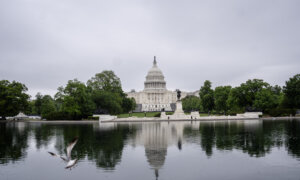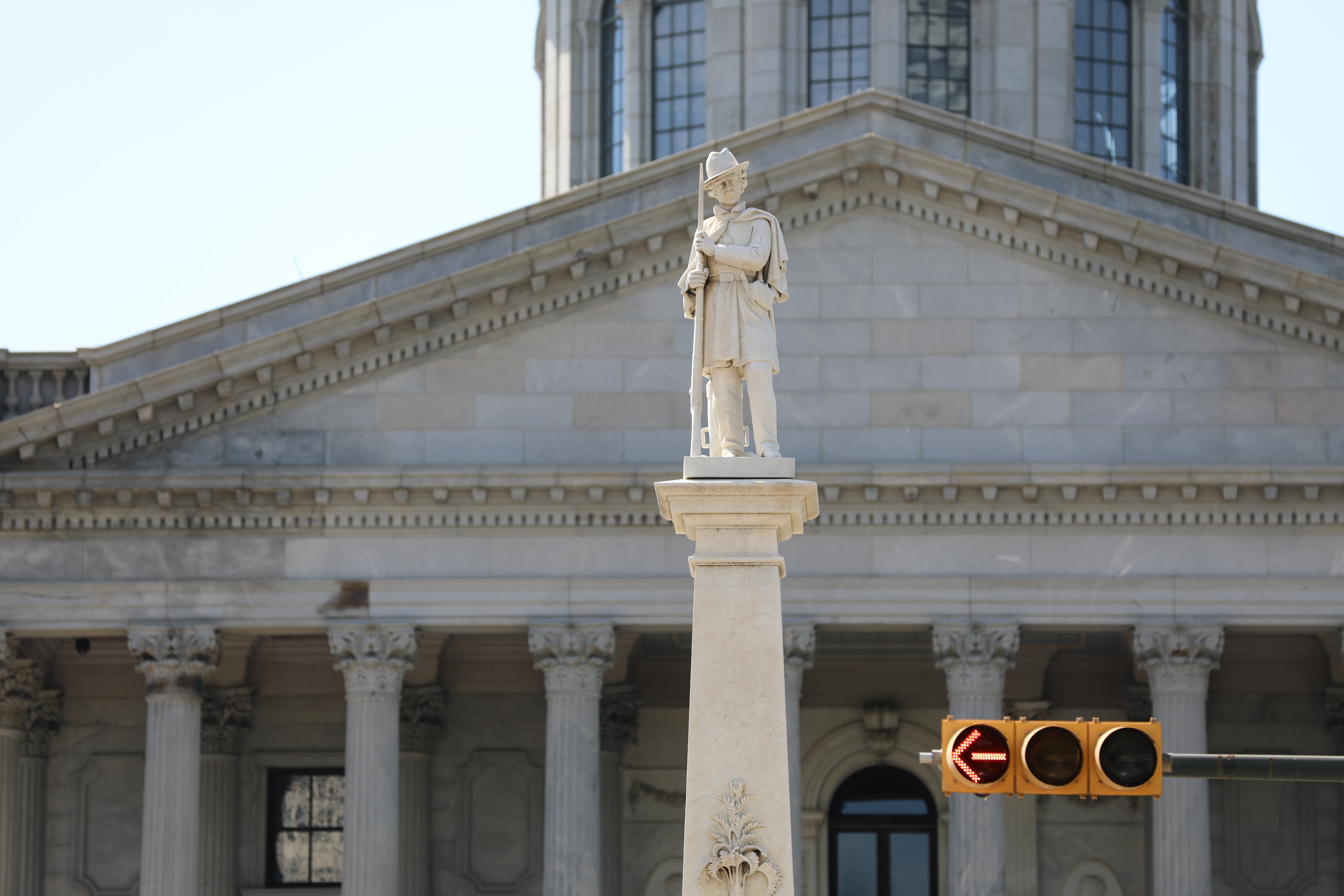

The South Carolina state Senate voted on May 12 against extending its current session, a setback in the effort to postpone the congressional primaries in the state and to redraw the state’s congressional map.
Five Republicans joined all Democrats in the result, which required the support of a two-thirds majority.
It’s not over yet, as South Carolina Gov. Henry McMaster, a Republican, could call a special session.
If the effort is successful, the primary will be delayed from June 9 to Aug. 11.
President Donald Trump weighed in on the redistricting issue on May 11, posting on social media that he was monitoring the situation closely and urging South Carolina senators to support delaying the primaries so new congressional districts can be created.
This comes after Trump-backed candidates successfully unseated five incumbents in the Indiana Senate who opposed redistricting in the Hoosier State.
South Carolina Lt. Gov. Pamela Evette called for redrawing the state’s congressional map.
“We have both the duty and the opportunity to maximize our conservative stronghold and ensure our people receive the representation they deserve, grounded in faith, freedom, family values, safe communities, and economic prosperity,” she said before the South Carolina House Judiciary Constitutional Laws Subcommittee on May 12.
Republicans currently hold a supermajority in the Legislature, but not all GOP senators are convinced the proposed map would strengthen their position. Some lawmakers worry the redraw could unintentionally make other districts more competitive for Democrats, potentially reducing the Republican advantage from 6–1 to 5–2, or even 4–3.
The debate largely centers on the district represented by Rep. Jim Clyburn (D-S.C.), the only Democrat in South Carolina’s congressional delegation.
Some Republicans argue that altering district lines could help the GOP capture the seat, while others fear the strategy could backfire politically.
“Frankly, I’m concerned that if you, as I’ve said before, that if you get cute with this and you start playing with it too much, that you could actually end up losing seats,” state Senate Majority Leader Shane Massey said during discussions.
Some senators have also questioned whether a congressional map heavily favoring Republicans would fairly represent the state’s electorate.
Redistricting is usually conducted once every decade following the U.S. census, but recent legal developments have renewed discussions about revisiting district lines earlier than expected.
State Sen. Jason Elliott pointed to recent U.S. Supreme Court decisions involving race and redistricting, arguing that lawmakers now have additional legal guidance regarding how districts can be drawn.
Election officials, however, are warning that changing the election schedule and district boundaries could create significant confusion for voters.
Conway Belangia, executive director of the South Carolina Election Commission, said voters may struggle to understand whether previous ballots cast in June would still count if the primary is postponed.
Belangia said that if the primary is moved to August, votes cast in the June election, which also includes races for governor and other state offices, would not apply. He said that voters could mistakenly believe they have already participated in the election and choose not to return to the polls later in the summer.
Officials also warned that new district maps could affect where residents vote and which candidates appear on their ballots.