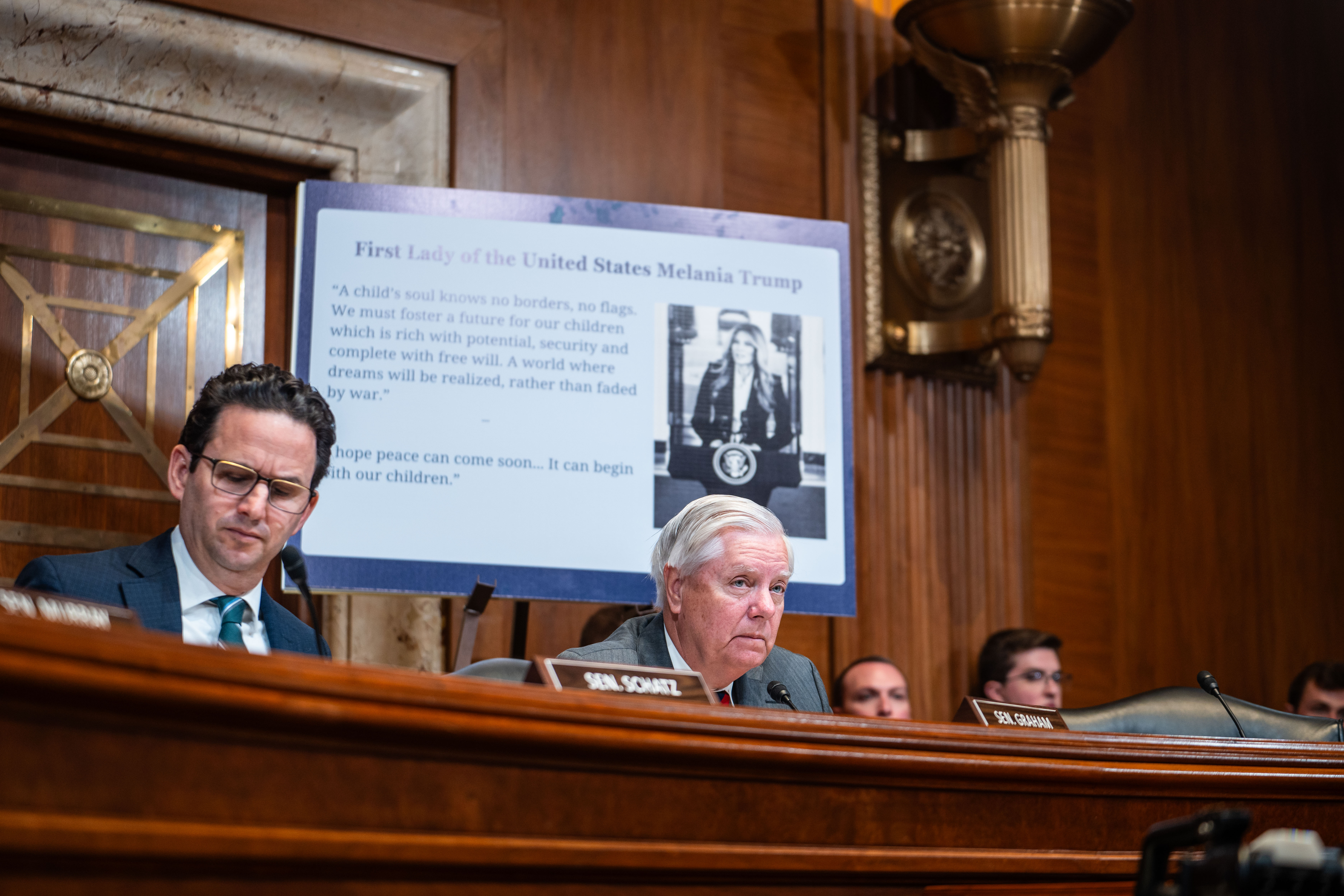

A bipartisan congressional effort to designate Russia a state sponsor of terrorism received a renewed push during a Dec. 3 Senate hearing on allegations that Moscow is kidnapping and brainwashing tens of thousands of Ukrainian children.
Sens. Lindsey Graham (R-S.C.) and Richard Blumenthal (D-Conn.) first introduced legislation in 2022 to designate the Russian government as a “state sponsor of terrorism” months after it invaded Ukraine, and on the same day, Russian forces shot a missile on the Karachunivske reservoir, causing it to break and flood Ukrainian President Volodymyr Zelenskyy’s home city, Kryvyi Rih.
In June 2024, Graham and Blumenthal introduced the bill again, accusing Russian President Vladimir Putin of “barbaric behavior in Ukraine” and for “disruptive behavior throughout Africa and the world at large.”
Now, as the Trump administration continues negotiations with Moscow and Kyiv in efforts to end Russia’s war in Ukraine, the push to pass that legislation received a boost during a Senate hearing on Wednesday, where lawmakers and witnesses accused Putin of ordering the kidnapping and brainwashing of tens of thousands of Ukrainian children.
“People in Ukraine and organizations are claiming that Putin’s Russia has separated over 19,000 Ukrainian children from their families, trying to turn them into Russians,” Graham said. “You cannot honorably end this conflict unless you account for every child taken by Putin’s Russia from Ukraine. Period.”
Russia has denied that it engages in the kidnappings. Graham said he invited the Russian ambassador to Wednesday’s hearing to “make a record as to whether or not this claim is legitimate,” but he didn’t show up.
In one report Blumenthal reviewed, Russian soldiers forcibly took a 16-year-old boy to an orphanage with “terrible sanitation” where he slept on “sagging metal beds, no bedding, just blankets.”
Another boy, 9, had lived with his mother until she was killed by a Russian missile strike. After burying her in their backyard, Russian forces put the boy in a hospital in Donetsk, where he “underwent surgery without anesthesia and was told by Russian doctors that he shouldn’t say Glory to Ukraine anymore.”
Nathaniel Raymond, a war crimes investigator serving as the executive director of the Humanitarian Research Lab at the Yale School of Public Health, said his three-and-a-half-year-long investigation alongside the State Department revealed that the “actual number” of Ukrainian children allegedly kidnapped by Russia is “closer to 35,000.”
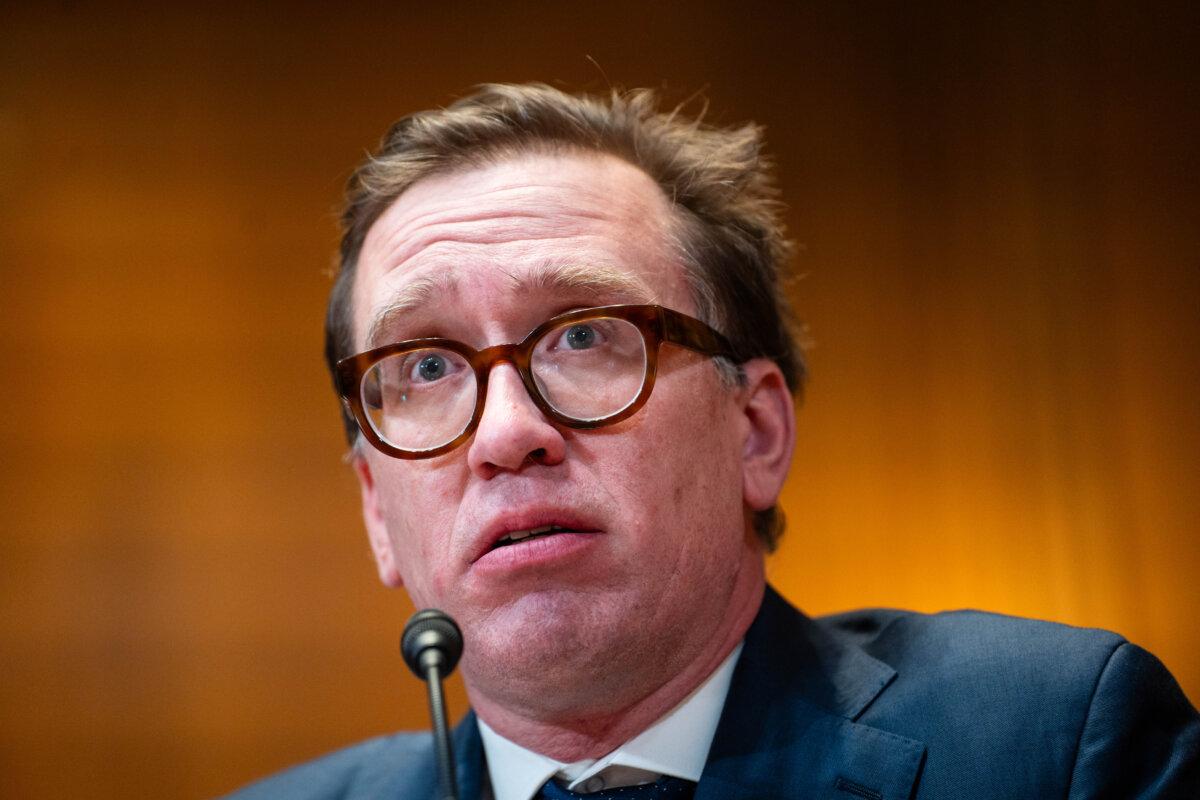
Nathaniel Raymond, humanitarian research lab executive director at Yale School of Public Health, testifies during a hearing on Capitol Hill in Washington on Dec. 3, 2025. (Madalina Kilroy/The Epoch Times)
The research lab’s investigation ended after the State Department “formally terminated” its grant in June, Raymond said.
Graham, a top Senate Republican, said Congress should review the terms of whatever deal the Trump administration is negotiating with Moscow so the legislative branch has a say on whether the deal is good or bad and if it offers security guarantees to Ukraine, “which there must be.”
“We’ll review those guarantees and see if we can find bipartisan support to make them continuing past the Trump administration,” Graham said, adding that the legislation he and Blumenthal co-sponsored would label Russia a terrorist state “because they’re acting like terrorists,” with child kidnappings and other alleged human rights abuses.
Returning Children Red Line for Ukraine
Olga Stefanishyna, Ukraine’s ambassador to the United States, said it is “non-negotiable” for the Ukrainian government that “all children who have been abducted are subjected to unconditional return,” or Kyiv will not agree to a deal with Moscow.

Olga Stefanishyna, Ukrainian ambassador to the United States, testifies during a hearing on Capitol Hill in Washington on Dec. 3, 2025. (Madalina Kilroy/The Epoch Times)
Last month, the Trump administration drafted a proposed 28-point plan to end the war.
The plan includes a non-aggression agreement, where Russia must cease invading its neighbors, an end to NATO expansion, and a provision where Ukraine would cede regions of Crimea, Luhansk, and Donetsk to Russia. Additionally, Kherson and Zaporizhzhia would be frozen along the line of contact, resulting in de facto recognition.
The plan, particularly the portions calling on Ukraine to cede territory, has garnered criticism from some U.S. lawmakers and world leaders, who describe it as more beneficial to Moscow’s interests than Kyiv’s. U.S. President Donald Trump has said the plan is still up for negotiation.
Special Envoy Steve Witkoff met with Putin in Moscow on Dec. 2, resulting in “constructive” talks, according to Yuri Ushakov, Putin’s top foreign policy aide.
The Kremlin said Putin had accepted some of the United States’ proposals to end the war, but “others were marked as unacceptable.”
European leaders showed their support to Zelenskyy on Monday ahead of Witkoff’s meeting with Putin, with French President Emmanuel Macron hosting a press conference with the Ukrainian president in Paris, where the two joined a call with roughly a dozen other leaders from the continent.
Only Ukraine can make the decision on its territories and peace deals with Russia, Macron told reporters.
Guy Birchall contributed to this report.