
Two Canadian human rights organizations are pressing the federal government to impose targeted sanctions on senior Chinese officials responsible for decades of persecution against Falun Gong practitioners.
The Falun Gong Human Rights Group (FGHR) and the Human Rights Action Group (HRAG) have submitted a formal request to the Sanctions Bureau of Global Affairs Canada, recommending that Canada invoke the Special Economic Measures Act (SEMA) to designate two senior Chinese Communist Party officials who they say are linked to “gross and systemic human rights violations.”
The rights groups say the specific violations include a decades-long systemic campaign of repression targeting Falun Gong practitioners in China, including arbitrary detention, forced organ harvesting, torture, and mass surveillance, among other human rights violations.
The violations are also part of a broader transnational repression campaign around the world against Falun Gong practitioners, including in Canada, the groups say.
“Sanctions are one of the ways to hold perpetrators more accountable for their crimes,” Maria Cheung of FGHR told The Epoch Times on June 18.
“The significance of this submission is that it is one of the first sanction submissions holding perpetrators responsible for transnational repression.”
HRAG CEO Sarah Teich told The Epoch Times that implementing sanctions on the two CCP officials would allow Canada to “demonstrate for the first time that acts of transnational repression can fall under our sanctions laws when linked to gross human rights violations occurring in a foreign state.”
She noted the case would set a “powerful precedent” in how Canada responds to foreign interference on Canadian soil and serve as a deterrent to transnational repression and foreign interference, both against Falun Gong practitioners and beyond.
The sanctions would bar the officials from entering Canada and prohibit Canadians from engaging in financial transactions with them. The rights groups said in a Feb. 19 press release that the measures would also signal that Canada will not serve as a “safe haven” for individuals responsible for gross human rights violations.
The sanctions were requested by FGHR and HRAG while Prime Minister Mark Carney was visiting China from Jan. 13 to 17, as part of Ottawa’s efforts to strengthen ties with Beijing. Global Affairs Canada has not yet publicly responded to the submission.
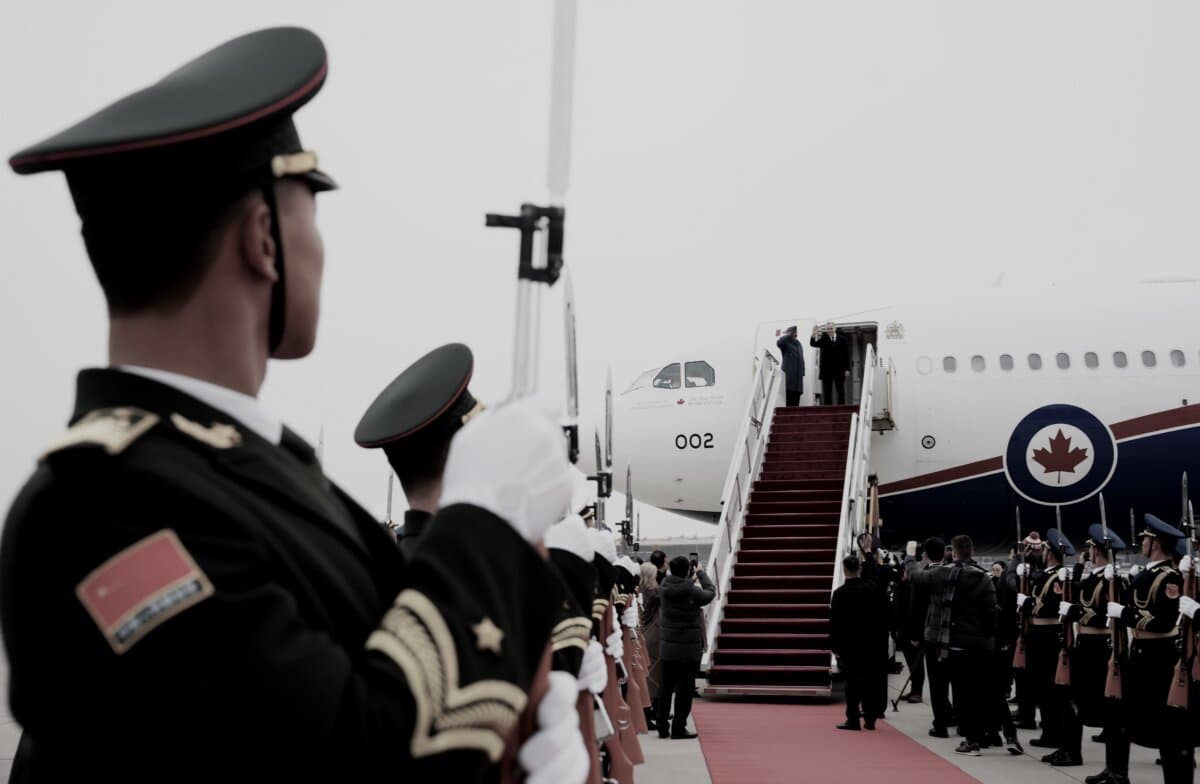
Prime Minister Mark Carney waves as he departs Beijing on Jan. 17, 2026, on route to Doha, Qatar. (The Canadian Press/Sean Kilpatrick)
Human rights groups, China experts, and opposition MPs have raised concerns about closer ties between Canada and China, citing the Chinese regime’s record of human rights abuses, foreign espionage, and transnational repression targeting Chinese diaspora communities in Canada.
Concerns about foreign interference and transnational repression by China have intensified in Canada in recent years, with a public inquiry looking into the topic extensively. The final report of the Foreign Interference Commission said China is the “most active perpetrator of foreign interference targeting Canada’s democratic institutions.”
Transnational Repression
Cheung said Falun Gong practitioners outside of China have been subjected to transnational repression since the CCP’s persecution of the spiritual practice in China began in 1999. She said the campaign of repression has included Chinese state propaganda and disinformation, as well as consulate staff and their proxies abroad spreading hate propaganda and excluding practitioners from local community activities.
There have also been documented reports of Falun Gong practitioners in Canada facing discrimination, sabotage, harassment, and intimidation, Cheung said.
Falun Gong, also known as Falun Dafa, is a traditional Chinese spiritual discipline that combines meditative exercises and moral teachings based on the principles of truthfulness, compassion, and tolerance. Following its rapid rise in popularity in China in the early 1990s, the CCP began to view the Buddhist-style practice as a threat to its one-party rule, and launched a violent persecution campaign against Falun Gong in 1999.
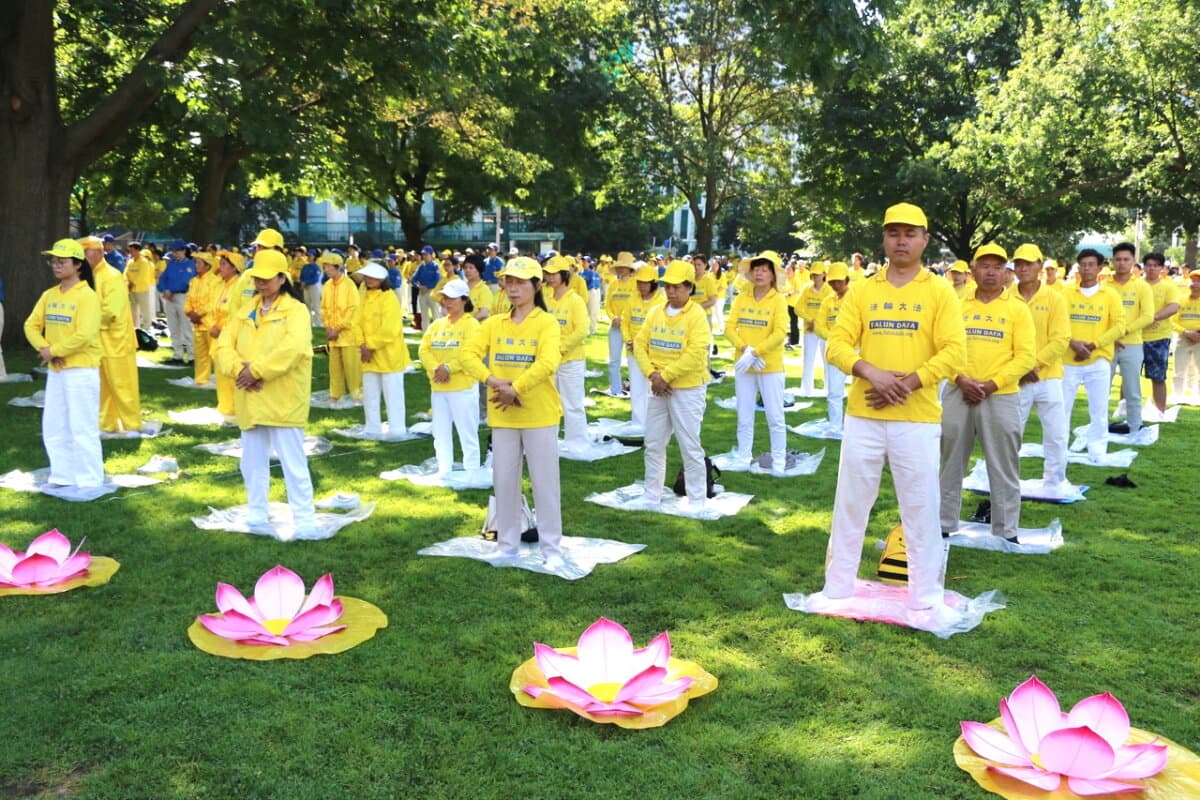
Falun Gong practitioners perform their meditative exercises during an event held at Queen's Park in Toronto on July 20, 2024. The event marks the 25th anniversary of the Chinese regime's persecution of Falun Gong. (Andrew Chen/ The Epoch Times)
More recently, Cheung noted China-linked efforts to suppress Shen Yun Performing Arts, a classical Chinese dance and music company, including hoax bomb and death threats, as well as intimidation and pressure on venues not to host performances. Many of Shen Yun’s artists are practitioners of Falun Gong.
Impact of Sanctions
Experts say the symbolism of imposing sanctions matters as much as the practicality behind them.
Andrea Charron, director of the Centre for Defence and Security Studies and political science professor at the University of Manitoba, told The Epoch Times that sanctions are a “powerful tool” for signalling to a wide audience that particular actions or decisions are unacceptable.
She noted that sanctions are among the most frequently used foreign policy tools—aside from the use of force—by the United Nations, the European Union, the United States, Canada, and other countries.
“For human rights violators, sanctions are one of the few tools available to signal strong repudiation of their actions while also preventing sanctioning states (and their citizens) from contributing financially to the abuse,” Charron said.
While Canada has previously sanctioned Chinese officials under SEMA, it has not done so specifically in response to allegations of transnational repression.
In 2021, Canada designated four Chinese officials and one entity responsible for gross human rights violations against Uyghurs, Tibetans, and Falun Gong practitioners in the Xinjiang region of China, following the lead of the United States, the UK, and the EU. Global Affairs Canada also sanctioned another eight Chinese officials in December 2024 for persecuting members of those same groups.
Both of these rounds of sanctions addressed abuses by the Chinese regime occurring within China, Cheung said, adding that the FGHR hopes its joint submission with the HRAG “will bring action from the Canadian government” to sanction perpetrators of transnational repression against Falun Gong practitioners on Canadian soil.
Canada’s other targeted sanctions law—the 2017 Justice for Victims of Corrupt Foreign Officials Act, known as the Sergei Magnitsky law—has never been applied to China, Cheung noted.
The effectiveness of sanctions, Charron said, depends on whether they target high-ranking decision-makers and their accomplices who “organize or condone” human rights abuses, and on whether Canada maintains the sanctions over long periods and updates them as foreign actors adapt.
She noted Canada must also be consistent, and not use sanctions as a “one-off tool that can be ‘fired and forgotten.’”
“Canada cannot sanction a small number of individuals for human rights violations while simultaneously rewarding affiliated companies or decision-makers with trade agreements,” she said.
Teich said Canada has applied its sanctions laws “inconsistently,” and their use is “subject to political will.” For example, she noted that Canada has sanctioned many Russian individuals responsible for human rights violations, but “not a single” Cuban or Eritrean individual. It has also imposed “very limited” sanctions against officials responsible for human rights abuses committed against Falun Gong practitioners.
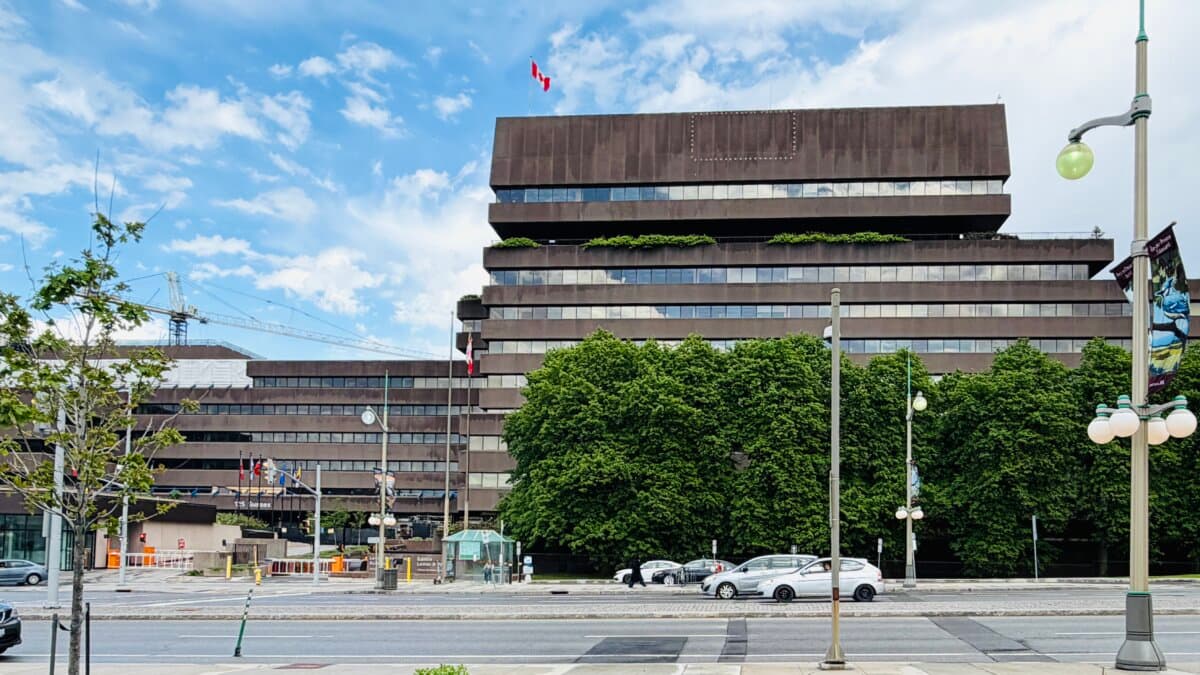
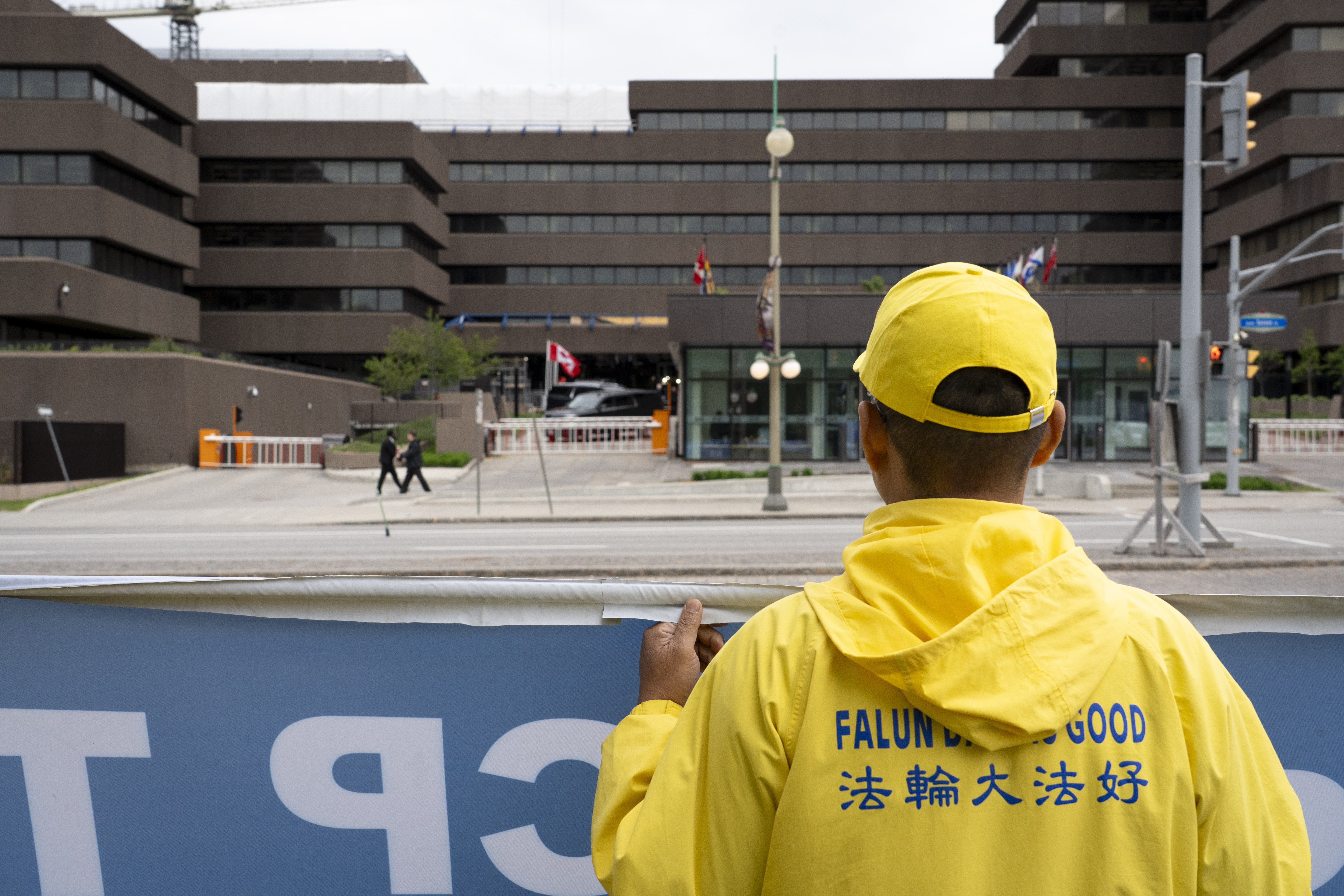
The Lester B. Pearson Building, the headquarters of Global Affairs Canada, is pictured in Ottawa, on May 29, 2026. (The Epoch Times)
Teich also noted there is no requirement on Global Affairs Canada to respond to sanctions submissions from civil society.
“There is no transparency,” she said. “Our sanctions laws give us useful tools but there is certainly a lot of room for improvement.”
Charron called SEMA a “powerful tool” that is designed to address gross and systematic human rights violations, while the Magnitsky law, she said, is typically used for more targeted, one-off cases of serious abuse.
“The challenge, however, lies in enforcement,” she said. “Canada’s sanctions lists are arguably too long, reflecting a tendency to measure success by the number of individuals and entities designated.”
Canada needs more “strategic” targeting, stronger enforcement, improved evidence collection to support cases, closer coordination with allies, and to better educate the Canadian public about their sanctions compliance responsibilities, Charron said.
What Happens Next?
When Global Affairs Canada receives a sanctions submission, the Minister of Foreign Affairs is responsible for bringing forward a Governor-in-Council order, including a list of proposed targets and the associated regulations, Charron said.
The government largely relies on publicly available information, she added, as it does not have the resources to independently investigate extensive lists of potential designees.
Global Affairs says sanctions are a “key component of Canada’s commitment to playing a leadership role in the preservation and strengthening of an international rules-based order.”
Canada uses a “due diligence process” to consider and evaluate possible cases of human rights violations, corruption, or other circumstances that may warrant the use of sanctions. It also considers “broader political and international context” when deciding whether sanctions may be an “appropriate response,” the department says.
Meanwhile, Charron said Canada’s sanctions “lack extraterritorial reach,” since if a Chinese official is unlikely to travel to Canada, hold assets within Canadian jurisdiction, or engage in financial transactions with Canadians, their designation “may have limited impact.”
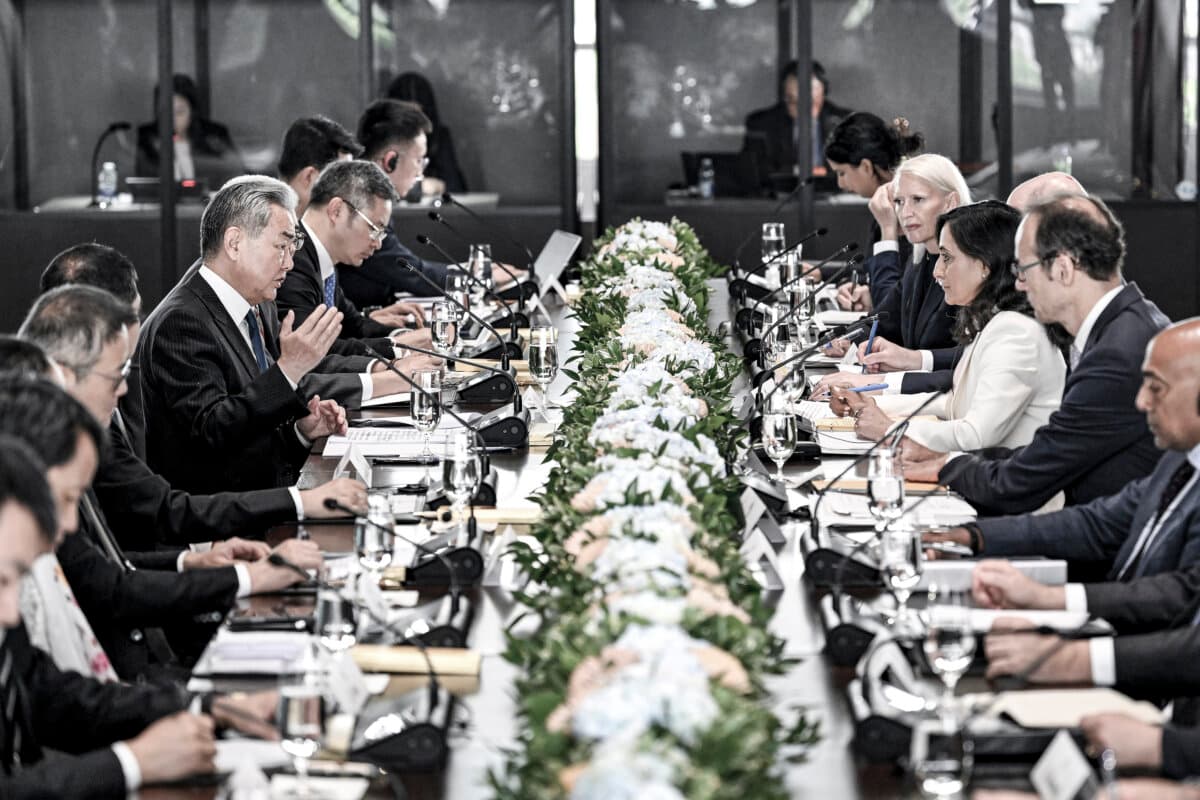
Minister of Foreign Affairs Anita Anand, right, meets with the Foreign Minister of China Wang Yi at Global Affairs Canada in Ottawa, on May 29, 2026. (The Canadian Press/Spencer Colby)
In addition, some targets may not be aware of their designation, as the Canadian government does not formally notify individuals when they are sanctioned. In other cases, there is also the risk of a “rally-around-the-flag” effect, Charron said. For example, Canadians sanctioned by the Putin regime for criticizing the Russian government “often interpret their designation as a badge of honour rather than a deterrent.”
Charron noted that Canada’s foreign policy fails to clearly define “what China represents to Canadian interests.”
“Is China an adversary, a trade partner, a human rights violator—or all of the above? The absence of a clear and consistent strategy means that policy responses are often fragmented,” she said.
“As a result, sanctions risk being applied in a piecemeal fashion, disconnected from a broader, integrated approach to managing the bilateral relationship.”