
Republicans have regained the advantage in the national mid-decade redistricting battle after the Virginia Supreme Court struck down a map that sought to grow the Democratic majority in the House of Representatives.
Under the redrawn map proposed by Virginia Gov. Abigail Spanberger and her fellow Democrats in the state General Assembly, Republicans were projected to lose up to four U.S. House seats in the upcoming midterms—a development that would have placed Democrats ahead in the national fight.
Following approval of the map on April 22, Republicans took the fight against the redistricting effort to court.
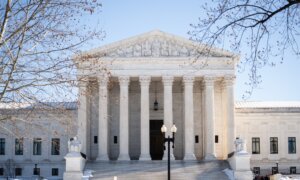
The state Supreme Court agreed with the Republican critics of the measure, ruling that the Democrat-majority General Assembly failed to follow constitutional procedures when advancing the measure.
The proposed map would likely have heavily favored Democrats, creating a projected 10-to-one advantage over Republicans in the state’s U.S. House delegation.
The decision bolsters Republicans’ national position ahead of the midterm elections, as the redistricting fight approaches its conclusion with the approaching 2026 midterm primaries.
Here is what to know.
Republican States That Have Redistricted
The national redistricting frenzy was kicked off in Texas after President Donald Trump urged Republicans to redraw the state’s congressional maps in the wake of his sweeping 14-point win in the state in 2024, citing racial gerrymandering following the 2020 census.
Texas Republicans ultimately passed a redistricting measure that is expected to expand their majority in the state Legislature by five seats.
Since then, several other states have also approved redistricting measures.
In Ohio, lawmakers approved a bipartisan deal that Republicans hope will see them gain up to two new seats. Some state General Assembly Democrats who backed the deal expressed optimism that their party could retain one or both of the seats under the new maps.
In North Carolina, Republicans passed a map that is expected to flip the seat currently held by Rep. Don Davis (D-N.C.).
Likewise, Missouri Republicans passed a measure that they hope will help the party pick up one more House seat. The state Supreme Court has upheld the map against some challenges, although it will continue to hear a few cases on the matter in May.
In total, Republicans could gain up to nine new seats from these districting changes.
Democratic States That Have Redistricted
Democrats have responded with successful redistricting efforts of their own in California, while the party gained a victory via a court ruling in Utah.
In California, voters in November 2025 approved a referendum to add five congressional districts that favor Democrats. Gov. Gavin Newsom sold the push as a short-term effort meant to respond to Republican-led changes in Texas.
The U.S. Supreme Court denied an appeal from California Republicans—who claimed that the map unlawfully favors Hispanics—to overturn the map. The high court said the map could be used in this year’s election.
Meanwhile, Democrats are also on track to gain a seat in Utah.
In November, a Utah state judge ordered that new House district boundaries be drawn to include Salt Lake City as a single district. Previously, the map split Salt Lake City into four separate districts, diluting the city’s Democrat-favoring voter base.
The court found that lawmakers had sidestepped voter-approved anti-gerrymandering rules when drawing the previous map. In February, both a federal court panel and the state Supreme Court rejected Republican challenges to the court-imposed districts.
In total, Democrats could pick up six seats from these changes.
What Is Next?
Before the state Supreme Court struck down Democrats’ Virginia redistricting push, Democrats briefly held the lead in the national redistricting fight with 10 seats.
Now, Democrats stand at roughly a three-seat disadvantage compared with Republicans, if all the districting changes pan out in the elections as expected.
With the primary season fast approaching, Democrats have few other options for redistricting before the midterms, as some of the most critical blue states have already ruled out or rejected changes to their maps after their previous redistricting actions.
Previously, several Democrats hinted at or pursued changes to their state maps.
Illinois Gov. JB Pritzker indicated that the state was musing on redrawing maps to further favor Democrats, but no push to that end has gained momentum.
In New York, Gov. Kathy Hochul had pushed for the state to redraw its congressional boundaries, but any such change has been blocked by the U.S. Supreme Court.
In March, the Supreme Court overturned a lower court order that had called on the state Legislature to redraw the boundaries for the 11th Congressional District seat of Rep. Nicole Malliotakis (R-N.Y.).
In Maryland, Gov. Wes Moore, a Democrat, pushed the state General Assembly to redistrict the state’s single Republican seat, but it failed to gain steam. A bill to that end stalled in the state Senate.
Florida, meanwhile, is pursuing a push to redistrict up to four congressional seats in favor of Republicans, a move that could bring the GOP’s advantage in the national fight up to seven seats.
Jackson Richman contributed to this report.