
WASHINGTON—A month before it expires, a major provision of the Foreign Intelligence Surveillance Act (FISA) could face roadblocks—or at least speed bumps—from Democrats and some Republicans.
Section 702 of the law targets intelligence from foreign nationals thought to be outside the United States. Yet, it also enables intelligence agencies to gather information from Americans who are in contact with those non-U.S. persons—and all without a warrant.
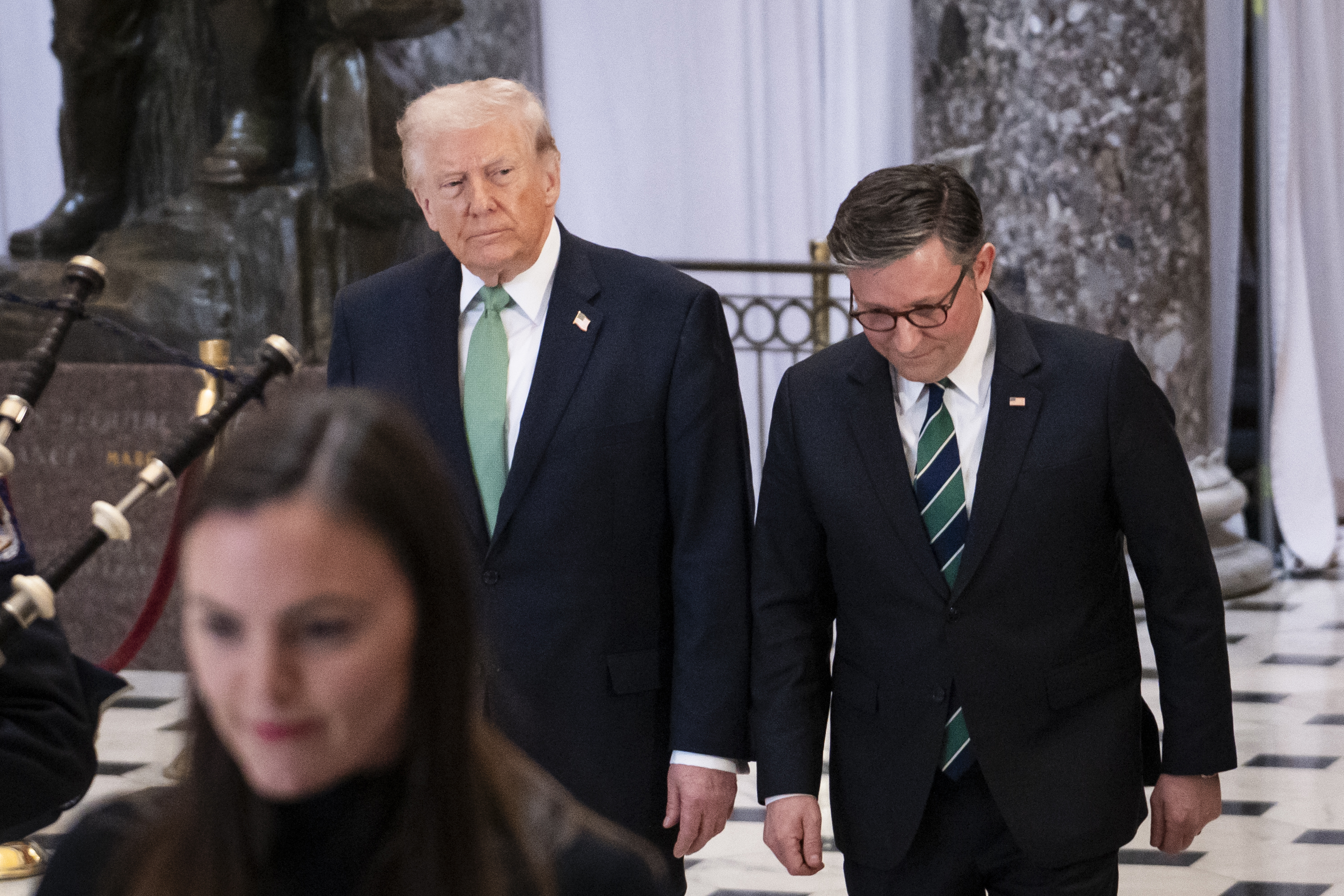
Despite recent reforms to FISA, key members of Congress remain concerned about it as House Speaker Mike Johnson (R-La.) and the Trump administration seek to steer its renewal through a divided Congress.
President Donald Trump, previously a critic of FISA, has backed a clean extension of Section 702, which was first enacted in 2008.
Johnson on March 17 said he intends to move a clean, 18-month extension along those lines through the House.
“We instituted 56 substantive reforms to FISA,” he said, referring to changes in 2024’s Reforming Intelligence and Securing America Act. “By every measure and review, those are working just as we planned. We’ve not had the abuses that were happening before those reforms.”
The House has scheduled a two-week break in late March and early April, leaving less than 10 days when the House is in session before Section 702 expires on April 20.
Trump administration officials, including CIA Director John Ratcliffe and FBI Director Kash Patel, briefed lawmakers on FISA on March 18.
Afterward, House Majority Leader Steve Scalise (R-La.) told reporters that renewal “has been a bipartisanly supported process over the years since its creation.”
House Judiciary Committee Chair Jim Jordan (R-Ohio)—like Trump, a past critic of FISA—has reversed course and backed its renewal.
Ahead of a March 18 briefing, he told reporters that the FBI has boosted compliance with Section 702’s querying procedures—guard rails to shield Americans from FISA wiretapping.
A review of FBI Section 702 compliance from the Department of Justice’s Office of the Inspector General identified more than 60,000 noncompliant queries in 2021 alone.
Following the 2024 reforms, almost 99 percent of queries reviewed by the Justice’s National Security Division complied with the agency’s querying standards.
“The president wants something short-term while we’re in this conflict,” Jordan said, referring to the Iran war.
Some other conservative and libertarian-leaning Republicans have objected to a clean extension.
Reps. Thomas Massie (R-Ky.) and Lauren Boebert (R-Colo.) signaled opposition on March 17 in posts on X.
That same day, Rep. Anna Paulina Luna (R-Fla.) endorsed reforms to the law in a conversation with reporters.
She has suggested it should be attached to the SAVE America Act, election integrity legislation that has been endorsed by Trump and is being debated in the Senate.
Rep. Andy Harris (R-Md.), who chairs the House Freedom Caucus, told reporters on March 18 that 18 months is too long.
“I hope there’s some room for negotiating a couple of smaller reforms into it to show good faith, that they know there are problems,” he said.
Noting Jordan’s support for the extension after FISA’s reforms, he added, “There are still concerns among constituents that Fourth Amendment rights of Americans are not adequately protected.”
Rep. Jim Himes (D-Conn.), ranking member of the House Intelligence Committee, told reporters on March 18 that the sudden expiration of Section 702 would make Americans “a lot less safe.”
He said attaching it to the SAVE America Act would kill it, saying that his colleagues were less confident in the surveillance tool under the Trump administration’s leadership.
“We’ve got a little bit of a Rubik’s cube to solve here,” he said.
During a March 19 press conference, House Minority Leader Hakeem Jeffries (D-N.Y.) said that “it’s clear that FISA reforms are necessary.”
“Every single Democrat will oppose the rule,” Jeffries said, referring to a procedural step Johnson could take to advance the extension that would come ahead of a final vote.
Himes said that “if the Republicans can pass a rule—big if—I think this passes with good, strong bipartisan support.”
Scalise on March 18 said that a decision on the rule has not been made.
Suspension of the rules, another option to pass the extension, would necessitate two-thirds support in the House. That, too, could be a tall order for Johnson, as it would require substantial support from Democrats.