
News Analysis
A new report from the Organization for Economic Co-operation and Development (OECD) is likely to intensify an already contentious debate in the West over China’s use of state subsidies.
At a time when U.S. and EU policymakers are increasingly focused on Chinese industrial overcapacity, government support programs, and supply-chain security, the report finds that nearly 60 percent of the global market-share gains achieved by Chinese firms over the past two decades can be attributed to state subsidies.
The OECD compared subsidy-driven market gains to the use of performance-enhancing drugs in sports, arguing that subsidies can give less productive competitors an unfair advantage.
Analysts say Beijing has relied on extensive state support to help Chinese firms capture global market share and strengthen China’s position in critical supply chains, a strategy they believe is intended to expand the country’s geopolitical influence.
They also warn that the model could hollow out manufacturing sectors abroad, provoke international resistance, and ultimately expose China itself to significant industrial and financial risks.
Chinese Subsidies Far Exceed Global Peers
The OECD currently consists of 38 member states, most of them advanced market economies. In Asia, only Japan and South Korea are members.
On June 1, the OECD released a report on industrial subsidies based on its Manufacturing Groups and Industrial Corporations database. The database contains subsidy estimates and financial information for 525 of the world’s largest manufacturing groups across 15 key industries from 2005 to 2024.
The industries include solar panels, semiconductors, steel, aluminum, shipbuilding, and automobile manufacturing—sectors that sit at the center of today’s global industrial competition and supply-chain realignment.
The report conservatively estimates that between 2005 and 2024, Chinese firms received government subsidies averaging three to eight times the level received by firms in OECD member countries. The figures also substantially exceeded subsidy levels received by companies in non-OECD economies such as Brazil, India, and Indonesia.
The study further found that among companies that expanded between 2005 and 2023, roughly 22 percent of their market-share growth could be linked to subsidies. For Chinese firms, however, that figure approached 60 percent.
Long-Standing Western Criticism
OECD Secretary-General Mathias Cormann said at the time of the report’s release: “Just like doping in sports, the risk is that subsidies help less productive players win unfairly at the expense of better, more innovative and more efficient ones.”
He said that while subsidies helped firms expand market share, they did not significantly improve productivity or profitability.
“Firms won market share not by being more efficient or more innovative but by being more heavily subsidized,” Cormann said.
On June 4, China’s Ministry of Commerce criticized the report, claiming its definitions were imprecise, its sample selection was biased, and its conclusions were one-sided.
However, Davy Jun Huang, a U.S.-based economist and former columnist for China’s state media CNTV, told The Epoch Times on June 5 that the findings carry considerable weight because they come from an independent international institution.
“The report effectively validates what the United States and Europe have been saying for the past decade—that concerns over overcapacity, dumping, market distortions, and destructive pricing practices are grounded in facts and data, not simply politics,” Huang said.
Competitiveness or State Support?
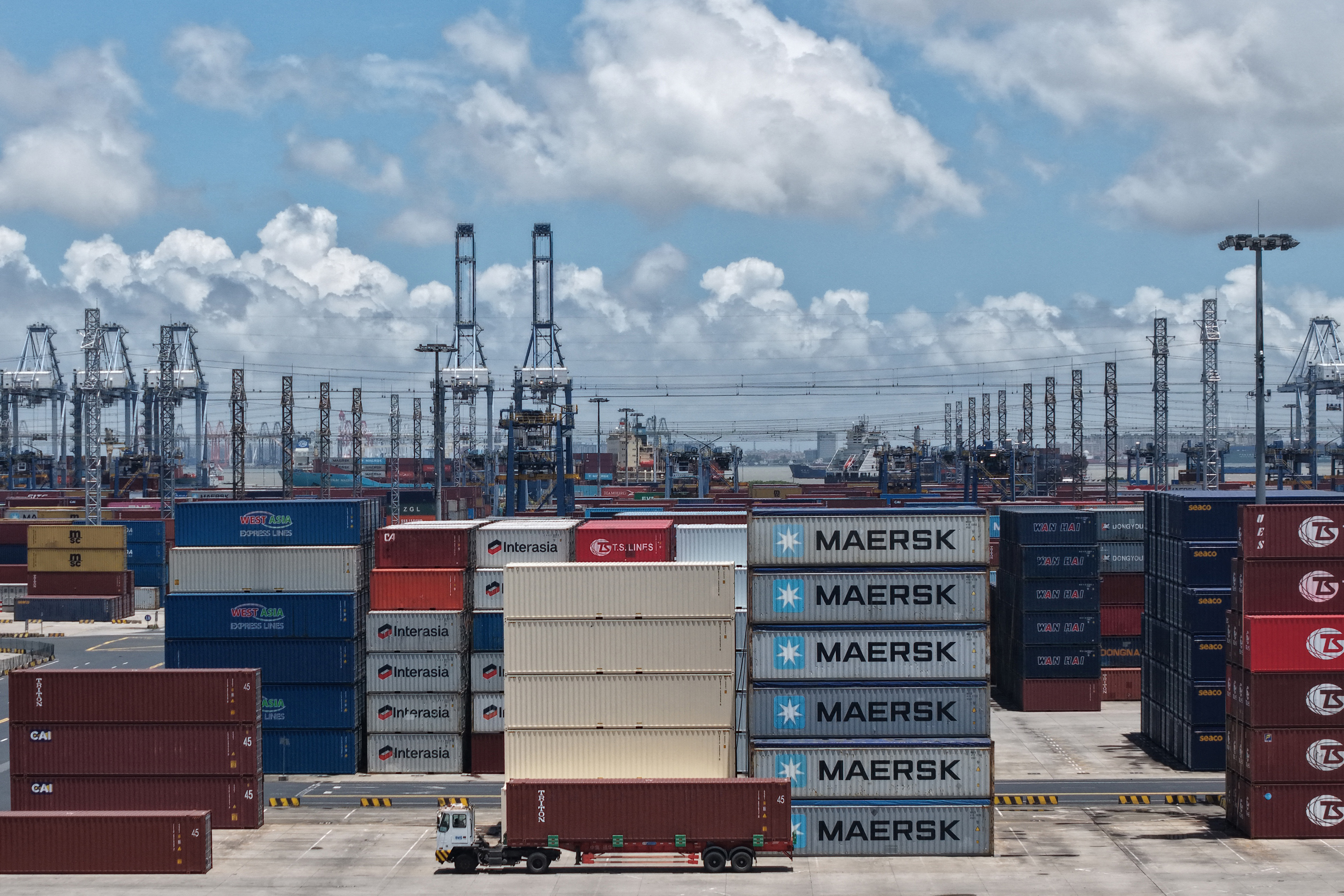
According to official Chinese figures, China is currently the world’s largest exporter of goods, with annual exports totaling 45.47 trillion yuan (about $6.7 trillion) and accounting for roughly 15 percent of global exports.
Electric vehicles, lithium batteries, solar products, and shipbuilding have emerged as major drivers of China’s export growth.
China’s export success raises a key question: Are Chinese companies winning because they are more competitive, or because they benefit from extensive state support?
Frank Tian Xie, a John M. Olin Palmetto Chair Professor in Business and Professor of Marketing at the University of South Carolina Aiken, said that competitiveness alone cannot explain this trend. He said many firms depend heavily on government support and might struggle to compete in global markets without it.
“Many firms are not truly profitable,” Xie said. “They survive because of subsidies and are effectively selling products overseas at or below cost.”
Similarly, Huang stated that Chinese companies have advantages in terms of scale and price, but they lack corresponding advantages in production efficiency and profitability.
Beijing’s Push for Greater Influence Over Global Supply Chains
Why, then, does the Chinese Communist Party (CCP) continue to subsidize enterprises on such a massive scale?
Xie said the subsidies appear to serve several objectives, including maintaining employment, absorbing excess industrial capacity, and generating foreign-exchange earnings through exports.
“With substantial foreign exchange reserves, the CCP can invest overseas or engage in other activities, such as wooing or bribing Western government officials, exporting communist ideology, or allowing CCP elites to line their own pockets,” he said.
According to Xie, the long-term goal is to use low-priced exports to gain market share abroad and, once a dominant position has been secured, regain pricing power.
Huang expressed a similar view, describing Beijing’s approach as a form of “asymmetric competition” designed to circumvent normal market forces.
“The primary objective is to eliminate competitors,” Huang said, explaining that Chinese firms are encouraged to use artificially low prices to erode the profit margins of foreign rivals, even if it means incurring short-term losses.
Massive Money Printing for Subsidies Carries Significant Risks
According to Huang, government support for Chinese companies extends far beyond direct subsidies. He said it also includes fiscal injections, free land allocations, and extensive access to financing through the state-controlled banking system.
“In essence, these subsidies are funded by the contributions of the entire population,” Huang said.
He further noted that public resources that could otherwise be directed toward healthcare, education, elderly care, and other social needs have instead been funneled into industrial support programs.
Xie noted that governments at multiple levels in China are running large fiscal deficits. He believes that authorities have relied on monetary expansion to sustain export subsidies while acquiring foreign currency earned by exporters and managing exchange rates to offset pressure on the yuan.
“The consequences of money creation—higher inflation, yuan depreciation, and a decline in purchasing power—the ultimate burden falls on Chinese taxpayers, the entire financial system, and the general public,” Xie said.
Huang said the model is unlikely to be sustainable indefinitely, warning that diverting resources toward global industrial competition could eventually produce systemic financial debt problems and prolonged weakness in domestic consumption.
“Once these companies lose their subsidies, the market economy will teach them a harsh lesson,” Huang said. “Many of them could face bankruptcy overnight.”
Xie also noted that the United States and Europe have already begun restricting certain Chinese exports. If more countries adopt similar measures, he said, many export-oriented Chinese firms could struggle to survive even with government support.
“These companies would go bankrupt,” Xie said. “That would mark the beginning of the CCP’s trade collapses, and the Chinese economy will face massive trouble.”
CCP’s Pursuit of Supply-Chain Dominance Could Create Global Instability
Xie believes there is also a strategic dimension behind Beijing’s efforts to expand global market share through subsidies.
While promoting an export-driven economy, he said, Chinese authorities have also sought to build complete industrial ecosystems capable of dominating entire supply chains.
“It is attempting to gain control over global supply chains and industrial chains,” Xie said. “The goal is for China to become less dependent on other countries while making other countries more dependent on China.”
According to Xie, such dependence could provide Beijing with greater geopolitical leverage and increased pricing power throughout key industries. He noted instances during the COVID-19 pandemic as examples of how supply-chain dependencies can be used as a tool of pressure.
Huang echoed that concern, saying that the CCP’s massive subsidy model aims to secure pricing power in strategically important industries.
“The goal is to reshape geopolitical dominance, ultimately changing the world, rewriting global rules, and, finally, controlling the world,” he said.
Xie warned that if Beijing’s strategy succeeds, the consequences for other countries could be significant. He said large-scale subsidies have effectively shifted some of China’s employment pressures abroad, contributed to capital outflows from other economies, and increased dependence on Chinese production.
“For these reasons, this could become a source of future global instability—political, economic, and military,” Xie said. “That is the harm the CCP could bring to the international community.”
Huang noted that Beijing is effectively mobilizing the resources of the entire state to compete against private-sector firms in other countries.
This unfair practice, he says, can lead to industrial contraction, factory shutdowns, job losses, fractured social fabrics, and deindustrialization abroad. Ultimately, this compels countries to erect trade barriers, which sparks prolonged trade wars.
Huang also said that although some observers described the U.S.–China trade war as having been initiated by President Donald Trump, the conflict was fundamentally triggered by the CCP’s failure to adhere to standard trade norms.
Cheng Wen and Yi Ru contributed to this report.