FALLON, Nev.—Cattle ranchers who are losing grazing permits to a massive military expansion near Naval Air Station Fallon for “Top Gun” training and bombing ranges say they’re being shortchanged on compensation offers—a claim the U.S. Navy denies.
The expansion was approved by Congress in late 2022. The law requires the Navy to compensate federal grazing permit holders within the expansion area.
While the Navy promised fair compensation to ranching families and native American tribes within the expansion area, ranchers say the offer falls short of federal guidelines.
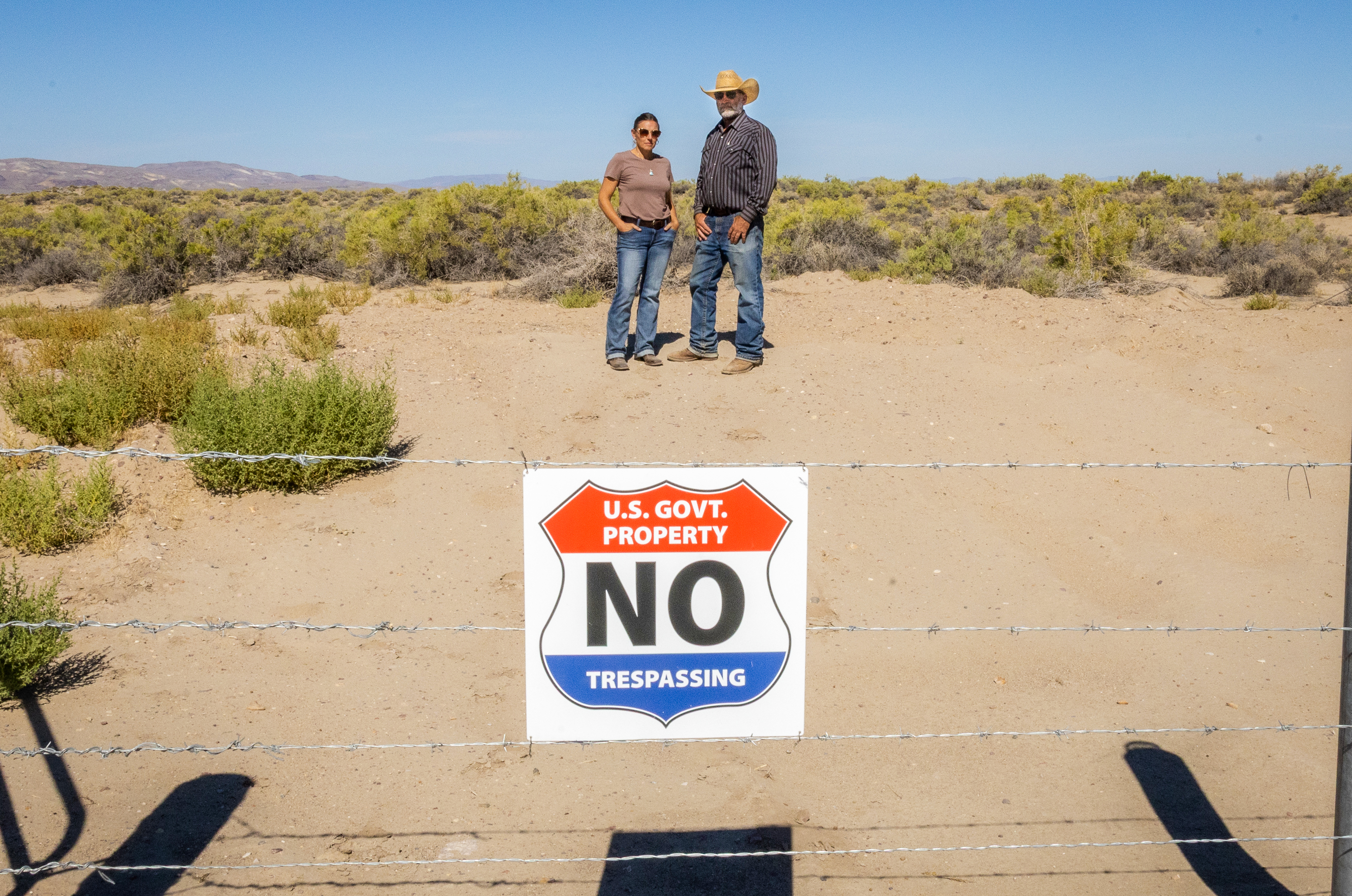
Justin and Adrienne Snow, who run a cattle ranch within sight of Naval Air Station Fallon, are among the first two families to receive a compensation offer from the Navy.
The Snows will lose about half of their 78,000-acre winter grazing allotment, including all their water wells, to the expansion. The way the Navy split the grazing lands will make running the ranch impractical and unfeasible, Adrienne, 48, told The Epoch Times.
“They low-balled us,” Snow said.
The expansion affects nine ranching families.
Ranchers are required to have deeded property in the vicinity of a grazing allotment. The Snows own 225 acres of private land and have built their livelihoods around the allotment, the entrance to which is about five miles from their ranch.
“They have fenced us off because they are taking the half closest to the ranch,” she said. “The half they’re taking is where all the [water] wells are. There are no wells on the other side.”
The remaining acres, with vast dry areas and salt flats, produce less forage and are an hour-and-a-half drive away.
“For us to get to the other side to haul water to our cattle, instead of a five-to-10-mile drive there and back, we’re now looking at three hours for a round trip. When you factor in mileage and fuel, that’s a significant cost increase,” she said.
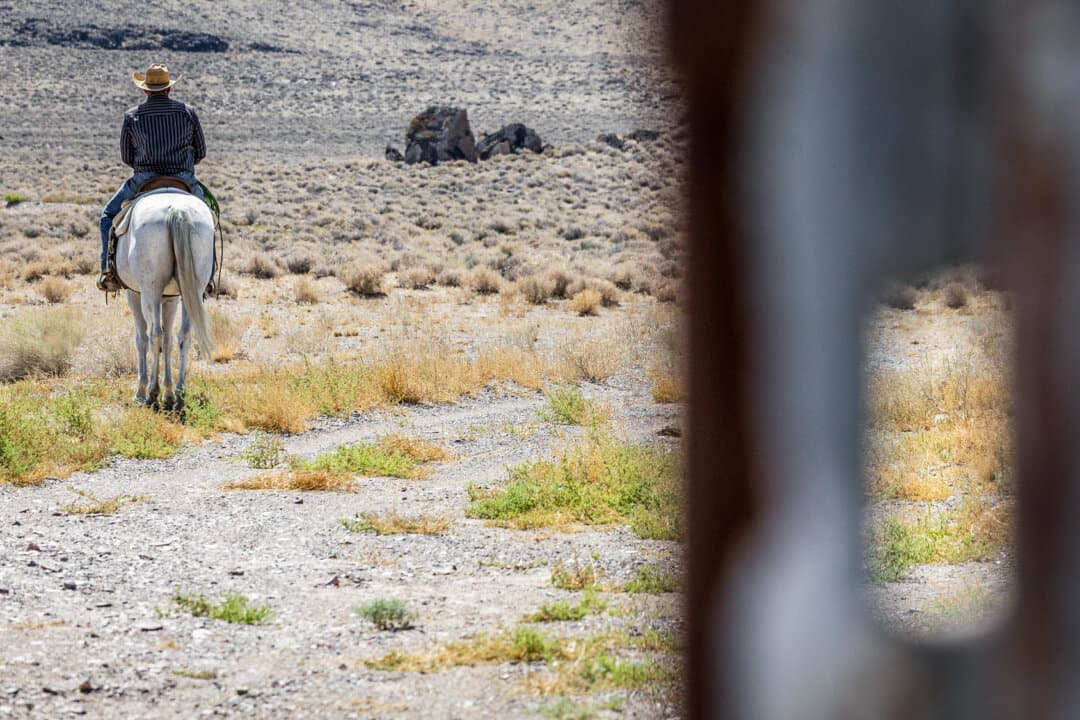
Rancher Justin Snow rides the land outside of Fallon, Nev., on Aug. 26, 2026. (John Fredricks/The Epoch Times)
“We are calling it a total loss, and we want the Navy to recognize it as such.”
Justin, 47, told Fallon Range Training Complex (FRTC) officials at a public meeting in March that the offer amounts to a devastating financial loss for his family.
“If they would make us whole, we could continue ranching. It’s what we do,” he told The Epoch Times at the ranch in late August.
But so far, the Navy is sticking to its offer for only the acres it wants.
The Navy’s Offer
The Navy has valued half of the Snows’ grazing allotment at about $14,800 a year for 100 years, arriving at a lump sum offer of $1.48 million before taxes, but Adrienne says compensation should be much higher.
The Taylor Grazing Act requires the Navy to pay grazing permit holders when their land is withdrawn for national defense, in “such amounts as the head of the department or agency so using the lands shall determine to be fair and reasonable for the losses suffered.”
The National Defense Authorization Act for Fiscal Year 2023 obligates the Navy to make “full and complete payments to Federal grazing permit holders for all losses suffered by the permit holders” when grazing land is withdrawn for national defense.
Neither of the acts specifies how the value should be calculated.
The Snows arrived at a much greater value by using the USDA’s per-acre value for determining crop insurance payouts, which is $8.30 per acre insured at 150 percent. That value is $12.45 per acre, or about $971,000 a year or $97.1 million over 100 years, Adrienne said. If they keep roughly half of the 78,000-acre allotment, the compensation should be about $48.5 million before discounting, Adrienne said.
The Navy offered the Snows a lump sum of $1.48 million for all losses, including the grazing permit itself, a maximum of $435,000 for forage losses, full and complete business losses caused by the NDAA withdrawal of public lands, and replacement costs for improvements on the allotment, she said.
For two years, the Snows have asked government agencies and the Navy to show how the $1.48 million offer was calculated.
“It’s crickets every time we reach out to every agency,” she said. “Who is doing their math?”
A spokesman at Naval Air Station Fallon told The Epoch Times in an email that the Navy has developed, “consistent with the law,” a four-step valuation process for grazing payment losses, including permit value loss, forage value related loss, improvement value loss, and business value loss.
The Navy’s appraisal and compensation methods “adequately account for all losses incurred by the withdrawal legislation,” and its valuation process incorporates a 100-year time frame for projecting future losses, he said.
When further pressed to show its math and how it calculated $1.48 million as fair compensation, the Navy shared the factors that go into the calculation but didn’t provide any figures.
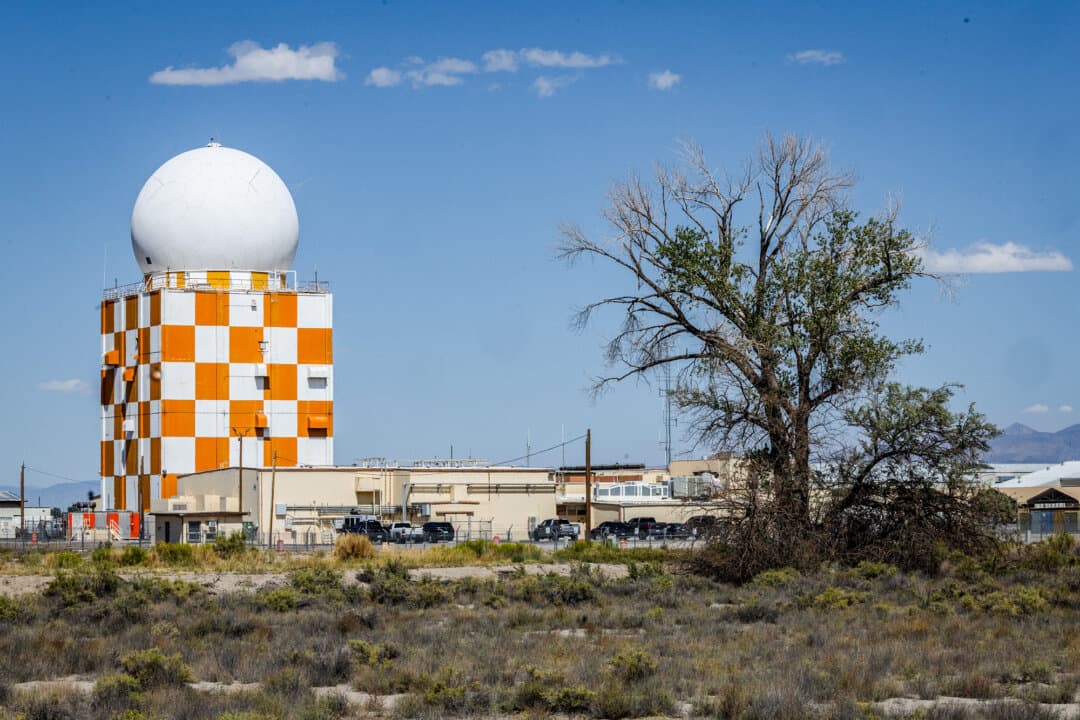
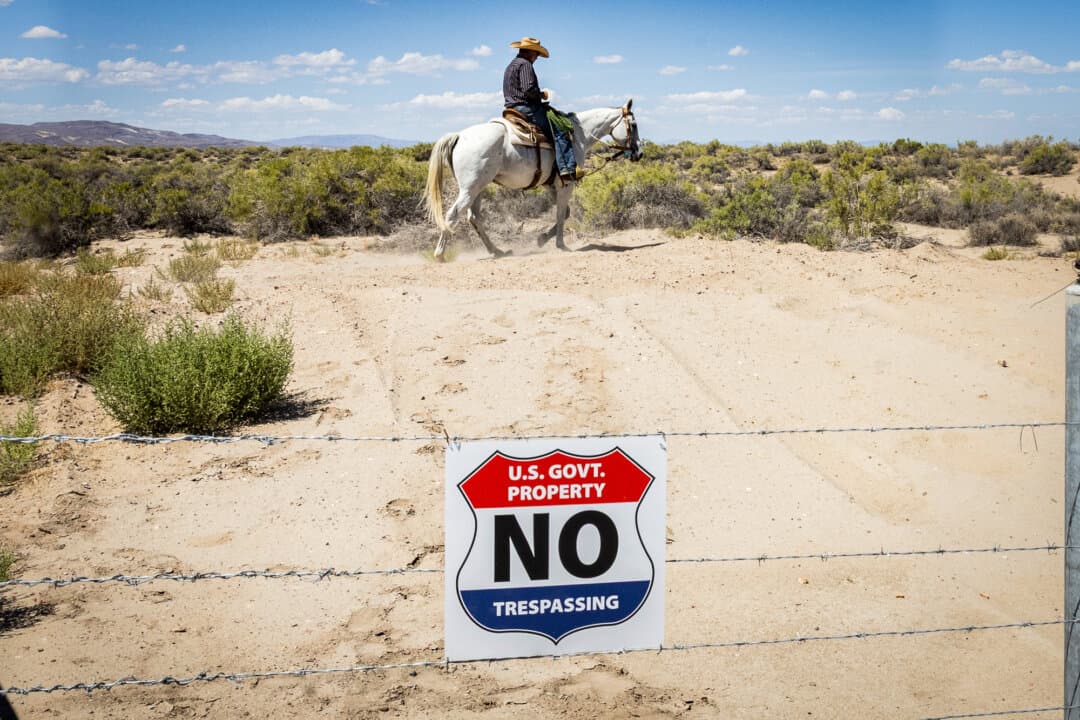
(Top) U.S. Naval Air Station Fallon is visible behind farmland in Fallon, Nev., on Aug. 26, 2026. (Bottom) Rancher Justin Snow rides one of his horses in Fallon, Nev., on Aug. 26, 2026. (John Fredricks/The Epoch Times)
Those factors include historical cattle prices, regional ranch sales, and “industry-standard data” to calculate “the present value of grazing permit losses over a 100-year period,” the Navy spokesman told The Epoch Times in an email.
The spokesman said the formula the Snows used to calculate their payout figure is used by USDA to establish the production value of grazing land and hayland forage. It determines the amount of insurance protection available under the Pasture, Rangeland, and Forage Insurance program.
That formula “represents the insured value per acre used to calculate potential rancher payouts during low rainfall, not the actual cost of forage, nor direct annual economic losses tied to the grazing permit modifications,” he wrote.
“We recognize that land in Nevada is more than acreage on a map—it represents generations of hard work, family legacy, and a deep-rooted way of life,” the spokesman said, acknowledging the disruption the expansion has had on local ranching families. “We are committed to treating every affected landholder with fairness, dignity, and respect throughout the transition.”
The Snows made a timely counteroffer to the Navy, but were told several months later at a June meeting of the FRTC’s Intergovernmental Executive Committee that it had been rejected and that the Navy was standing by its initial offer, Adrienne said.
At a Senate Armed Services Committee hearing in May 2026, U.S. Sen. Jacky Rosen (D-Nev.) urged Acting U.S. Navy Secretary Hung Cao to fully compensate ranchers for lifetime losses.
Rosen indicated the offers to ranchers were too low, saying she was “disappointed” with significant discrepancies in the valuation of forage.

Sen. Jacky Rosen (D-Nev.) speaks to reporters at the U.S. Capitol on March 10, 2026. At a Senate Armed Services Committee hearing in May 2026, Rosen urged acting U.S. Navy Secretary Hung Cao to fully compensate Nevada ranchers for lifetime losses. (Anna Moneymaker/Getty Images)
The compensation offered “completely is missing the mark,” Rosen told the committee. “It’s not a buyout.”
The ranchers’ losses should be treated as a “complete loss,” she said.
Rosen also questioned then-Navy Secretary John Phelan in a 2025 committee hearing, saying the Navy’s offers to ranchers were “well below expectations and estimated value.”
Mark Faust, CEO of growth advisory firm Echelon Management, has worked with more than 400 companies, including 70 agricultural-related businesses. He told The Epoch Times that before they lost the grazing lands, the Snows were on track to earn an estimated $30 million in net profits over the next 20 years.
The Navy’s $1.48 million offer “is laughable,” he said.
“That’s what they’re losing this year.
“These guys risked so much to be where they are, and to be insulted like this is an abomination.
“There is a political disrespect for agriculture in general, for entrepreneurs specifically. We’ve seen that proven out in the auto dealership industry, and we’re now seeing it with cattlemen and ranchers who have for generations stewarded this land to feed America.”
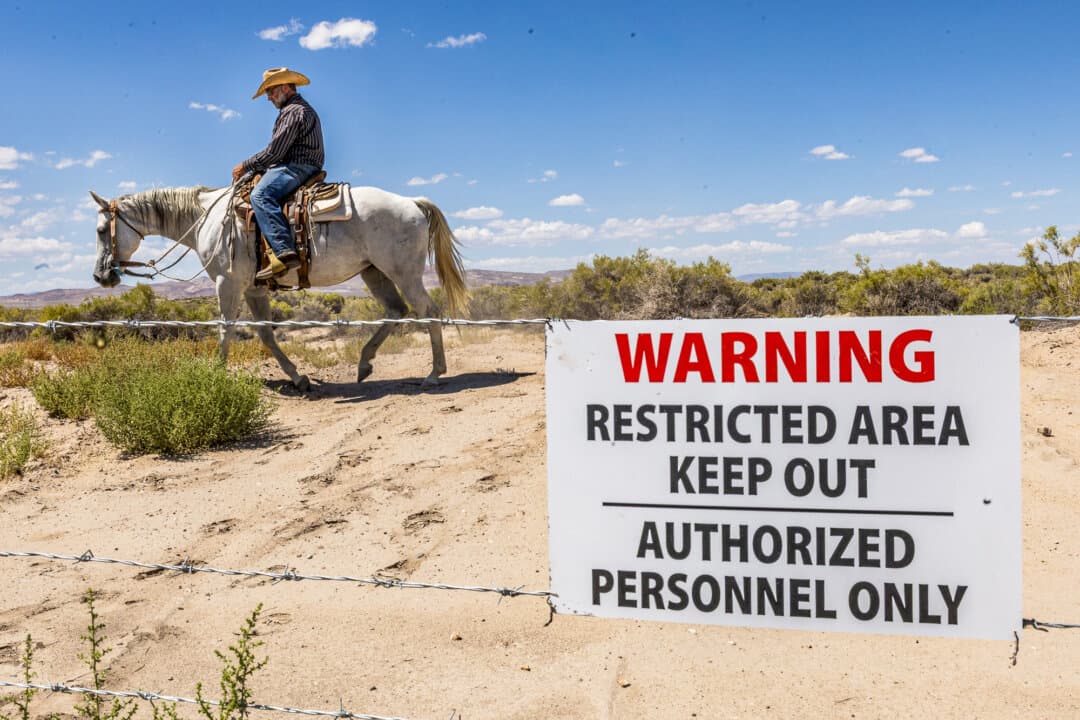
Rancher Justin Snow rides one of his horses in Fallon, Nev., on Aug. 26, 2026. (John Fredricks/The Epoch Times)
While the Navy’s job is to beef up national security, Faust says food supply is part of that.
“Food security is national security,” he said.
Generations of ranchers have invested millions of dollars in equipment and infrastructure on their property to improve ranching operations, which they plan on passing along to the next generation, Faust said.
Offering one year’s profit is more than a mistake and is “absolute blindness” to the laws and guidelines for fair compensation, he said.
Ranchers like the Snows struggle for years before they see a penny in profit, and the compensation the Navy has offered doesn’t account for those years, Faust said.
Most ranchers aren’t living lavish lifestyles, he said.
“They actually live very conservatively,” he said.
“They’re just not ostentatious people. They put it all back in the operation.
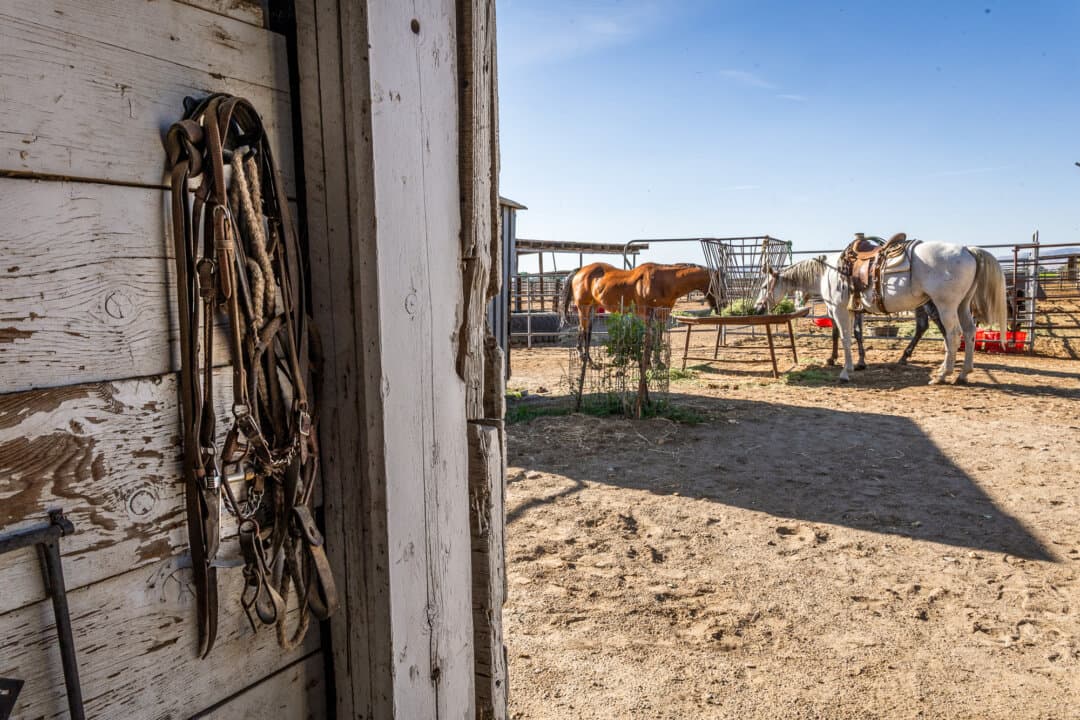
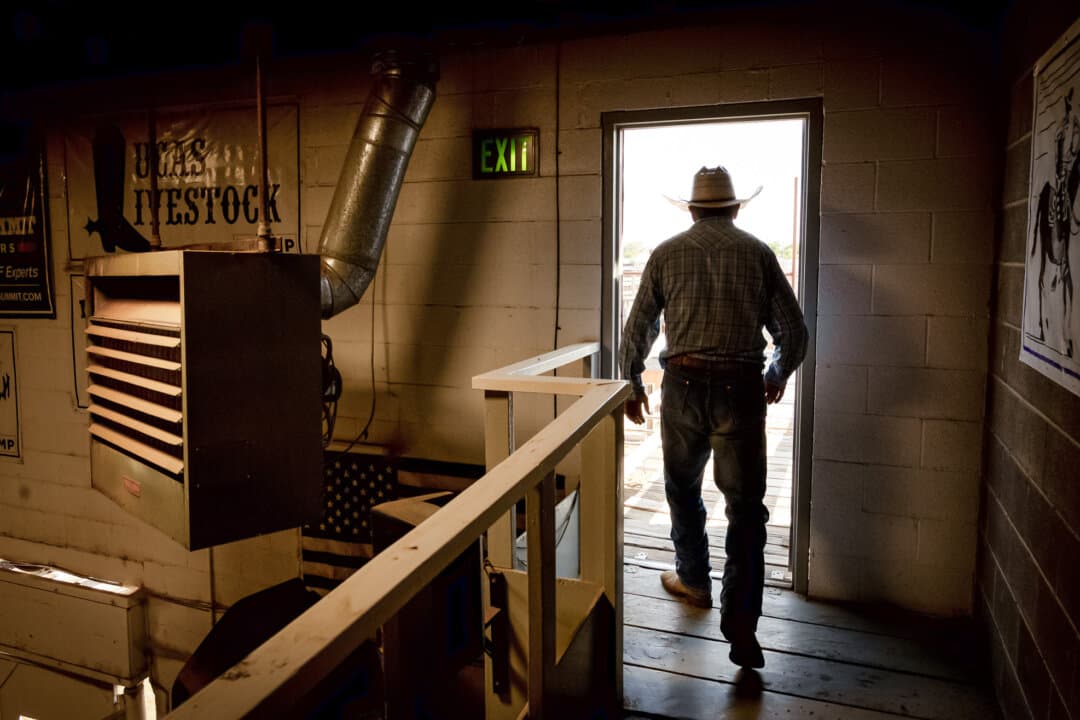
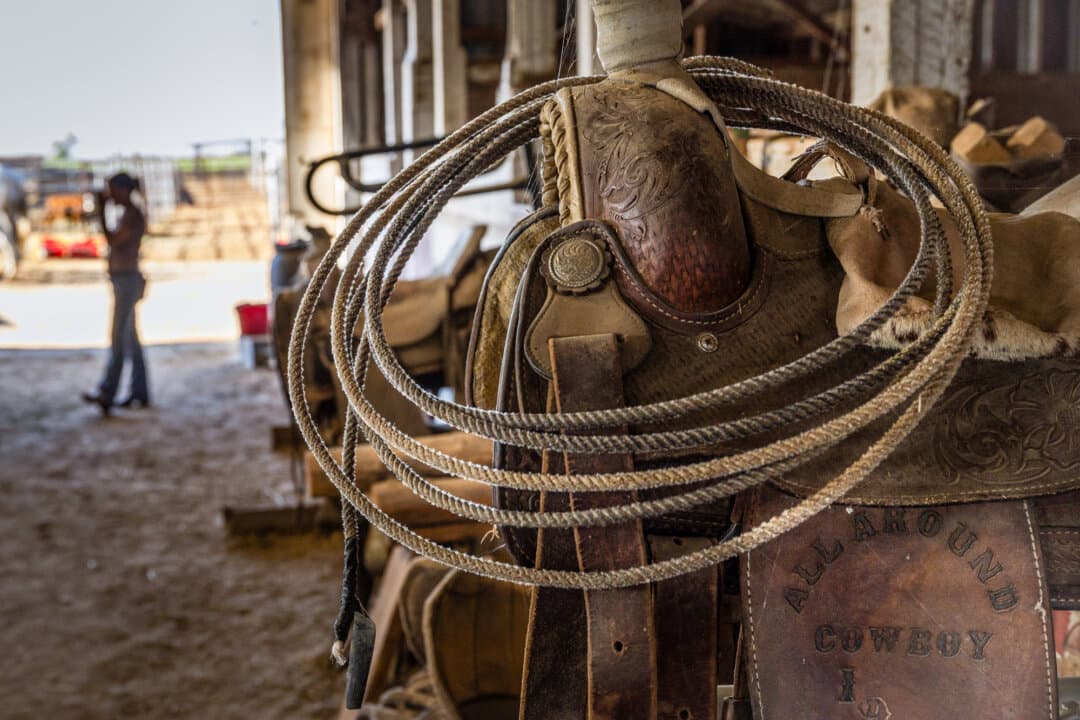
(Top) Horses on Justin and Adrienne Snow's ranch outside of Fallon, Nev., on Aug. 26, 2026. (Bottom Left) Rancher Jack Payne heads out to view cattle. (Bottom Right) Rope and saddle wait for a rider at the ranch outside of Fallon, Nev., on Aug. 26, 2026. (John Fredricks/The Epoch Times)
“These guys take care of the soil, the land and the water like it’s a gift from God, even though they’ve paid for it in blood, sweat, tears, and cash.”
Adrienne said the loss has taken an emotional toll on her family after working hard to make the ranch profitable just “to have the Navy come in, take it all away and tell us that we are worth less.”
When their sons were young, the couple struggled to save money to buy the ranch and grazing permit from Justin’s father.
Justin stayed in a camp trailer on a remote ranch and continued to help his dad on the family ranch, while Adrienne stayed with the boys in a tiny house with a small wood cook stove for heat in the winter, she said.
“I would get up every two hours to feed the wood stove to keep the house warm for me and the kids,” she said. “We lived like pioneers.”
The ‘Welfare Ranching’ Myth
Adrienne rejected the term “welfare ranching,” which critics like to use, as a myth. Most people, she said, only see the head tax on cattle or grazing fees ranchers pay to the BLM. They aren’t aware that ranchers also have to purchase grazing permits, which she compared to paying both a home mortgage and property taxes.
The original permits for grazing on public lands were issued in the 1930s, and later became sellable grazing rights, much like homesteading, she said.
“We purchased our permit from Justin’s father,” she said. “We had to take out a loan for that.”
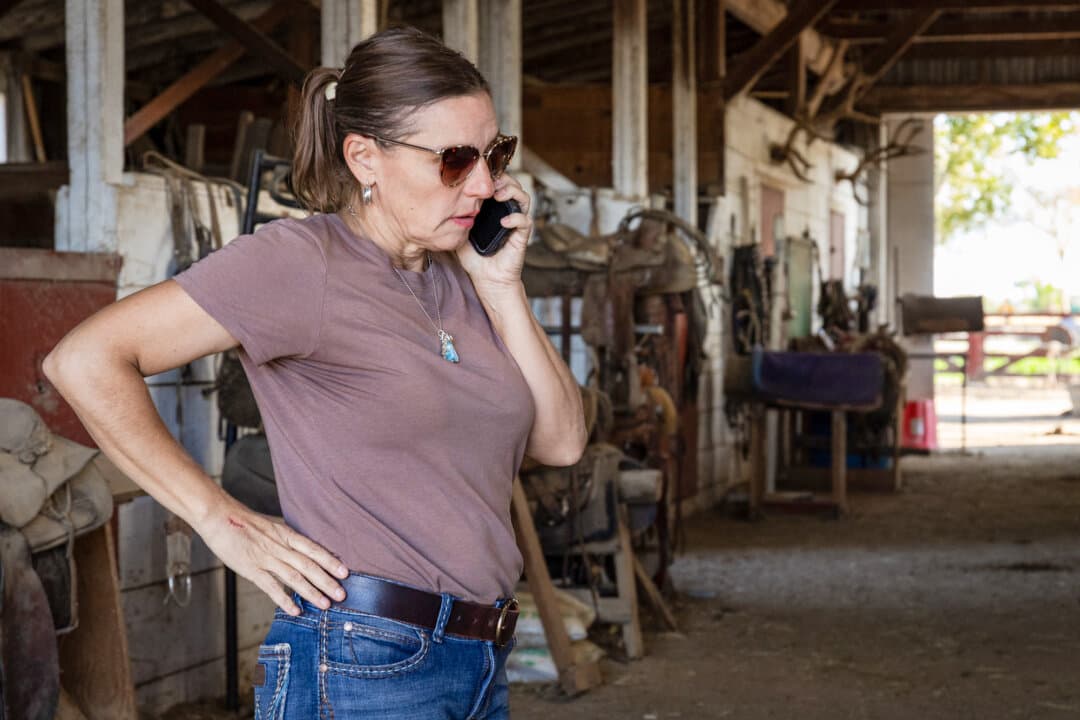
Rancher Adrienne Snow works on her ranch in Fallon, Nev., on Aug. 26, 2026. (John Fredricks/The Epoch Times)
“We mortgage these grazing permits.” Justin said.
“They’re not welfare ranches. We mortgage these ranches just like anybody mortgages a house. We pay taxes. If I was to die tomorrow, my kids will pay an inheritance tax on this.
“There are two different views on this. The IRS says that we own it because they tax us on it, but then the BLM says you don’t own it, that it’s a lease. So, which is it?”
Little Choice
If the Snows are forced to buy another ranch and relocate, it would be difficult to purchase a grazing permit from another ranching family, Justin said.
“The only time one comes available is if a rancher dies and the kids don’t want it,” he said.
Permits, usually found through word-of-mouth, are bought up quickly before they ever reach the open market, he said.
The Snows use their grazing allotment to feed 235 head of cattle five months a year, from Nov. 1 to March 31, which means they don’t have to pay for hay in the winter.
“It’s a winter permit. That’s why it’s so valuable,” he said.
The Snows also paid $1.35 per “Animal-Unit-Month”—the amount of dry forage to support a cow and its unweaned calf for one month—to the BLM when cattle were on the range.
But when they lost the land, they had little choice but to lease land 90 miles away in the Sierra Nevada foothills, where they paid $30 a head a month—about $7,050 a month for 235 cattle to graze.
Last year, they sent cattle to California, where it cost $50 a head, or $11,750 per month, for grazing, so they sold off nearly two-thirds of the herd.
“We primarily ran 800 head of mother cows, and this last spring, we had to sell 500 head,” he said.
“We struggled along and got through the winter, but before summer came, we couldn’t afford it. We had to sell them.”
“At the end of the day, I’m making a payment on a ranch that I can’t use because the United States Navy has fenced us off.”
Two native American tribes affected by the expansion are being compensated for the loss of culture and heritage, and ranchers should be treated in a similar manner, he said.
The fiscal year 2023 military spending bill allocated $20 million for the Walker River Paiute Tribe to resolve “contamination, impairment, and loss of use of approximately 6,000 acres” of tribal land as part of the Fallon air base expansion. It allocated another $20 million for the construction and endowment of a Fallon Paiute Shoshone Tribe cultural center.
“I’m a fifth-generation rancher,” Snow said. “This is my heritage and my culture, so we should be viewed with the same respect.”
Snow said many Fallon-area residents are suspicious of the expansion and wonder why the Navy needs so much land.
“Everybody feels like there’s something that we don’t know,” he said.
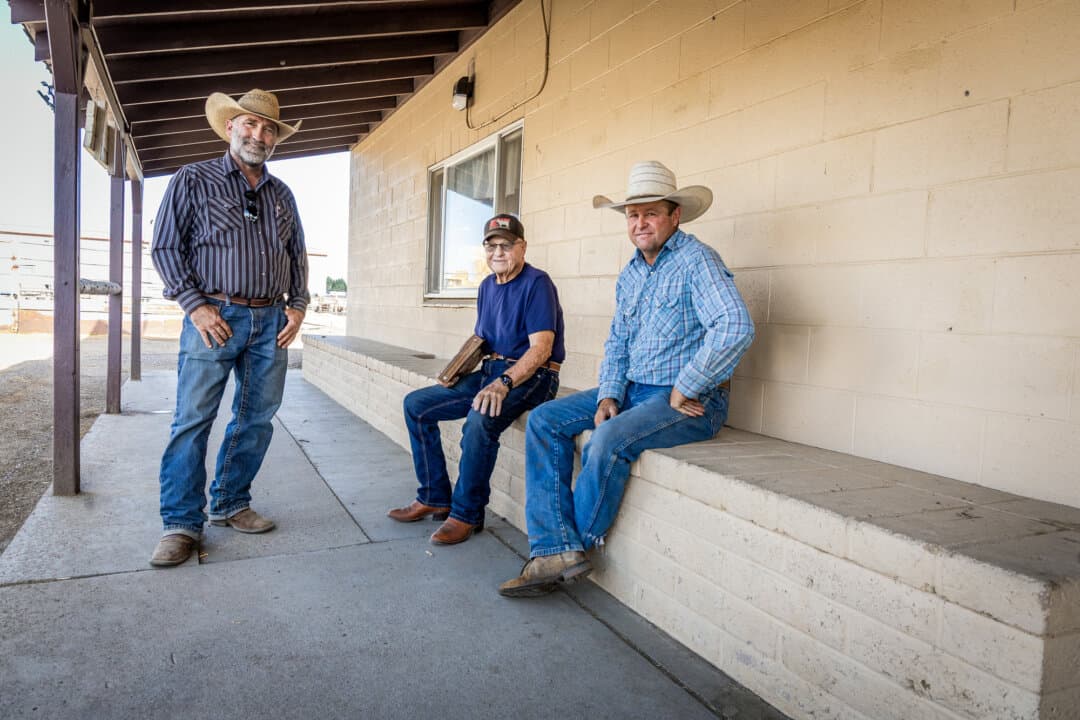
Justin Snow (L) talks with fellow ranchers in Fallon, Nev., on Aug. 26, 2026. (John Fredricks/The Epoch Times)
The Navy’s Expansion
The Navy’s 791,000-acre Fallon Range Training Complex expansion and modernization plan mostly affects federally managed public lands overseen by the Bureau of Land Management, including vast areas of winter grazing allotments for livestock, but also tribal and privately owned lands.
The expansion, approved by Congress in the 2023 National Defense Authorization Act, spans five Nevada counties—Churchill, Lyon, Mineral, Nye, and Pershing.
The expansion is needed to train aircrews and special operations forces with modern weapons systems in more realistic conditions and ensure safe buffer zones around neighboring communities, the Navy says.
A spokesman at Naval Air Station Fallon told The Epoch Times in an email that the modernization “is an essential national security requirement” and a crucial project “that will provide our warfighters the training ranges they need to adequately prepare for emerging threats, changes in the warfare environment, and evolving technological advancements, including the introduction of new combat capabilities into the fleet, such as the F-35.”
The training environment absolutely “cannot be replicated elsewhere” and is “critical for defending and securing the United States and its interests abroad,” he said.
Plans for the expansion of training and bombing ranges near the Fallon air station were proposed in August 2016, the last year of the Obama administration, and an environmental review process was initiated. A Record of Decision was signed in March 2020, during the Trump administration.
Naval Air Station Fallon was built in 1942, after the U.S. entered World War II, and in 1996, the Navy’s Strike Fighter Tactics Instructor program, known as “Top Gun,” was moved to Fallon from the Naval air station in Miramar, California.
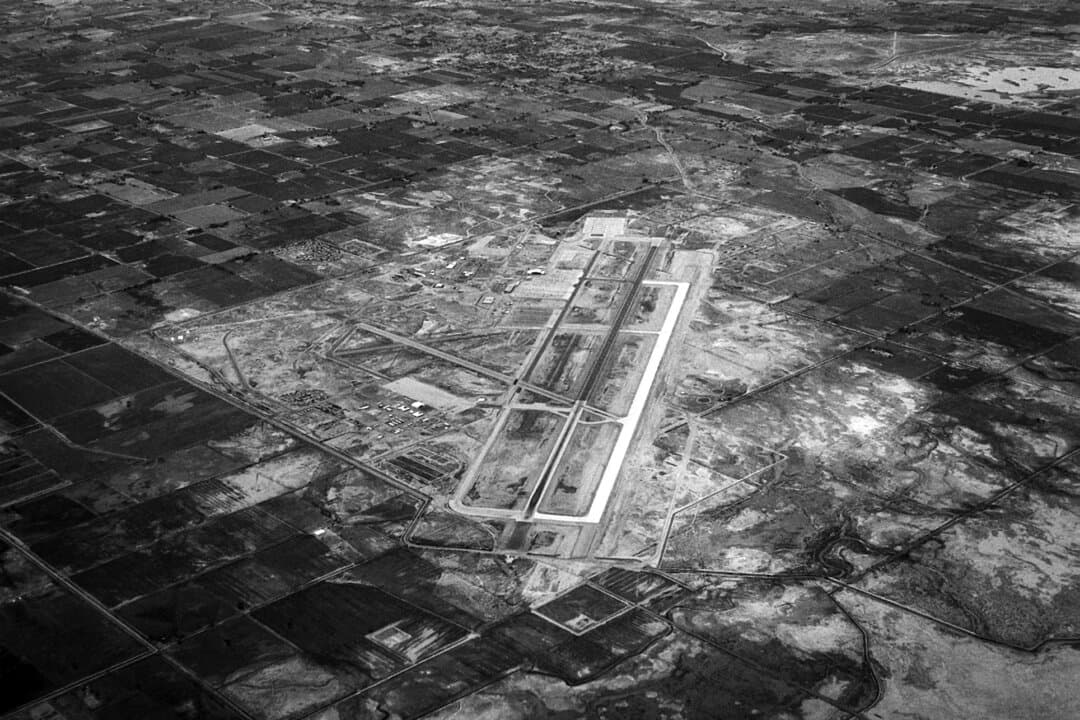
Naval Air Station Fallon in Fallon, Nev., in this 1988 photo. (Bob Lawson, U.S. Navy)
In response to The Epoch Times’ inquiries, the USDA offered no explanation of the valuation process used by the Navy to arrive at its $1.48 million offer. A USDA spokesman said only that USDA officials have been meeting with Department of War officials and ranchers to discuss the issue.
“We will not comment further while this matter is being addressed,” a USDA spokesman told The Epoch Times in an email on Oct. 27.
The Bureau of Land Management did not respond to inquiries.
Economic Effects
Jack Payne, a rancher and owner of Nevada Livestock Marketing, warned that the impact of so many ranchers “being kicked off their land” will cripple the local economy.
“They’re losing their ranches,” he told The Epoch Times. “They market their livestock here at our auction, so this expansion is not only going to cost us our ranch … it’s also going to cost our business.”
The revenue from ranching trickles down to “every business in this town” from hair salons to lumber yards, tire stores, grocery stores, restaurants, feed stores, and insurance companies, he said.
“They say that that money turns over in your local community five to seven times,” Payne said.
That means that every $2,000 steer he sells at auction has at least a $10,000 effect on the economy, he said.
“When I buy hay from our local farmers, they take that money, and they go buy equipment at the equipment dealership. They buy baling twine, they buy diesel. That’s how it works. And so, when you take ranching away, you just dry these communities up, and then those businesses close down,” Payne said.
“And then that affects your schools and churches and so on. It’s not rocket science. Just keep these ranchers going. We’re the ones feeding this country, and we’re also the ones feeding our local economies.”
Payne is losing deeded property and likely 100,000 acres of grazing land, which he says will deeply hurt his ranching operations.
The Navy, he said, has not reached out to him to discuss compensation.
Winter pastures where cattle can graze without the expense of buying hay or putting in expensive irrigation systems to grow, haul, and store it are rare and “irreplaceable,” he said.
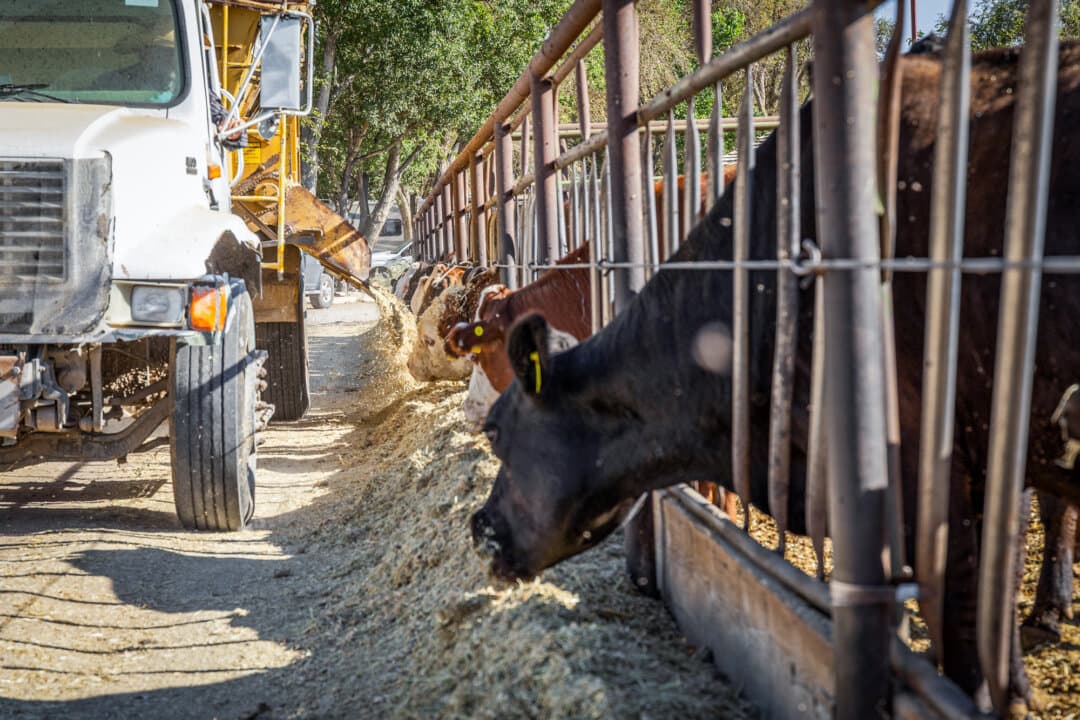
Cattle feed in Fallon, Nev., on Aug. 26, 2026. (John Fredricks/The Epoch Times)
The Navy is also taking 439 acres of private property in Dixie Valley that serves as a headquarters for part of his ranching operations and is the last piece of privately owned property in the area, Payne said.
He said the access road has been destroyed.
“It’s really hard to get trucks in and out of there,” he said. “Neighbors have had horse trailers come apart, and horses fall through the floor.”
The loss means there won’t be any land left to round up cattle for shipping in the spring, Payne said.
“We’ve got to make sure every mama has its baby and make everything straight,” he said.
“We'll have nowhere to camp, nowhere to keep cattle, nowhere to gather.
“It’s not only the value of the land and the water on it … but it’s also just an integral part of our operation.
“So, as they take that from us, it’s really going to put us in a hard spot.”