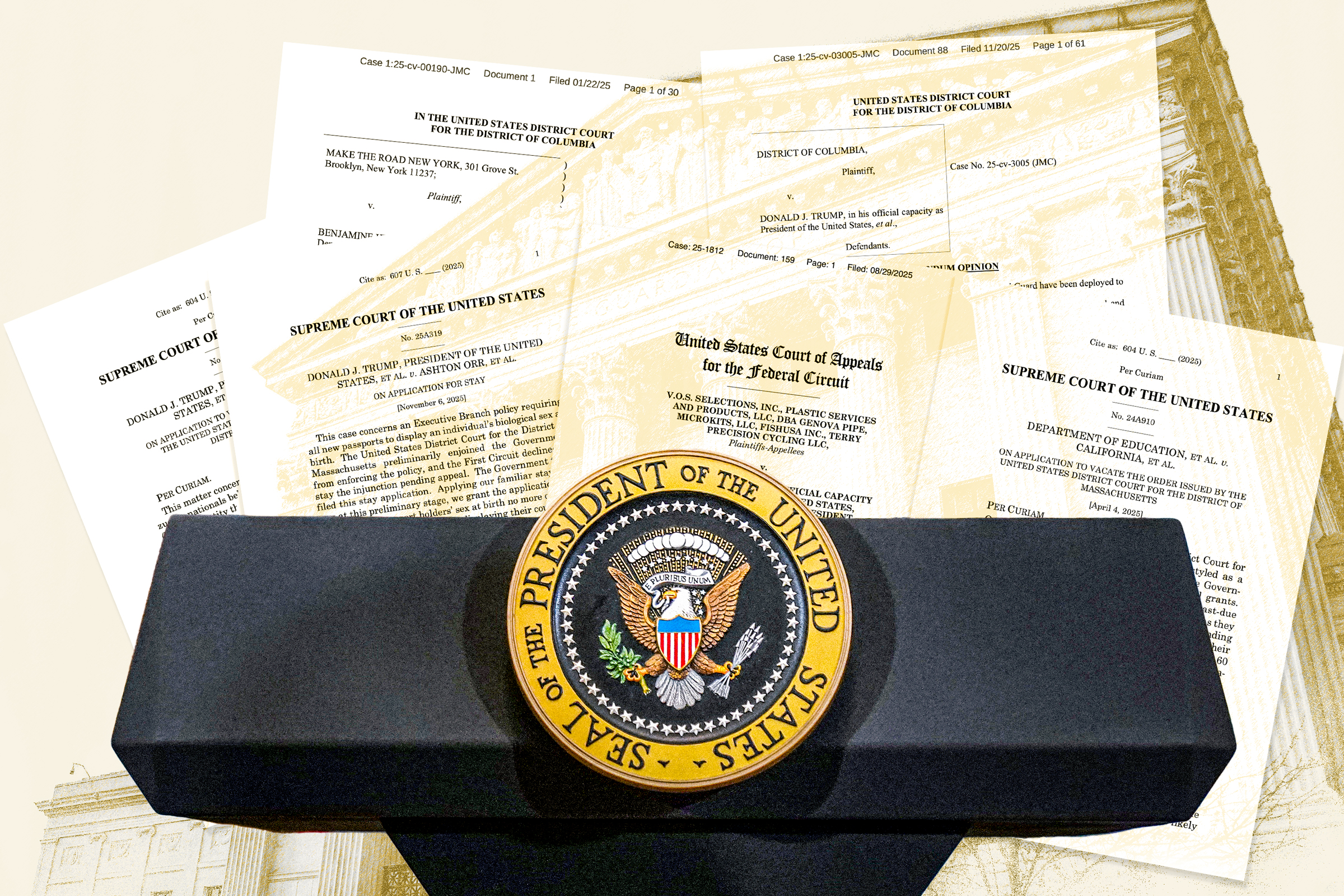


A flood of litigation continues to hamper President Donald Trump’s agenda, with hundreds of lawsuits challenging his actions on gender issues, tariffs, immigration, National Guard deployment, and other matters.
A common theme of many lawsuits is the claim that the president has overstepped his executive authority.
Some of the cases have already reached the Supreme Court, where Trump scored a major win in June and a series of wins on the emergency docket.
Eventual decisions on outstanding cases could have long-lasting effects. If Trump wins, he can press forward with his key policies and the court will have carved out a clearer scope of executive power.
Here are some of the key issues, the legal battlegrounds in which they will be fought, hints on how judges might rule, and their implications for the future.
Tariffs, Emergency Economic Powers
Trump’s broad tariff agenda sparked a legal battle that has been heard by the Supreme Court. Judgment is pending.
A group of states and businesses have challenged the tariffs the president imposed on Canada and Mexico over their failure to police drug trafficking and illegal immigration at their borders, as well as the reciprocal tariffs he imposed on scores of other countries.
Trump issued those tariffs under the 1977 International Emergency Economic Powers Act (IEEPA), which allows the president to take actions such as regulating imports during a national emergency. Before Trump, presidents had used the law only to impose sanctions.
The U.S. District Court for the District of Columbia ruled in May that the IEEPA does not authorize the president to impose tariffs.
In a separate case in May, the U.S. Court of International Trade ruled that Trump’s tariffs did not address the issue of drug trafficking, and were therefore unjustified. It also ruled that the IEEPA does not give Trump power to impose “unlimited” tariffs because that power belongs to Congress and has not been delegated to the president.
Those cases eventually reached the Supreme Court, which heard oral arguments on Nov. 5 and is yet to issue its decision.
During oral arguments, some justices expressed skepticism that Congress had authorized the type of tariffs Trump imposed.
The Supreme Court is also considering whether the law—if it does, in fact, authorize Trump’s tariffs—upsets the nation’s separation of powers and is therefore unconstitutional.
“Congress, as a practical matter, can’t get this power back once it’s handed it over to the President,” Justice Neil Gorsuch said. “It’s a one-way ratchet toward the gradual, but continual, accretion of power in the executive branch and away from the people’s elected representatives.”
At one point during the Nov. 5 hearing, Justices Amy Coney Barrett and Brett Kavanaugh seemed more sympathetic to the administration’s position. They questioned how, as one attorney argued, the law could allow Trump to impose something as large as a complete embargo but not a small tariff.
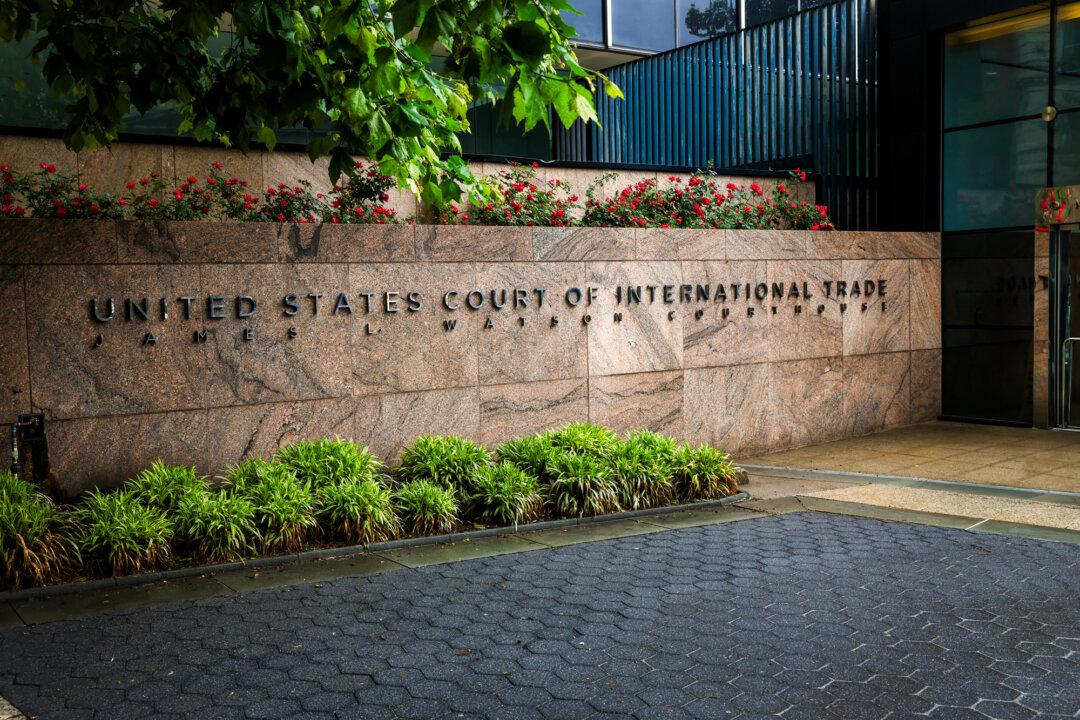
The U.S. Court of International Trade in New York City on May 29, 2025. The court ruled that the 1977 International Emergency Economic Powers Act did not give President Donald Trump power to impose “unlimited” tariffs. (Spencer Platt/Getty Images)
National Guard, Posse Comitatus
Citing high crime rates, Trump has attempted to federalize and deploy National Guard troops to major cities across the United States.
Officials in Memphis, Tennessee, welcomed the move, but state and local governments have sued to block the action in Chicago, Washington, Los Angeles, and Portland, Oregon.
The lawsuits challenge Trump’s invocation of Section 12406 of Title 10 of the U.S. Code, which allows presidents to federalize state National Guard troops under certain conditions.
The Trump administration has pointed to two of those conditions in particular: when the president is unable to execute the law using regular forces and when there is a rebellion or danger of a rebellion.
Trump’s challengers have found limited success in courts, winning lower court blocks but facing hurdles in the appeals process.
Most recently, Judge Jia Cobb of the U.S. District Court for the District of Columbia ruled on Nov. 20 that the president must end troop deployment in Washington, saying that the president can deploy troops only to address a specific situation, not for “whatever reason” he chooses. She paused that order to give the government time to appeal.
Judges in Oregon and Illinois also blocked Trump’s deployments while expressing doubt that the National Guard was needed to address crime in those areas. And a California judge ruled in September that Trump had violated a law known as the Posse Comitatus Act, which prevents federal troops from engaging in civilian law enforcement.
The administration is appealing each of those cases, and the Illinois ruling has reached the Supreme Court. The court has requested a briefing, asking both sides to clarify their interpretation of the line in Section 12406 stating that the president may call up the National Guard if he is “unable with the regular forces to execute the laws of the United States.”
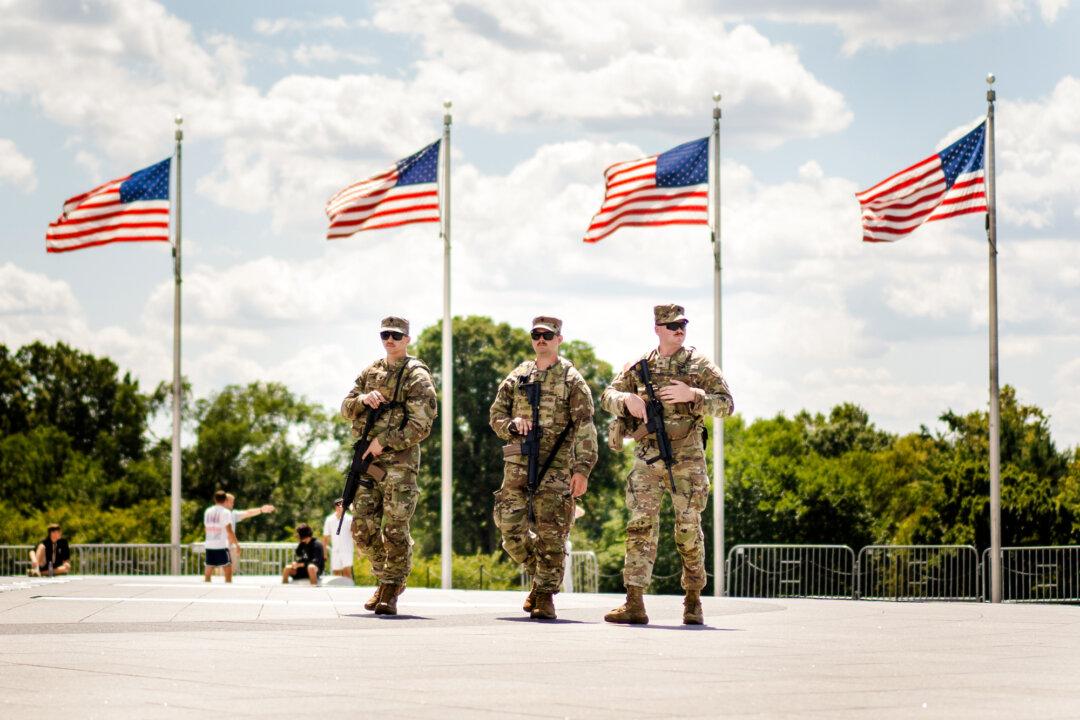
National Guard members patrol the National Mall in Washington on Aug. 27, 2025. On Nov. 20, Judge Jia Cobb of the U.S. District Court for the District of Columbia ordered the president to end the troop deployment, ruling that he may deploy troops for only a specific situation, not “whatever reason” he chooses. She then stayed her order to give the government time to appeal. (Madalina Kilroy/The Epoch Times)
Illegal Immigrants
Trump has focused on enforcing immigration laws, including through a ramp-up of deportations.
Previously, expedited removals were reserved for illegal immigrants detained within 100 miles of the U.S. border and within 14 days of illegal entry.
When he took office, Trump expanded rapid deportations to include illegal immigrants nationwide who had been in the country longer than two weeks, but less than two years.
On Jan. 22, advocacy group Make the Road New York sued, arguing that illegal immigrants were being removed without due process. A federal judge blocked the government’s policy in August, and on Nov. 22, a court of appeals declined to put that ruling on hold pending appeal.
Trump’s executive order in January revoking birthright citizenship for the children of illegal immigrants was challenged by numerous plaintiffs across the country. Those challenges were consolidated into Trump v. CASA.
When the case reached the Supreme Court, the justices did not rule on the legality of the executive order or the question of birthright citizenship, but instead ruled that such nationwide blocks—called universal or nationwide injunctions—are likely an abuse of lower courts’ power.
This ruling signaled to lower courts that they should issue such nationwide injunctions against a president’s policies sparingly.
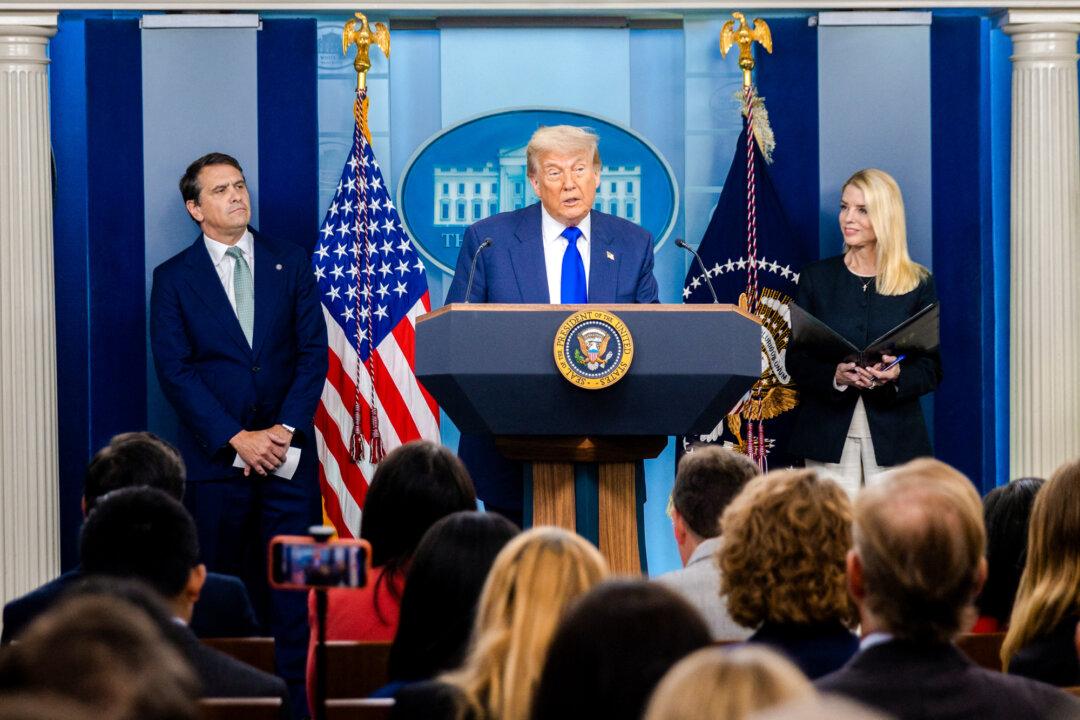
President Donald Trump speaks during a news conference in the James S. Brady Briefing Room at the White House on June 27, 2025. (Mehmet Eser/Middle East Images/AFP via Getty Images)
Alien Enemies Act
Part of Trump’s deportation plan involved using the 1798 Alien Enemies Act, which allows swift deportations during an invasion, to remove alleged criminals and transnational gang members from groups such as Tren de Aragua.
Trump invoked that law in March to deport Tren de Aragua members, but multiple lower courts have since imposed blocks on the deportations.
In a series of rulings, the Supreme Court said that potential deportees must use a particular legal mechanism called habeas corpus to challenge their detention. It also said that the administration must provide adequate notice and time for detainees to seek that type of relief.
While the justices have weighed in on the due process owed to deportees, they have not yet said whether Trump validly invoked the law. Some lower courts, by contrast, have said that he didn’t because Tren de Aragua’s actions did not constitute the type of invasion or incursion that would allow the president to act under the law.
In W.M.M. v. Trump, the U.S. Court of Appeals for the Fifth Circuit upheld a block on Trump’s actions in September while stating that they found “no invasion or predatory incursion.”
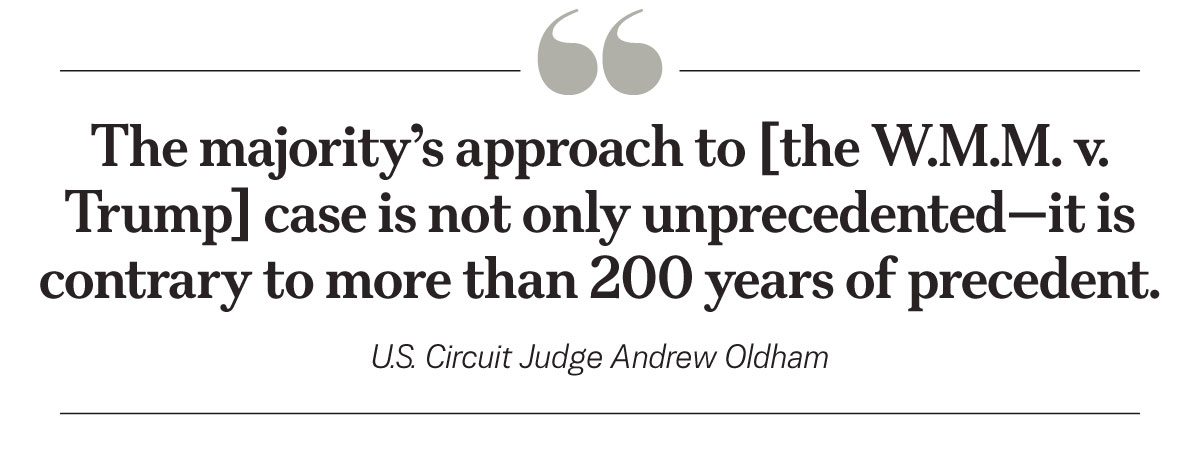
Circuit Judge Andrew Oldham of the Fifth U.S. Circuit Court of Appeals, dissenting from the majority, highlighted the current friction between Trump and the judiciary.
“The majority’s approach to this case is not only unprecedented—it is contrary to more than 200 years of precedent,” he wrote in his dissent.
“It reflects a view of the Judicial power that is not only muscular—it is herculean. And it reflects a view of the Executive power that is not only diminutive—it is made subservient to the foreign-policy and public-safety hunches of every federal district judge in the country.”
The Fifth Circuit vacated that ruling at the end of September and plans to hold an en banc hearing; the full slate of circuit judges may reach a different conclusion.
In another case, J.G.G. v. Trump, a federal judge ordered the government to halt deportation flights headed to El Salvador’s Terrorist Confinement Center.
The judge is pursuing a criminal contempt-of-court inquiry against the Trump administration, alleging that the order was ignored.
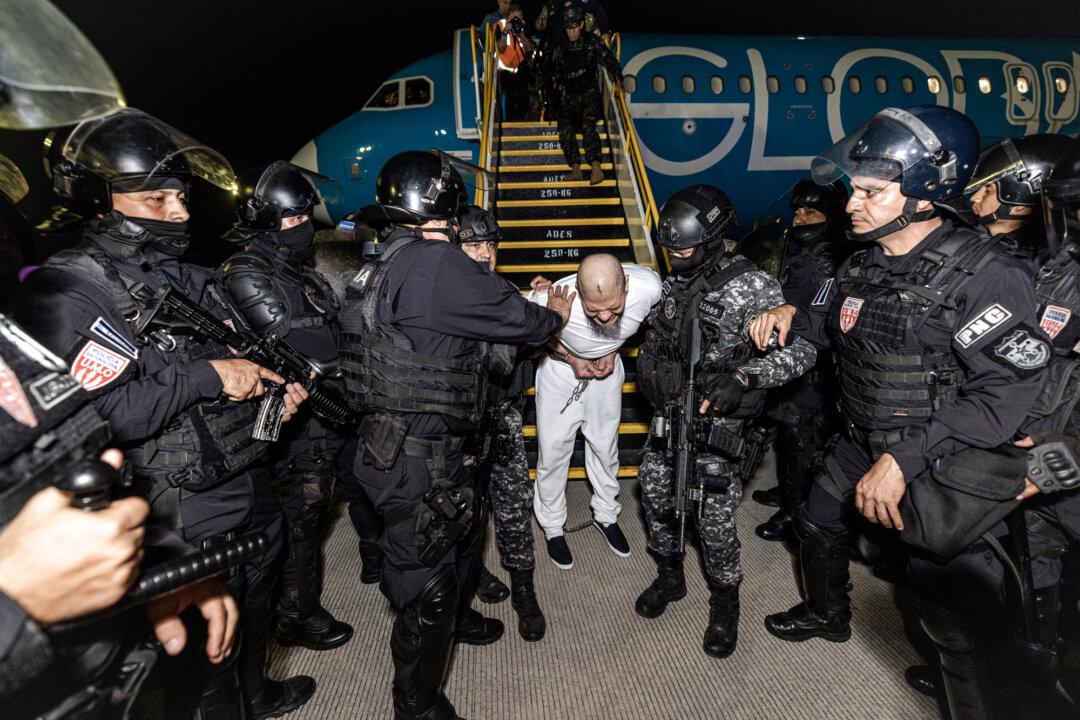
Guards escort a newly admitted inmate, allegedly linked to criminal organizations, at the Terrorist Confinement Center in Tecoluca, El Salvador, on March 16, 2025. Courts are weighing Trump’s deportation plans, which use the 1798 Alien Enemies Act to expedite removals of criminals and members of the Venezuelan gang Tren de Aragua. (Salvadoran Government via Getty Images)
Transgender Issues
On his first day in office, Trump issued an order intended to protect women from “gender ideology extremism” that allows “men to self-identify as women and gain access to intimate single-sex spaces and activities designed for women, from women’s domestic abuse shelters to women’s workplace showers.”
Pursuant to that order and others, agencies within the executive branch took action.
The State Department said it will stop issuing passports that use sex identifiers based on chosen gender expression instead of biological sex. It also banned the use of “X” for people who identify as nonbinary.
A federal judge in Massachusetts blocked that order in April, first for the plaintiffs in the case, and later nationwide. After an appeals court declined to pause the decision, the State Department appealed to the Supreme Court.
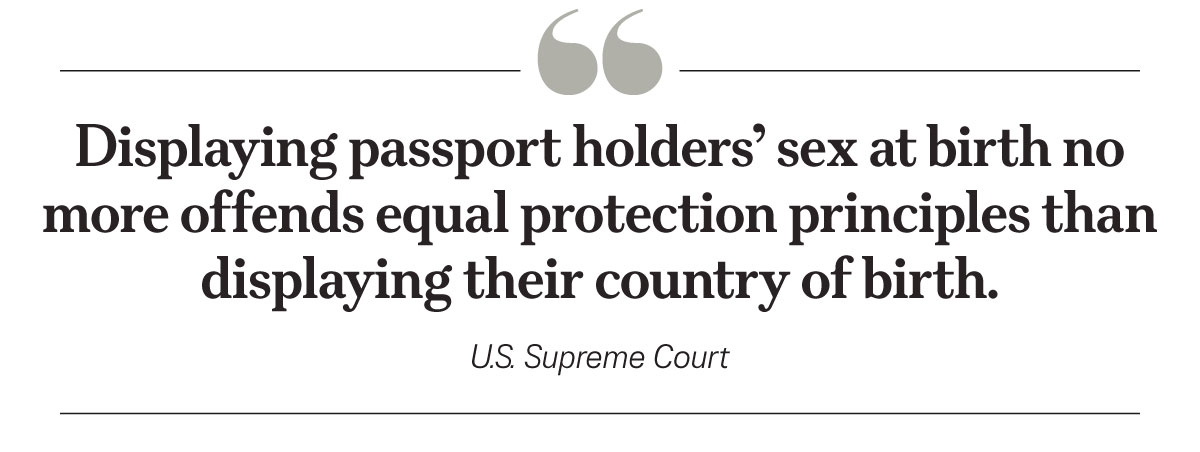
On Nov. 6, the Supreme Court halted the lower court order, pending ongoing litigation.
“Displaying passport holders’ sex at birth no more offends equal protection principles than displaying their country of birth—in both cases, the Government is merely attesting to a historical fact without subjecting anyone to differential treatment,” the court’s brief order reads.
Trump’s executive order barring Americans who identify as transgender from serving in the military was also halted by a federal judge in March, but in May the Supreme Court stayed that order, pending the government’s appeal. The case is under consideration in the U.S. Court of Appeals for the Ninth Circuit.
Other lawsuits challenged the administration’s policy of housing federal prisoners according to their sex, not their gender identity, and defunding institutions that perform gender transition procedures on children.
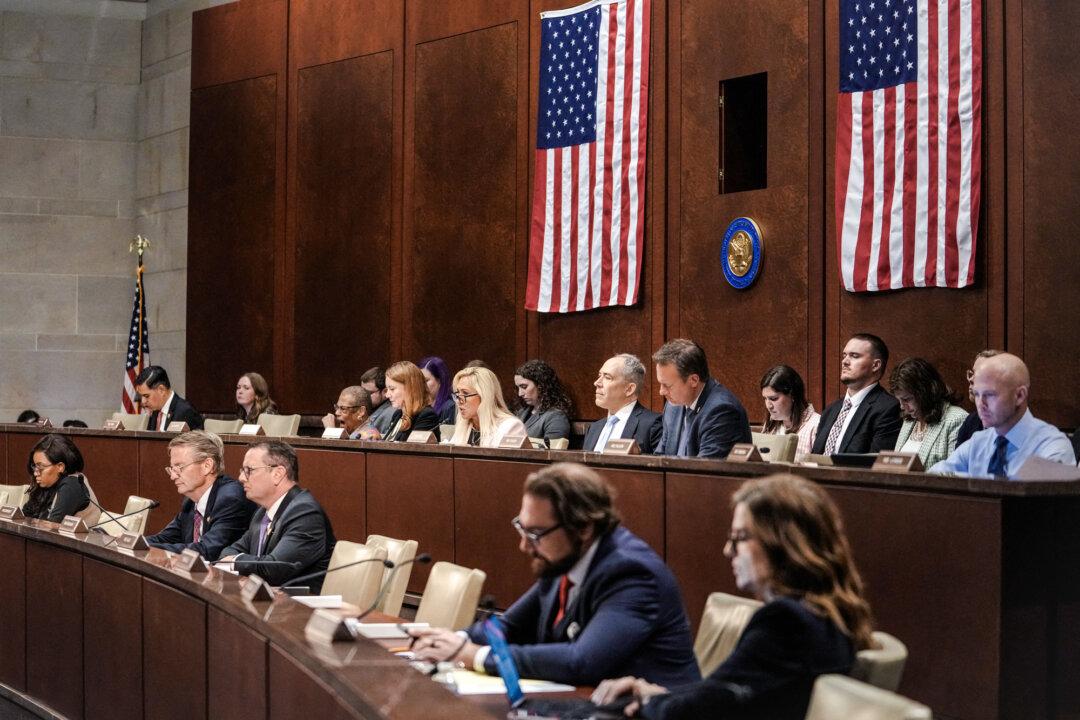
Delivering on Government Efficiency Subcommittee Chairwoman Marjorie Taylor Greene (R-Ga.) speaks during a hearing on men in women's sports on Capitol Hill in Washington on May 7, 2025. (Oliver Contreras/AFP via Getty Images)
Grant Clawbacks and DEI
Scores of federal grants and contracts have been paused or rescinded in response to various actions from Trump. The defunded projects include arts programs, public broadcasting, and diversity, equity, and inclusion initiatives.
Nonprofits and states have challenged these orders on various grounds, including claims that Trump was usurping Congress’s power of the purse and that agencies did not follow the proper procedures when withholding the money.
In response, the administration has argued that the changes were part of its discretion and that the judges overseeing the cases lacked authority to hear them.
The administration cited the Tucker Act, which gives the U.S. Court of Federal Claims jurisdiction over contract disputes with the federal government. Although multiple lower court judges have rejected the Trump administration’s arguments, the Supreme Court seemed more sympathetic when confronted with these cases.
The Supreme Court in April allowed Trump to freeze some Education Department grants, despite a lower court order to the contrary. In an unsigned opinion, a majority of the Supreme Court pointed to the Tucker Act and said Trump was likely to succeed in showing that the lower court lacked jurisdiction.
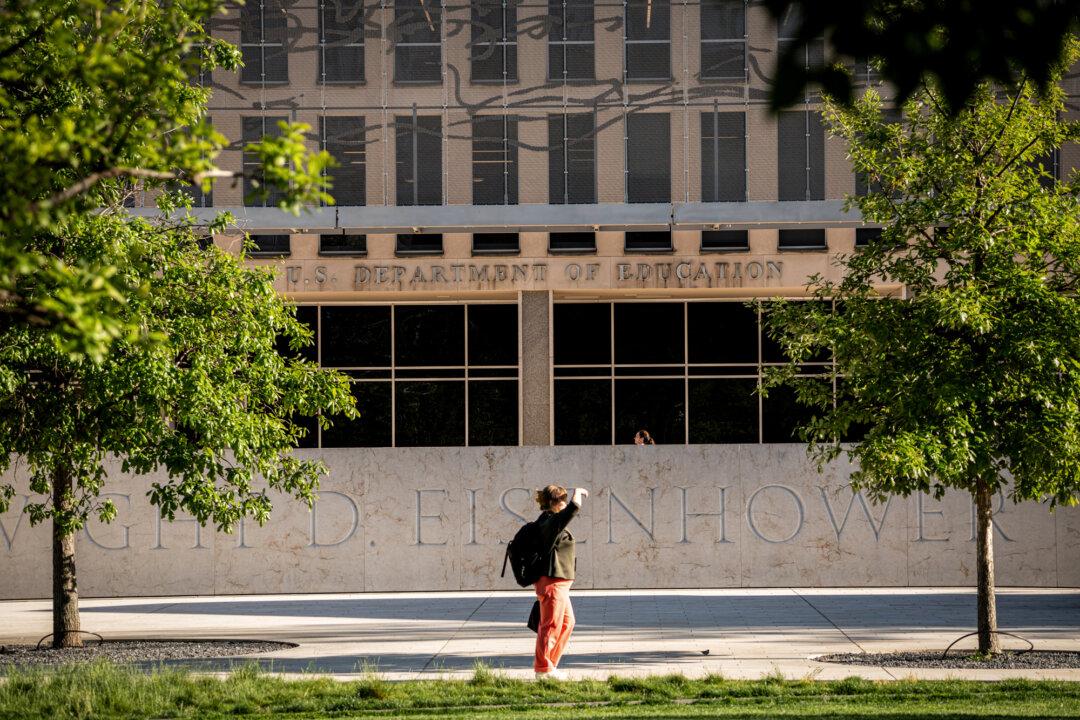
The Education Department in Washington on April 28, 2025. The Supreme Court in April allowed Trump to freeze some Education Department grants, despite a lower court order to the contrary. (Madalina Vasiliu/The Epoch Times)
After that decision, lower courts continued to rule against Trump but faced more reversals at the Supreme Court level. In one example, a recent district court ruling that ordered the Agriculture Department to pay full food stamp benefits was overturned by the high court, following an emergency appeal by the Trump administration.
In an exception, Trump faced a setback when a majority of the justices allowed a judge to order billions of dollars in foreign aid payouts from the administration.
However, when the same district court ordered the government to pay out another $10.5 billion in September, the Supreme Court paused that ruling. The brief, unsigned order notes that the decision is a preliminary one and does not reflect the court’s final opinion.
Each of these grant-related decisions was part of the court’s emergency docket and therefore offered tentative results rather than final conclusions of law.
Correction: A previous version of this article misstated some details in the Alien Enemies Act cases. The Epoch Times regrets the error.