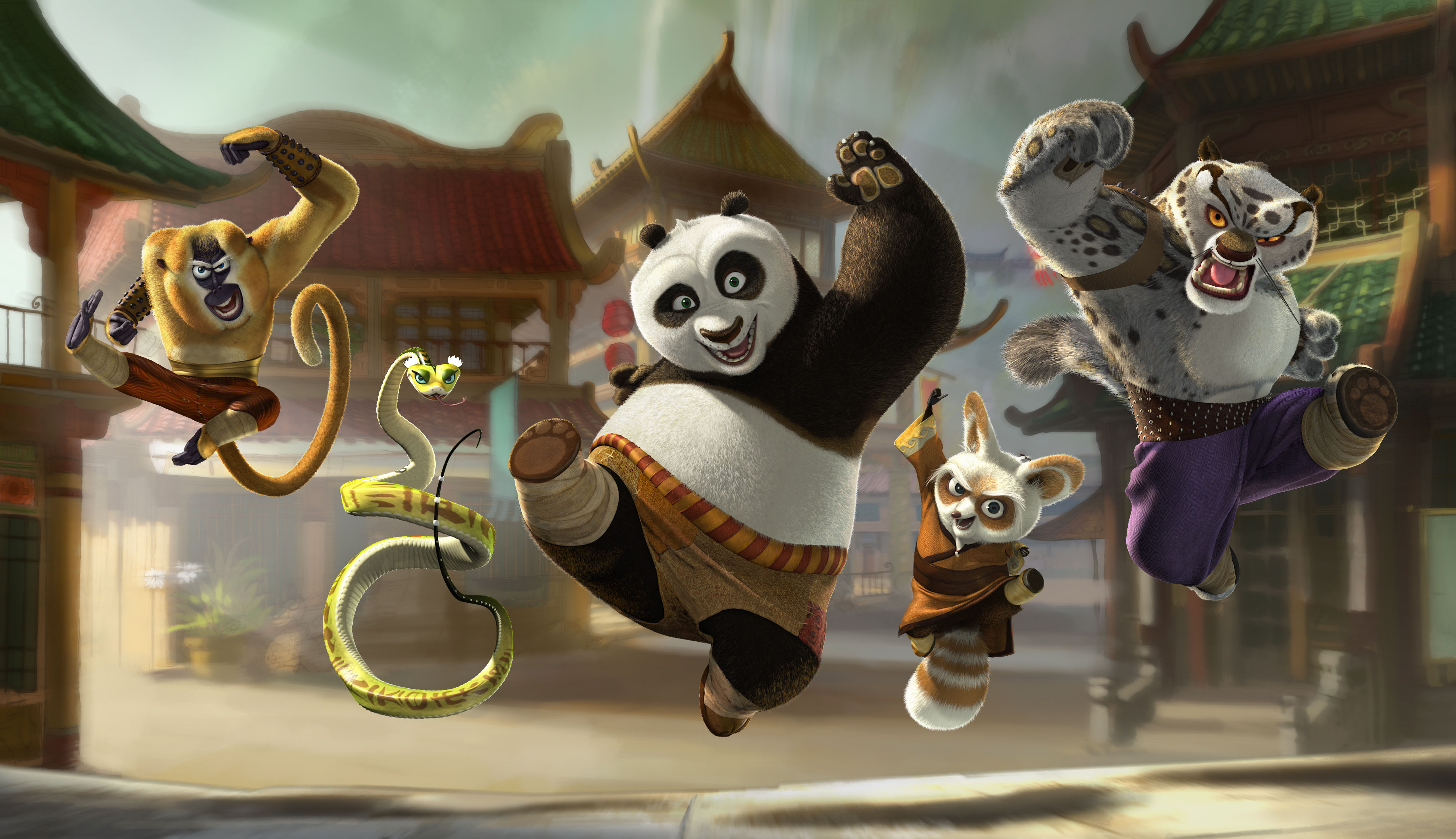

Hilariously disguised as an animated martial arts comedy, “Kung Fu Panda” (2008) tells of the transformative power of self-acceptance and self-realization.
In ancient China’s Valley of Peace, aging Grand Master Oogway (Randall Duk Kim) handpicks an unlikely Dragon Warrior to preserve the peace: kung fu fanatic Po (Jack Black). The problem is that Po’s a clumsy, gluttonous panda who sells noodles for a living.
This stunning choice overlooks the Furious Five (Tigress, Monkey, Mantis, Viper, and Crane), who appear to be more visibly impressive kung fu exponents. Trained by Oogway’s protege, Master Shifu (Dustin Hoffman), they’re understandably furious with Po.
After all, Po’s father, Mr. Ping (James Hong), is an ordinary noodle-soup restaurateur, and Po’s so plump he can barely see his toes, let alone touch them.
Oogway tasks Shifu to train Po to decipher the secret of the Dragon Scroll; Shifu can’t believe the indignity he’s being subjected to. He figures Po’s a poser and goes hard on him.
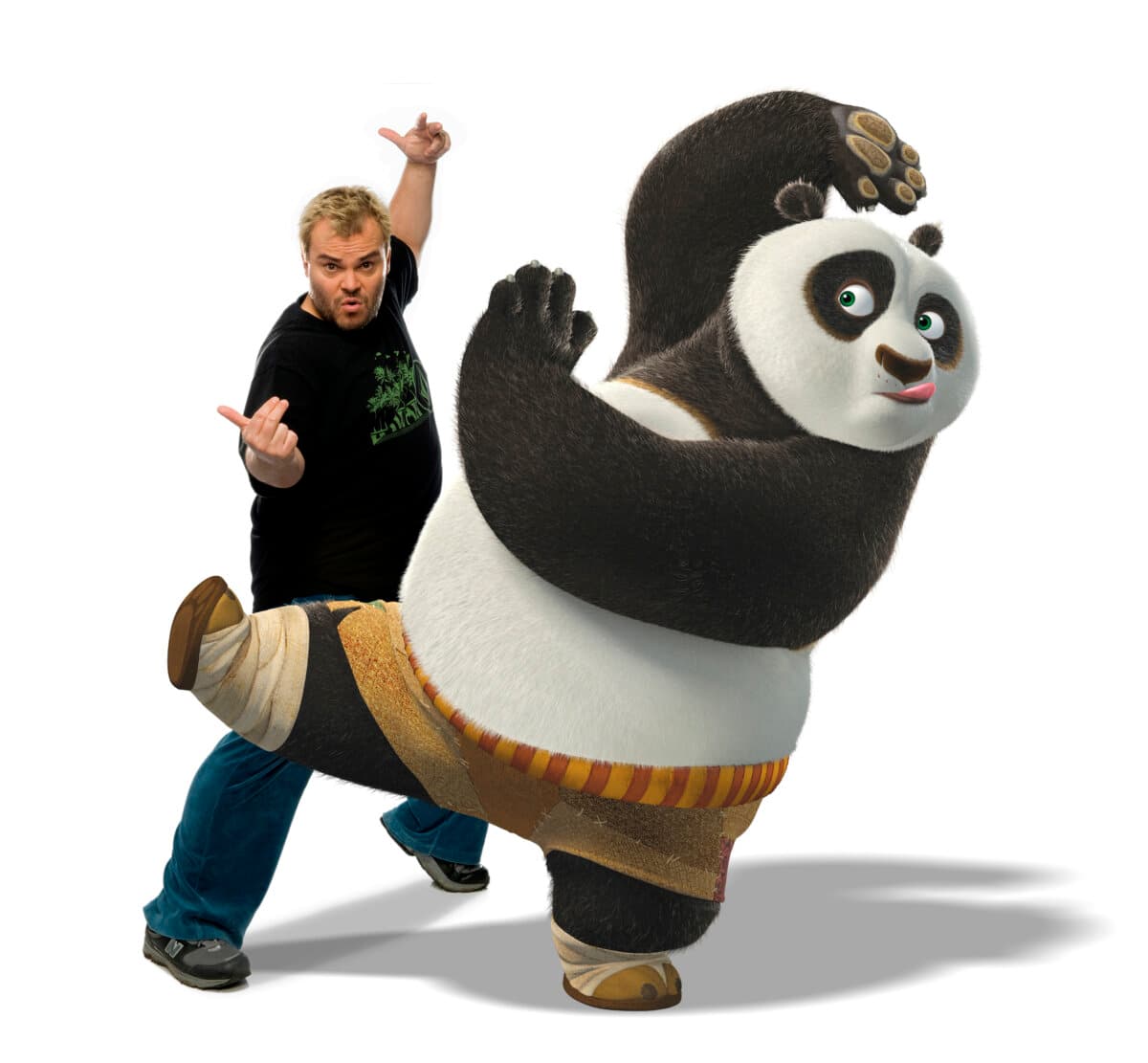
Jack Black as Po, in "Kung Fu Panda." (DreamWorks Pictures)
Climbing the Mountain
Following much hilarity, master and student huff-and-puff up and down China’s mountainous stairways. Soon they see themselves and each other anew.
Shifu’s ostracized protege, the vain Tai Lung (Ian McShane), is back. Imprisoned for 20 years for having abused his feared kung fu skills, he has other plans. He’ll stop at nothing to seize the scroll and the title of Dragon Warrior; he believes it’s been his all along.
Daoist traditions liken self-mastery to climbing a mountain. The higher state, Shen (spiritual awareness), derives from mastery of Qi (energy of being-becoming), which in turn derives from mastery of Jing (pure bodily essence).
Variations of this spirit-mind-body philosophy figure also in neigong-qigong, yin-yang, or wu wei principles. But all allude to external balance and discipline before internal stillness; here, that is Shifu’s seemingly elusive “inner peace.”
In every form of kung fu, however, practice builds competence, and competence builds confidence.
Chinese American martial artist Bruce Lee, a dragon warrior after a fashion, is believed to have said, “I fear not the man who has practiced 10,000 kicks once, but I fear the man who has practiced one kick 10,000 times.” Lee’s master Ip Man embodied that respect for focus.
Mastering the One
Unsurprisingly, kung fu relies on mastering the one: the one breath, the one punch, even the one finger. Here, that extends to making (or marketing) one bowl of noodle soup.
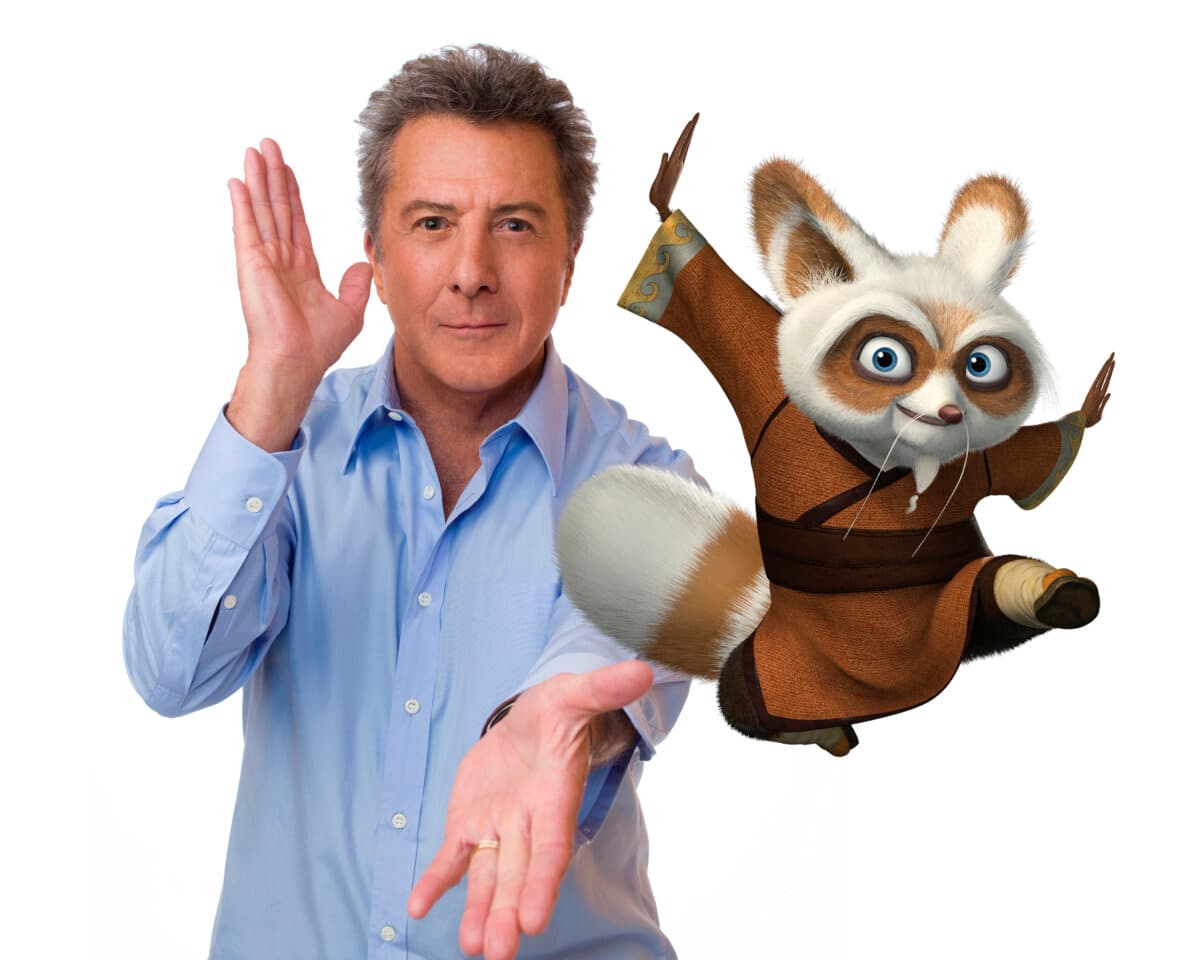
Master Shifu (Dustin Hoffman) in a publicity still for "Kung Fu Panda." (DreamWorks Pictures)
The filmmakers seem to say that even the simplest maneuver by the simplest person can have a disproportionately powerful impact, if done well, sincerely, and humbly.
A fragmented force is the lesser for it. Tai Lung’s force is terrifying at first, but his narcissism eventually numbs it. Po’s force is initially pedestrian, but coming from a place of utter sincerity, it’s multiplied several times over.
Shifu insists the mark of a hero isn’t so much heroism; it’s humility. From Oogway and Shifu, Po learns to value what he has, and not whine about what he hasn’t.
He first grumbles, “I’m not like the Five. I’ve got no claws, no wings, no venom.” Only later does he realize that his bulk, his ability to laugh at himself, and his sheer resilience may be unique enough to give him the edge.
From Po, Shifu learns to shed his “illusion” of control. Again, from Po, the Furious Five learn that gloating about their kung fu prowess is just one leap, one chop, or one kick away from Tai Lung’s fated vanity.
Nobler Values
Po can’t help himself. He reaches even for the smallest morsel of food within sight: a dumpling, a cookie, a noodle. But the lesson here isn’t to feed your baser appetites. That’s just for laughs. The lesson here is: Align your baser appetites with higher, nobler values.
What Po wants most is mastery of kung fu, which ultimately prizes self-mastery. It’s why he submits to a torturous training regimen. Sample one punishing session up in the mountains.
Shifu keeps waving, then withdrawing, mouth-watering dumplings at a drooling Po. This draws him out into subconsciously quicker, stronger, surer kung fu moves. First, it’s physical hunger that powers Po.
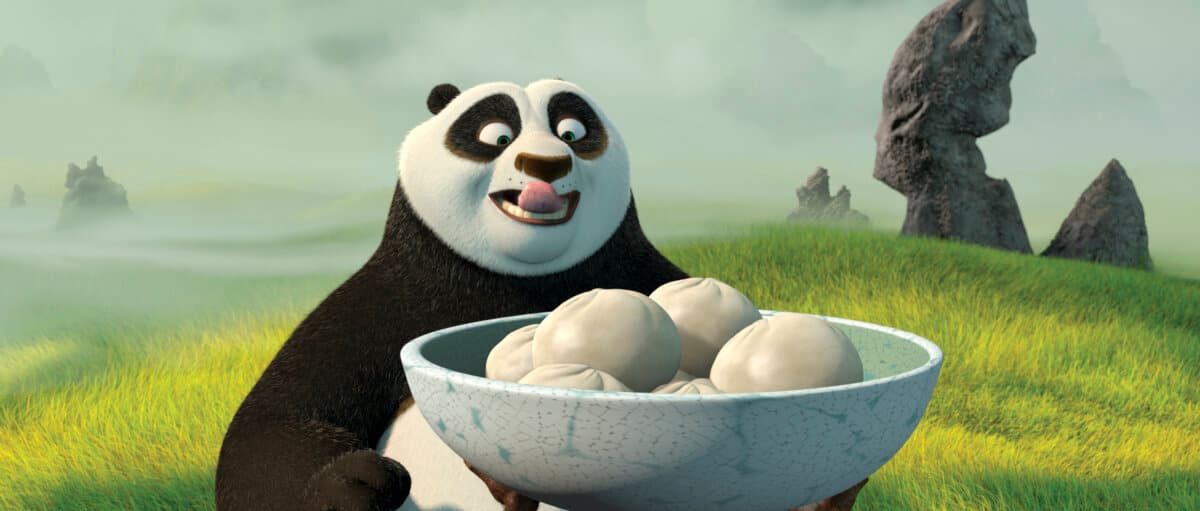
Po drools over dumplings in "Kung Fu Panda." (DreamWorks Pictures)
Then, another hunger kicks in—the hunger to transcend limitations forced on him. His baser appetite for dumplings doesn’t disappear; it’s now better ordered to a higher appetite for self-mastery.
After Po’s proven himself, Shifu tosses him a dumpling as a reward. Po casts it aside with a line he’d probably otherwise never utter: “I’m not hungry.”
Check the Internet Movie Database website for plot summary, cast, reviews, and ratings. You can watch “Kung Fu Panda” on Prime Video, Apple TV, and Flix.
These reflective articles may interest parents, caretakers, or educators of young adults, seeking great movies to watch together or recommend. They’re about films that, when viewed thoughtfully, nudge young people to be better versions of themselves.
What arts and culture topics would you like us to cover? Please email ideas or feedback to features@epochtimes.nyc.