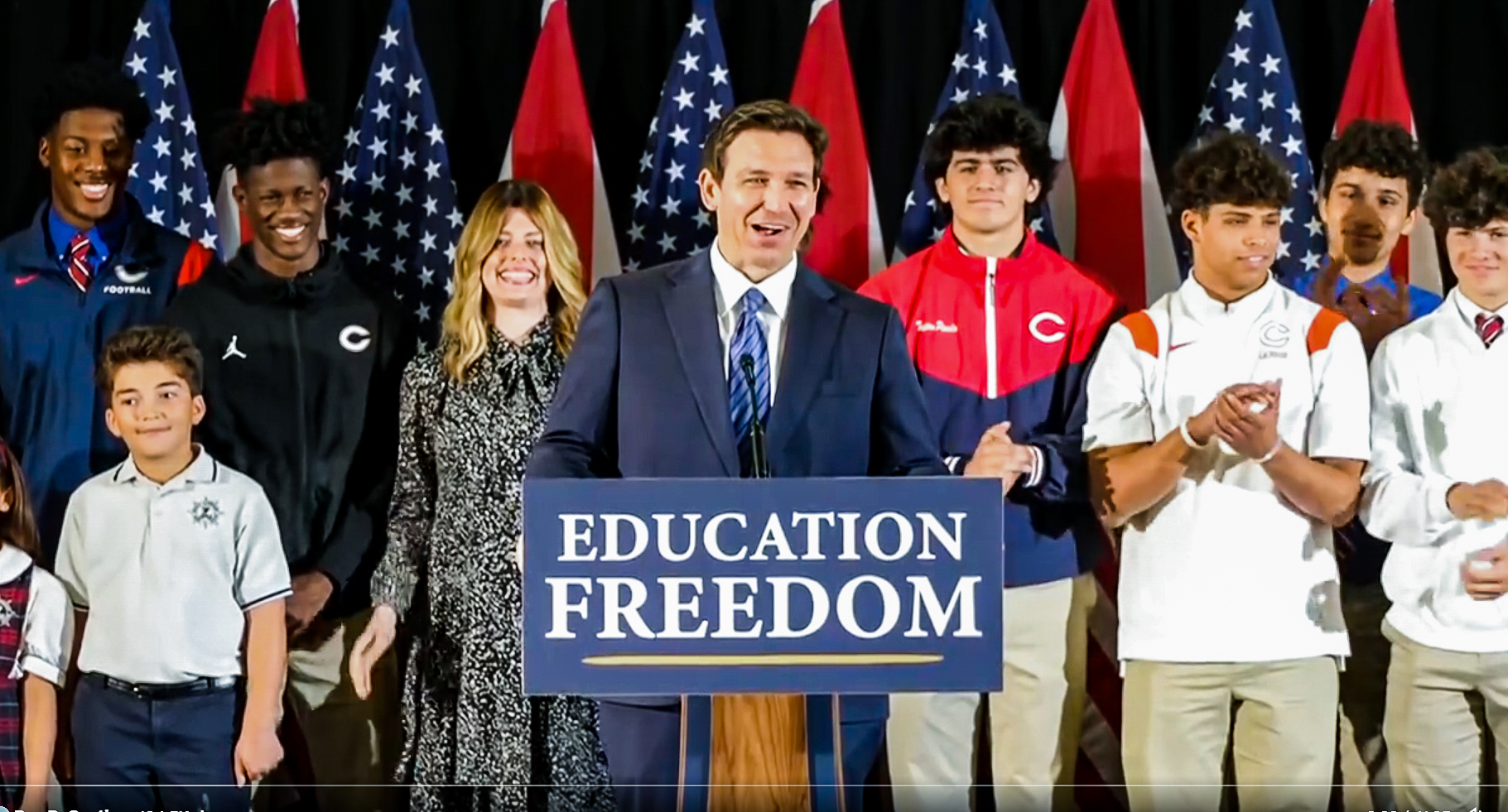

In 2023, under the leadership of Gov. Ron DeSantis—a Republican candidate for president—Florida educational policies caught the attention of analysts as exceptional and earned praise from parental rights activists.
Yet a teachers’ organization insists that Florida’s education policies don’t benefit education.
That’s despite the state’s climb from third to first in the nation in higher education, according to an annual analysis by U.S. News and World Report. In analyzing pre-K through 12th-grade education, the publication ranked Florida 14th nationwide.
The 2023 American Legislative Exchange Council (ALEC) Index of State Education Freedom also ranked Florida in first place.
And the state ranked best overall on the Heritage Foundation’s Educational Freedom Report Card. Florida placed second on educational choice, first on transparency, second on teacher freedom, and fifth on return on investment of tax dollars.
“Florida lawmakers have once again expanded education freedom and promoted parents’ rights while creating a laudable return on investment for taxpayers,” wrote Heritage Foundation analysts in the report.
Still, the Florida Education Association (FEA), the state chapter of the National Education Association (NEA) teachers’ union, condemned many of the policies and targeted Mr. DeSantis with blame.
“The universal voucher bill signed today by Gov. DeSantis will drain billions of taxpayer dollars away from the neighborhood public schools that nearly 90 percent of Florida’s parents trust to educate their children,” the FEA announced on its website after Mr. DeSantis signed a bill in March allowing for universal school choice.
“Additionally, this new law will hand over that public money to unaccountable, corporate-run private schools. Average Floridians will be helping pay for millionaires and billionaires to send their kids to elite private schools that hand-select their students.”
Conservative-controlled states nationwide have been making moves to enact school choice policies. Those allow parents to move children from failing public schools and put them, instead, into private schools, charter schools, online programs, or homeschooling.
So far, Florida has funded more than 377,000 school choice scholarships, according to a year-end announcement from the Florida Department of Education (FDOE).
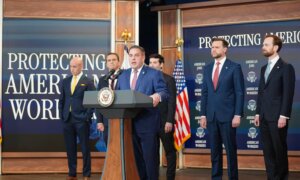
And union criticism doesn’t dampen the enthusiasm of Florida’s commissioner of education, Manny Diaz, Jr.
“This year’s education accomplishments are nothing short of extraordinary,” Mr. Diaz wrote in the announcement.
Moms for Liberty co-founder Tiffany Justice says the facts back up his claim.
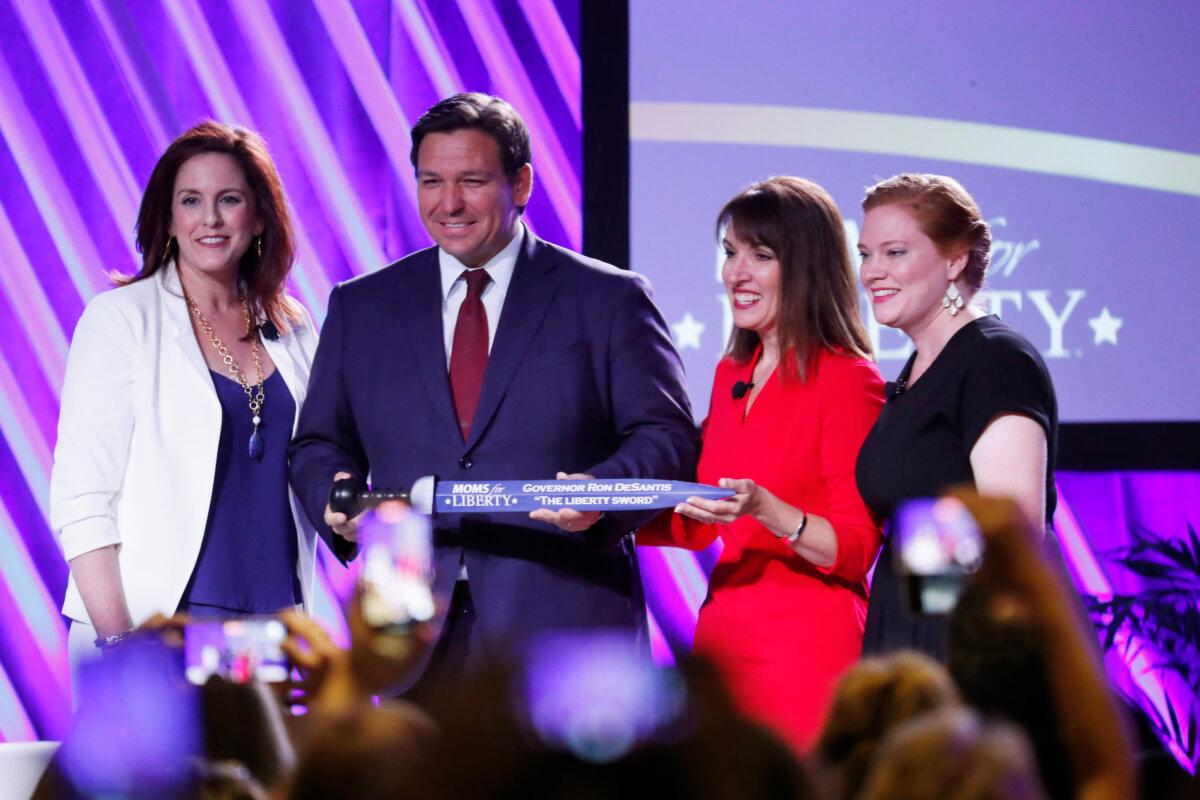
Moms for Liberty founders Tiffany Justice (L) and Tina Descovich (2nd R) present the Liberty Sword to Florida Gov. Ron DeSantis at the Moms For Liberty Summit in Tampa, Fla., on July 15, 2022. (Octavio Jones/Getty Images)
“Florida has led in so many ways since COVID,” Ms. Justice said. “Since that moment, Ron DeSantis really has prioritized education and parental rights.”
For example, at a time when other states enacted policies allowing schools to hide child “gender transitions” from parents, Florida told parents the truth, she said.
But there are still areas where Florida can improve, she said.
“Florida may be doing better than other states in the United States of America, but we’re certainly nowhere near where we need to be as far as true academic achievement and unfolding the full potential of every child,” she said.
Mr. DeSantis’s most important achievement since taking office in 2019 is still getting the Parental Rights in Education bill through the Florida Legislature in 2022, Ms. Justice said.
The Parental Rights in Education legislation gives parents the final decision on any issue impacting their child physically or emotionally. The bill also bans the teaching of radical gender ideology to students in third grade and under. The bill only established this limit as a minimum. Later, the Florida Board of Education voted to expand these restrictions to 12th grade.
Parents can sue schools that break this law.
Opponents of the legislation derisively dubbed it the “Don’t Say Gay” law, leading many on the political left to condemn the move by Florida’s lawmakers and governors.
“We worked for three years to get that passed,” Ms. Justice said. Florida’s governor “signed it into law. We were thankful for that.”
Teachers’ unions, however, remain critical of Mr. DeSantis.
The FEA released a statement on Dec. 7 saying his proposed annual budget fails to meet the needs of public school students.
The Framework for Freedom budget would provide $26.8 billion to the state’s K-12 public school system, with an increase of $405 in per-student funding.
Benefits for Teachers
In 2023, teachers received $1.1 billion in raised salaries. Since 2020, Florida has spent $3 billion to increase teacher pay.
The state also passed a “Teachers’ Bill of Rights” as part of House Bill 1035. This bill provides legal protection for teachers who intervene in classroom fights and empowers them to report any school administrative directive to break the law.
The same bill establishes teacher apprenticeship pathways, incentives to lure retired veterans and first responders to teach, and offers teachers scholarships to get graduate degrees that allow them to teach dual enrollment courses.
A statewide poll conducted by ClearView Research on behalf of the FEA found that 55 percent of Florida residents felt the state’s public schools were going in the “wrong direction.”
The same poll found general support for ideas the Florida Legislature is considering, such as ensuring the state has highly qualified and certified teachers, allowing experienced teachers to sign long-term contracts with school districts, strengthening the retirement system for teachers, raising salaries for teachers, ensuring schools are appropriately funded, and more.
In the past year, Florida committed more than $6.8 billion to workforce education and training and boosted apprenticeships and pre-apprenticeship training by 14 percent.
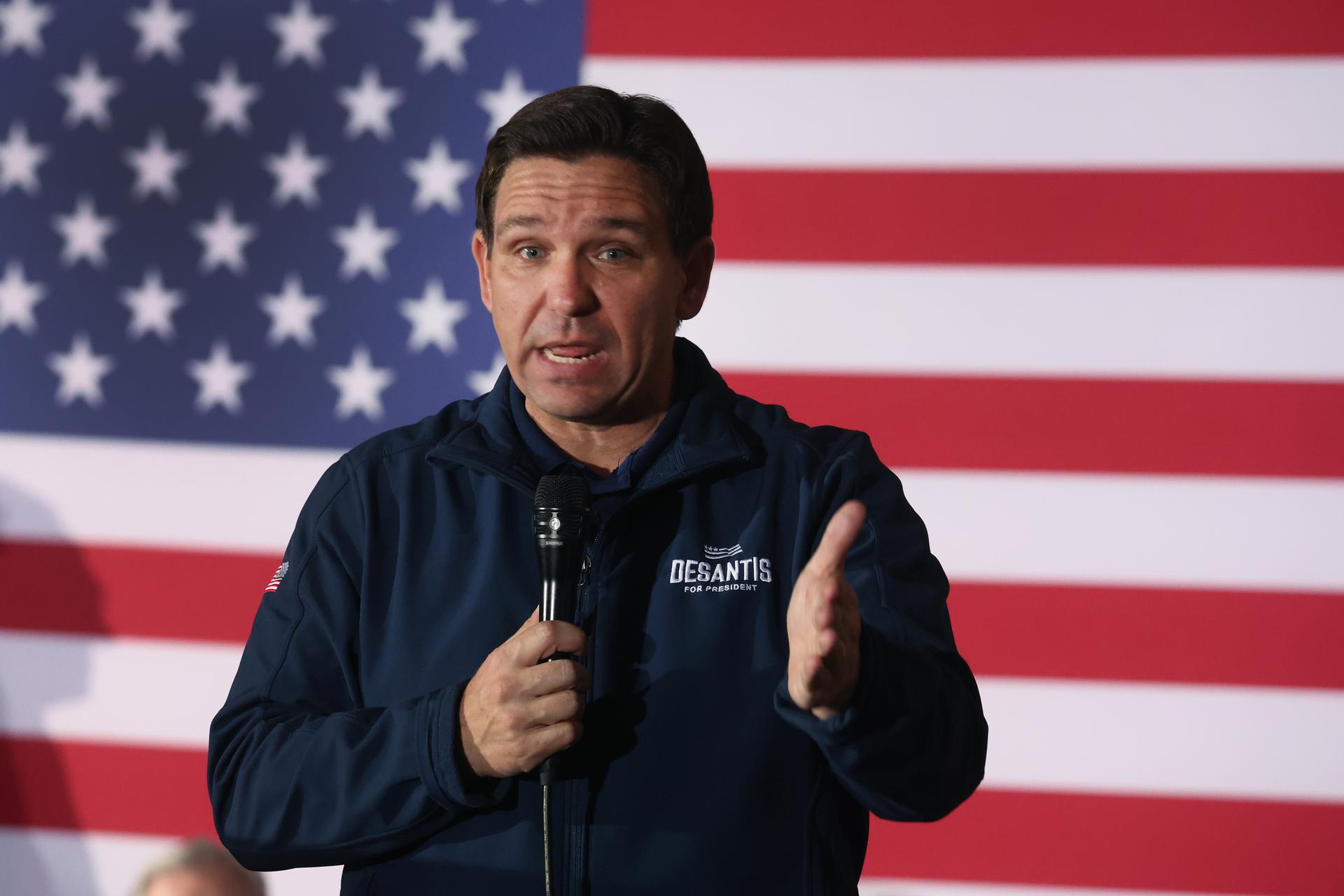
Republican presidential candidate Florida Gov. Ron DeSantis speaks to guests during a campaign rally at the Thunderdome in Newton, Iowa, on Dec. 2, 2023. (Scott Olson/Getty Images)
Florida also created administrative rules to address which restrooms and changing areas can be used by individuals who claim to be the opposite sex.
The State Board of Education unanimously voted to keep single-sex restrooms and locker rooms for students in kindergarten through college. So males only may use spaces for males, and females only may use facilities for females.
Men and boys who identify as women and girls may not use restrooms and changing rooms set aside for females, and vice versa.
This rule from Florida’s government comes at a time when it’s increasingly controversial about whether people identifying as transgender have a right to use facilities set aside for the opposite sex.
Mr. DeSantis also signed House Bill 1069, which prohibits some instruction on sexual orientation and gender identity until 8th grade. And he signed Senate Bill 1438, which protects children from seeing live adult entertainment, including while attending a school-sponsored event.
A federal judge has blocked Senate Bill 1438.
Teacher-Shortage Solutions
Schools nationwide are struggling to find teachers to fill their classrooms.
In December 2022, an analysis showed that about 44 percent of public schools had at least one teacher vacancy, according to the National Center for Education Statistics (NCES).
Schools in high-poverty areas have the worst problems finding teachers, researchers with NCES wrote in the report.
Florida schools opened the 2023-24 academic year with about 12,000 vacant teacher and school staff positions, according to an FEA statement in August.
However, new state laws make it easier for Florida residents to become teachers.
For the first time, Florida is offering post-baccalaureate and pre-baccalaureate teacher apprenticeship programs, allowing would-be educators to become teachers without incurring debt. The state put $5 million into the Pathways to Career Opportunities Grow Your Own Teacher Grant, creating no-cost apprenticeship pathways to teaching.
The program is expected to create more than 200 credentialed teachers yearly, according to the FDOE.
To make it easier to put teachers in classrooms, House Bill 1537 extends the length of time people can teach using temporary teaching certificates, and cuts out some bureaucratic requirements.
Another bill, House Bill 379, gives teachers the authority to set rules on classroom use of social media and cell phones. Research suggests that smartphone use in classrooms can negatively affect even the students not using them.
And Florida has made it less easy for teachers’ unions to force teachers to pay dues to join. House Bill 256 prohibits teachers’ unions from directly deducting union dues from employee paychecks.
The FEA opposed the bill and has filed a federal lawsuit against it. The teachers’ union blames Mr. DeSantis for the waning interest in teaching careers.
“We, as educators in Florida, exercise our constitutional rights, and for doing so, we have faced political retribution by the governor of this great state,” FEA present Andrew Spar wrote in an online announcement about his group’s lawsuit.
“Gov. DeSantis has made it clear that he is targeting educators because we exercise our constitutional right to speak out against attempts by this governor and others to stymie the freedom to learn and to stifle freedom of thought.”
He continued, “Parents are waking up to the reality that DeSantis’s attempts to appeal to his extremist base are harming their children’s freedom to learn, and they’re fighting back.”
Florida also worked to increase the quality of its teachers, enrolling more than 18,000 teachers in a 50-hour Civics Seal of Excellence course.
The course is designed to create “strong foundational content knowledge that is rooted in a factual account of American history and the guiding principles that influenced the Founders as they debated and adopted the Declaration of Independence and the Constitution of the United States,” according to an online description of the program.
Teachers who study this material will be able to teach students how to become a “virtuous citizenry,” the course website said. They also can receive $3,000 for completing the training.
Florida also responded to world events affecting education.
In the wake of the Oct. 7 Hamas attack on Israel, Mr. DeSantis signed legislation to allocate an additional $45 million to enhanced security at Jewish institutions, including schools.
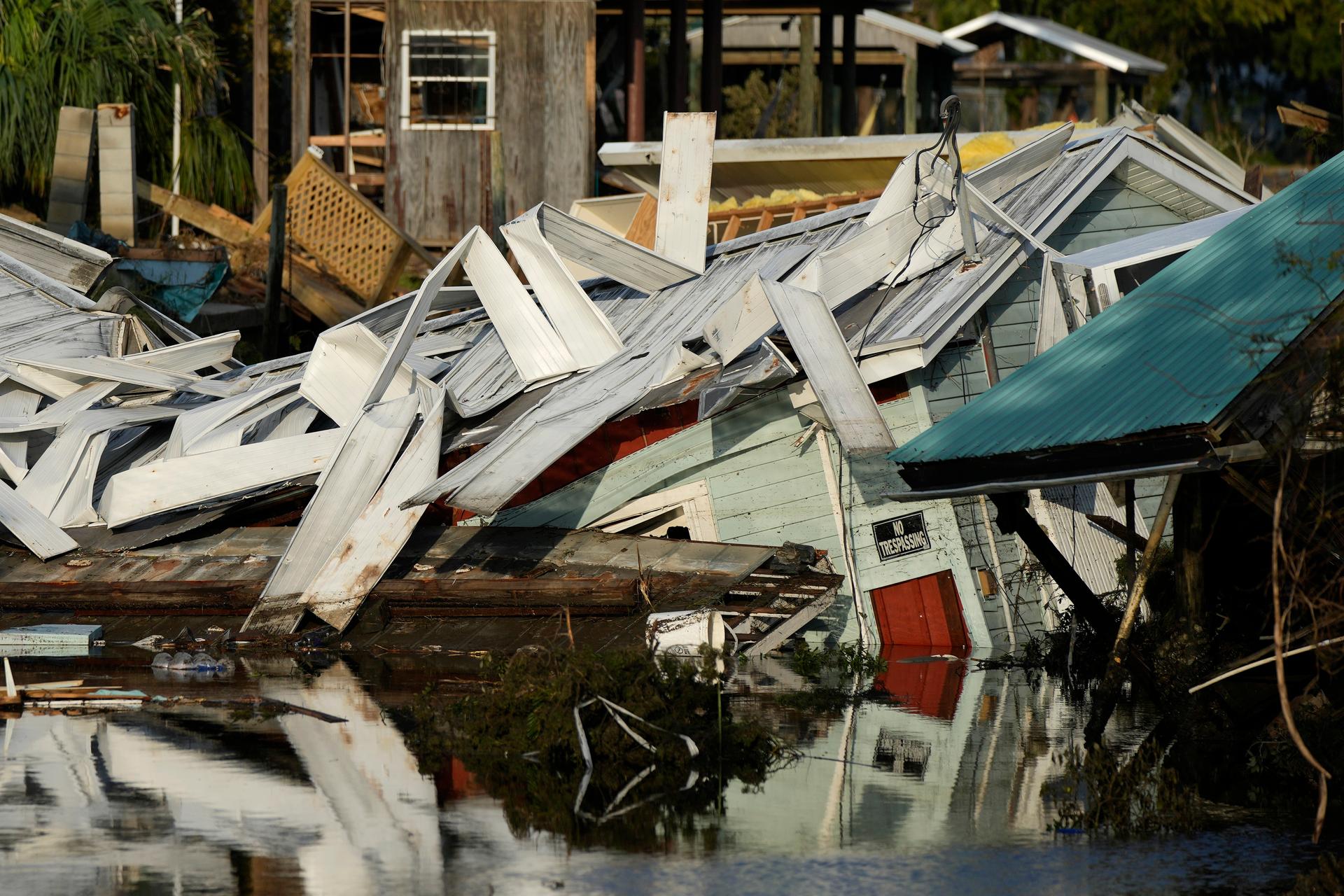
An unstilted home that came off its blocks sits partially submerged in a canal in Horseshoe Beach, Fla., on Sept. 1, 2023, two days after the passage of Hurricane Idalia. (Rebecca Blackwell/AP Photo)
After Hurricane Idalia, a Category 4 storm, slammed into Florida, the state reopened 53 of its 75 school districts within 24 hours after it made landfall. Within a week, all of the state’s school districts were open again.
Mr. DeSantis released $2 million from the state’s disaster fund to six school foundations in counties most affected by the hurricane. The groups used this money to buy supplies for families struck by the storm, according to the FDOE.
“It’s not an accident that Florida is ranked No. 1 in education,” Mr. Diaz wrote.
The Associated Press contributed to this story.