“The Triptych” (“Il Trittico”) by Giacomo Puccini could be called opera’s favorite triple-feature. This isn’t surprising because it’s the only work of its kind. Certain operas are frequently performed on double bills, although they often were not written as such. There is, of course, Richard Wagner’s four-opera “Ring” cycle, which is so epic that the whole thing can’t be performed in one sitting.
“Il Trittico” ended up being the great verismo composer’s last completed work before his death in 1924. He originally envisioned it as a double bill, a tragedy and a comedy, but he eventually added a third one-act opera. The result was three masterful works: “The Cloak” (“Il Tabarro”), “Sister Angelica” (“Suor Angelica”), and “Gianni Schicchi.”
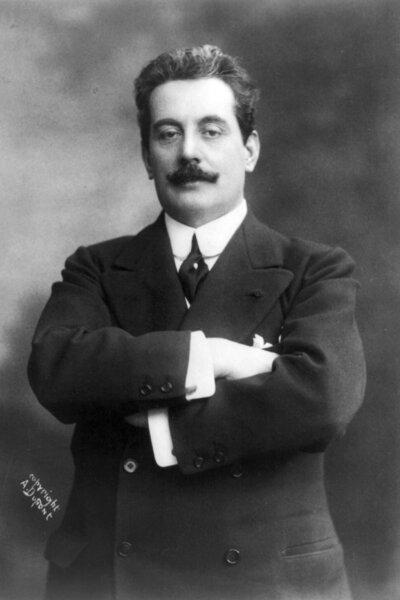
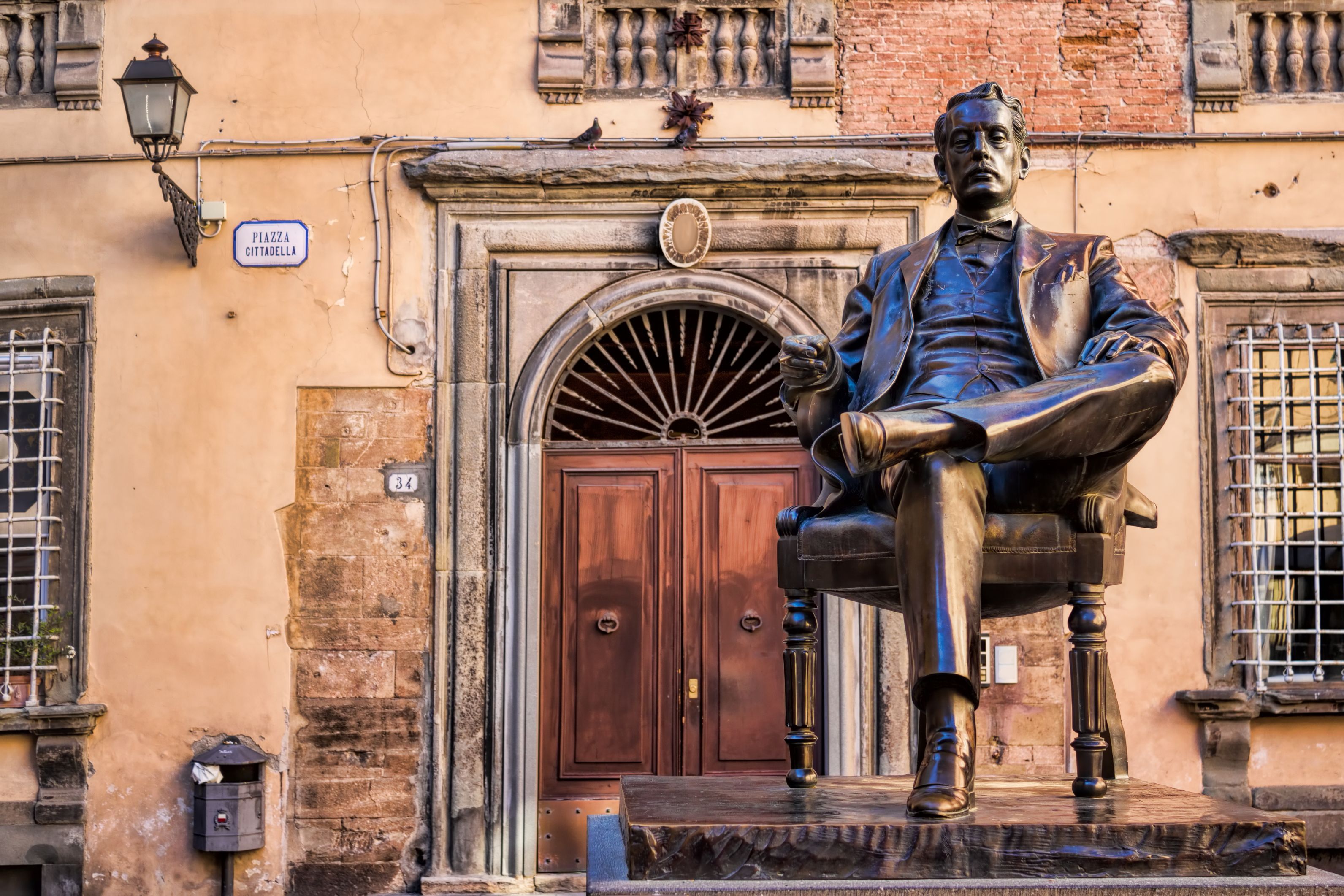
Giacomo Puccini, 1908. Library of Congress. (Public Domain)
‘Il Tabarro’
“Il Tabarro” is the first opera in the cycle that Puccini conceptualized and composed and is by far the least popular of the three. This dark opera can only be understood by hearing the beautiful score. The only one of the three operas that takes place during the composer’s time in 1910, it highlights as its title, ironically, an object—a cloak—instead of a character. This is fitting, since this opera is the only real example of “verismo” (Italian for “truth” or “realism”) in the cycle. It is less about the individual characters than about the environment that produced them.
The real star of this story is the Seine River. The story takes place on a barge on this Parisian river. The libretto was written by Giuseppe Adami, based on the French play “La Houppelande” (a French word for an outer garment or cloak) by Didier Gold.
Sunset on the Seine
Michele (a baritone) is the owner of the barge where the story takes place. He is a middle-aged man who always wears a cloak. His young wife, Giorgetta (soprano), lost all love for him when their child died. She longs to flee Michele and the restless life on the barge with her young lover, Luigi (a tenor), one of Michele’s employees.
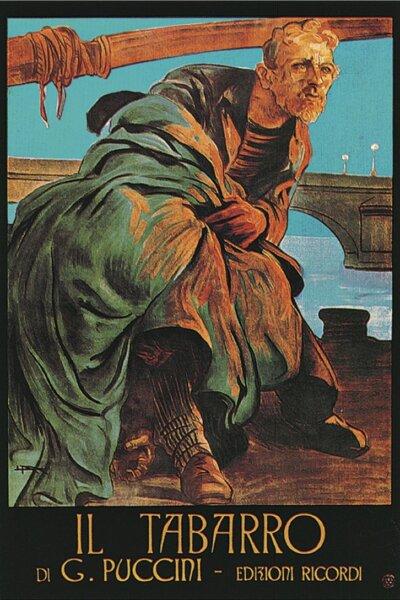
Cover of "Il Tabarro" of an edition published by Ricordi, likely to a vocal score. (PD-US)
The action occurs in the hour around sunset, as the stevedores are finishing their work, enjoying the music of an unseen organ grinder, and discussing their dreams and sorrows.
Other characters who mingle in this scene are Luigi’s two fellow workers, Talpa (a bass), who is quite happily married to the chatty ragpicker Frugola (a mezzo-soprano), and Tinca (a tenor), who drinks heavily to forget his unseen wife’s infidelity.
As all these incidental characters bid their employer and his wife good night, Michele ponders whether his wife’s coldness could stem from love for another. When Luigi mistakes Michele’s pipe for Giorgetta’s signal for their tryst, he encounters the jealous husband, who forces him to confess to the affair before strangling him.
When Giorgetta rushes out, her husband reveals the body of her lover, hidden in his cloak, and the horrified Giorgetta sees how her selfishness has destroyed the two men she loved.
None of the arias from “Il Tabarro” are commonly performed outside the opera, which is largely because very few portions can be excerpted. By this point in his career, Puccini had embraced through-composition so thoroughly that the melodies flow one into the other without stop. They overlap and intertwine so complexly that there are few sections that make sense on their own.
The baritone has a powerful aria when he is onstage alone, as he dramatically broods about his wife’s coldness. In a surprisingly light moment, Frugola sings a comically wordy aria about her pet cat, which is one of the few arias Puccini ever wrote for a mezzo-soprano.
Puccini used progressive harmonies in this score to create tension, using unusual sounds like foghorns and taxi horns to capture the mood of pre-World War I Paris. Throughout is woven the haunting melody of the river, which evokes a sense of flowing water, which is memorable and undeniable.
With its intense levels of drama and hypnotically distinct score, “Il Tabarro” is the forgotten gem of the trio that has enough emotional and musical potency to be recognized as a masterpiece on its own.
Read about Puccini’s other one-act operas as part of “Il Trittico” coming as part of this series: “Suor Angelica“ and ”Gianni Schicchi.”
What arts and culture topics would you like us to cover? Please email ideas or feedback to features@epochtimes.nyc