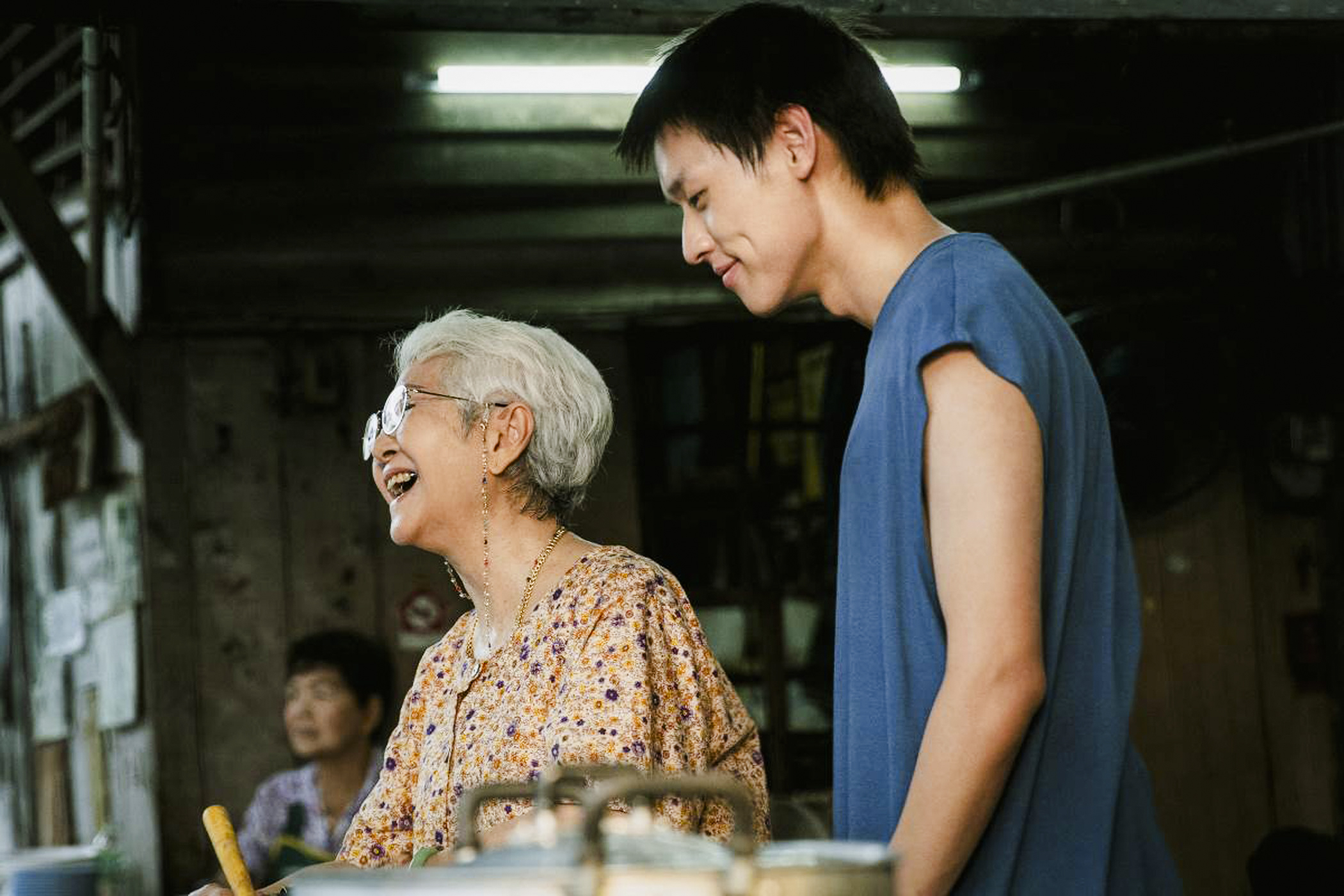

The 2024 Thai film “How to Make Millions Before Grandma Dies” pays homage to tradition in the institution of the family. Not all Thais are Chinese, but the family poignantly featured in this award-winning family comedy represents those with Chinese ancestry.
A young, cynical university dropout and wannabe videogame streamer known as M (Putthipong Assaratanakul) plans to charm an inheritance out of his aging grandma, Amah (Usha Seamkhum).
After all, his young cousin Mui (Tontawan Tantivejakul) won an enviable inheritance from a sick patriarch after caring for him during his dying years. Brimming with entitlement, M figures he stands the same chance with a sick matriarch; his Amah has terminal cancer.
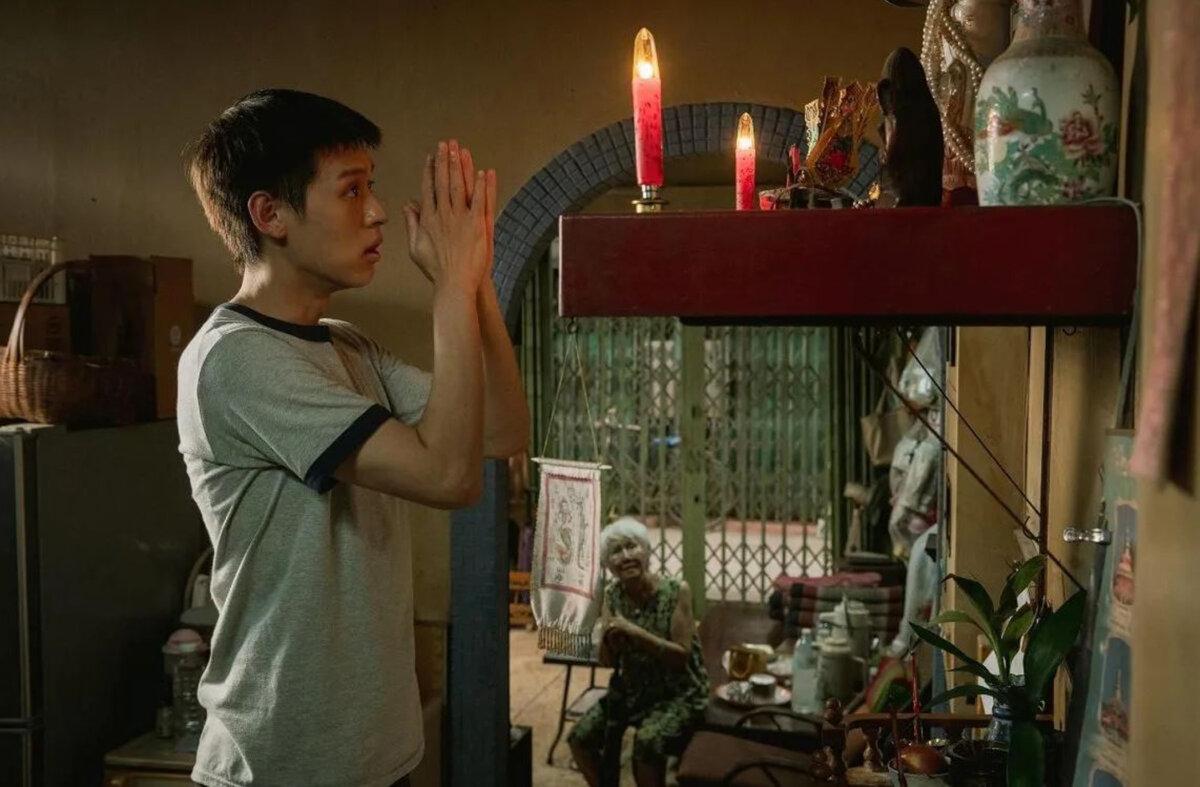
M (Putthipong Assaratanakul) prays as Amah (Usha Seamkhum) looks on, in “How to Make Millions Before Grandma Dies.” (GDH)
M’s work-weary mother, Sew (Sarinrat Thomas), hopes he’ll get around to caring for Amah, even if he starts out merely pretending. However, M’s uncles want that inheritance, too. Why should M have a monopoly over pretense?
At first, M is tentative and transactional. When Sew asks him to spend time with Amah, he wonders what he’ll get in return because “time is money.” Mui explains to M that the aged or the sick want their family to lend them their time, not just money or things.
M privately muses that, surely, they'll happily pay for what they value. Only later does he realize that, while they may emphasize time and effort, what they really want is love, and love is never offered with an eye on the clock or the wallet.
Companies pay their workers for time and effort because they expect, even demand, a designated quantity and quality of time and effort. Many measure it. Companies want lazy workers to work and hard workers to work harder.

M (Putthipong Assaratanakul) learns some profound life lessons, in “How to Make Millions Before Grandma Dies.” (GDH)
In a free market, labor is a legitimate commodity. Employers and workers willingly trade labor for mutual benefit because the market defines itself by a widely accepted standard: profit. Employers who find themselves being rewarded with hard work typically reward their employees. This is fair all around.
However, families don’t pay for time or effort. They take both for granted because they define themselves by another standard: love. Love has little to do with fairness, keeping score, or balancing the scales.
Time spent with a loved one isn’t currency—it’s a gift. It isn’t unpaid labor. It’s love because it doesn’t count the cost. Fathers who sacrifice for their families don’t count the hours they’ve spent to protect or provide for them. Doting mothers log innumerable sleepless nights caring for husbands or children.
Amah scolds M. If he’s doing things only for show, she’d rather he not do them at all. Sure, she needs things done around the house, but what she prizes is thoughtful intent. If worldliness is willing the good of the self, love is willing the good of the other.
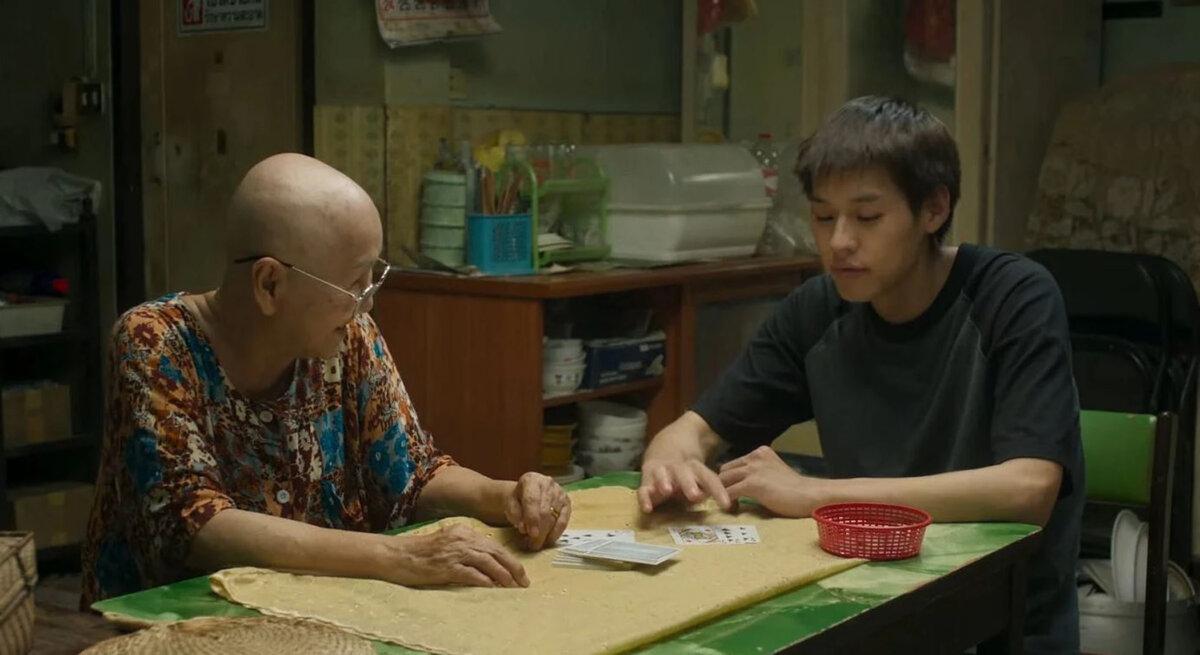
Amah (Usha Seamkhum) plays a game with grandson M (Putthipong Assaratanakul), in “How to Make Millions Before Grandma Dies.” (GDH)
However reluctantly, M intuits this about love. Amah taught love to all her children as a family tradition; Sew imbibed it, but not her brothers. Love may be taught to many; only some learn it well.
Yes, parents must take responsibility for passing on love to their children. But as they grow to adulthood, the children must take responsibility for making it their own, paying it forward through their own children.
Honoring Tradition
M resents what he sees as wasteful time at a cemetery. Why must he scatter flowers, light candles, burn incense, or pray in memory of a departed loved one? Amah rebukes him when he flings the flowers, rather than respectfully laying them down.
She’s saying that he should be doing it not just for the dead but more for himself. Those traditions are to remind him to be, if not as loving as the dead, at least not as selfish as they were.
Sew wonders why Amah prays at a stranger’s grave. Through her homage, Amah implies that charity builds its own connections, leveling otherwise uneven plains. Thus, waters of love that flow forward in one generation flow right back as freely in the next.
In honoring the dead, we respect ourselves. Amah longs for this other-centeredness when eating leftovers from Chinese New Year alone the next day.
Lonely as she is, Amah feels it’s better when her needy son, Soei, doesn’t visit her. It means he’s happy, because otherwise he’d be hanging around, pestering her.
Quietly listening to her, M gets it. Of course, Amah craves attention, but she craves the happiness of her family even more.
Check the Internet Movie Database website for plot summary, cast, reviews, and ratings. You can watch “How to Make Millions Before Grandma Dies” in theaters and on Netflix, Apple TV and Prime Video.
These reflective articles may interest parents, caretakers, or educators of young adults, seeking great movies to watch together or recommend. They’re about films that, when viewed thoughtfully, nudge young people to be better versions of themselves.
What arts and culture topics would you like us to cover? Please email ideas or feedback to features@epochtimes.nyc