

Hooked on our smartphones, we lose track of time as our thumbs scroll through effortless, endless, and entertaining content feeds. Meanwhile, the several-inch screen quietly emits blue light and waves of electromagnetic fields (EMFs). We may not notice these constant influences, but our minds and bodies do.
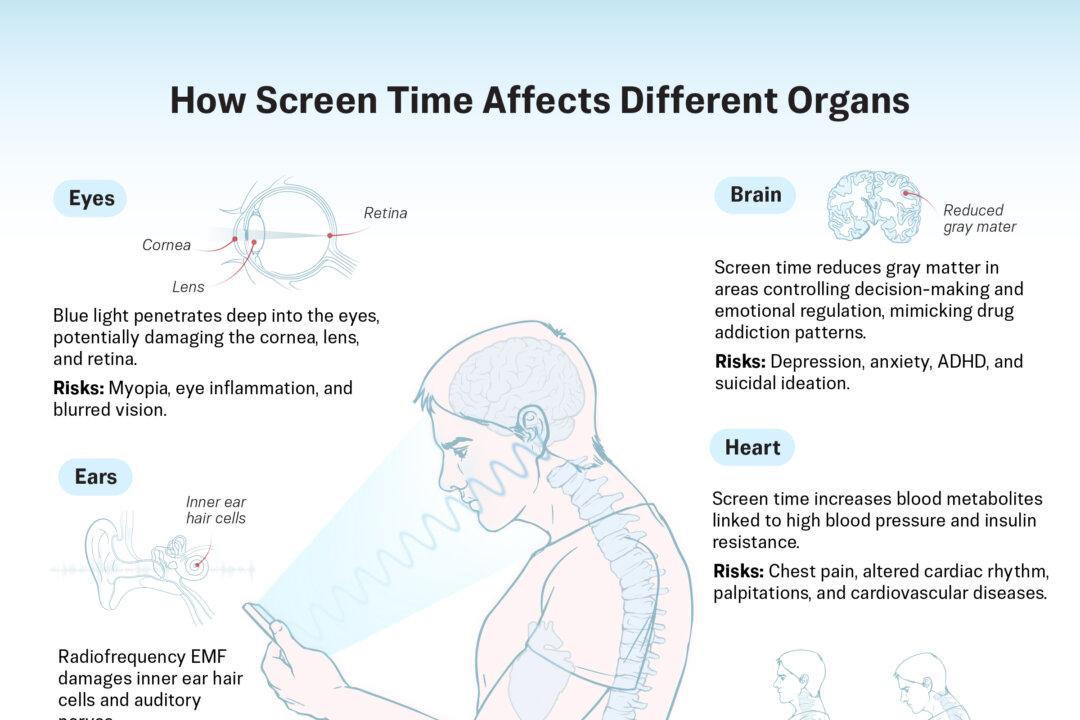
The average American reaches for their phone 144 times per day. Growing scientific evidence shows that excessive screen time affects nearly every part of the body—beginning with the eyes, heart, spine, and beyond.
(Illustration by The Epoch Times, Shutterstock)
Bright Screens, Blurry Eyes
Smart screens emit a combination of red, green, and blue light. Within this spectrum, they emit a notable “blue light spike” in the 400-to-490 nanometer range, also known as high-energy visible (HEV) light.
Our eyes can’t completely filter out HEV light, so it passes through the eye and penetrates to the retina—the light-sensitive layer at the back of the eye.
Laboratory studies show that exposure to intense or prolonged blue light causes temporary or permanent damage to the eye’s cornea, lens, and retina. Blue light-induced eye damage may also cause the lens to become opaque and damage to the cornea, leading to various eye disorders.
Dr. Savleen Kaur, a pediatric ophthalmologist who has studied the effect of screen time on eye disorders, told The Epoch Times that blue light from smartphones is associated with the development of digital eye strain, and children who are glued to digital devices are at greater risk of developing myopia.
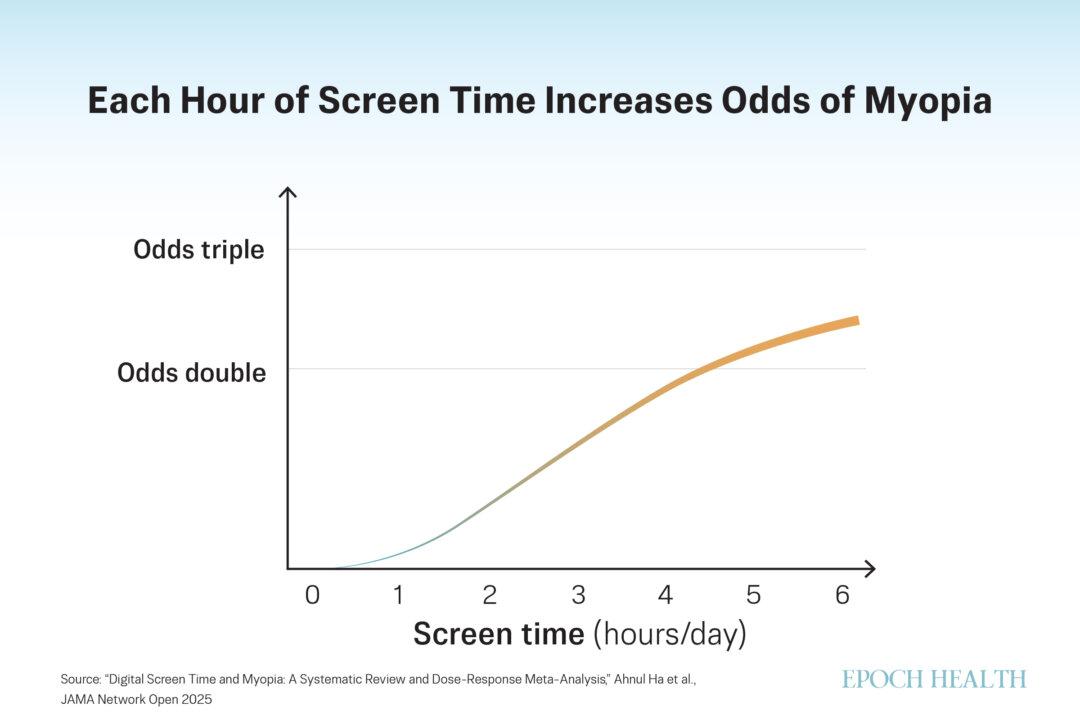
A systematic review involving more than 335,000 participants found that a daily one-hour increase in screen time was associated with 21 percent higher odds of developing myopia.
(The Epoch Times)
It’s not just myopia. A study published in Ophthalmic Epidemiology found that daily smartphone use for more than two hours was associated with a higher likelihood of experiencing various symptoms simultaneously, including blurring, redness, visual disturbances, inflammation, and dryness.
Yet, your eyes are just the first victims of exposure to digital devices.
EMF Overload, Tired Ears
People who frequently use cellphones from a young age may develop hearing loss comparable to that usually seen in people in their 70s, Dr. Naresh Kumar Panda, an ear, nose, and throat specialist who has studied the effect of cellphone use on hearing, told The Epoch Times.
Multiple studies have evaluated the impact of cellphone radiofrequency electromagnetic radiation (EMR) on the ears. When talking over a cellphone, the ear, the auditory nerve, and a portion of the temporal lobe absorb radiofrequency EMR.
Radiofrequency EMRs are the radio waves that connect your phone to a cell tower. These waves can penetrate body tissues, produce heating effects, and stimulate the auditory system—even in the absence of sound.
Multiple studies have shown that people with excessive smartphone use are more likely to report poorer hearing ability and higher hearing thresholds, meaning they need louder sounds to hear what used to be baseline. Radiofrequency EMR exposure from prolonged cellphone use, along with headphones or Bluetooth earbuds, may also damage inner ear hair cells—the sensory receptors that convert sound into neural signals so your brain can interpret it—causing mild to moderate hearing loss.
Long-term cellphone use—even if just one hour of phone calls per day—could harm hearing and desensitize the ears to sound, Panda said. Bluetooth devices are “equally damaging.”
Auditory threshold shifts may be temporary if the exposure is not too severe, but damage to the auditory system could be permanent with long-term exposure, he added. However, more research is needed to understand this in depth, he said.
A Brazilian study found evidence suggesting an association between radiofrequency EMR and tinnitus, especially in people who are more sensitive to electromagnetic fields. Panda, who was not involved in the study, said that tinnitus is one of the first warning signs of hearing impairment, and people who use cellphones for extended periods should consider it a red flag.
Distinct Metabolites, Strained Heart
Our handheld devices harm more than what lies above the shoulders—their effects travel down into other organ systems.
A study published in the Journal of the American Heart Association found that increased screen time is associated with abnormal blood metabolite changes, which are linked to high blood pressure, high cholesterol, and insulin resistance.
Dr. David Horner, the lead author of the study, called the distinct pattern of blood metabolites a “biological fingerprint” of screen time. He told The Epoch Times that many of the same metabolites have been identified in previous studies for obesity and cardiometabolic disease, suggesting that the screen time “fingerprint” may represent an early stage of similar risk pathways.
The analysis found that each additional hour of recreational screen use per day was linked to a measurable increase in cardiovascular risk scores. While the numbers may seem small for a single hour, the effects accumulate: A child with three extra hours of daily screen use would have roughly a quarter to half higher risk score than their peers with less screen time, he said.
Multiplied across a whole population, we would see a “meaningful shift in early cardiometabolic risk that could carry into adulthood.”
Moreover, studies have shown that EMFs from mobile phones may affect heart rate variability—the variation in the time intervals between consecutive heartbeats. The variability reflects how effectively the autonomic nervous system—both the fight-or-flight and rest-or-digest branches—controls the heart. Low heart rate variability indicates cardiac stress and is a known predictor of cardiovascular problems.
Prolonged cellphone use is associated with low heart rate variability in healthy adults.
Holding the phone close to the chest also alters ECG readings, with extended exposure possibly leading to palpitations and chest pain. Multiple studies have also found that smartphones and accessories, such as wireless headphones and smartwatches, can interfere with implantable cardiac devices, including pacemakers and defibrillators.
Beyond these direct physical effects on the heart, screens also increase cardiovascular risk indirectly—by disrupting sleep. Horner observed the connection in his study: Sleep duration accounted for approximately 12 percent of the overall association between screen time and cardiometabolic risk, suggesting that part of the risk stems from screen time stealing hours of restorative sleep.
Faulty Posture, Strained Spine
Lost in a phone screen while lounging on your couch can hurt you even further—right down to your bones.
Increased sedentary behavior is generally linked to problematic screen use and contributes to poor posture and postural strain, leading to neck, shoulder, and back pain. Prolonged sitting and time spent on screens are negatively associated with overall bone mineral density.
There are a variety of “text” diseases.
When concentrating on small screens, people tend to bend their necks more, which can lead to a prominent forward head posture, also known as “text neck.” It is one of the most common cervical abnormalities that makes people vulnerable to more conditions, such as headaches, altered shoulder blade position, and temporomandibular disorders—a set of more than 30 disorders of jaw joints and jaw muscles.
A case report published in Radiology Case Reports details the history of a 24-year-old “YouTuber” who used his smartphone for at least 16 hours a day, checking it every 10 minutes. He reported experiencing persistent head, neck, and upper back pain and numbness in his right arm for almost a year—the symptoms of classic “text neck syndrome.”
His condition worsened to the point that he could hardly keep his head up for only a minute. An X-ray examination revealed an abnormal forward curve of the neck (the yellow line), misaligned vertebrae (the red arrows), and arthritic degeneration in neck joints (white arrows). After more than three months of reduced screen time and posture correction exercises, his symptoms substantially improved.

Preventing the progression of text neck in a young man: A case report. Radiology Case Reports. 2022;17(3):978-982. https://doi.org/10.1016/j.radcr.2021.12.053, under CC BY 4.0.
Constantly swiping your phone can also cause wrist and thumb pain from repetitive strain, leading to conditions such as “texting thumb.”
Digital Waves, Disrupted Fertility
Multiple studies have found that exposure to radiation from digital devices, including cellphones and laptops, is associated with reduced sperm motility, viability, and concentration—key predictors of male fertility.
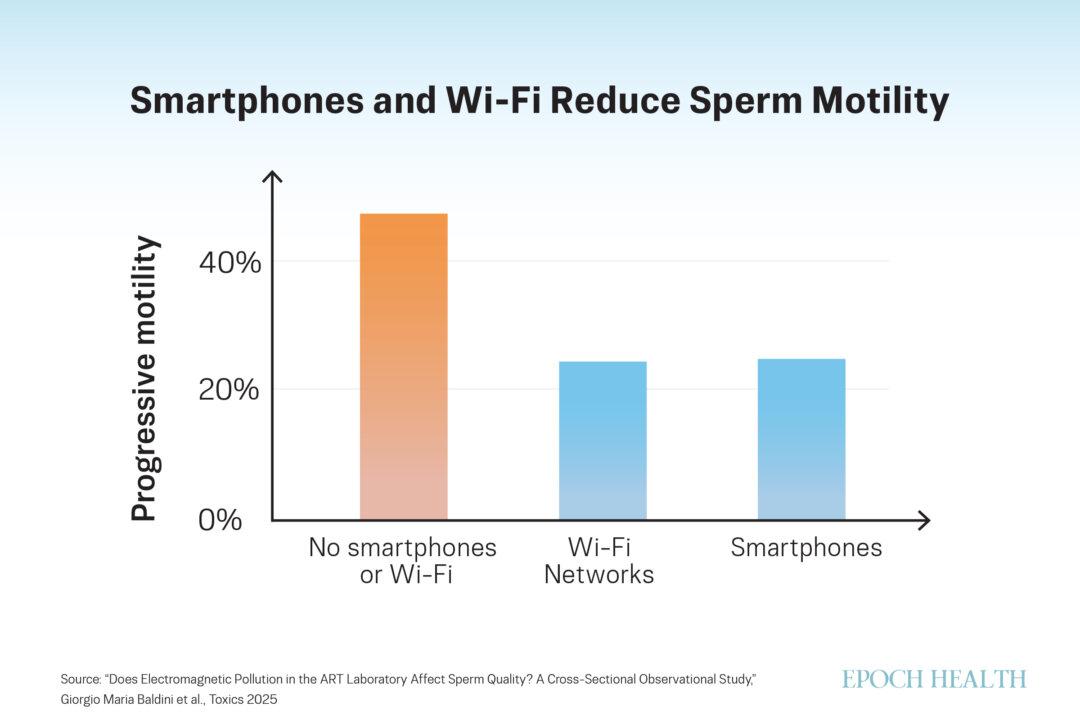
A study published in Toxics in June examined the effect of EMFs on sperm motility in a lab. Semen samples from healthy males aged 20 to 35 years were exposed to different sources of EMFs for one hour, with an assessment of sperm motility immediately thereafter.
The results showed that progressive sperm motility—sperm moving forward in a relatively straight line—was reduced to 19.5 percentage points after exposure to devices such as smartphones and Wi-Fi networks compared to controls. Their immotile sperm increased by 10 percentage points.
(The Epoch Times)
It’s not just what EMFs emit electronically, but also what they emit thermally. Keeping digital devices close to the groin, such as in trouser pockets, can raise scrotal temperature above physiologically normal levels. Warming of the scrotal area can negatively affect sperm formation and function, possibly leading to decreased fertility in men. The longer and closer the exposure, the greater the adverse effects.
The effects are also seen in women. A California study of more than 900 pregnant women found that those who were exposed to higher radiation levels had nearly three times the risk of miscarriage than those with low exposure. The study used a wearable monitoring device to measure participants’ exposure to magnetic fields from various devices, including cellphones, over 24 hours. A meta-analysis had a similar finding.
Using mobile phones for calls for more than 30 minutes a day during pregnancy may also hinder normal fetal development, leading to babies born smaller compared to those born to mothers who used cellphones less frequently.
The Cancer Risk
The possibility of developing cancer due to cellphone radiation exposure remains controversial, with research providing mixed results and no clear consensus to date. In 2011, the World Health Organization’s International Agency for Research on Cancer classified radiofrequency electromagnetic fields as “possibly carcinogenic to humans,” noting limited evidence.
However, the latest systematic review, partially funded by the WHO, found high-certainty evidence from long-term animal studies that cellphone radiofrequency EMF exposure increases the risk of two types of malignant tumors in rats.
The International Commission on the Biological Effects of Electromagnetic Fields (ICBE-EMF) said in a statement that “the same types of tumors have also been observed in human studies” of cellphone users, thereby “adding significant confidence that the associations observed in these studies are real.”
“Animal studies are essential for predicting cancer risk in humans,” Ron Melnick, chair of the ICBE-EMF, said in the statement.
The Mental Toll
Excessive screen time can also affect brain function and reduce gray matter volume, especially in areas responsible for inhibitory control, decision-making, and emotional regulation.
Gadi Lissak, a clinical and behavioral medicine psychologist, told The Epoch Times that such structural changes, found in various brain imaging studies, mimic the addictive behavior seen in substance abuse. Such neural changes can make it harder for people to filter out distractions and focus on their goals, further affecting their emotional processing and contributing to increased neuroticism and impulsivity.
Screen use is associated with an increased risk of mental disorders such as depression, anxiety, attention-deficit/hyperactivity disorder (ADHD), and even suicidal tendencies.
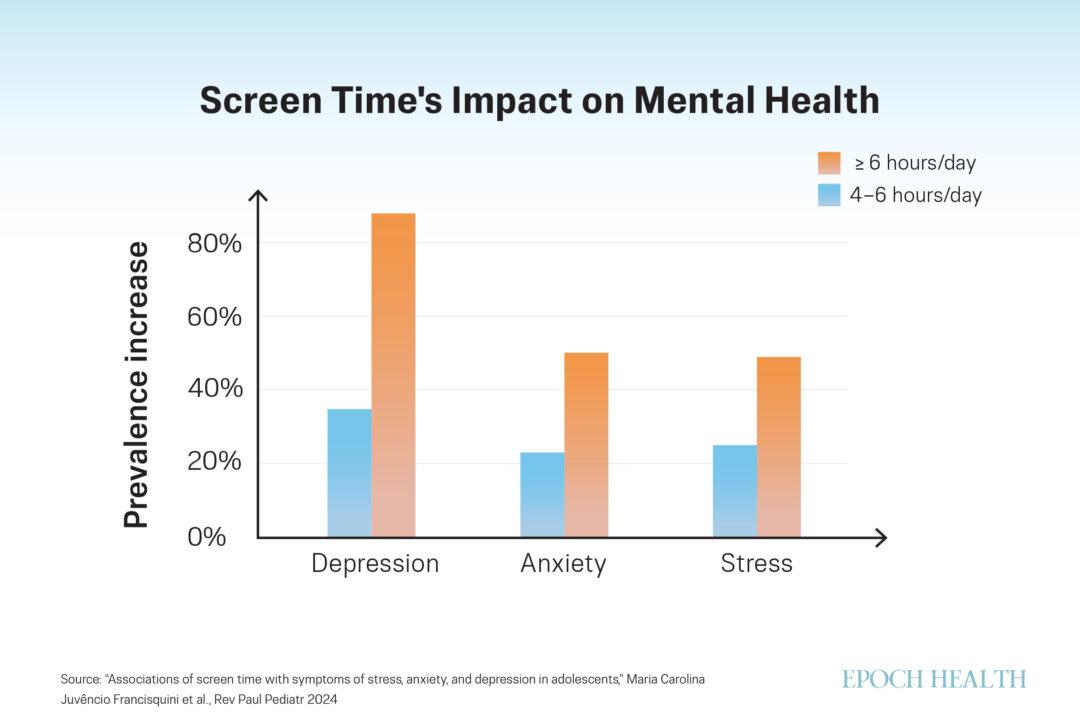
Suicide is the most pernicious, but certainly not the only, mental affliction. A 2024 study, involving 982 adolescents, found that screen time of four to six hours per day led to a 25 percent increase in stress, 35 percent increase in depression, and 23 percent increase in anxiety compared to those with less than two hours of daily screen time.
(The Epoch Times)
“In the largest studies, teens who are heavy users of social media are nearly twice as likely to be depressed as non-users,” Jean M. Twenge, a professor of psychology at San Diego State University and author of the book “10 Rules for Raising Kids in a High-Tech World,” told The Epoch Times. Such a risk is not a small number for parents, she said.
In preschool-and school-aged children, high screen exposure has been associated with attention difficulties.
For instance, 9-year-old Mark received an ADHD diagnosis as he exhibited symptoms of impulsivity, inattention, aggression, and mood swings that intensified with increased screen time, according to his case study published in Environmental Research.
He spent most of his time playing video games on his PlayStation, computer, or smartphone, averaging more than seven hours on weekdays and even more on weekends. He was put on methylphenidate, but the drug apparently caused him to become underweight.
Seeking an alternative, Mark’s parents enrolled him in a behavioral program in which he was put under a screen time reduction plan. Mark began showing improvement within two weeks. At week 11, his condition had significantly improved, and he no longer met the ADHD diagnosis.
Lissak, the author of the review, followed Mark after the intervention. He told The Epoch Times that Mark hasn’t been diagnosed with ADHD-like symptoms again.
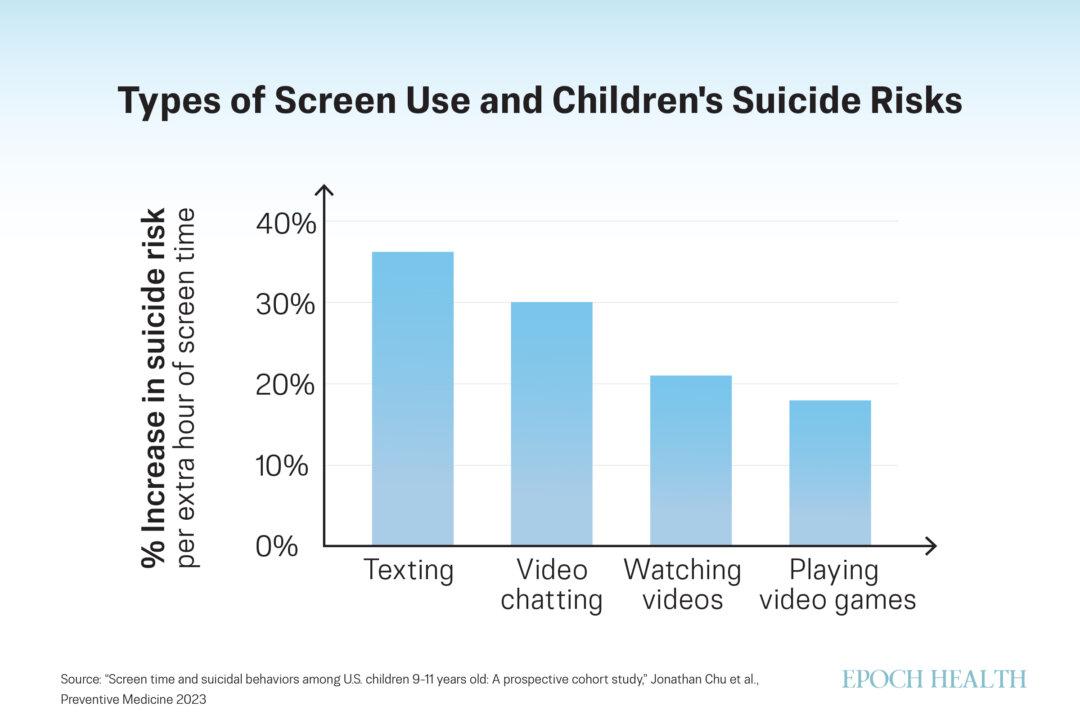
Problematic screen use is also found to result in suicidal behaviors. A 2023 study involving more than 11,000 U.S. children, aged 9 to 11, found that each extra hour of screen time per day was associated with a 9 percent higher risk of suicidal ideation and attempts.
The odds of experiencing suicidal thoughts and behaviors were 36 percent higher for texting, 30 percent for video chatting, 21 percent for watching videos, and 18 percent higher for playing video games.
(The Epoch Times)
The Cure
Despite extensive scientific evidence associating screen time with health risks, digital technology has already penetrated every corner of society.
“Because everyone uses it, everyone is affected by it,” Kishore PV Reddy, a senior machine learning engineer whose work focuses on training AI models, told The Epoch Times.
Although modern devices come with built-in blue light filters, research shows they may not be very effective. Kaur instead recommends healthy habits, such as frequent blinking, minimizing glare, taking regular breaks from screen work, and following the 20-20-20 rule of looking at something 20 feet away for 20 seconds every 20 minutes, to reduce eye strain.
Panda suggests holding phones at arm’s length while reading or watching videos, or using speaker mode during long calls to reduce radiation impact, and not keeping them near pillows or beds while sleeping.
What’s most important, fundamentally, is to cut the source—reduce screen time.
“We can’t tell people to stop using cellphones but to use them judiciously—using them only when absolutely required,” Panda said.
For kids, Twenge advises delaying giving them their own devices for as long as possible. “No parent, educator, or developmental expert would say that 13, at the beginning of puberty and during middle school, is the right time to introduce social media,” she said—as children and younger teens are more vulnerable. Thirteen is the minimum age for kids to use most social media platforms in the United States.
Alternatively, use a basic phone instead of a smartphone. This works for adults too, but they can get two phones —one for work, one for home—the latter with only text messaging and call-making capabilities.
Experts recommend replacing screen time with engaging alternatives.
For Reddy, who works long hours on screens throughout the week, striking a balance between on-screen and off-screen activities is an important first step toward healthier living in the digital age.
“Practicing meditation, reading physical books, playing a musical instrument, taking on challenging tasks, or simply going for a walk can all help you,” he said.