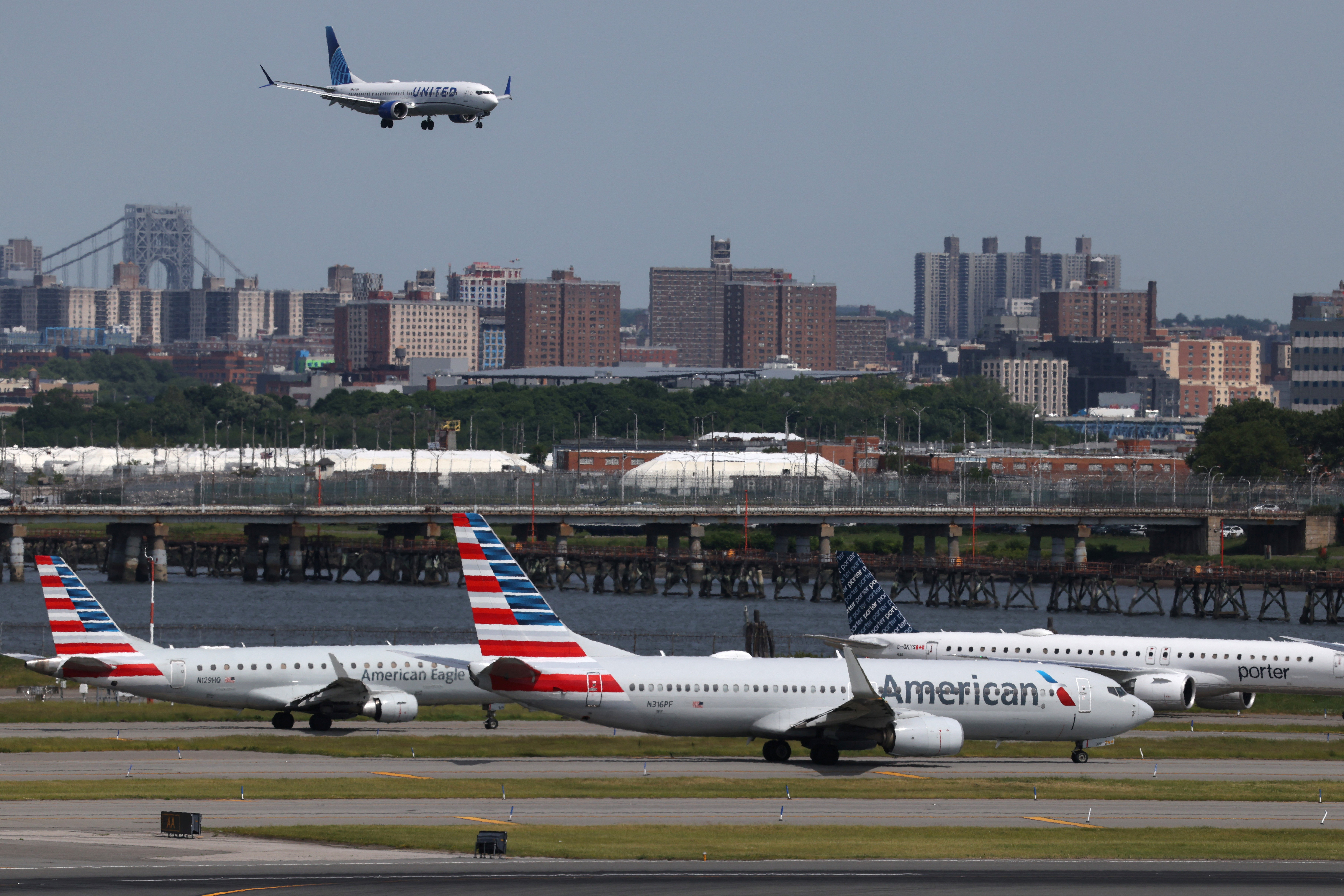

The FAA extended flight limits at three major travel hubs in the New York City area on June 18 to ease congestion on the runways, citing continued air traffic control staffing shortages.
The limits will be extended at Newark Liberty International Airport in New Jersey through summer 2027; and New York City’s John F. Kennedy International Airport (JFK) and LaGuardia Airport through Oct. 28, 2028, according to an FAA spokesperson.
“These are among the many steps the FAA is taking to reduce congestion-related delays, address air traffic controller staffing challenges, and improve operational reliability at some of the nation’s busiest airports,” the spokesperson told The Epoch Times in an email.
The goal of reduced flights at the airports is to continue operating safely while reducing flight delays and equipment challenges, the FAA said last year. The limits were extended in September 2025.
Air traffic control staffing levels continue to strain operations at airports. Nationally, air traffic control positions are only 74 percent staffed, according to 123ATC, a national staffing dashboard.
When the limits were first enacted in June 2025, the FAA reported that staffing at New York Terminal Radar Approach Control (TRACON), which oversees airspace for the airports, was at 73 percent.
Newark airport controllers were also experiencing equipment failures, according to the notice.
In May 2025, the FAA cut flights at Newark after a series of major disruptions from TRACON alerted the agency to problems within the aging system. United Airlines canceled 35 flights per day, or about 10 percent of its daily schedule.
Transportation Secretary Sean Duffy said air travel remained safe despite the outdated system and announced a multibillion-dollar plan to modernize air traffic control infrastructure.
The FAA is also extending staffing-related relief at Ronald Reagan Washington National Airport in Arlington, Virginia; and JFK and LaGuardia airports for the winter 2026/2027 and summer 2027 scheduling seasons, the FAA spokesperson said.
For airlines at the busy hubs, this means that carriers such as American Airlines and Delta Air Lines can reduce their flight schedules to comply with the FAA’s flight limits without risking having their takeoff and landing slots confiscated in the future.
Airlines usually must use at least 80 percent of their takeoff and landing slots at congested airports. The FAA waiver allows airlines to fly 10 percent fewer flights.
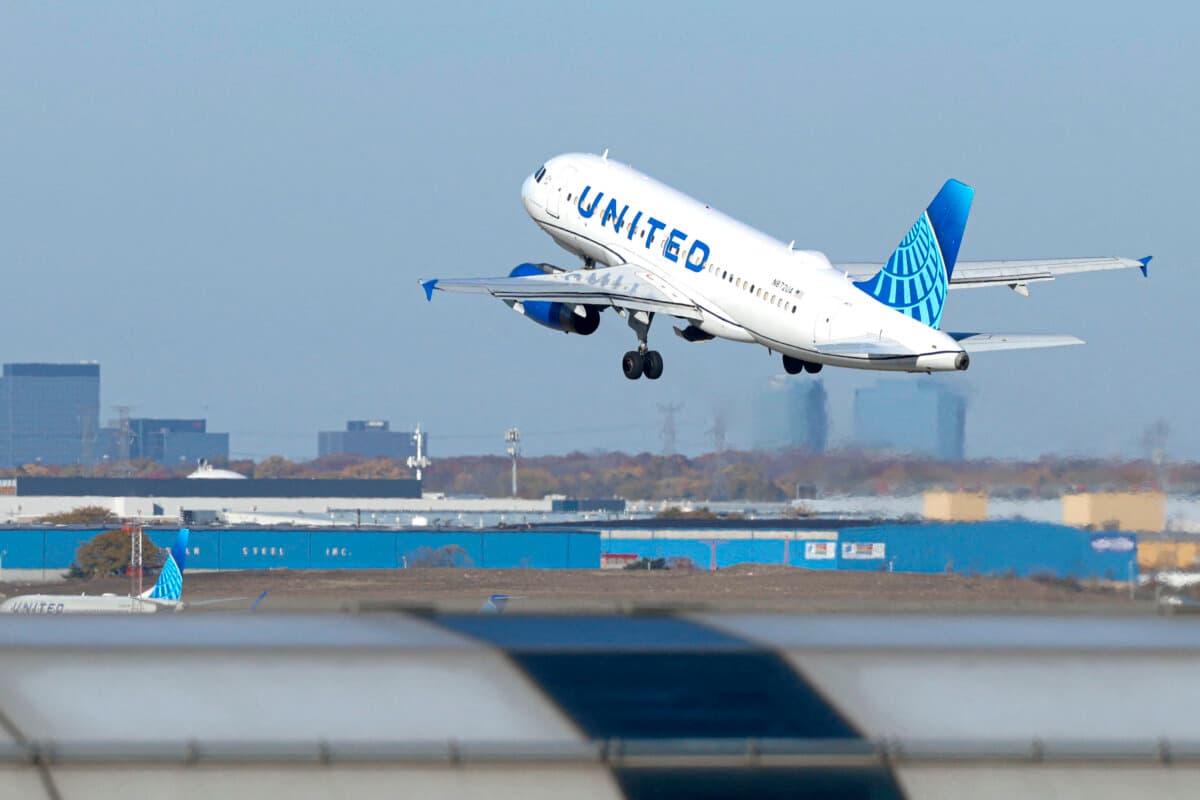
A United Airlines passenger plane departs Chicago O'Hare International Airport in Chicago on Nov. 7, 2025. (Kamil Krzaczynski/AFP via Getty Images)
The agency has used similar waivers in the past to address staffing issues at JFK and LaGuardia airports.
The FAA released a plan in May to boost its workforce, calling for eliminating the staffing shortage and ensuring more certified controllers in the coming years.
The agency plans to eventually have 12,563 certified controllers on board. As of April, only 11,000 were deployed across more than 300 facilities, with 400 in training, the FAA said.