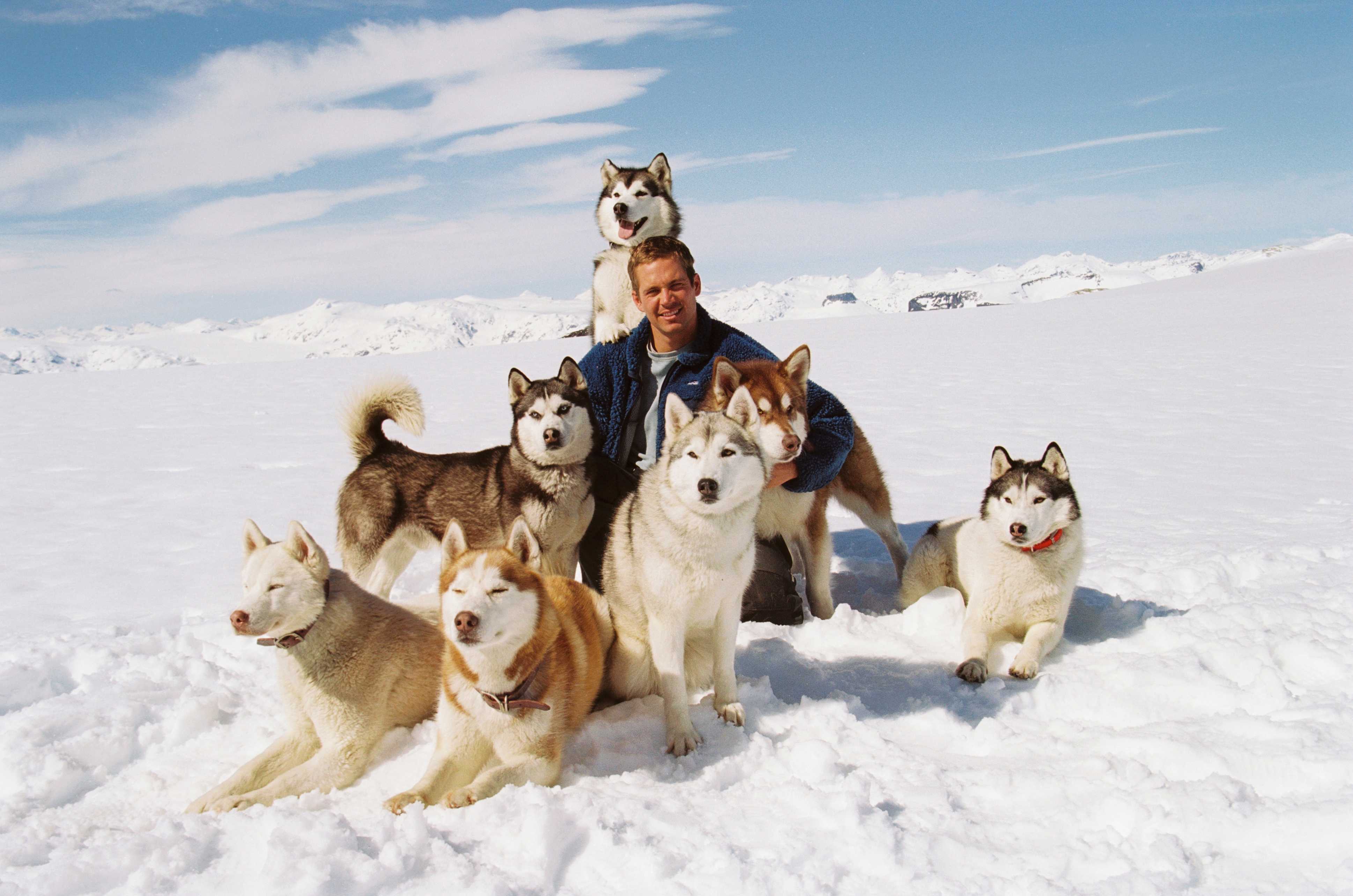

That a dog is man’s best friend is a truism. In return, shouldn’t man be a dog’s best friend? The 2006 family film “Eight Below” asks and answers that question.
Antarctica has only two seasons: summer, from October to March, and winter, from March to October. During the summer, sunlight lasts all day long every day, making it ideal for wildlife that isn’t hibernating. The Antarctic summer also works in favor of intrepid human explorers, such as those on the Antarctic research base in this film.
One January, geologist Dr. Davis McLaren (Bruce Greenwood) sets out from that base, hunting for a rare meteorite. Its discovery may transform the earth sciences. He’s helped by guide Jerry Shepard (Paul Walker) and his stouthearted dogsled team.
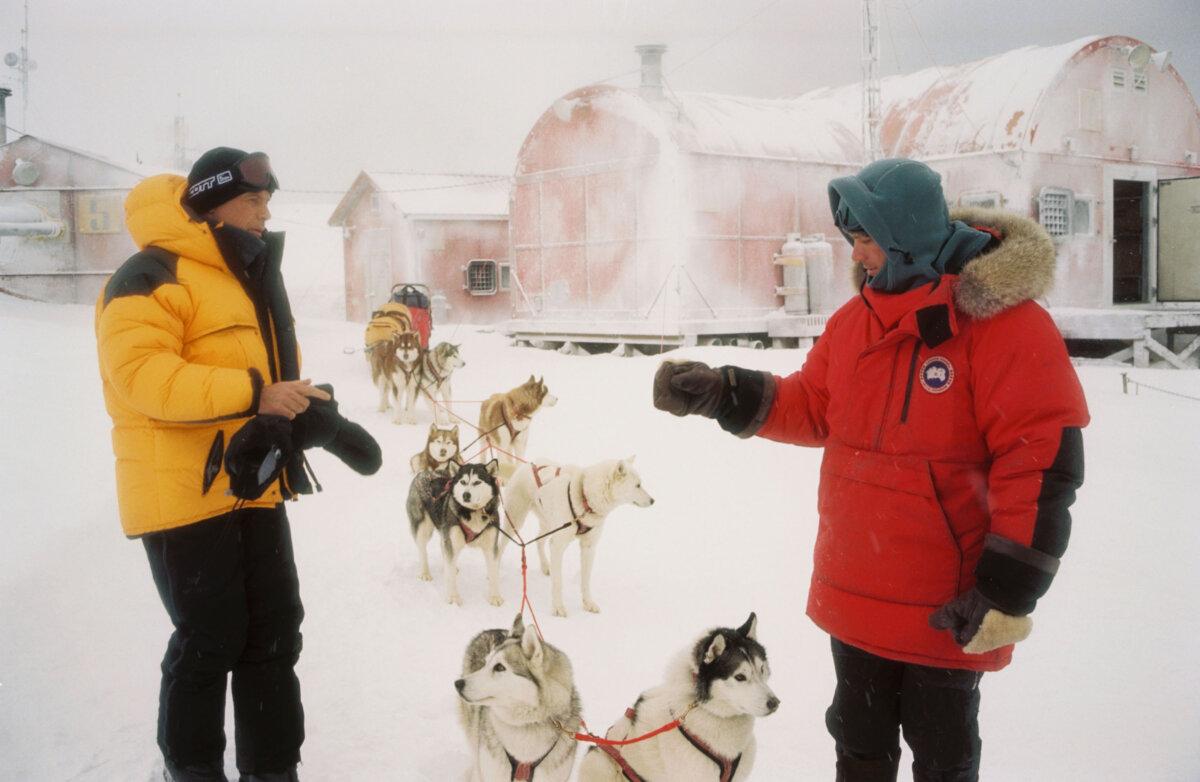
Davis McClaren (Bruce Greenwood, L) and Jerry Shepard (Paul Walker), in "Eight Below.” (Walt Disney Features)
Once the meteorite is in the bag, everyone suddenly evacuates the base as notorious polar storms kick in. There’s one problem: Jerry’s dogs, six Siberian Huskies and two Alaskan Malamutes, can’t be evacuated immediately with the humans. They’re tethered outside the base, with plans to return for them soon, before the lethal winter arrives.
By the time everyone’s been evacuated, winter has arrived; because of harsh weather conditions, authorities rule out a rescue trip for over six months. Inconsolable, Jerry sees that as a death sentence to his beloved dogs. Can they survive the brutal elements for six days, let alone six months?
Do the Japanese have the inside track on dogs and their bond with man? It’s mere conjecture, but there may be something to it. This film about huskies draws on the 1983 Japanese film “Antarctica,” which was based on a doomed, real-life mid-20th-century Japanese expedition to the South Pole. Likewise, the film “Hachi” draws on a Japanese legend about the mountainous Akita breed.
The Japanese treasure loyalty in ways other cultures don’t. Unsurprisingly, dogs feature prominently in their cultural folklore. That’s something all cultures can ponder. Ultimately, this isn’t slavish devotion but something nobler.
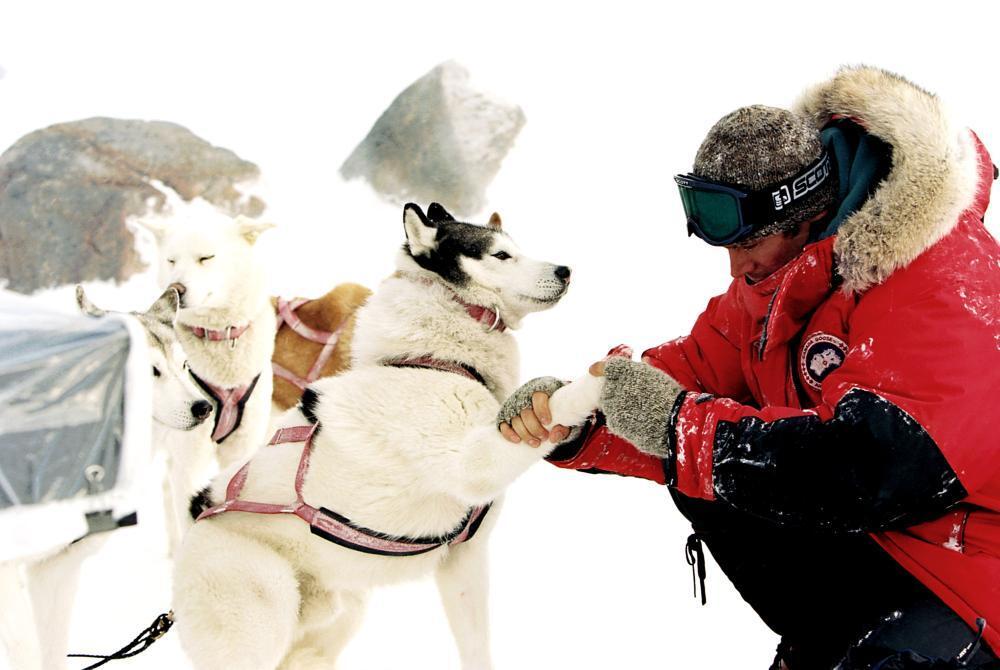
Jerry Shepard (Paul Walker), in “Eight Below.” (Walt Disney Features)
Naming is a divinely ordained way of creating belonging where it otherwise wouldn’t exist. Man’s sway over nature, like God’s sway over man, is meant to embody wise kinship, not wicked dominion.
If noble humans mirror the divine, however faintly, don’t noble animals mirror humans, especially domesticated animals? Why? Humans can’t help imparting some of themselves to their animals.
Endearingly, Jerry calls his dogs “kids” and names each one: Maya is leader of the pack; 10-year-old Jack’s readying for retirement; Shorty’s the white one; Max is the pup of the bunch; the twins are Truman and Dewey; and then there are the two malamutes, Shadow and Buck.
A leader must be first but among equals. Here, Maya leads the sled, but the pack can’t power itself unless the other seven dogs pull their weight at the right time in the right way.
Jerry uses a “fan formation” when speeding over suspiciously thin ice; in this way, the weight of the sled-party is spread out safer. Not that Maya vanishes as leader in a flanking maneuver; she just leads differently.
Devotion as the Default
Hope and despair aren’t two sides of the same coin. They’re different coins; only one leads to self-pity and self-loathing. Devastated at having to desert his dogs, a despondent Jerry tells an apologetic Katie (Moon Bloodgood), “Sometimes you just have to lower your expectations.”
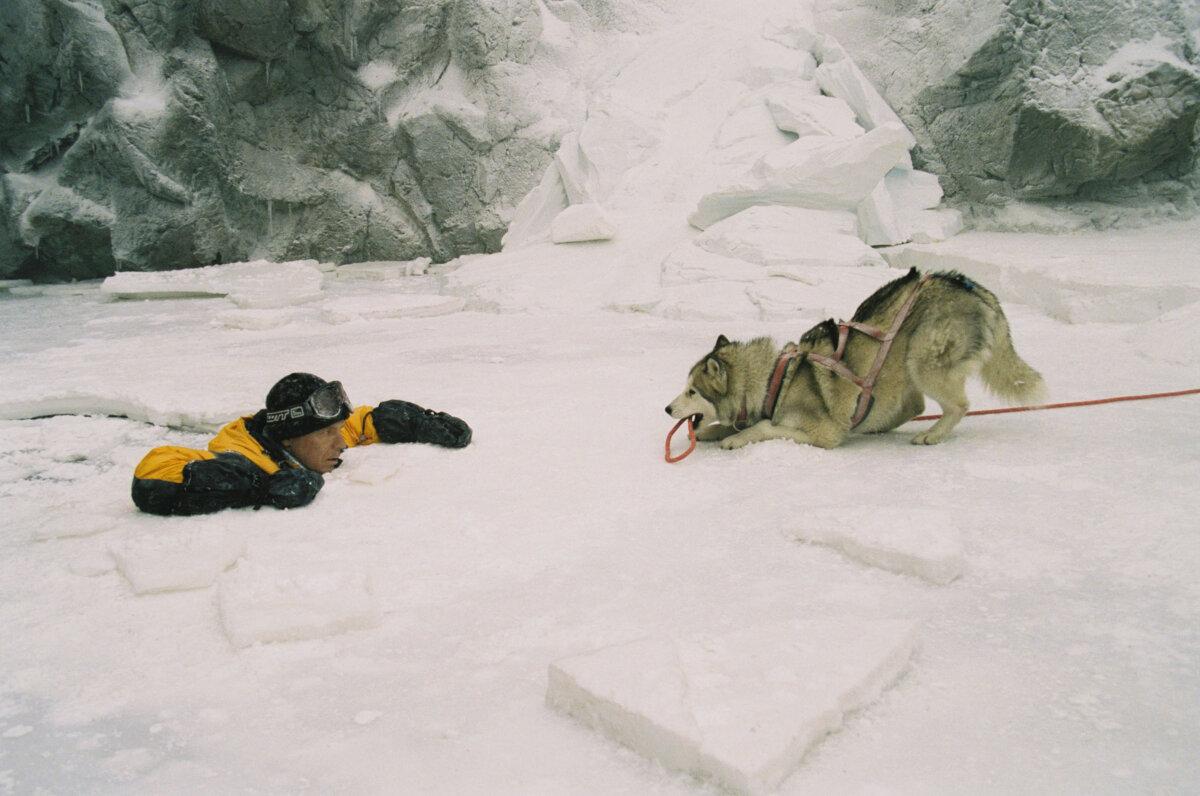
Davis McClaren (Bruce Greenwood) is in danger, in “Eight Below.” (Walt Disney Features)
Later, Katie comes for Jerry, for which he’s grateful, but she replies, “Sometimes you gotta raise your expectations.” Katie and other characters encourage Jerry not to beat himself up over circumstances that were clearly beyond his control. Why not make the best of things in the current moment? Every man and his dog is aware of the problems. Why not dwell on solutions?
Sometimes, dogs can teach humans to aspire to a deeper commitment worthy of them. Risking all, one dog crawls on thin ice to rope and rescue a stranded McLaren.
Jerry and his old flame Katie represent fleeting loyalties. Nevertheless, being devotedly tethered to a person doesn’t necessarily imply bondage. Sometimes it’s a freedom that people who are untethered can’t grasp. A loyalty that’s selfless isn’t slavery. When well-lived, it can be freedom.
Not all dogs are loyal to all masters. Here, the playful reference to a “dog person” signifies how picky dogs are. They don’t offer their loyalty easily. When they do offer it to a special someone, it’s for good.
Under a starry sky, Jerry and Katie consider getting back together. Privately, they wonder why they broke up in the first place. Shouldn’t devotion be the default?
Check the Internet Movie Database website for plot summary, cast, reviews, and ratings. You can watch “Eight Below” on Disney+, Apple TV, and Prime Video.
These reflective articles may interest parents, caretakers, or educators of young adults, seeking great movies to watch together or recommend. They’re about films that, when viewed thoughtfully, nudge young people to be better versions of themselves.
What arts and culture topics would you like us to cover? Please email ideas or feedback to features@epochtimes.nyc