
WASHINGTON—As Congress returns from its Easter break, lawmakers are preparing to navigate the renewal of a controversial surveillance law.
Section 702 of the Foreign Intelligence Surveillance Act (FISA), set to expire on April 20, enables the government to conduct warrantless surveillance of foreign targets outside the United States that are thought to pose a threat to the country.
Its defenders, who now include President Donald Trump, say it is vital to protecting national security, particularly amidst the Iran War, and draw attention to 2024 reforms.
Section 702 remains contentious because it can pick up incidental information on Americans without a warrant. That raises Fourth Amendment concerns among its critics.
Members of the conservative House Freedom Caucus are among those who have continued to articulate worries about it, threatening a reprise of a GOP rebellion against its renewal in 2024 despite changes intended to curb abuses.
On April 13, multiple Republicans in the Senate voiced concerns with a planned 18-month extension of Section 702 that has been endorsed by Trump.
Sen. Rick Scott (R-Fla.), a leader of the chamber’s conservative wing, told The Epoch Times he was a no, and Sen. John Kennedy (R-La.) told The Epoch Times he wanted to “listen to the arguments about FISA.”
“If you trust government, you failed history class,” he added.
Leader John Thune (R-S.D.) signaled that the chamber was considering contingency plans if the planned Section 702 renewal meets with resistance.
House Republican leadership delayed a planned vote on the authority in March.
The April 20 expiration date has created a sense of urgency on Capitol Hill for Section 702’s defenders.
At a March 19 hearing with intelligence community leadership, Rep. Rick Crawford (R-Ark.), the chair of the House Intelligence Committee, signaled support for the 18-month renewal.
Trump voiced support for that extension in a March 25 Truth Social post, saying the reforms passed in 2024 should be retained.
He wrote that while he believes FISA was abused during the investigation of his 2016 presidential campaign, “whether you like FISA or not, it is extremely important to our military.”
The House Rules Committee is slated to consider a rule on April 14 that includes FISA renewal. Past or present critics of Section 702 could push for amendments, complicating the attempt at a simple extension.
The committee’s members include Reps. Ralph Norman (R-S.C.), Morgan Griffith (R-Va.), Chip Roy (R-Texas), Michelle Fischbach (R-Minn.), and Nicholas Langworthy (R-N.Y.).
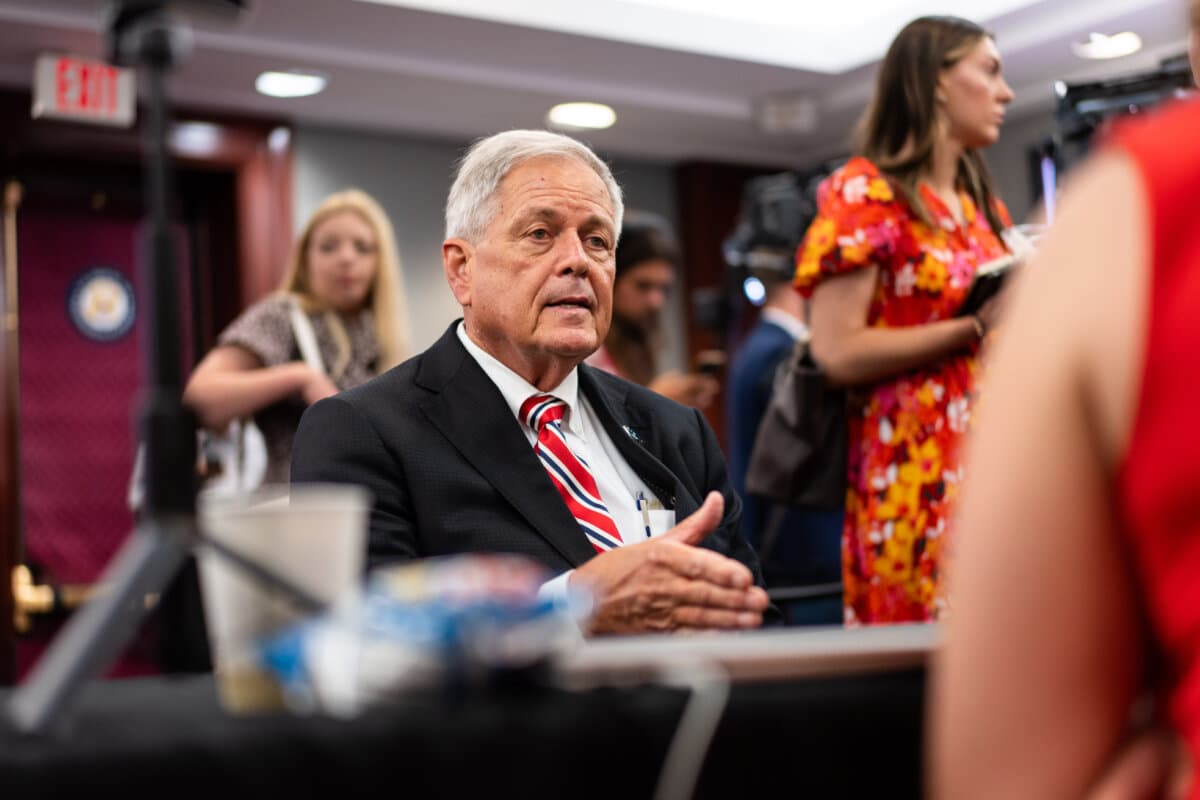
Rep. Ralph Norman (R-S.C.) speaks to repoters in Washington on July 15, 2025. (Madalina Kilroy/The Epoch Times)
Norman and Roy, who are running for governor of South Carolina and Texas’s attorney general, respectively, were among the 19 Republicans who opposed a procedural move to renew the authority in April 2024.
A later House vote to renew FISA that year met with 88 nays from Republicans, including Roy, Norman, Griffith, Fischbach, and Langworthy.
The Senate ultimately reauthorized FISA just a few minutes before its expiration in a 60–34 vote. It was opposed by 16 Republicans, including Scott.
On March 18, after Trump administration officials briefed lawmakers on Section 702’s renewal, House Freedom Caucus Chair Andy Harris (D-Md.) told reporters he wants something shorter than an 18-month extension.
“I hope there’s some room for negotiating a couple of smaller reforms into it to show good faith, that they know there are problems,” he said.
Sen. Mike Lee (R-Utah), another opponent of renewal in 2024, has signaled concerns with a clean reauthorization of Section 702.
He joined Sen. Ron Wyden (D-Ore.) to introduce a FISA reform bill in March that includes a Section 702 warrant requirement for Americans, though “with important exceptions for emergency situations.”
Wyden told The Epoch Times that there are “a lot of Republicans who don’t agree with the President’s simple extension” as well as “a lot of Democrats who are indicating they changed their minds” on the authority since it was last extended with fairly strong support from that party.
“I think it’s a different debate,” he added.
The House version of the Government Surveillance Reform Act is led by Reps. Warren Davidson (R-Ohio) and Zoe Lofgren (D-Calif.).