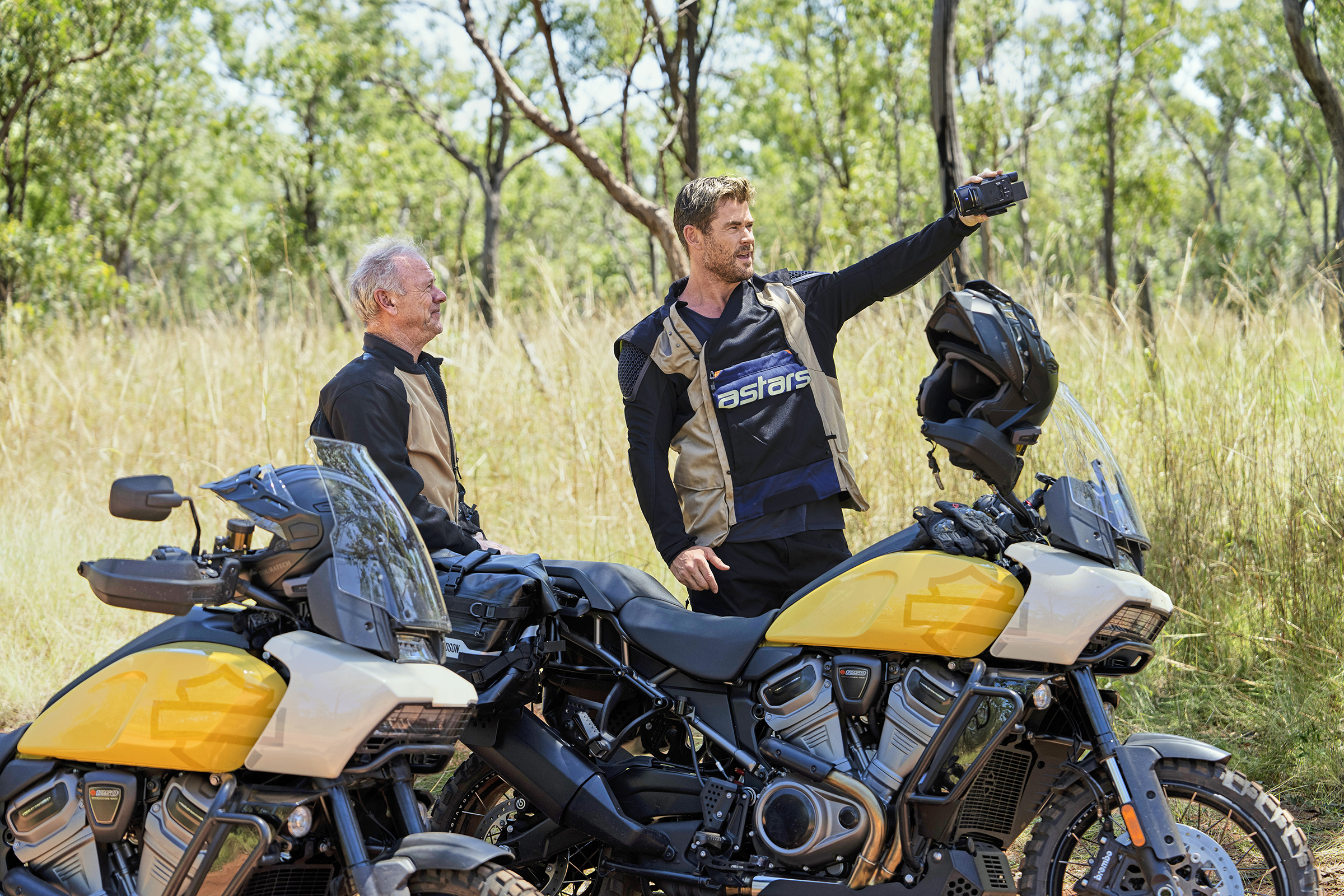

Today, more than 57 million people worldwide are living with dementia, with Alzheimer’s disease the most common cause. Every year, 10 million new cases of dementia are diagnosed worldwide.
When Chris Hemsworth, the Australian actor who rose to fame for his role as Thor in the Marvel Cinematic Universe movies, learned his father Craig, now 71, had early-onset Alzheimer’s, he realized the time had come for their long dreamed-of father and son journey to the Northern Territory, where their family had lived years ago.
“We often think that [dementia is] inevitable, but it’s really not,” Dr. Suraj Samtani, a dementia specialist and clinical psychologist at the University of New South Wales in Sydney, Australia, told The Epoch Times.
“We know that about half of our risk is genetic but the other half is not. There are lots of potentially modifiable things that we can actually do right now to delay dementia. Everyone knows what we can do is stay mentally active and physically active, but what we really wanted to do [in the documentary] was raise the awareness about just how important it is to stay socially active, because our research shows that being socially active puts the brakes on cognitive decline.”
Samtani, in collaboration with the producers and the Hemsworth family, designed a therapeutic “road trip back in time,” which included revisiting key places from their past to explore the powerful science of social connection, for “Chris Hemsworth: A Road Trip to Remember,” which premieres Nov. 23 on National Geographic and streams the next day on Disney+ and Hulu.
The Recipe for Brain Health
The younger Hemsworth, who three years ago discovered he has a high risk of also developing Alzheimer’s disease, isn’t new to documentaries or the team that helped make “A Road Trip to Remember.” The film is backed by the same creators who made Hemsworth’s National Geographic “Limitless” docuseries, where he investigated various ways to try and live better for longer.
While working on “Limitless,” Hemsworth underwent a battery of genetic tests to see what, if anything, his future health might hold. What he discovered, he says in the show, was “my biggest fear.” The results showed he has two copies of the gene APOE4, one from his mother and the other from his father, which studies have linked to an increased risk of Alzheimer’s disease.
One in four people carry a single copy of the gene, but only 2 to 3 percent of the population have both, according to a 2021 study by the National Institutes of Health.
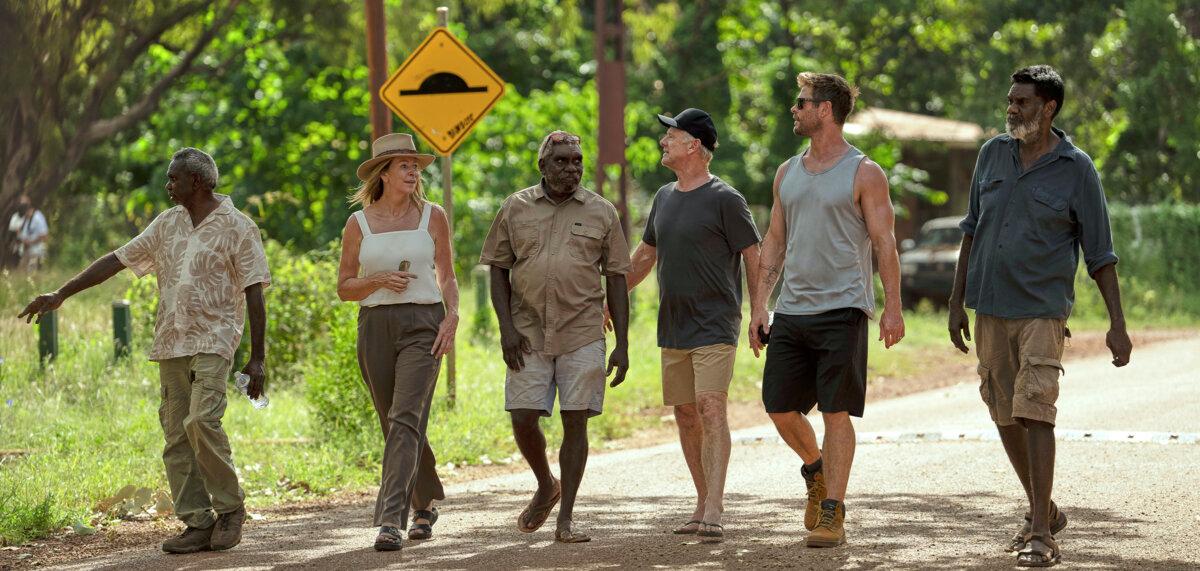
On a road trip into their past, Chris and his dad Craig explore the science of social connection and how it can support memory function. (Courtesy of National Geographic/Craig Parry)
“There is actually a very simple recipe for brain health,” said Samtani about managing the risk of developing dementia and mitigating it’s effects. “The ingredients are to keep exercising your body and your mind and to be around people. It’s really important that we’re looking after our mental health. Doing things that recharge you, that make you feel lighter—like talking to someone and being socially active. That has two benefits, because it provides cognitive stimulation through great conversations and activities and also it makes our heart feel lighter and that reduces our stress. Stress isn’t good for our brain because it causes inflammation, so that’s how we think social connections protect us.”
On the flip side, there are things that are known to contribute to brain aging that can be avoided.
“One of the things that we know is really bad for our brain health is processed foods and ultra processed foods,” said Samtani. “And being really sedentary is bad for us. So trying to move every day is important. Also, we know that smoking and drinking increase our risk of dementia. It’s really important to have healthy habits and to live towards putting things in your body that you know are good for you.”
[embed]https://www.youtube.com/watch?v=bJtFW5PQ7NU[/embed]
Social Connections: A Powerful Tool to Stave Off Dementia
As they motorbike across Australia together, Hemsworth’s emotional journey becomes a chance for the father and son to deepen their bond, relive memories, and discover how love, community, and nostalgia can be potent medicine. It becomes living proof of Samtani’s research, which shows that strong social connections can even slow cognitive decline after diagnosis.
This critical finding provides the scientific foundation for their road trip agenda, which includes reminiscence therapy: revisiting past experiences by talking to someone about them, using objects from the past (like photos or home videos), or visiting places from the past.
Social connection, regular interactions like talking with a friend or having a confidante, are shown to reduce the risk of early mortality and social bridging, and participating in wider community activities, like volunteering or group walks, is linked to slower rates of cognitive decline.
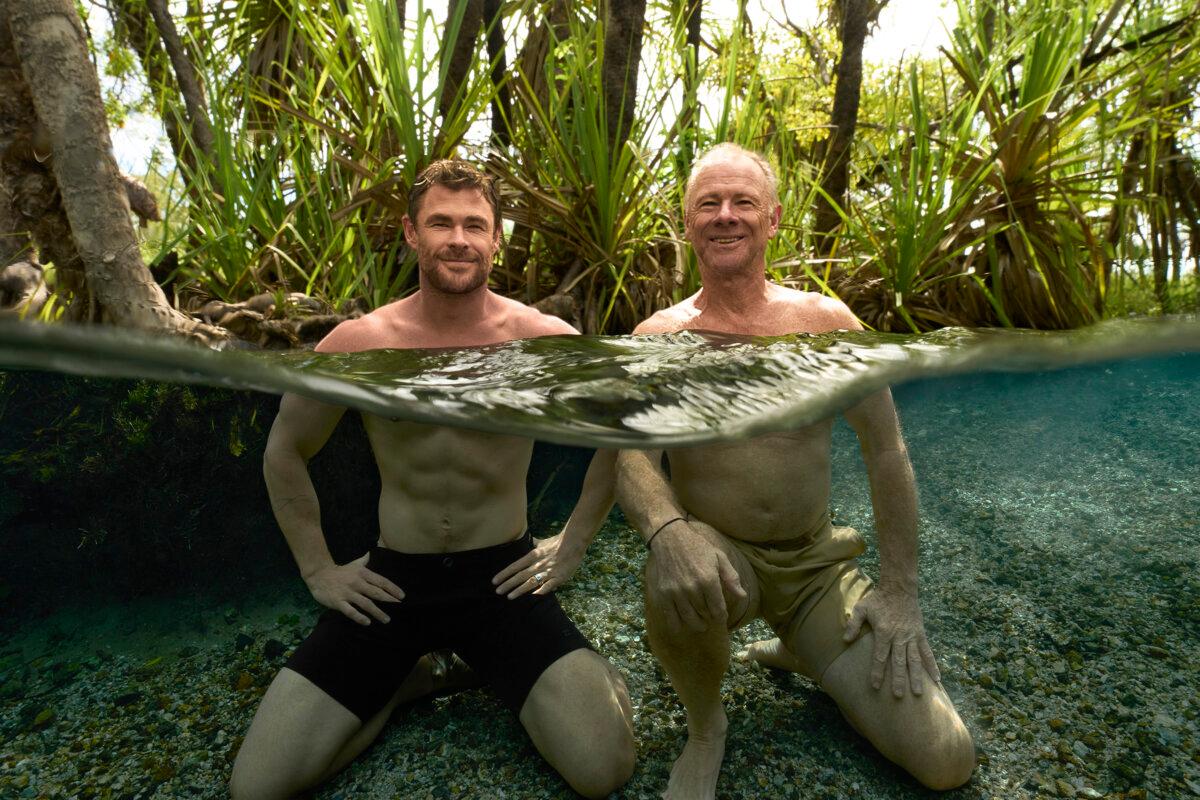
Chris Hemsworth and his father Craig at a blessing in Bulman. (Courtesy of National Geographic/Craig Parry)
“I think the whole experience that they had of recreating the childhood home [on their trip] really opened the floodgates of old memories for Craig and started to bring these memories back up to the surface,” said Samtani.
“And you could see as they met each person along this road trip that there would be good days, there would be bad days. But overall, having these interactions really boosted his spirits and his memory. And by the end, [Craig] was more like his normal self, just enjoying being with other people, talking, being in his own confidence. And that’s the beautiful thing about social connections is it raises our confidence and so does reminiscence therapy. So I think that was just a perfect combination for Craig, because you could see all the joy he got out of them.”
How can friends, family and loved ones make the most of their time with people with dementia? “The best piece of advice that someone gave me, and I use this in my clinical work as well, is to always react to the person as if they’re saying something for the first time,” said Samtani. “I think a lot of people feel the need to speak for the person living with dementia or correct them. We shouldn’t be doing those things. We should be rolling with it and meeting them wherever they are.”
While the actor and his father’s adventure had to come to an end, for Samtani the hard work continues. There are “factors for dementia that we didn’t recognize three, four years ago when this [documentary] was being planned,” he acknowledged.
“We know now, for example, that sleep is really important for our brain health. And there’s a lot of other risk factors that are social and structural—like how walkable is our neighborhood or how green is the area in which we live in? The tree canopy. These are the sorts of things that we’re researching now. We’re looking into the social determinants of health because it’s not just the individual but the world around us that determines our path as well. And it’s really important to understand those factors too.”