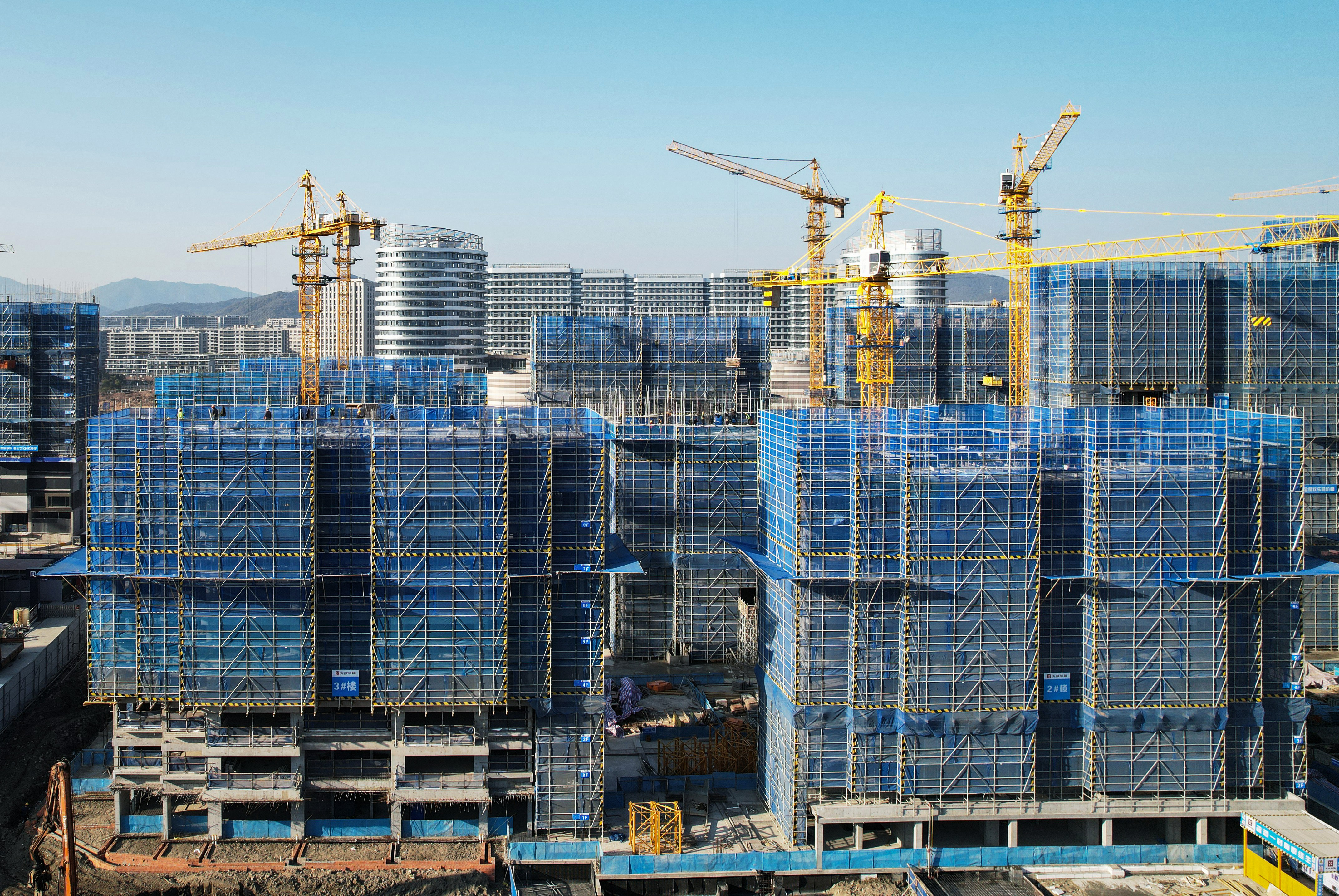

Many Chinese banks have recently accelerated efforts to directly sell foreclosed properties, drawing significant public attention. After repossessing the homes through judicial procedures, banks are bypassing the traditional auction process and selling them directly online, sometimes at half of their appraised value.
Chinese state media has acknowledged the surge of bank-owned homes entering the market, with news reports naming several major lenders, including the Agricultural Bank of China, China Construction Bank, and the Bank of Communications, which are offloading unprecedented volumes of distressed properties.
The label “bank direct sale,” used by banks for these properties, stands out on online property platforms. From top-tier cities to small towns, the number of listings is large and the discounts deep.
On Nov. 11, a 176-square-meter (1,894-square-foot) apartment in Harbin sold for 315,000 yuan (US$44,316), or about 1,800 yuan (US$253) per square meter, according to Hong Kong outlet Sing Tao News. This sales price is more than 50 percent below market value, which is at least 3,700 yuan (US$520) per square meter for similar units in the same complex.
Real estate agents from multiple regions told the Chinese-language edition of The Epoch Times that the deep discounts offered by banks are depressing home prices and hurting ordinary sellers. In recent months, homes listed at market value simply do not attract buyers. All of the agents requested anonymity, citing fear of retaliation from the ruling communist party.
A property consultant in Hefei, Anhui Province, who gave only his surname, Wang, said the surge in judicial auctions and the rise in bad loans are creating systemic financial risks. Banks are rushing into direct sales, he noted, because they urgently need to dispose of their growing nonperforming assets and recover cash.
State media reports have echoed this assessment, noting that traditional foreclosure auctions are slow, prompting banks to seek quicker liquidation channels. With year-end performance reviews approaching, banks are under pressure to bring down the nonperforming mortgage ratios on their books.
“If banks don’t sell these homes themselves to raise cash quickly, the financial market will collapse—and then China’s entire economy collapses,” Wang said. “When that day comes, ordinary people won’t even be able to afford food.”
He added that with major state banks already offering direct listings, many more local banks are likely to follow.
According to the Chinese newspaper Economic Observer, properties that banks are selling fall into two broad categories: residential homes and commercial assets such as factories and shops.
Wu, an agent in Wuxi, Jiangsu Province, who asked to be identified only by his surname, said many banks are now holding large inventories of homes abandoned by delinquent borrowers. Banks are increasingly unwilling to use the official auction system because entering the process can take a year.
He said an employee who works at a local bank disclosed that its branch began selling delinquent properties in September but has kept the sales private thus far.
According to public data, the number of bank-listed direct-sale properties nationwide increased 37 percent year-on-year in early November, reported the Economic Observer on Nov. 19.
The newspaper detailed direct listings by rural credit systems in six provinces. Among them, the Sichuan Rural Credit system alone has listed 24,821 properties for sale over the past 12 months.
Feng, a real estate agent in Xi’an, Shaanxi Province, who also asked to be identified with only his last name, said residential prices have dropped by half in many areas. Even after selling, many owners cannot fully repay their mortgages at such low prices. Some homeowners have chosen to walk away from their loans when they realized this fact.
According to these agents, steep bank discounts are dragging down prices and hurting ordinary sellers. Developers are also trying to sell homes at low prices on a large scale to meet sales targets.
Some banks have adopted similar strategies.
The Economic Observer reported that China Minsheng Bank is auctioning 10 homes in Beijing’s Chaoyang District as a bundle. The average price per square meter is about half the local market rate. Purchases are restricted for civil servants and financial regulators, and buyers must undergo anti-money laundering checks.
Wu also said many banks now negotiate directly with delinquent borrowers. Under these agreements, the bank sells the property on the owner’s behalf: If the home sells for more than the mortgage balance, the owner keeps the surplus; if it sells for less, the borrower is still required to repay the full remaining loan. However, banks still rely on agents to complete certain procedures.
Lowest Confidence in Decades
The arrival of deeply discounted bank direct-sale homes has dealt a heavy blow to an already fragile housing market.
Chen, an agent in Shenzhen, Guangdong Province, who only gave his last name, said that direct bank sales are driving prices down. However, the bigger problem is that many listings receive no inquiries.
“Buyers are scarce, and those who do look for property demand sharp discounts,” he said.
Chen revealed that in the area he serves, the average is just 0.78 homes sold per agent per month—meaning most agents are unable to complete even one sale.
“No one comes to the agency anymore to ask about listings. Agents themselves are unmotivated—they’re sluggish and far less efficient than before,” he said.
Across the board, agents are pessimistic about the outlook.
“I think prices will continue to fall—there’s no doubt,” Wu said. “Last year, the market was already stagnant. Now, many people are just waiting and watching. Even those with money aren’t buying.”
Chen added that the more sellers cut prices, the more buyers hold back. Both sides worry that prices will continue to decline. In other words, the confidence that once fueled China’s real estate boom is now at its lowest point in decades.
Fang Xiao and Xiong Bin contributed to this report.