
Iranian American economist Djavad Salehi‐Isfahani, who studied in Britain and America, mastered the economics of the Middle East and Iran. He used hard data to show how the Islamic Revolution and an anti-capitalist, totalitarian theocracy suffocated an otherwise booming economy.
His point? As in totalitarian China or North Korea, the culture of abundance and benevolence that the ruthless Iranian state and its “Supreme Leader” project to the outside world belies the human tragedy within.
“Children of Heaven” (1997), Iranian screenwriter and director Majid Majidi’s heartbreaking film about late 20th-century Iran, says the same thing more subtly. It was the first Iranian film to secure an Oscar nomination for Best Foreign Language Film.
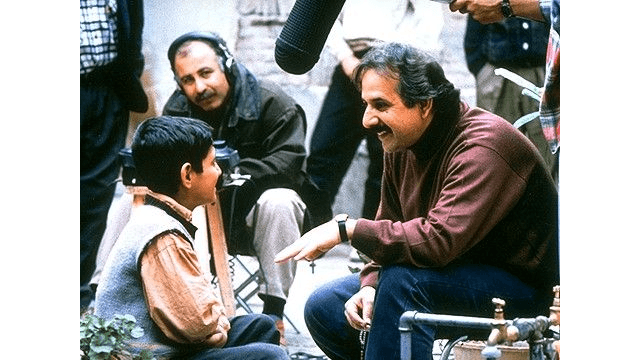
Child actor Amir Farrokh Hashemian and director Majid Majidi on the set of “Children of Heaven.” (Miramax)
However, Majidi’s camera only glances at manifestations of Iran’s oil-inflated GDP: glossy skyscrapers, fancy billboards, and fountains in the public square. He knows the prosperity that envelops those who toe the state line doesn’t touch millions of others whom the state ignores.
Instead, he spotlights the smiling stoicism of a poor family contending with unfulfilled aspirations. Here, the children study in Iranian schools, as Salehi-Isfahani did. But unlike him, they’re denied opportunities to grow beyond their station.
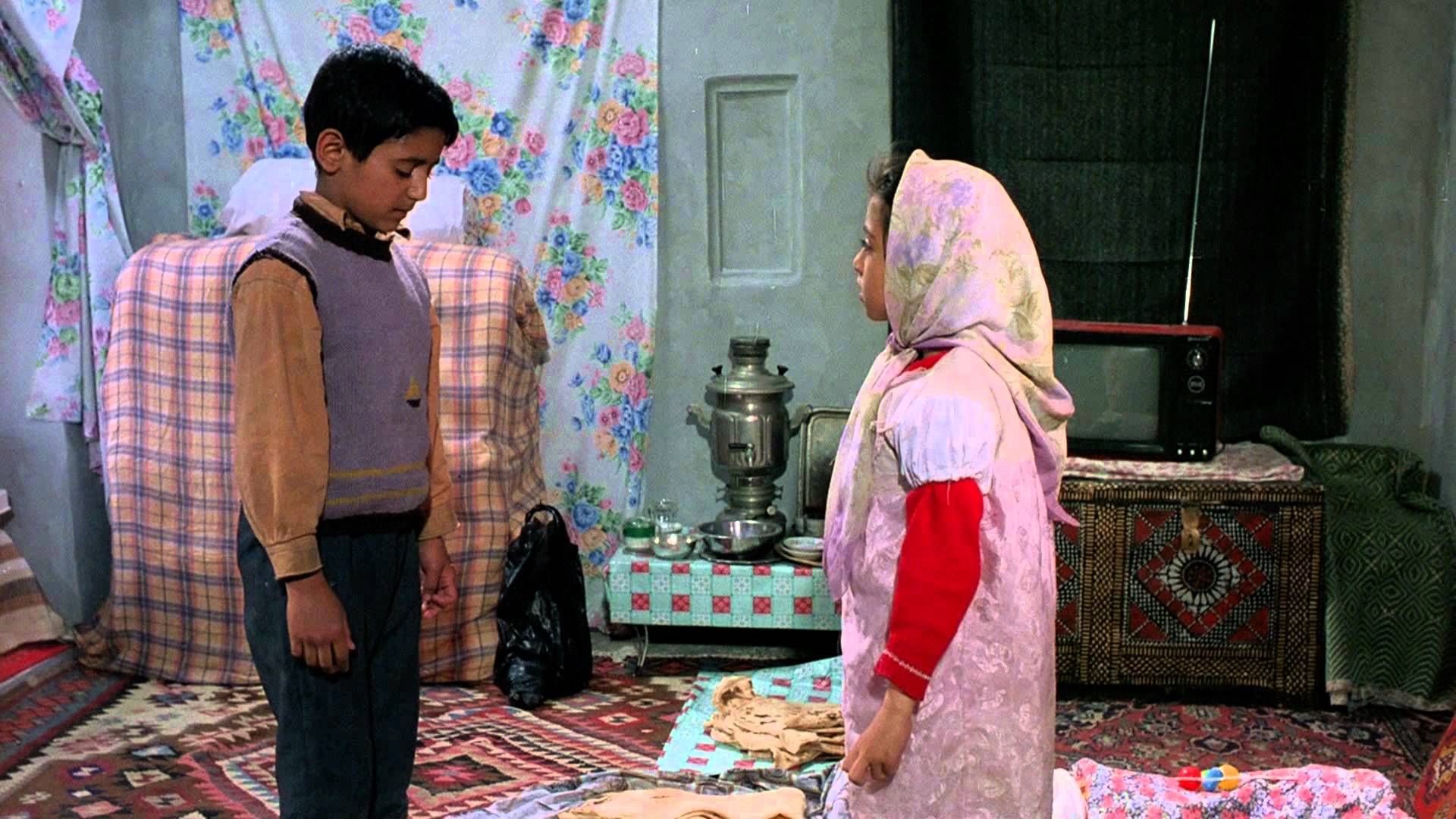
Third-grader, 9-year-old Ali (Amir Farrokh Hashemian) dotes on his 6-year-old sister, Zahra (Bahare Seddiqi). Their hard-working parents, now caring for a newborn baby, can’t afford new shoes for them, let alone a refrigerator for themselves.
When Ali misplaces Zahra’s worn-out shoes, he’s ready to move heaven and earth to find or replace them. He lends her his worn-out sneakers so she won’t be evicted from her school, even if he might be consequently evicted from his.
An interschool running race promises attractive prizes to winners, including a holiday camp, sports suits, and school supplies. Ali, though, eyes only the third prize: new sneakers. He hopes to win the sneakers then trade them in for new shoes for Zahra.
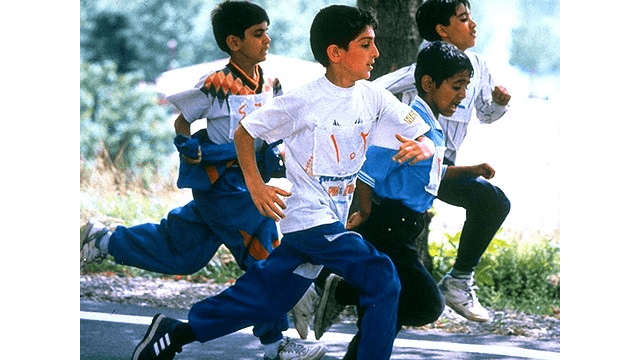
Ali (Amir Farrokh Hashemian) in the race, in "Children of Heaven." (Miramax)
Unfortunately, he’s spent the whole school season running between home and school, helping his parents with chores, so he’s dehydrated, malnourished, and exhausted. His blistered feet ache inside his now weathered sneakers that look more like worn-out socks than worn-out shoes.
Here, shoes and the feet they safeguard are metaphors for foundations, whether of personhood or of nationhood. If people can’t access lower, more basic financial freedoms, they can hardly be called citizens who aspire to more complex, higher freedoms. They’re more like half-citizens, in danger of being evicted from the fortress of freedom their state boasts of.
The children here proxy as half-citizens, with less than half the rights of freer, fuller citizens worldwide but with well over twice their responsibilities.
Nurturing Nationhood
Majidi’s lesson? Honest, hard-working citizens who are capable of compassion ought to shame their rulers. Those who have nearly nothing and end up sharing so much from what little they have should shame leaders who amass plenty at citizens’ expense.
Zahra and Ali find her worn-out shoes, but they’re on the feet of a schoolmate of hers. Furious, they secretly follow her, ready to reclaim Zahra’s pair. Nevertheless, on seeing that the girl’s father is an honest, hard-working man, who’s blind to boot, they forgo the thought of confronting her.
Ali’s mother, though convalescing, gets him to deliver hot soup to her aged neighbors. Far from truant, Ali tops his class; his teachers cut him slack not because he’s poor but because he’s earnest and hard-working.
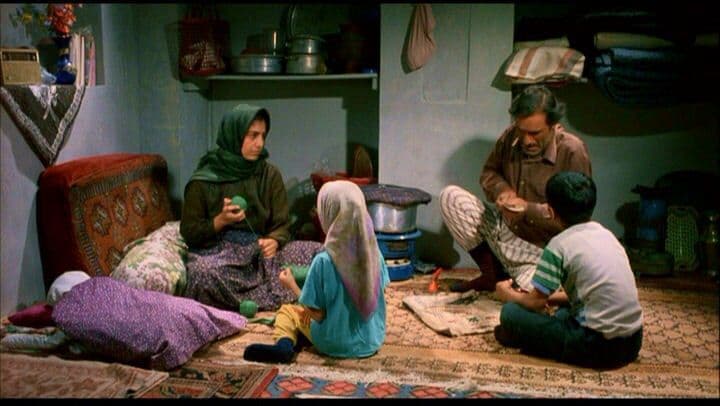
Ali's family, in "Children of Heaven." (Miramax)
Prayerlike, the children recite their school creed: “I am the flower of this country, obedient to the leader.” Sure, that’s state-sponsored brainwashing. Still, watching those children, it’s hard not to wonder whether such unquestioning obedience to an indifferent leader befits the innocent souls that these children represent.
The film opens with a 2-minute close-up of a cobbler repairing Zahra’s shoes. It’s as if Majidi’s saying that selflessness can heal a broken soul, just as a cobbler restores a battered sole. This is also the method of a wise leader, who nurses a bruised nation back to health with trust rather than with twine and with governance rather than with glue.
Some people dispose of a shoe because they think it’s beyond restoring; others rush to a cobbler because they believe it can be restored, even if they don’t know how. That requires humility. It also requires vision—to see the shoe not as it is but as it should be, for only the cobbler can see what the desperate yet hopeful wearer can’t. That makes all the difference.
Check the Internet Movie Database website for plot summary, cast, reviews, and ratings. You can watch “Children of Heaven” on Kanopy, Hoopla, and Prime Video.
These reflective articles may interest parents, caretakers, or educators of young adults, seeking great movies to watch together or recommend. They’re about films that, when viewed thoughtfully, nudge young people to be better versions of themselves.
What arts and culture topics would you like us to cover? Please email ideas or feedback to features@epochtimes.nyc