
A Canadian border official told MPs enquiring about Chinese electric vehicles that automobiles are on a watchlist for potential forced labour content.
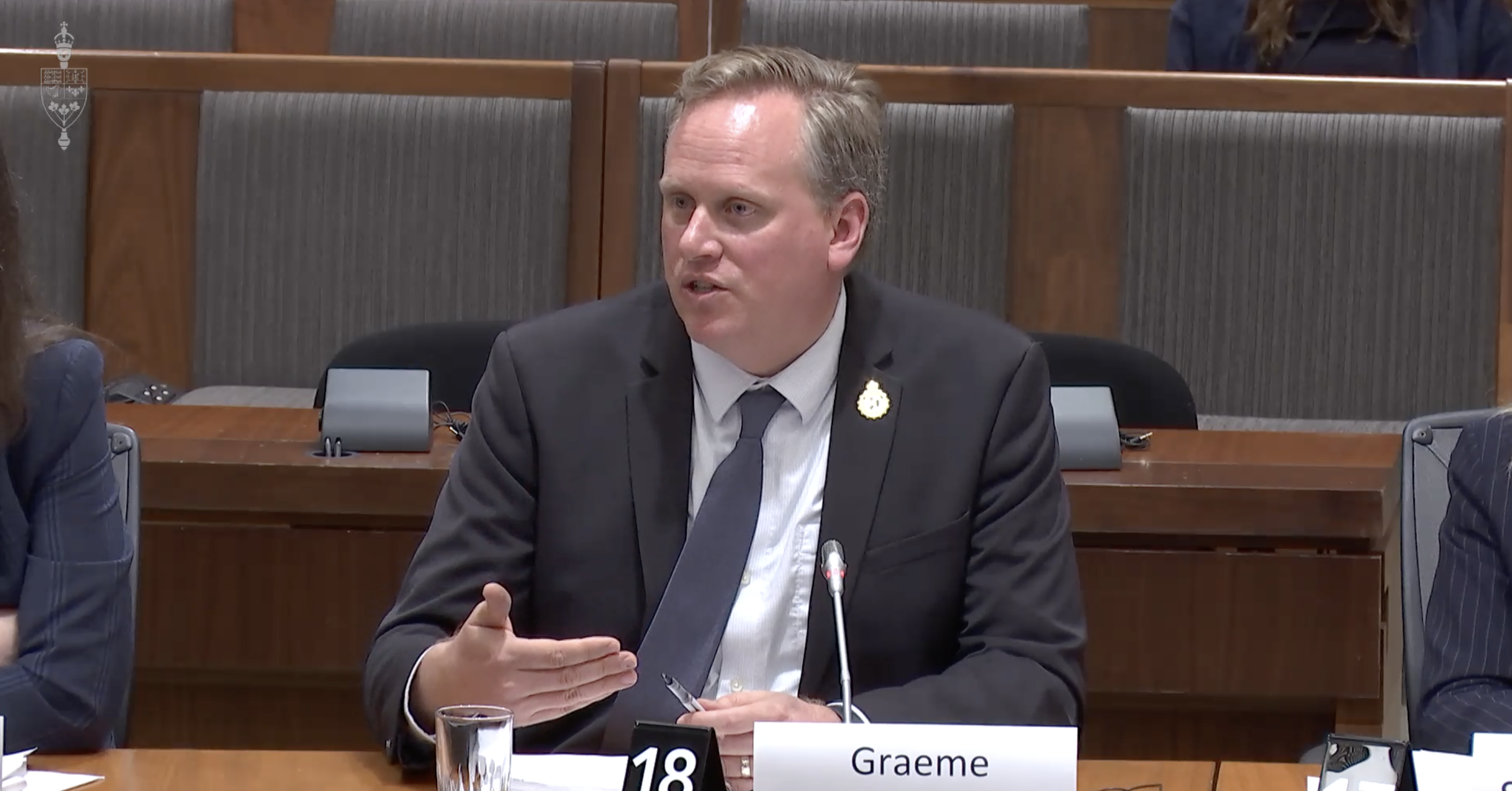
Graeme Hamilton, director general at the Canada Border Services Agency (CBSA), appeared before the House of Commons international trade committee on June 18 to provide testimony on enforcement of Canada’s import ban on goods produced using forced labour.
The federal government tabled Bill C-35 last week, aiming to strengthen Canada’s legal framework to prevent goods made with forced labour from entering the Canadian market.
The legislation would allow the foreign affairs minister to establish a list of goods for which there are “reasonable grounds” to suspect are produced using forced labour. The list would also indicate regions or countries where forced labour is a possibility.
Conservative MP Michael Kram asked Hamilton whether Chinese-made automobile parts and EVs should be included on that list. He referred to a 2024 U.S. Department of Labor report that identified automotive components produced in China as made with forced labour.
China experts have also warned that vehicles and parts fabricated in China have been found to be produced using forced labour.
“I wouldn’t want to speculate in terms of obviously what will make the list, but I can say, in terms of the targets that we currently have ongoing, automobile parts, textiles, seafood are some of the commodities that are in there,” Hamilton said. “It would not surprise me that automobile parts would be [listed].”
Kram asked how Canada’s enforcement mechanism works when it comes to goods suspected of being made with forced labour. “Do we have inspectors that go to China and look at the assembly lines?” he asked.
“I think, in some ways, you’re stumbling on some of the challenges that we have identified, through the use of the Customs Tariff,” Hamilton said.
He noted that “broad-based reporting” around the high likelihood of the use of forced labour in certain industries would not necessarily ensure the CBSA can successfully detain goods at the border, as the agency has to assess goods on a “shipment-by-shipment basis.”
“The burden of proof is that that particular car that is in front of you has a particular chassis that is made from aluminum that was produced using forced labour,” he said, adding that this process would then repeat with the next shipment of autos.
Enforcing Canada’s prohibition on imports made with forced labour is “inherently difficult” on a shipment-by-shipment basis, Hamilton said, adding that he believes this is one of the challenges Bill C-35 intends to address.
Under the bill, anyone importing goods on the prohibited list would have to prove to the CBSA, at the request of a customs officer, that the products are not made with forced labour. Otherwise, the goods would be deemed prohibited from importation.
Sara Wilshaw, senior assistant deputy foreign affairs minister, told the committee that it’s too soon to say what goods will be on the list of prohibited goods under Bill C-35.
“This bill has just been tabled [last] Friday. It needs to go through the normal process. The regulations need to be developed and the list produced in due course,” Wilshaw said.
Chinese EVs Enter Canada
Concerns about forced labour in Chinese-made EVs have intensified since Prime Minister Mark Carney’s government signed a deal with Beijing in January to allow 49,000 Chinese EVs into Canada at a reduced tariff rate of 6.1 percent from the previous rate of 100 percent.
Recent data from Global Affairs Canada indicates 2,910 Chinese EVs were allowed into Canada for the first time in May.
Kram asked Wilshaw what guarantees there are that those vehicles were not made with forced labour.
“All I can say is the existing forced labour import ban applies to all products, and that is currently the mechanism being used to prevent goods coming into the country that are made with forced labour,” Wilshaw responded.
Bill C-35 was introduced after the U.S. administration threatened on June 2 to impose additional tariffs on 60 countries, including Canada, for allegedly failing to institute forced labour restrictions.
Canada amended its Customs Tariff in March 2020 to include “mined, manufactured or produced wholly or in part by forced labour,” meaning the country forbids such imports. It is obliged under the Canada-United States-Mexico Agreement on free trade to not import products made in whole or in part by forced labour.
Meanwhile, the United States Trade Representative found Canada “has not taken action to restrict the importation of goods for which there is a known risk of forced labour” in regions of concern.
Foreign Affairs Minister Anita Anand told MPs during a parliamentary committee meeting on June 16 that she cannot confirm what goods will be on the list, which she said will be prepared when Parliament returns in the fall.
“Canada will not tolerate the presence of goods produced through forced labour in our markets,” she said in a June 12 statement.