

Australian businesses are losing ground in Papua New Guinea (PNG) amid an “aggressive push” into the region by Chinese and Malaysian companies, a PNG-based CEO warns.
Nick Coyle runs Qland Pharma and Diagnostics based in the PNG capital, Port Moresby, and was previously CEO of the China-Australia Chamber of Commerce (AustCham) in Beijing.
Coyle grew up in PNG and neighbouring Pacific island Bougainville in the 1980s and 90s, then spent 14 years in China before returning to head up his current businesses, including DS Power Solutions, which works in renewable energy.
His former partner, Cheng Lei, was notably detained during the height the trade war in 2020 that was instigated by Beijing in response to the Australian Morrison government calling for an investigation into the origins of COVID-19.
“There’s significant competition [in PNG], which China is winning. On the government side of things, it’s a little bit mixed,” Coyle told The Epoch Times. “In PNG, the government here tries to be friends with everybody, and I think it’s doing a pretty good job of that.”
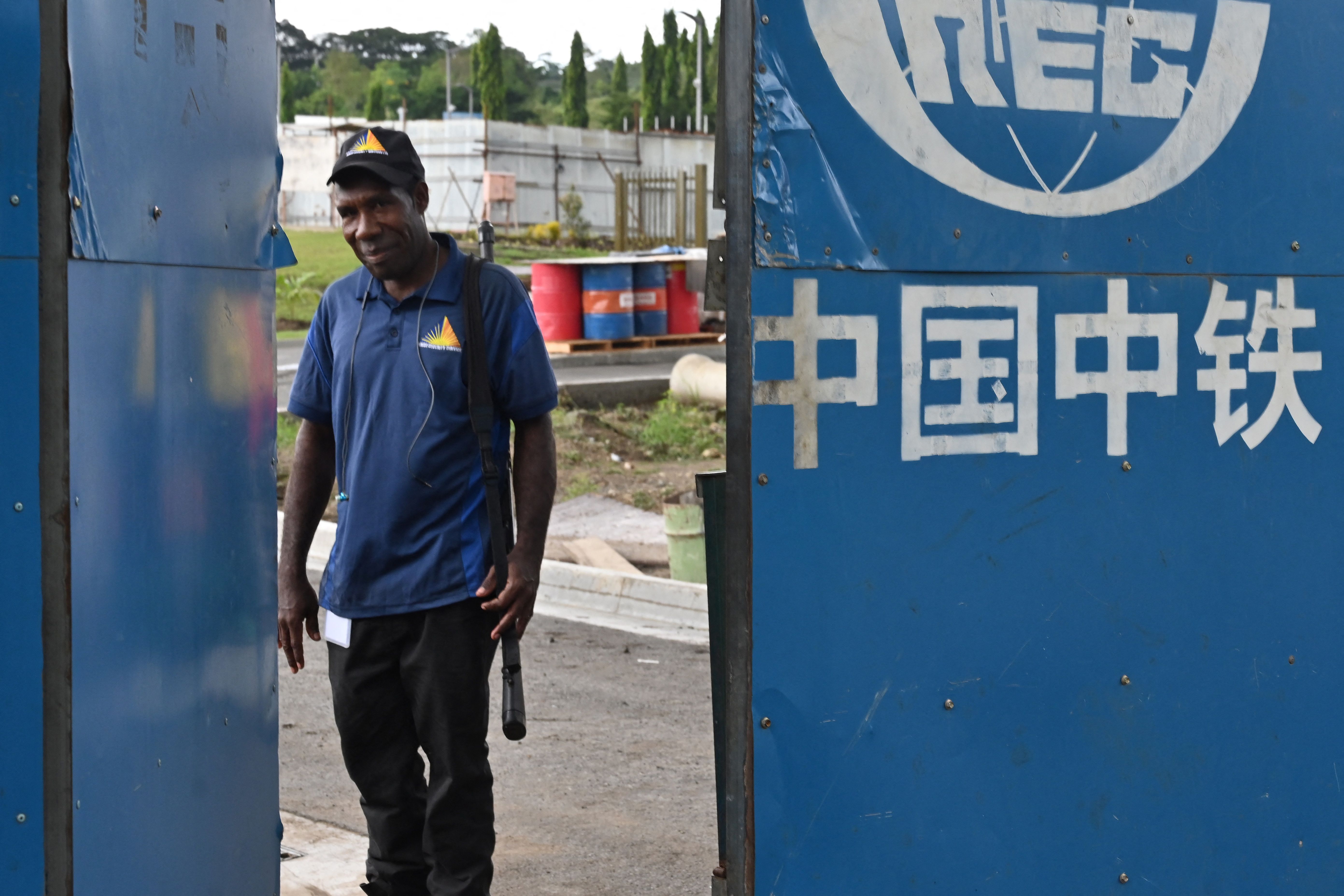
The push from Chinese businesses is particularly notable in mining and associated services, infrastructure, and the supply of equipment.
In fact, PNG’s second largest mine, the Porgera Gold Mine, is 24.5 percent owned by Chinese giant Zijin Mining Group, and the huge Ramu Nickel Mine is operated by a subsidiary of the Metallurgical Corporation of China.
“We’ve seen some direct investment [into mining] ... I’m told there’s a lot of exploration licences being granted for Chinese companies as well. A lot of [businesses] wanting to be in Greenfields ... so the mining and infrastructure sector is particularly strong,” Coyle added.
“The other area is forestry; there’s a huge Malaysian interest there.”
Around 30 years ago, Australian, American, Canadian, and New Zealand companies dominated those sectors, he recalls.
“That’s a significant change. Now we’re even seeing a little bit in financial services [too]. The Bank of China has a branch here, but it’s very embryonic.”
His comments come as Australian and democratic allies grapple with Beijing’s aggressive influence building in the region, notably in the Solomon Islands, which in April 2022 signed a secret security pact with the Chinese Communist Party (CCP) to allow the stationing of naval ships and weapons in the country.
Beijing-Backed Projects Winning the PR War: CEO
Meanwhile, Coyle said Beijing’s approach to aid was worth noting given its focus on high visibility projects—with bold Chinese branding—that can steadily win over the hearts and minds of the PNG population.
“For all that China’s negative aspects, it’s how it looks at economic development ... I think there’s quite a lot of justification to the way China looks at economic development, which is that you’ve got to get your infrastructure in first. So power, ports, airports, rail, connectivity, and telecommunications, and then you worry about things like governance and that sort of thing later. Get the building blocks in [first],” Coyle said.
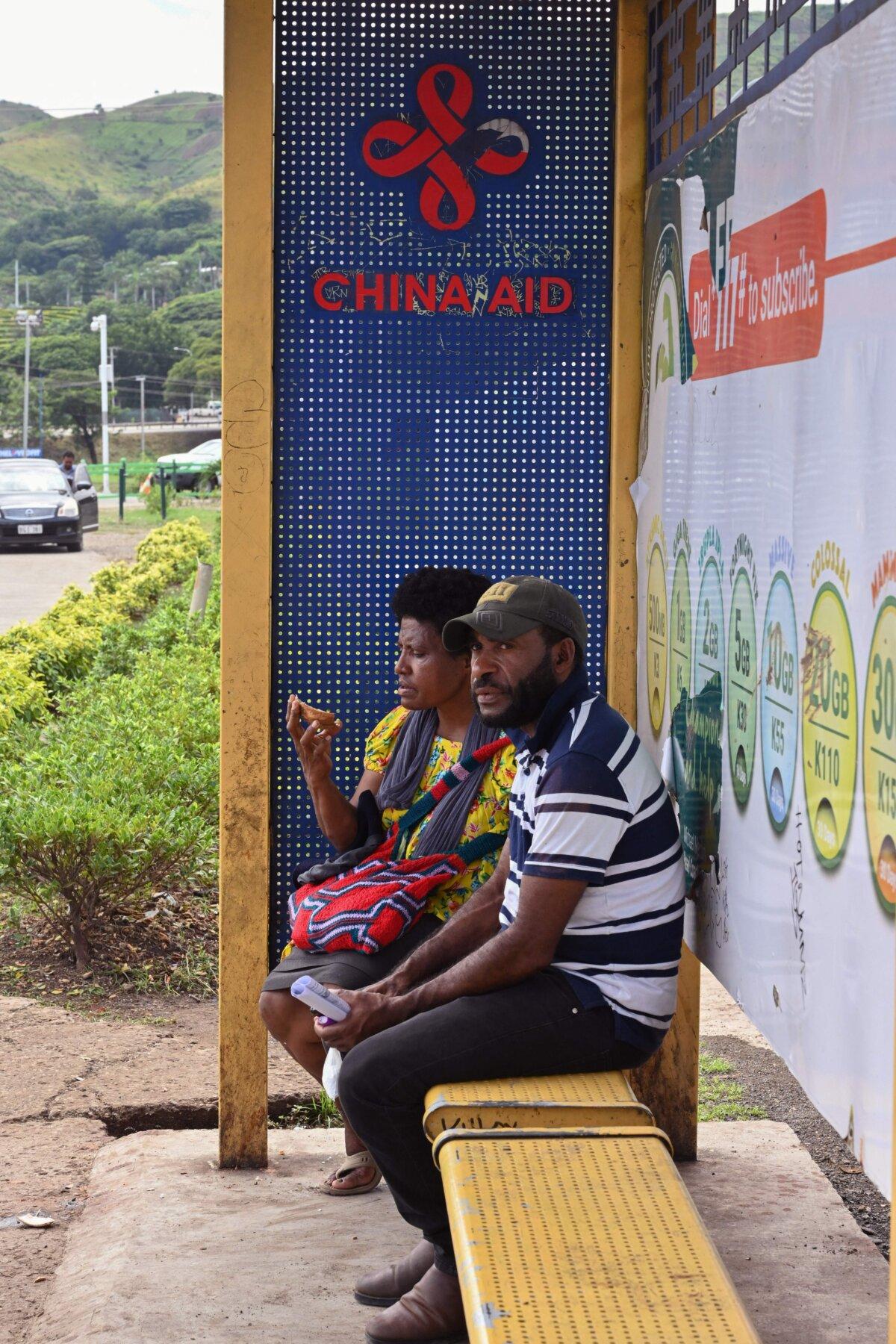
This picture taken on May 18, 2023 shows people sitting at a bus shelter in Port Moresby. (Adek Berry/AFP via Getty Images)
The CEO says this was an approach Australia used to adopt.
Unlike many parts of the world, people in the PNG have clean, drinkable tap water because Australia built much of its water infrastructure—at the time PNG was administered by Australia prior to independence in 1975.
“You talk to anybody from the army engineering corps back in the 60s and 70s, they built it. But we don’t do that [anymore], and where we do support infrastructure, most of those programmes are run by companies funded by the Department of Foreign Affairs [as opposed to a visibly Australian presence],” Coyle said.
“Australia started changing in the 80s and went away from building things in places like PNG to capacity-building, teacher-type stuff, and how effective that’s been over the years is fairly questionable,” he says, pointing to opportunities in the energy sector where 80 percent of the PNG population still has no power.
PNG’s electricity grid is primarily owned and managed by the state-owned entity PNG Power Limited (PPL), but the system also incorporates significant private sector involvement, and the government is pursuing further partial privatisation.
“Almost all of it runs off diesel, with a little bit of hydro, and it’s unreliable because the infrastructure was sold and the investment in upkeep has been underspent,” Coyle said.
In response to questions of corruption concerns, Coyle said the alternative approach hasn’t worked.
“Is PNG any less corrupt now than it was 20 years ago? No. Is it more corrupt? Possibly. So I get that argument ... [yet] for all of the good intentions and the funding that we’ve spent over the years in those spaces, I'd argue that it hasn’t really moved forward.”
Yet research from the Asia Foundation in 2022 (pdf) does suggest that despite the participation of major Chinese state-owned firms, many of these projects are bogged down with issues like technical deficiencies, delays, pollution, and poor governance (locally and internationally).
For example, the $414 million Chinatown project in Port Moresby—by Baosen International Holding—has largely sat dormant since the pandemic and only this year saw some work start again.
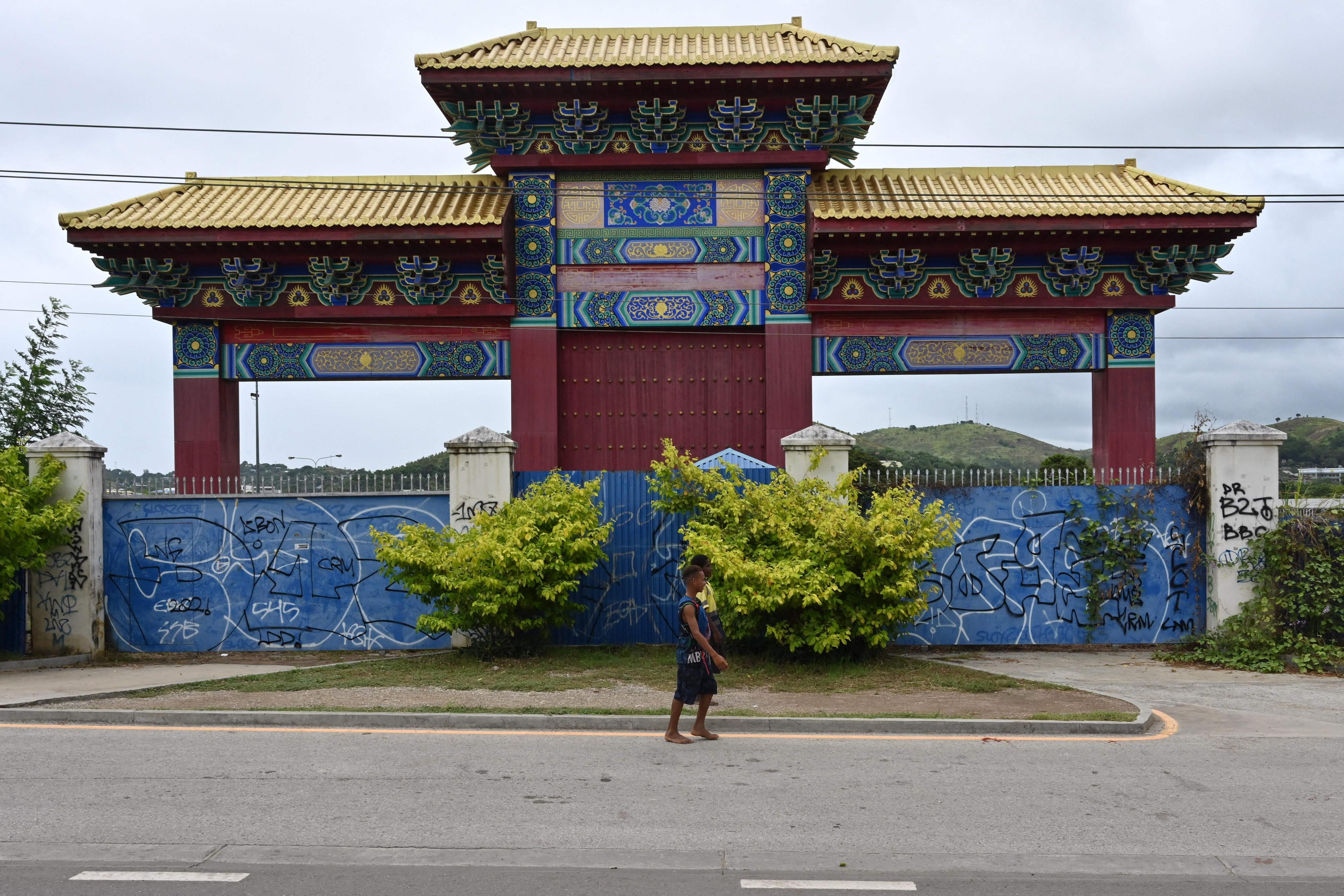
This picture taken on May 18, 2023 shows people walking past a Chinese style gate in front of a project site called Chinatown that stopped due to the COVID-19 pandemic in Port Moresby, Papua New Guinea. (Adek Berry/AFP via Getty Images)
Other Areas Where Australia Falls Short
He says another area where Beijing is actively competing is in education, where China offers postgraduate study and even undergraduate degrees to Pacific Islanders.
“We [in the Pacific] don’t see the large numbers of students getting scholarships into Australian universities,” Coyle points out.
“[Australia] really missed a trick there, in maintaining that sort of support, because they’re the people that might one day be business owners or political leaders, so I think that’s important.”
For some countries like India, Australia offers scholarships that can cover tuition, living expenses, and even airfares.
Coyle’s insights come as Australian leaders work to shore up alliances with the 20 or more South Pacific-based nations.
The Labor government recently tied up the “Pukpuk Treaty“ with PNG, which elevates both nations to ”alliance” status, meaning either country is obligated to consult and consider any measures in the event of an attack (pdf), or “act to meet the common danger.”
The pact drew a response from Beijing’s PNG Ambassador Yang Xiaoguang who wrote in an opinion piece that no country should “treat the island countries as its ‘backyard,’ or engage in zero-sum competition.”