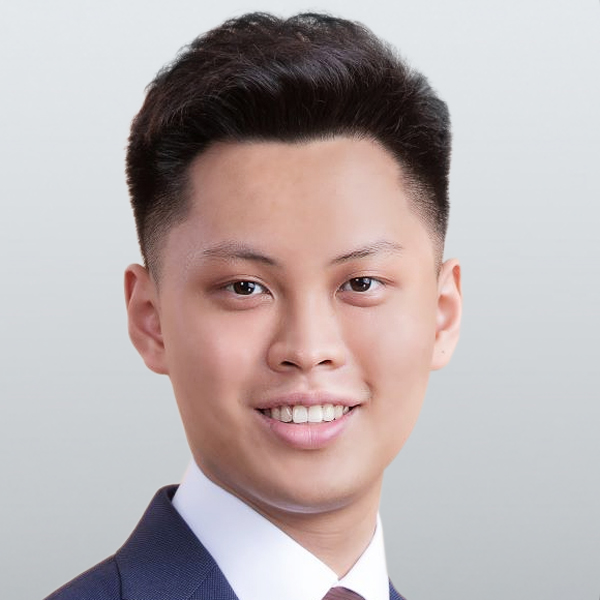
Yi Lianhong, a senior Chinese official and former provincial Chinese Communist Party (CCP) chief, is under investigation for “serious violations of discipline and law,” according to an announcement released by China’s top anti-corruption agency on Feb. 10.
The Central Commission for Discipline Inspection (CCDI) said Yi, a deputy director of the Financial and Economic Affairs Committee of the 14th National People’s Congress (NPC)—China’s rubber-stamp legislature—is being reviewed and investigated.
It is the first time during this NPC term that a sitting deputy director of one of its special committees has been publicly placed under investigation.
Yi’s fall has drawn attention because he holds a national-level post and previously served as Party secretary of Jiangxi and Zhejiang, two prominent provinces.
His case comes as authorities continue to investigate a growing number of senior officials in the lead-up to China’s annual “Two Sessions” political meetings, a period often marked by sensitive personnel shifts. The “Two Sessions” are held each year in early March and run for about 10 to 14 days, during which top leaders outline policy priorities and signal key personnel decisions for the year ahead.
Insider: Faction-Building Allegations
A CCP insider surnamed Qin told The Epoch Times that Yi had been seen as a rising political figure before the CCP’s 20th National Congress. Qin asked to be identified only by surname for fear of retaliation.
“Yi Lianhong was considered a key figure groomed by top leadership,” Qin said. “In 2018, he became acting governor of Liaoning Province, was promoted to governor the next year, and in 2021 was transferred to Jiangxi as Party secretary. I heard that he came under investigation as early as last year.”
Qin said Yi’s alleged problems were tied to accusations of building factions.
“It’s said that wherever he went, he built networks and promoted his own people. He allegedly formed cliques in Liaoning, Jiangxi, and Zhejiang. That’s what angered the top leadership most. Many in political circles expected this outcome,” Qin said.
In China’s political system, he said, officials are closely monitored, and even the appearance of forming factions can be career-ending.
Political loyalty is paramount under CCP leader Xi Jinping, Qin said, and factions are treated as a political-security risk because they can create independent influence networks. In that context, Qing added, Xi’s anti-corruption drive has also been a tool for tightening control.
The CCDI notice did not provide details about the specific allegations against Yi or the time period involved.
In China’s disciplinary system, such announcements typically use the standard phrase “serious violations of discipline and law” during the initial stage. Once the internal review is complete, cases are usually handed to prosecutors, followed by court proceedings and sentencing.
Power Struggle Ahead of Key Political Meetings
Chi, an independent scholar from Peking University, told The Epoch Times that the timing of Yi’s case reflects a broader political environment. Chi asked to be identified by surname for fear of retaliation.
“From the cases of Zhang Youxia, Liu Zhenli, and several ministerial-level officials, we can clearly see that ahead of the Two Sessions, a new round of personnel struggles is underway,” Chi said.
Zhang was the vice chairman of the Central Military Commission, the body that oversees China’s armed forces, while Liu served as chief of the Joint Staff Department under the commission. Both are among the CCP’s top military figures, and their recent downfall and scrutiny have drawn attention as part of a broader shake-up among high-ranking officials.
“Based on these developments, Yi Lianhong is unlikely to be the last ministerial-level official investigated before the meetings. More probes are likely to follow.”
According to public information, Yi was born in 1959 in Hunan Province. Over his career, he held senior posts in Hunan, Liaoning, Jiangxi, and Zhejiang. He served as Party secretary of Changsha and Shenyang, governor of Jiangxi, Party secretary of Jiangxi, and later Party secretary of Zhejiang. In 2024, after stepping down from his Zhejiang post, he was appointed deputy director of the NPC Financial and Economic Affairs Committee, moving into the national legislature system. He is also a member of the CCP’s 20th Central Committee.
During his time in Jiangxi, Yi oversaw economic and fiscal work, according to official reports. In Zhejiang, he oversaw local development and industrial planning. The NPC Financial and Economic Affairs Committee, where he currently serves, handles financial and economic legislation and reviews government budgets.
China-based analyst Zhou told The Epoch Times that recent cases indicate a shift in how Xi’s anti-corruption investigations are unfolding. Zhou asked to be identified by surname for fear of retaliation.
“In recent years, many of those investigated were officials who had already moved to less powerful positions,” Zhou said. “But many of the officials who have fallen recently were still in active posts. That suggests these moves are deliberate.
“A series of similar cases also points to changes within the top leadership, and the situation appears increasingly complex.”
Reporting by The Epoch Times shows that at least 40 senior officials—including two at the vice-national level—have come under investigation since Jan. 1, 2026. Zhou said this wave of cases appears to reflect shifts within the CCP’s top leadership structure.
Recently, the CCDI has continued to issue notices about investigations into provincial- and ministerial-level officials, many of whom are from local Party committees and government departments. At the investigation stage, announcements often lack detail, leading to differing interpretations among scholars and analysts.
Yang Qian contributed to this report.