
A driver plowed a bulldozer into a crowd at a busy market in Beijing’s Fangshan District on March 29, according to videos, witness accounts, and online discussion later scrubbed from Chinese social media.
Chinese authorities have not publicly reported the incident. However, multiple local residents told The Epoch Times that something serious occurred at the Dahanji market, and social media users noted the quick removal of videos and reports about the case.
The number of injuries or possible deaths remains unclear because of the censorship and lack of official information.
According to online accounts, the incident happened around midday at the Dahanji market in the Zhoukoudian area of Fangshan. Videos circulating online showed vendors and passersby being knocked to the ground after a bulldozer drove into the crowd. Their condition was not immediately known.
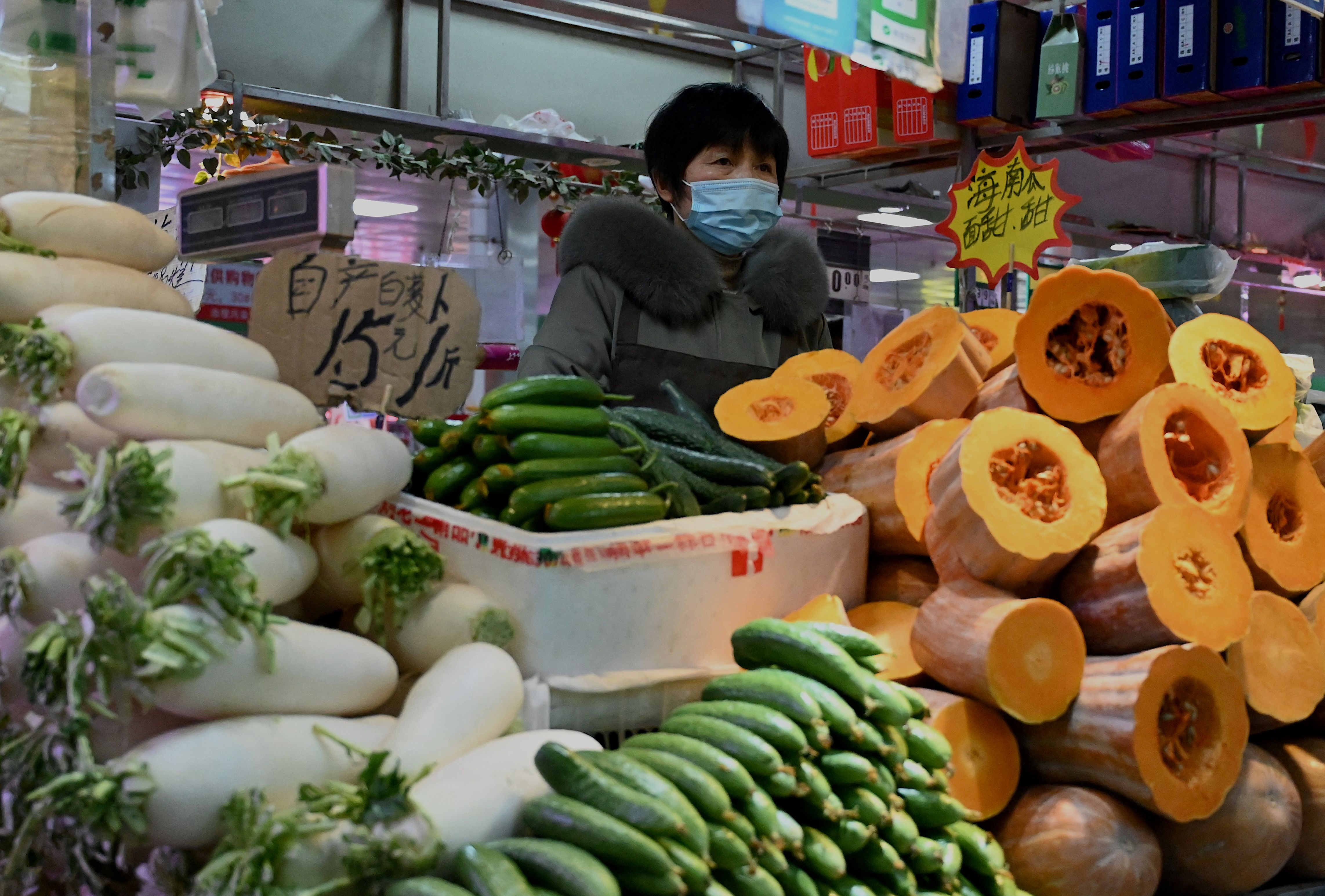
The Dahanji market is a long-established and relatively large traditional rural market in the village of Dahanji, and it is known locally as a busy gathering place.
No official statement had been released as of the time of reporting.
Several Chinese internet users said reports about the incident briefly appeared on WeChat, a Chinese social media and communications platform, before they were deleted and could no longer be found.
According to the deleted WeChat report, a witness said the incident occurred around 11 a.m. on March 29. The road had been closed off, and the vehicle appeared to break through a barrier before entering the market. The driver, allegedly in his 50s, was taken away by police.
Information about the incident also appeared to be heavily censored across major Chinese platforms. Related content on Douyin, the Chinese version of TikTok, and WeChat channels was blocked, and a search for “Dahanji market” on Douyin returned no results.
One Beijing resident told The Epoch Times that the incident appeared to be “a violent act driven by resentment toward society.”
Another local resident said the incident was widely discussed online before the videos disappeared.
“People say it was a very tragic traffic accident,“ the resident told The Epoch Times. ”A large bulldozer, or maybe a big truck, rushed in and ran people over. Quite a few people were hit.
“I heard it from friends. At first, there were videos on Douyin, and then very quickly they were gone. They couldn’t even be downloaded. I saw the video on Douyin myself.”
The resident added that some Douyin comments claimed that eight people had died. The Epoch Times could not independently verify that number.
The incident also drew discussion on X.
Yin Dengzhen, a former petitioner from China who has lived in Fangshan, wrote on X that the market is one of the busiest produce markets in the district.
“This is the place in Fangshan with the highest flow of people,” Yin wrote. “Many villagers here have been forced by the government to give up their homes in demolition disputes, and it is also one of the places where petitioners are most concentrated.”
Other comments on X expressed frustration at the ruling Chinese Communist Party.
“The real culprit is the Communist Party. ... If you go after passersby, then you become a terrorist. And if you go after passersby, the Communist Party doesn’t care,” one user wrote on X.
Another user wrote, “There have been a few too many Zhang Xianzhong-style incidents lately.”
The phrase “Zhang Xianzhong-style” is often used in China to describe random mass attacks against civilians—extreme, indiscriminate violence driven by revenge against society. Zhang Xianzhong was a 17th-century rebel leader associated with mass killings and destruction.
Ning Haizhong and Gu Xiaohua contributed to this report.