
Is grief meant merely to help us remember the past or to help us treasure the present? The recent Indonesian film “A Letter to My Youth” asks, and poignantly answers, that question.
Wealthy young man Kefas (Fendy Chow) becomes so overprotective of his daughter, Abigail (Sadiya Aisye), that his young wife, Rania (Agla Artalidia), takes Abigail and leaves home, allowing her husband space to return to his senses.

Kefas (Fendy Chow) goes back in time to his childhood, in "A Letter to My Youth." (Netflix)
Kefas is nursing childhood trauma that’s distancing him from both Rania and Abigail. Growing up as an orphan, teenaged Kefas (Millo Taslim) turned rebellious, blaming his father for abandoning him and his pre-teen sister, Angelina (Kathleen Thomas), especially after sickly Angelina died.
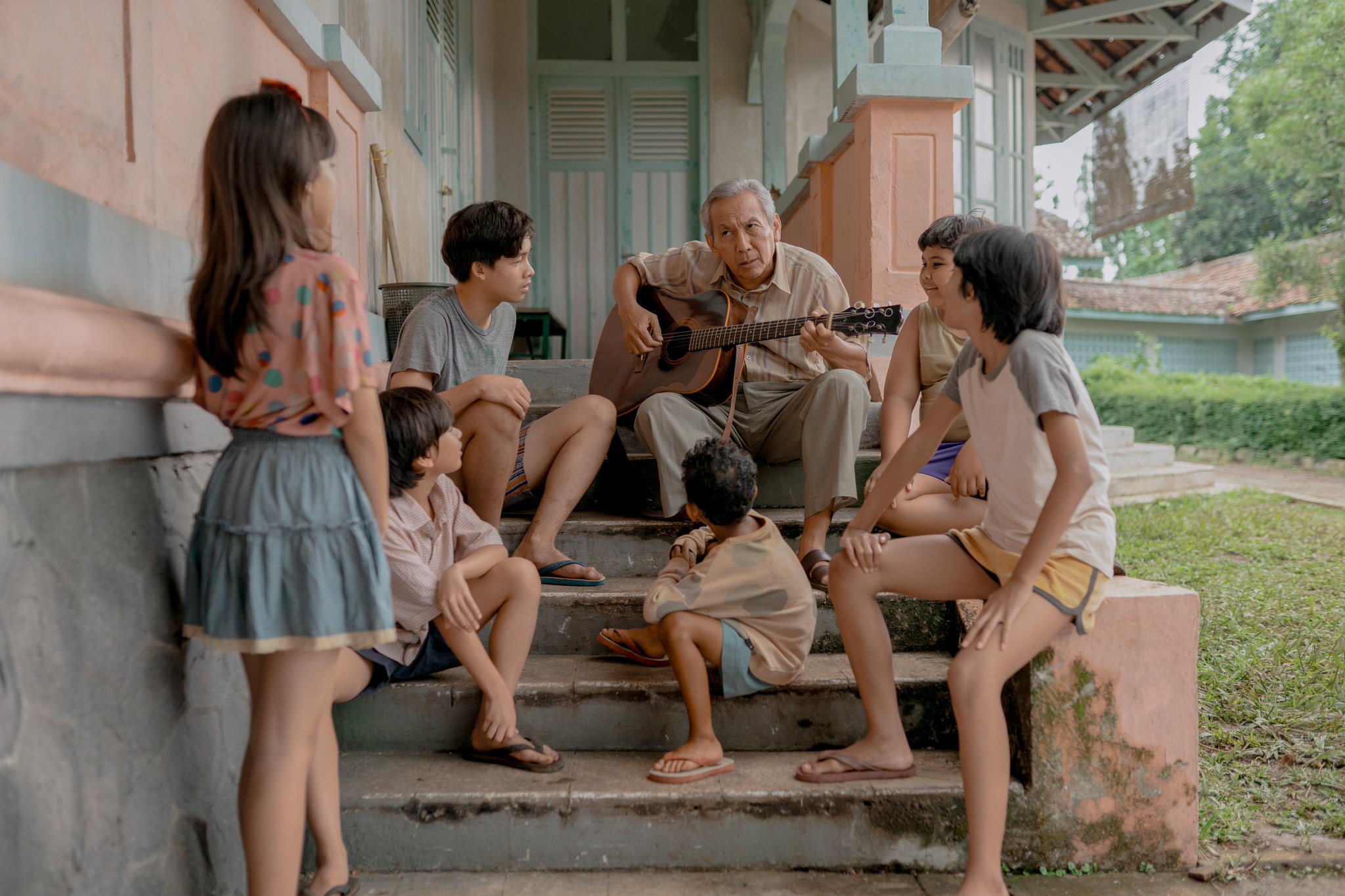
Now, flashbacks bring those emotional years to life. Kefas and fellow-orphans Sabrina (Aqila Herby), Joy (Cleo Haura), and Boni (Halim Latuconsina) learn life lessons from each other and their aging caretaker, Simon Ferdinan (Agus Wibowo).
The kindly Wahyu (Willem Bevers) owns the orphanage, but he’s barely around. That’s not the only reason he’s asked his friend Simon to be caretaker, though. Simon has become reclusive following the accidental death of his son and subsequent death of his wife.
Wahyu hopes Simon’s gentleness will comfort the mischievous but love-hungry orphans. Who knows? These endearing children may cheer up the grieving Simon, who’s secretly nursing a death-wish.
Loving the Living
Director Sim F., screenwriter Daud Sumolang, and their outstanding child cast present a profound portrait of grief. Their point? Of course, we must honor the dead, but fulfillment flows from wholeheartedly, gratefully loving and being loved by the living.
The tiniest of the orphans, Boni, is not much more than a toddler. Still, he yearns to be adopted and to have his own home, his own toys, and his own yard to play in. Teenaged Sabrina dreams of adoptive parents who’ll send her to college.
Likewise, they all excitedly anticipate each community event at the orphanage as a chance to meet caring adoptive parents. When a child is eventually adopted, parting becomes a bittersweet moment for everyone, as they rejoice in the reassuring future beckoning that child.
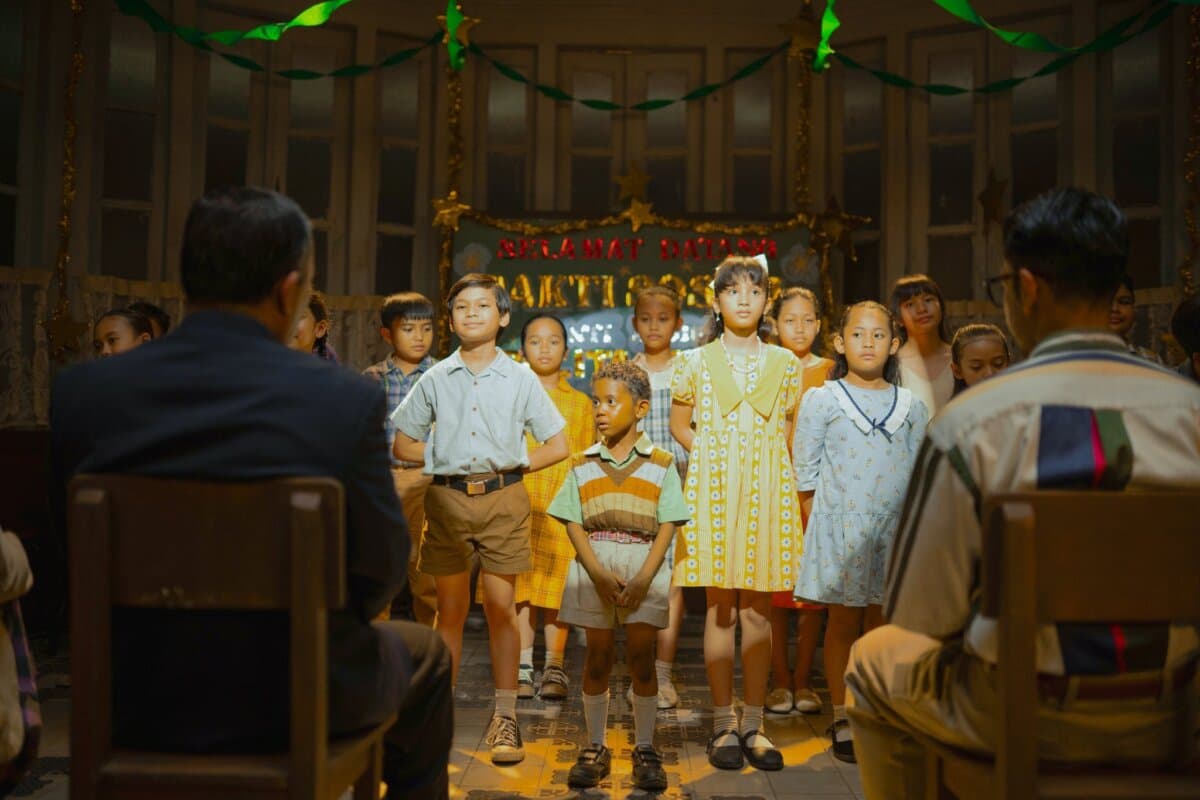
The children perform a concert, in "A Letter to My Youth." (Netflix)
Grief, however, has made Kefas and Simon turn inward. They’d rather spend all day at a gravestone, clutching flowers and mourning the loss of those from their past, than gratefully embrace and be embraced by those in their present.
For Kefas, his transistor radio reminds him of a song he used to sing to his beloved sister. For Simon, it’s his wife’s perfume, whose fragrance he keeps to remind him of her. In time, those bittersweet farewells at community events teach both boy and man something.
Metaphorically speaking, the orphanage represents a sort of visible, earthly, temporary home, while the prospective adoptive homes symbolize a sort of hidden, heavenly, permanent home.
Through a series of enforced losses (their own and those of others), Kefas and Simon realize that separation is only a stage. If they accept loss as an inevitable part of life—not the equivalent of death—they’re more likely to become cheerfully grateful rather than to stay morbidly grieving.
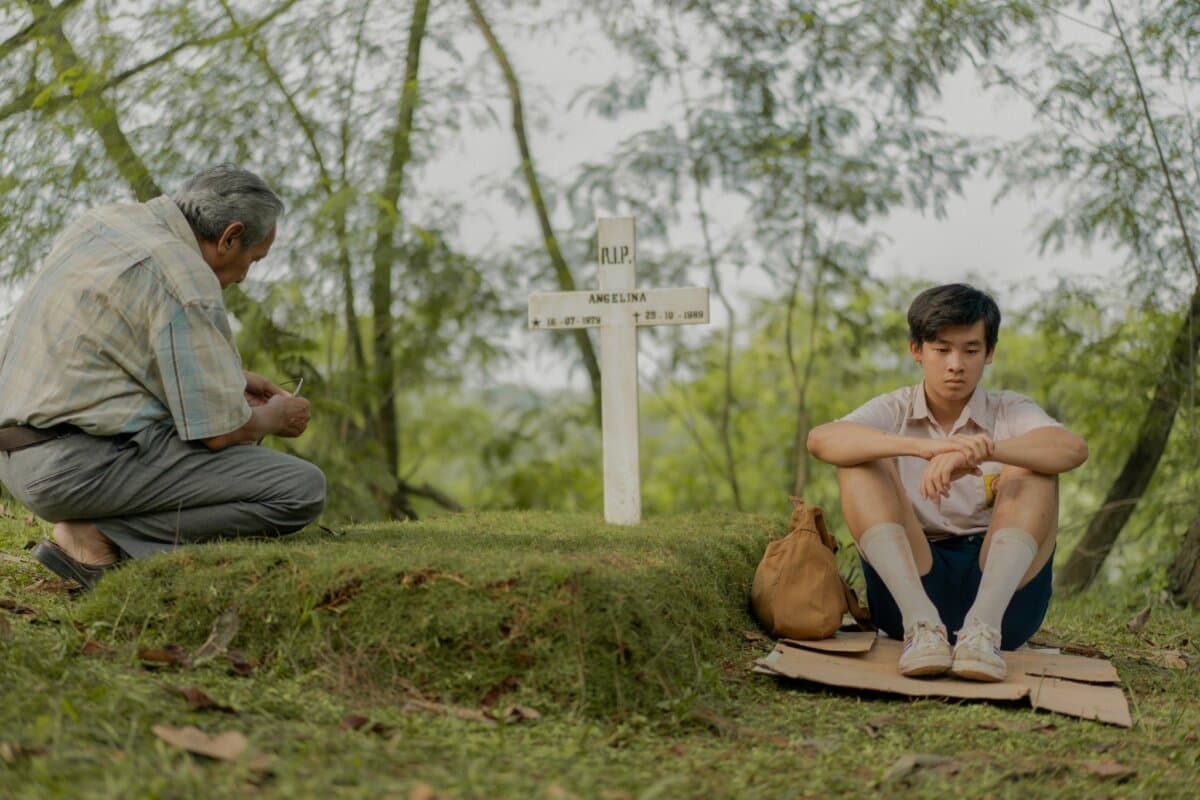
Simon Ferdinan (Agus Wibowo) and Kefas (Millo Taslim) sit in a cemetery, in "A Letter to My Youth." (Netflix)
It needn’t always be loss from death that they’re grieving. Sometimes they’re grieving a squandered chance to love.
Brimming with remorse, Kefas begs the children’s forgiveness after he’s been repeatedly, willfully disruptive. Watch their eyes as they compassionately welcome him back. No doubt they acknowledge his unrepentant past, but they’re more interested in joyfully embracing his repentant present.
Suave, slick undertaker Gabriel (Verdi Solaiman) symbolizes attitudes to death and dying. He cashes in on the grief of those anxious to memorialize their loved ones, only to realize how shallow his so-called “solution” is, no matter how well packaged.
Yes, it’s nice to memorialize the dead, to remind ourselves and future generations of a well-lived life. This might be through a framed photograph, a visit to the cemetery, or a quiet prayer of remembrance. Obsessing over death, whether our own or someone else’s, prevents life from having its say in each new moment.
When bidding farewell to children heading to their adoptive homes, those left behind at the orphanage have a choice. They can keep lamenting the loss of a dear companion or ward no longer with them, or they can continue to rejoice in, and even be rejuvenated by, the companionship of those still with them.
Listen to the children sing the inspiring words: “Not every clouded sky is dark and gray forever, because today I see the world so bright. … Oh, beautiful hymn, you have lifted me from the burden of my sin.”
Check the Internet Movie Database website for plot summary, cast, reviews, and ratings. You can watch “A Letter to my Youth” on Netflix.
These reflective articles may interest parents, caretakers, or educators of young adults, seeking great movies to watch together or recommend. They’re about films that, when viewed thoughtfully, nudge young people to be better versions of themselves.
What arts and culture topics would you like us to cover? Please email ideas or feedback to features@epochtimes.nyc