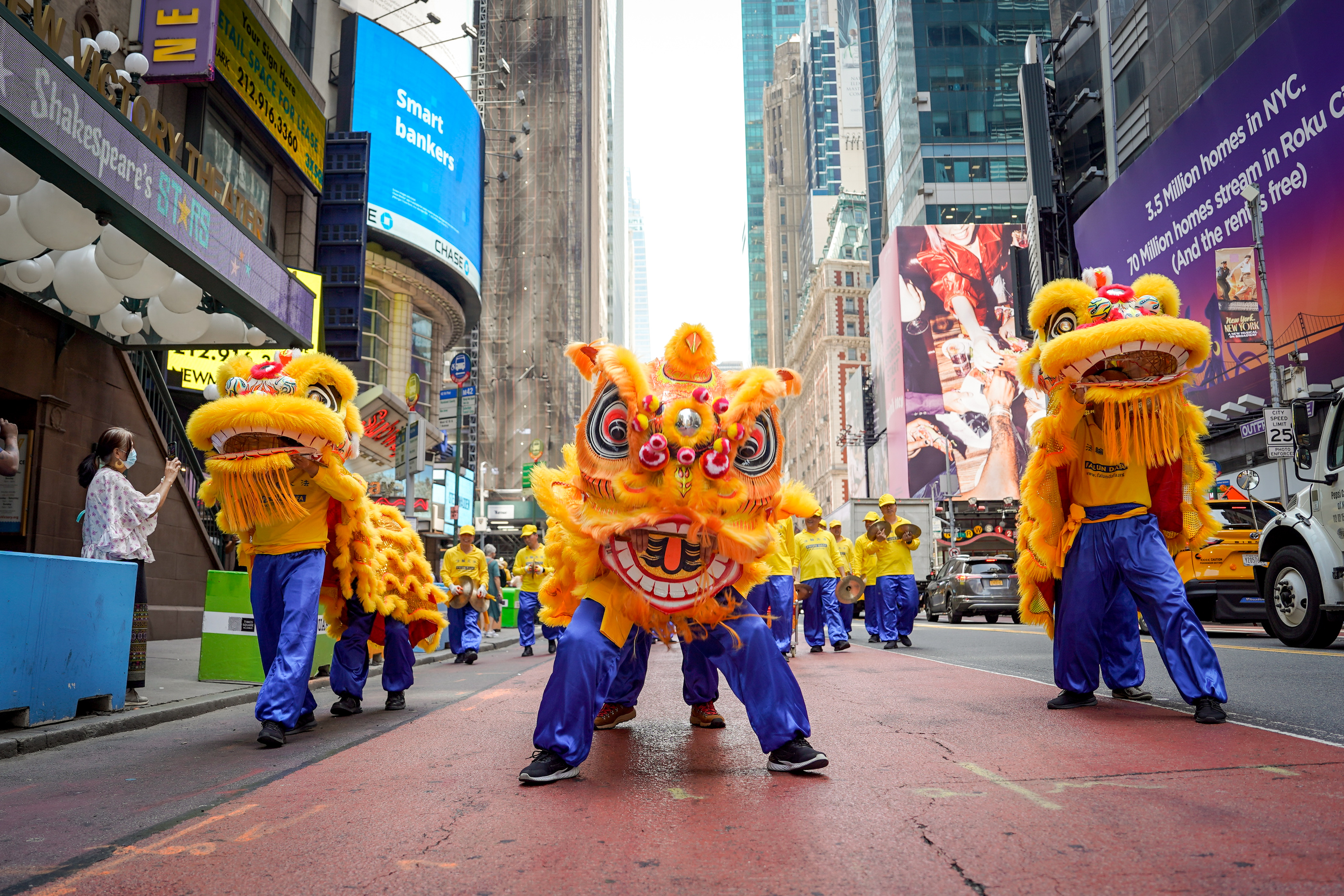

It starts with two sharp cracks on the side of a large drum, and then a deep guttural drum roll that signifies the start of one of the world’s oldest traditions.
“When those drums start playing, I feel a really strong sense of familiarity, and I would say a sense of home,” says Gabriel Yakub, a member of the Australian Eastern Traditional Centre in Sydney.
“I’ve just heard it so many times, learned to play a little myself and had so much fun connecting with friends and the group during rehearsals and performances over the years,” Yakub told The Epoch Times.
Each Lunar New Year, Asia bears witness to the “world’s largest annual migration” as workers rush home to their families and hometowns, in the West, another type of rush occurs and that’s to the closest Chinatown or suburb with a large Asian population.
The rush begins this year on Feb. 16, the eve of Lunar New Year and will last for two weeks across places like New York City’s Flushing, Toronto’s Markham, Melbourne’s Box Hill, and Sydney’s Haymarket.
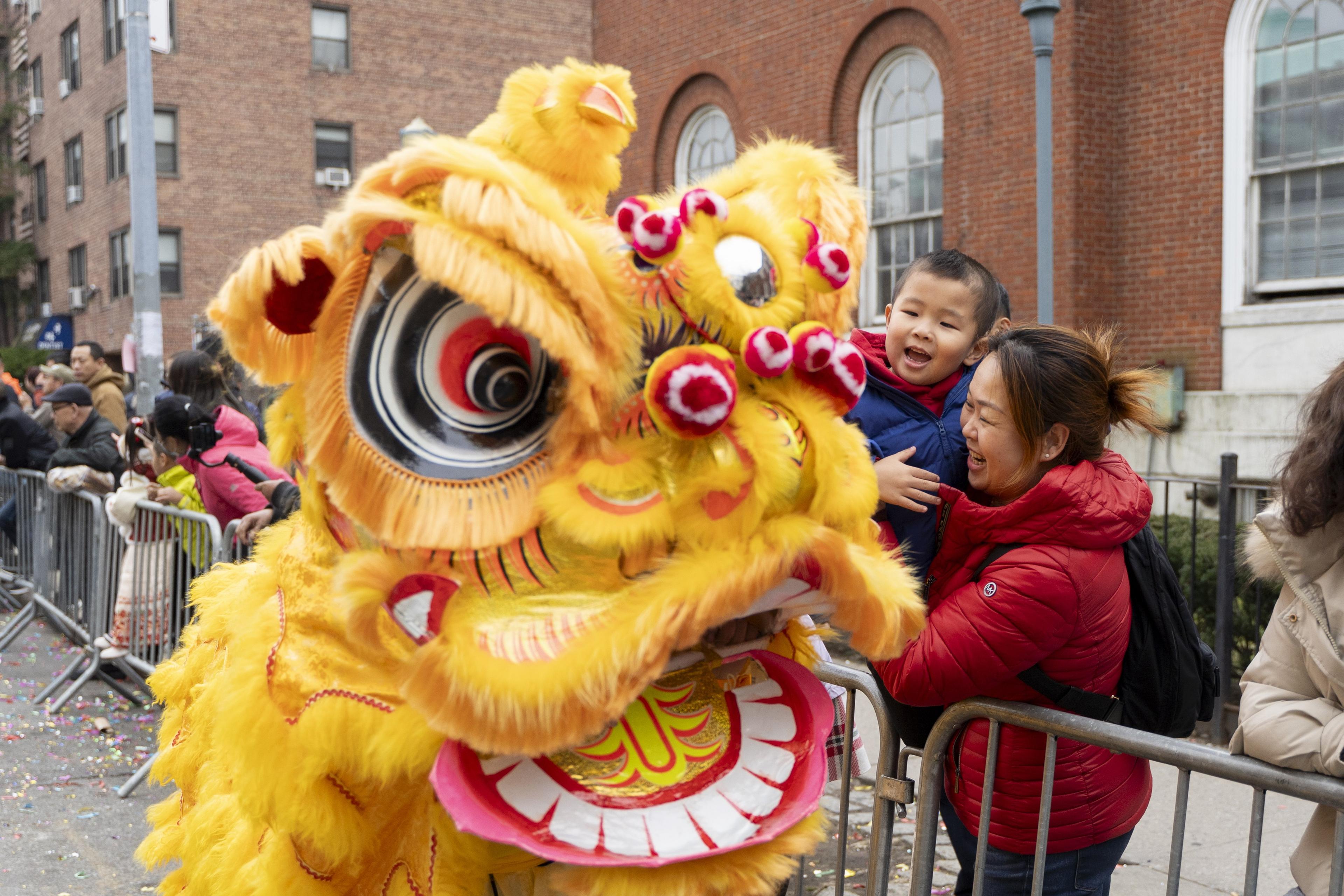
Besides firecrackers, food, and lucky red packets, dragon and lion dances form an integral and sought-after part of the event.
Thousands of Years of Tradition at Your Doorstep
The lion dance, an ancient tradition closely tied to martial arts traces its beginnings to as early as 206 BC–220 AD, over 2,000 years ago.
“It is not just an ordinary sport. It’s a form of martial arts, which has evolved into a very special performance of that martial art, showcasing it in a unique way,” said William Ho, a martial arts master and lion dance performer, in an interview with told The Epoch Times.
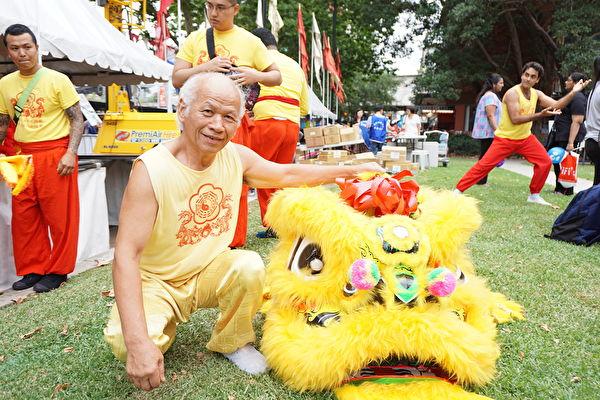
Ho, originally from Hong Kong, founded the Sydney Youth Dragon & Lion Dance Troupe in 2006. It now has two lions and one dragon, with nearly 30 people, including drummers.
For store openings, usually two lions are used, but for parades, a dragon is added. Each lion requires two people, one to perform with the elaborately designed papier-mâché head and one to act as the tail under a decorated cloth.
“Generally, the dances and the clothes worn are very beautiful … it can just go into the street, walk up to your door. It’s not restricted in any way,” Ho enthusiastically recounted.
“[The lion] moves slowly, swinging its head, blinking its eyes, and moving its mouth. It’s still quite impressive. People find it very captivating,” he added. “[I would] slowly walk up to [the children], give them a wave, and let them take photos. This way, the parents will be very happy, and the children will be very happy too.”
“During the [Lunar] New Year, the audience will even give you a red envelope. The parents, upon seeing how happy their children are, will give you a red envelope. “
Over the past two decades, Ho and his troupe have performed at community events, festivals, and Lunar New Year celebrations; and he was named Parramatta City Council’s Citizen of the Year in 2005.
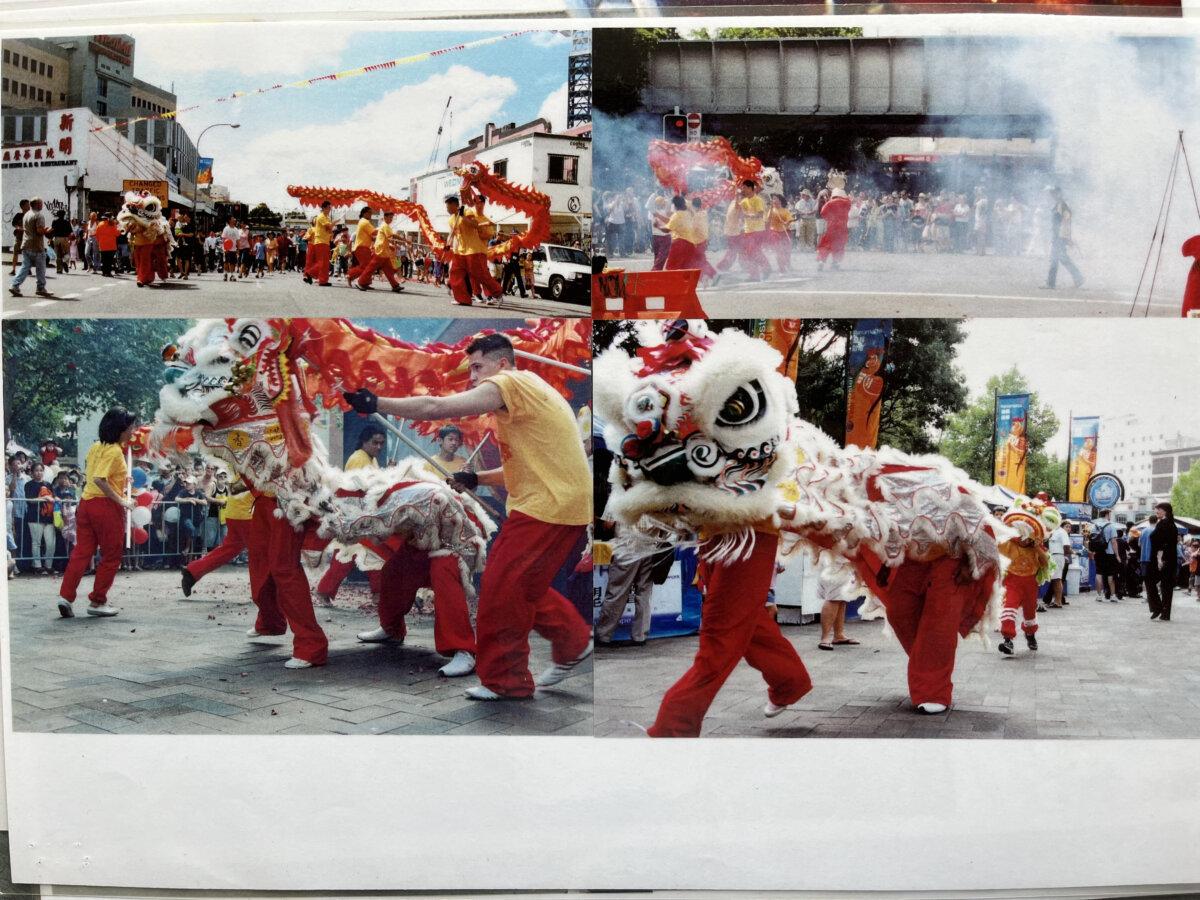
The Evolution of the Dance
Historically, Chinese lion dance can generally be divided into the Southern Lion and Northern Lion styles.
The Northern Lion resembles a Pekingese dog, is normally red and yellow, and involved acrobatic movements like both dancers balancing on a large ball.
The Southern style, which itself has split into two main traditions (Fo Shan and He Shan) is the style often seen across the West.
The lion “head” of the Southern Lion is bigger, more expressive, and incorporates martial arts stances. However, over the years, the He Shan style notably has borrowed more of the acrobatic movements from the Northern style.
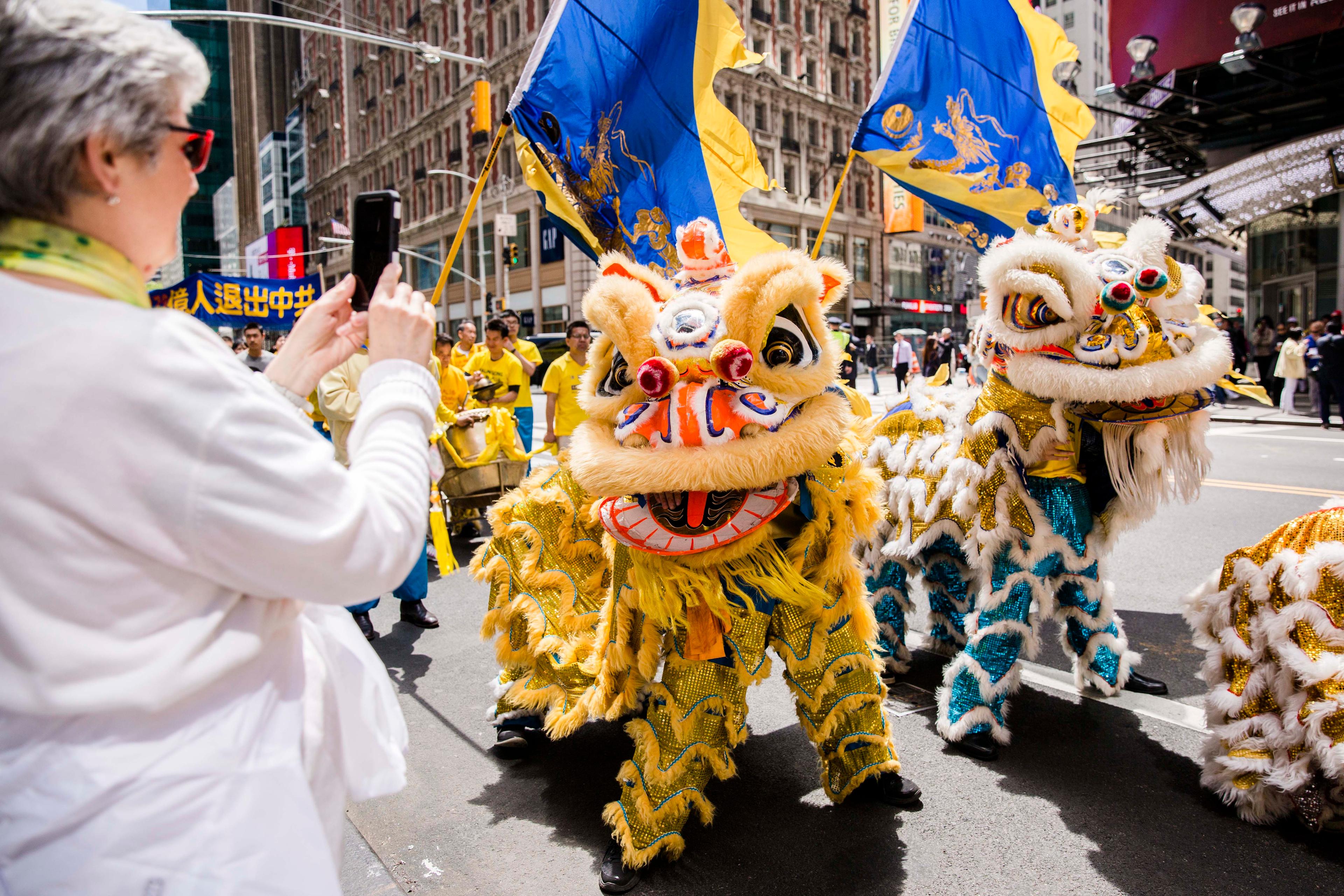
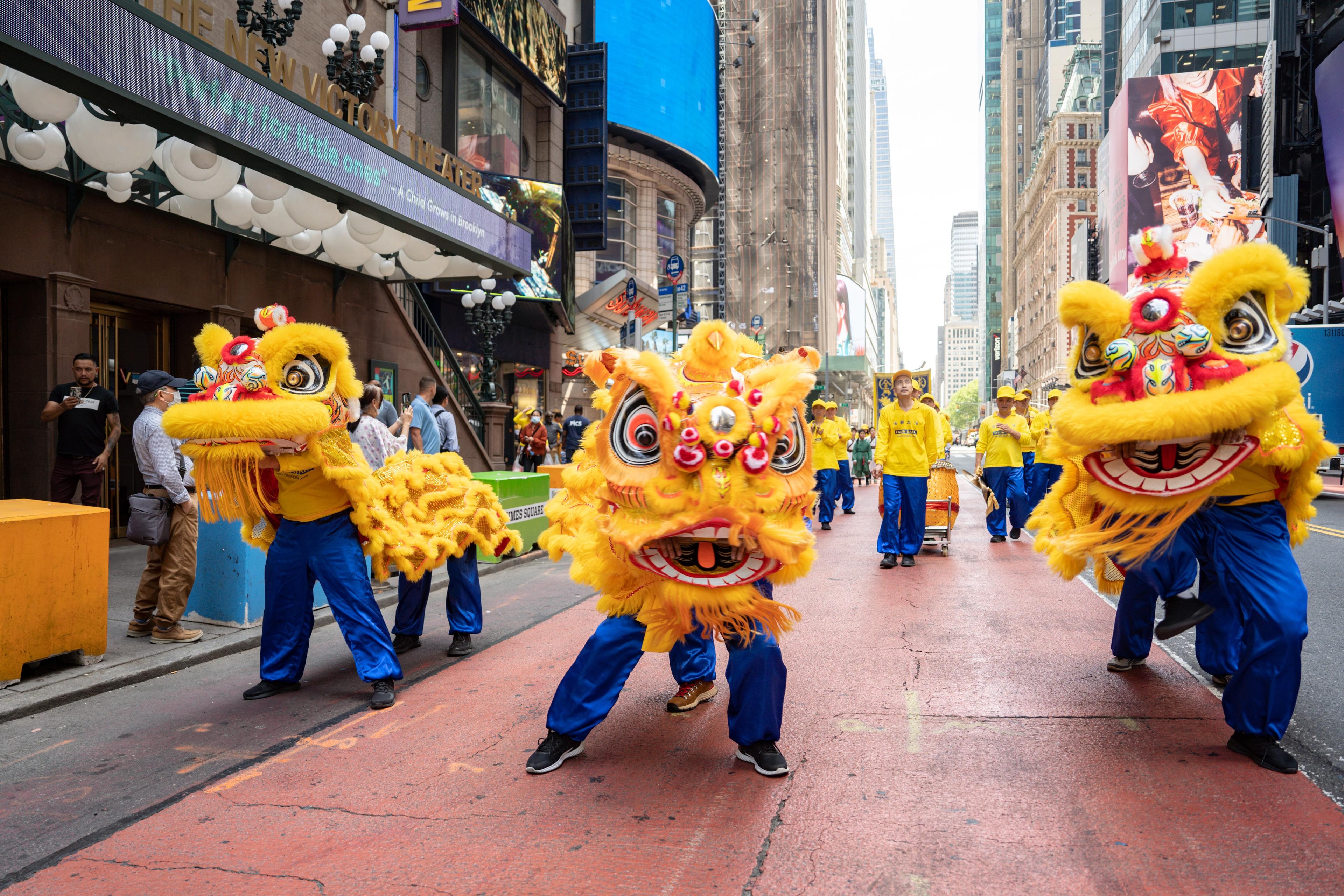
The dance is used for various festive occasions, such as Chinese New Year, weddings, birthday celebrations, and the National Day of the Republic of China (ROC) in Taiwan, which sees over 100 lions parading on the streets.
However, in some regions, lion dance is also performed during funerals, with the lions wearing white, a colour traditionally associated with funerals in Chinese culture.
What This Traditional Art is Bringing to Australians
Yakub, a member of the Australian Eastern Traditional Centre is a martial arts school, explains what lion dance has done for him.
“Everyone brings their own interpretation and energy, but the magical part is how everyone can also move in unison,” he said.
“I’ve seen really timid young people come in who are too shy to dance, and in a matter of months start teaching routines and engage in a really confident way. It’s really rewarding to see that kind of growth,” he said.
Ho said that the greatest reward he gained is the community’s admiration and gratitude.
“I feel that when people greet me and talk to me, they always show this kind of emotion, the sense that you’re helping everyone,” he said.
“This is not just an ordinary martial arts exercise. Ordinary exercise is just about being healthy ... but here, there’s also joy. The children are very happy and excited.
“There’s a different kind of happiness involved. It’s an emotion beyond health, it’s about emotion.”