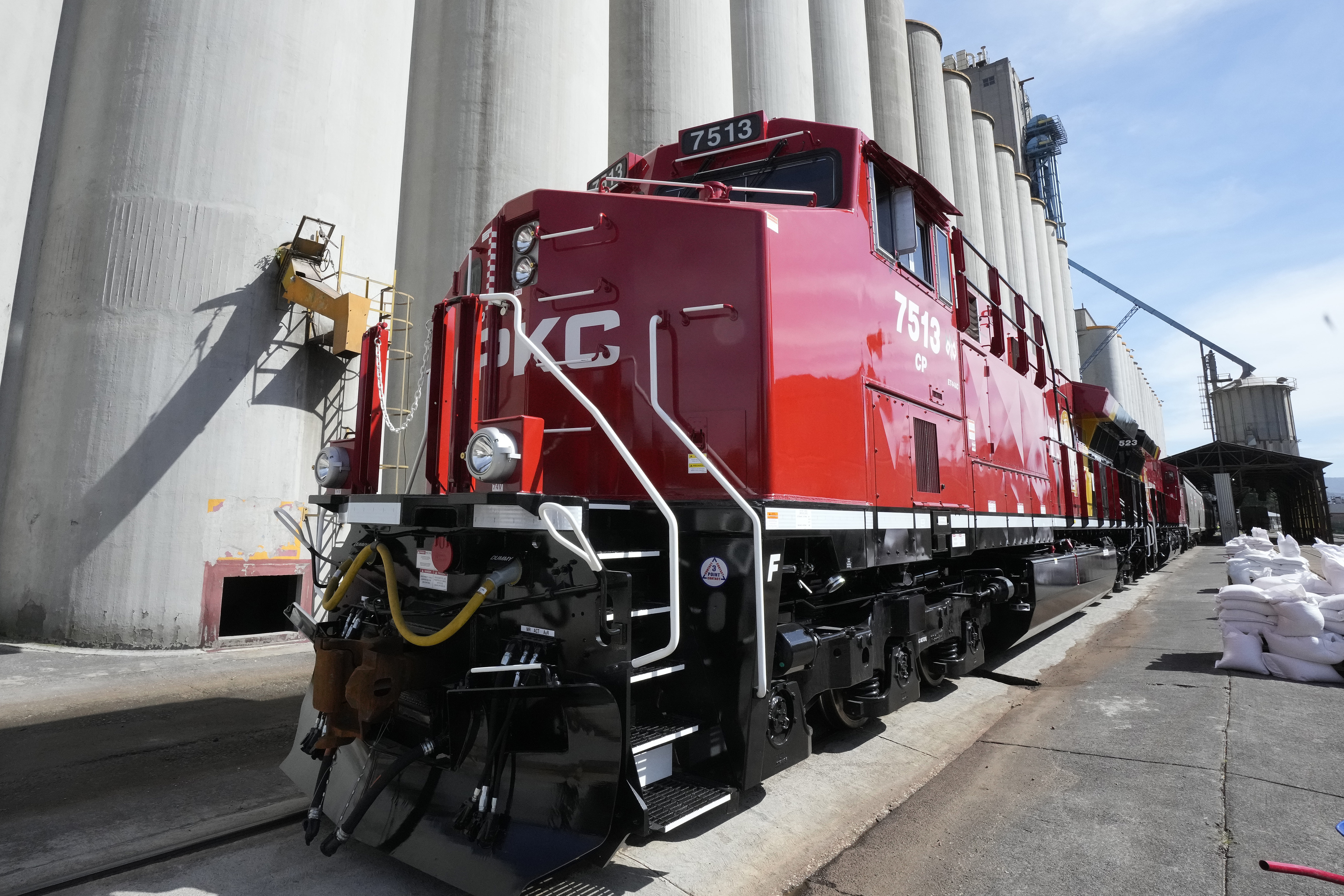

The Federal Railroad Administration (FRA) is cracking down on cross-border train operators from Mexico who lack basic English language proficiency, in a bid to make rail operations safer in the United States, Transportation Secretary Sean P. Duffy said in a Dec. 19 statement.
In the fall, FRA inspectors conducted routine regulatory oversight of cross-border operations on Union Pacific Railroad (UP) and Canadian Pacific Kansas City Limited (CPKC), finding that several inbound crew members faced difficulty when interpreting General Track Bulletins and communicating safety requirements in English.
The Department of Transportation (DOT) highlighted that railroads can certify locomotive engineers and conductors only if they have the required skills, knowledge, and abilities necessary to carry out operations safely. Because critical train documents and radio communications are in English, the potential language barriers that the FRA observed among some of the crew members at CPKC and UP raised safety concerns, it said.
The FRA issued letters to UP and CPKC, informing them about the findings made by the agency.
In the letters, the FRA clarified that certified crews from Mexico can operate only up to 10 miles into the United States from their point of entry. These crew members must be capable of safe operations in the United States, which requires that they are capable of reading and understanding documents, communications, and instructions in English.
The FRA said inbound uncertified crews cannot operate beyond the nearest crew exchange point as set up by Customs and Border Protection.
Any incidences of inbound Mexican crews operating in the United States without sufficient English language skills to carry out their duties safely could result in enforcement actions being taken against UP and CPKC, the FRA warned in the letters.
“Whether you’re operating an 80,000-pound big rig or a massive freight train, you need to be proficient in our national language—English. If you aren’t, you create an unacceptable safety risk,” Duffy said.
“These commonsense steps will ensure every train crew operator can communicate with inspectors and understand basic operational bulletins. This Department will continue to put you and your community’s safety first.”
The International Brotherhood of Teamsters, the largest labor union in the United States, welcomed the DOT’s action to restrict cross-border railroad operations from Mexico in a Dec. 19 post on X.
The union and the Brotherhood of Locomotive Engineers and Trainmen “applaud the Administration and [Secretary Duffy] for standing with us to protect union railroad jobs in border communities and across the nation, and to prioritize rail safety for trains entering the United States,” the Teamsters said.
In a Dec. 19 statement, the International Association of Sheet Metal, Air, Rail and Transportation Workers (SMART), a North American labor union with about 230,000 members, also commended the DOT for its latest decision.
SMART said the new DOT requirements do not restrict commerce but only ensure that cross-border trade operations follow the same safety standards that U.S. railroads have to adhere to every single day.
“Our members operate under rigorous certification standards because lives depend on it,” Jared Cassity, SMART’s national safety and legislative director, said.
“The FRA’s actions make clear that safety is not optional, and that language barriers, insufficient training, or uncertified personnel have no place in U.S. rail operations.”
The DOT’s decision to mandate English language proficiency is being applied to domestic truck drivers as well.
In March, President Donald Trump signed an executive order making English the official language of the United States. In April, Trump signed another order, directing Duffy to ensure that commercial truck drivers operating in the United States who do not meet English-language proficiency standards are removed from service.
In a Dec. 10 post on X, Duffy said more than 9,500 commercial truckers have been taken out of service because they didn’t meet language standards.