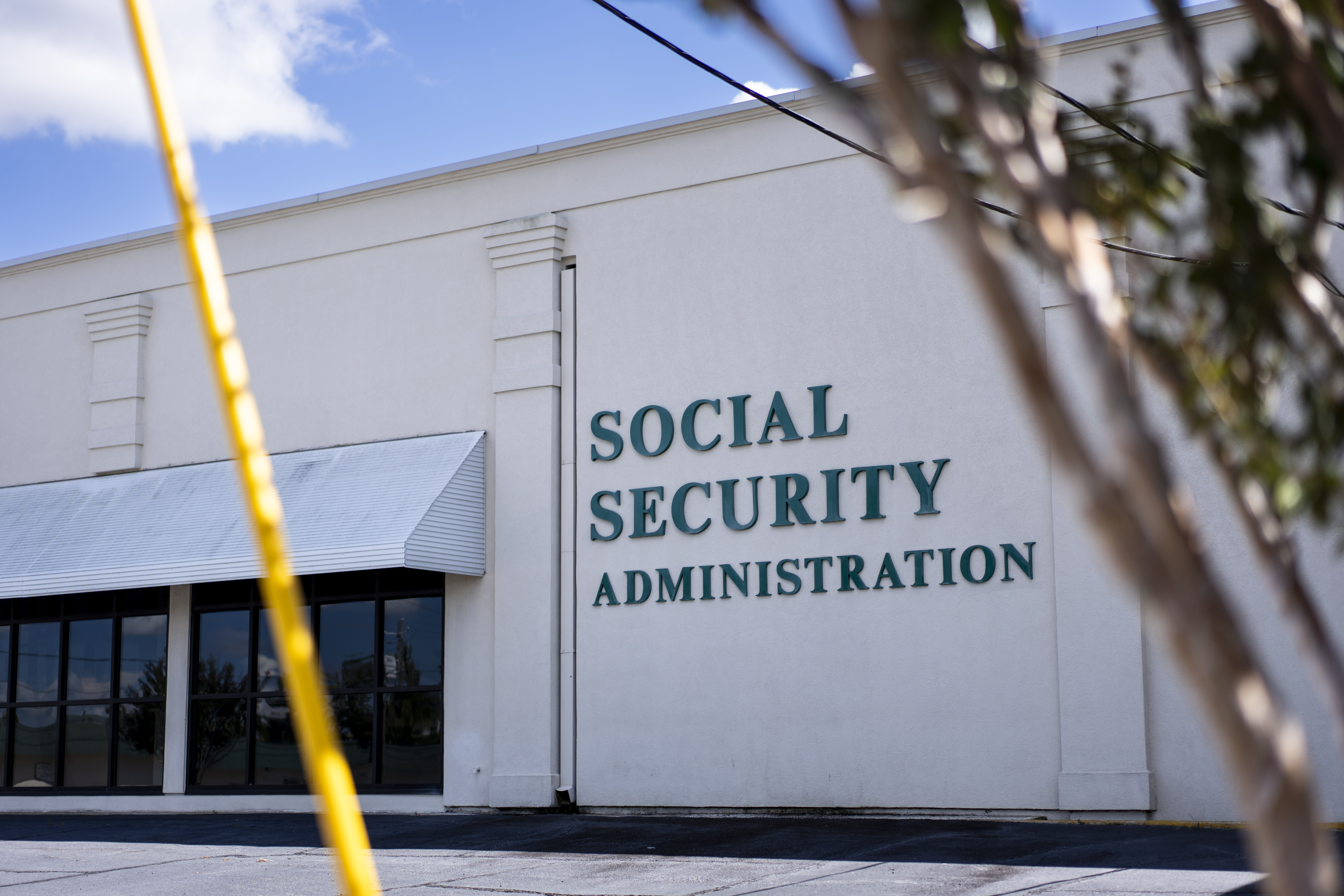

The Social Security Administration (SSA) has updated its Compassionate Allowances (CAL) list of severe disabilities to include 13 new medical conditions, allowing people with these illnesses to secure disability benefits faster, the agency said in an Aug. 11 statement.
When an applicant’s condition is mentioned on the list, SSA flags the application to expedite the review process. In certain cases, medical records may be obtained electronically, cutting down processing times even further.
The medical conditions added to the CAL list are Au-Kline Syndrome, Bilateral Anophthalmia, Carey-Fineman-Ziter Syndrome, Harlequin Ichthyosis—Child, Hematopoietic Stem Cell Transplantation, LMNA-related Congenital Muscular Dystrophy, Progressive Muscular Atrophy, Pulmonary Amyloidosis—AL Type, Rasmussen Encephalitis, Thymic Carcinoma, Turnpenny-Fry Syndrome, WHO Grade III Meningiomas, and Zhu-Tokita-Takenouchi-Kim Syndrome.
“By adding these 13 conditions to the Compassionate Allowances list, we are helping more people with devastating diagnoses to quickly receive the support they need,” SSA Commissioner Frank J. Bisignano said.
Bisignano said the updates were part of a broader commitment to make the disability determination process more responsive and improve the disability programs.
According to an August 2024 post by LaPorte Law Firm, which specializes in Social Security disability law, individuals who apply for disability benefits under CAL can get a decision in a matter of weeks rather than months or years.
With the 13 added conditions, CAL now includes 300 disabilities in total, the SSA said in the statement.
Since CAL’s establishment in 2008, more than 1.1 million Americans with severe disabilities have been approved through this fast-track process, the SSA said.
Improving Disability Processes
According to the SSA, the agency uses the same rules to evaluate CAL conditions as it uses to assess Social Security disability insurance and supplemental security income programs.
SSA identifies new conditions to be added to the CAL list after taking into account factors such as comments from the public, input from medical experts, and research from the National Institutes of Health.
In its Aug. 11 statement, SSA said that the agency uses its Health IT program to securely access electronic medical records while reviewing CAL applications.
Health IT enables the SSA to use electronic data exchanges to obtain medical records from health care providers directly. On March 27, the agency called on providers to join the Health IT program and improve the disability review process at the agency.
The SSA has taken other steps recently to improve how it handles disability claims.
On July 23, SSA announced that it had reduced the backlog of initial disability claims to 940,000 pending cases, down by 25 percent from the 1.2 million-plus cases last year.
Average processing time for initial disability claims is now five days faster than before Bisignano’s tenure, it said. Bisignano was confirmed as the 18th SSA commissioner by the Senate in early May.
In the July 23 announcement, SSA said that it had achieved “substantial progress” in customer service.
“The agency handled nearly 1.3 million calls on the national 800 number last week, or 70 percent more than the same week last fiscal year, while reducing the average speed of answer to six minutes,” the agency said.
Meanwhile, the SSA has come under criticism from Democrats. On June 24, a group of Senate Democrats sent a letter to Bisignano over the agency’s efforts to integrate artificial intelligence (AI) programs on its phone systems.
“These AI programs, which the agency deployed with little consultation with Congress, advocates, or other key stakeholders, appear to have been developed in haste and represent a troubling pattern that if continued, would significantly impede Americans’ ability to access their Social Security and Supplemental Security Income (SSI) benefits,” the letter stated.
For instance, the implementation of an AI anti-fraud algorithm in April to verify the identity of callers filing for benefits slowed down claims processing by 25 percent, the letter said, citing a report from Nextgov/FCW.