Daniel Grand, an Orthodox Jew, wanted to organize a prayer gathering in his Ohio home in 2021.
But what started as a potential gathering for friends soon turned into a national battle over religious liberty. The city of University Heights in Ohio sent him a cease-and-desist letter stating that he needed a permit to host a quorum—known as a minyan—of 10 Jewish men for prayer in his house.
“We’re in a world where a local government can come, give you a cease-and-desist order, and say you can’t pray in your house, and that’s America?” Grand told The Epoch Times. “It just sounds so un-American.”
On Dec. 9, the Supreme Court will hear Grand’s case, known as Grand v. City of University Heights, and issue a decision that could determine the circumstances under which Americans like Grand can challenge local attempts to regulate religious activities.
It’s one of two cases in front of the Supreme Court this term with a focus on the free exercise clause of the Constitution. That section of the First Amendment says the government shall make no law prohibiting the free exercise of religion.
In the other case, St. Mary Catholic Parish v. Roy, the high court will consider whether Colorado violated this clause by excluding Catholic school students from a universal pre-K program. Catholic preschools and the state are disputing whether the program, and its antidiscrimination rule on sexual orientation and gender, violates the Supreme Court’s long-established precedents about religious neutrality in government programs.
A Cease-and-Desist Letter
University Heights initially said that Grand was using his home as “a place of religious assembly and/or in operation of a shul or synagogue.” Its warning was based on a local ordinance requiring special use permits for locations that are used as houses of worship and religious organizations.
“It sounds kind of unbelievable, but this is what happened to me,” Grand said.
After Grand received the letter and a call from the mayor, he emailed his friends to cancel the prayer group. The next morning, he emailed the city with an application for a special use permit.

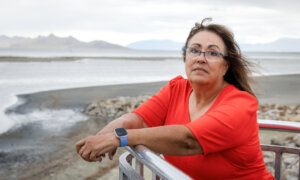
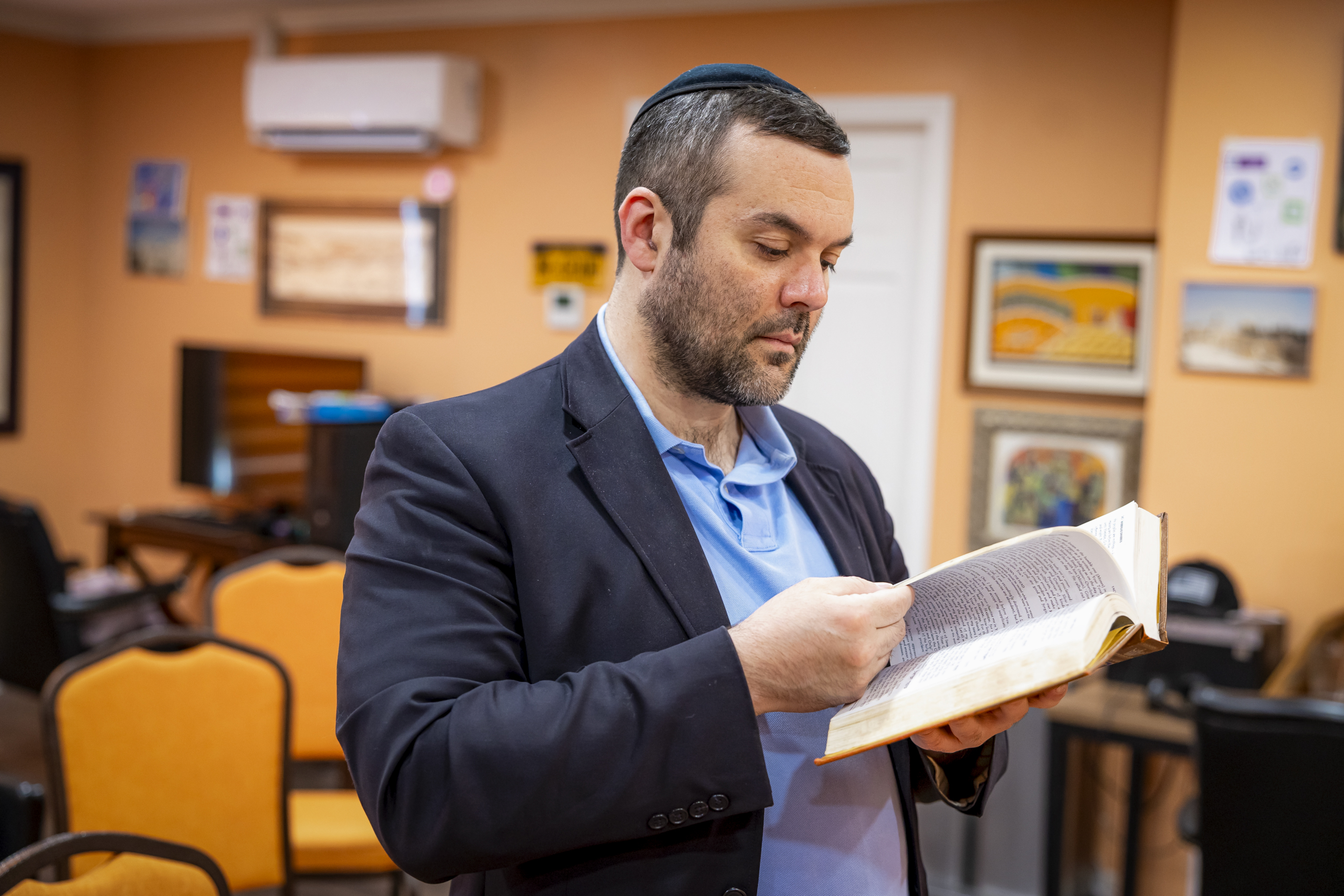
Daniel Grand, an observant Orthodox Jew, in University Heights, Ohio. (Courtesy of Alliance Defending Freedom)
However, he later withdrew his application and the mayor eventually acknowledged that a permit was unnecessary.
The case nonetheless reached the Supreme Court because Grand alleged that the city should have to pay damages for chilling his First Amendment rights by sending the initial letter.
He’s asking the justices to revive his lawsuit after the U.S. Court of Appeals for the Sixth Circuit sided with the city, saying the case wasn’t “ripe,” or ready for review by judges. The appeals court reasoned that Grand’s case was premature because the city never issued a final decision on the use of his home for prayer.
Chilling Religious Exercise

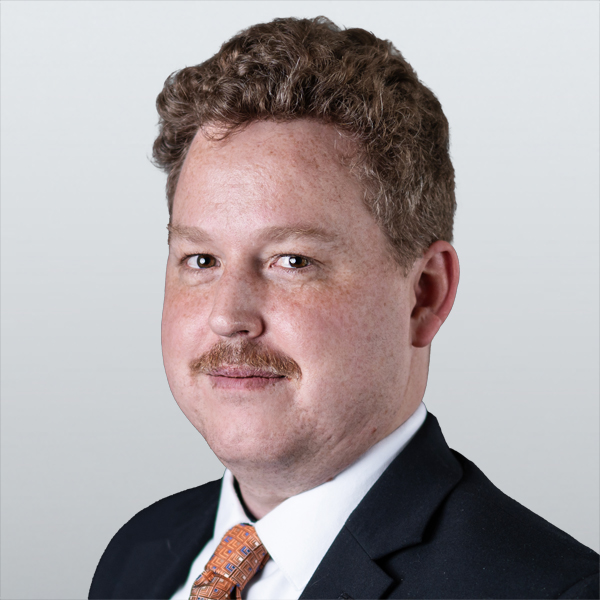
John Bursch, senior counsel at Alliance Defending Freedom, in this file photo. (Courtesy of Alliance Defending Freedom)
Although Grand dropped his application, he alleged that the cease-and-desist order dissuaded him from hosting group prayer in his home.
Alliance Defending Freedom senior counsel John Bursch, who represents Grand, told The Epoch Times that was enough of a legal injury.
“Those men’s prayer group meetings that he would have had but for the cease-and-desist order, he can’t ever get those back, and so that’s a constitutional injury that has to be remedied,” Bursch, whose group is representing Grand, told The Epoch Times.
In a brief filed with the Supreme Court, Bursch and other attorneys warned that other localities have engaged in similar tactics and could chill religious activity by merely issuing letters.
“This case is a playbook for government-sponsored religious discrimination,” the briefing reads.

Daniel Grand, an Orthodox Jew who lives in University Heights, Ohio. Grand claims that the city should have to pay damages for allegedly chilling his First Amendment rights by sending an initial letter stating that he needed a permit to host a prayer. (Courtesy of Alliance Defending Freedom)
Grand’s attorneys are relying, in part, on two recent Supreme Court decisions, including one issued this year. In April, all nine justices said that a group of pregnancy centers could sue New Jersey over a demand for their donor lists—even though the demand wasn’t enforced.
They reasoned that the mere threat from the subpoena chilled the pregnancy centers’ right to associate under the First Amendment. In 2014, the court similarly ruled in favor of a pro-life group challenging speech restrictions even though the restrictions had not yet been enforced.
Grand told The Epoch Times that his case and those cases could form a “three-headed dragon.”
“You have the organizational speech covered, and now you have the humanistic individual speech covered,” he said.
The appeals court, however, reasoned that any chilling was self-inflicted because Grand never faced any enforcement. It also noted that he convened a minyan on the Sabbath at least once since the city began holding planning commission meetings.
“That does not sound like chill,” the appeals court’s chief judge said.
Grand told the Supreme Court that gathering was “the one—and only—minyan, an unplanned prayer session that spontaneously materialized during a dinner with a large group of guests.”

Rabbi Nadav Caine (R), senior rabbi at Beth Israel Congregation, pours wine for the Sabbath blessing with his daughters Merav (L) and Ziva (2nd R), and wife Lynne, at their Ann Arbor, Mich., home on Oct. 8, 2026. (Jeff Kowalsky/AFP via Getty Images)
Colorado’s Pre-K Program
For years, the Supreme Court has said that the free exercise clause protects religious groups not only from prohibitions on prayer but also from discriminatory treatment in public benefits programs.
St. Mary Catholic Parish v. Roy, which is set for oral argument on Nov. 3, is expected to tackle how that principle applies to Catholic schools in Colorado.
The parish, along with the Archdiocese of Denver and other entities, told the Supreme Court that Colorado’s program violated the free exercise clause by including an “antidiscrimination” provision. That provision said that recipients of pre-K funding must agree not to discriminate on the basis of sexual orientation and other characteristics.
The Colorado Catholics argued that the condition would force schools to accept children of same-sex households, hindering their ability to teach Catholic values about sexuality and the family.
They said doing so ran afoul of another case, Carson v. Makin, that the Supreme Court decided in 2022. At the time, the court said Maine’s tuition assistance program was wrong to specifically exclude religious schools.
However, the U.S. Court of Appeals for the 10th Circuit said Colorado’s program was different than Maine’s because it didn’t explicitly target religious groups. Instead, it opposed purportedly discriminatory behavior by religious and nonreligious entities alike.

Georgetown University's Healy Hall in Washington on Sept. 22, 2019. Established in 1789, Georgetown is the nation's oldest Catholic and Jesuit university. (Daniel Slim/AFP via Getty Images)
Exemptions
Oral argument on Nov. 3 will likely feature discussion of a decades-old precedent known as Employment Division v. Smith, which social conservatives have been working for years to overturn.
In that 1990 decision, the court gave some leeway to laws that incidentally infringe on religious exercise. It said that those laws could face less scrutiny if they were neutral and generally applicable.
St. Mary’s parish argued that Colorado’s antidiscrimination provision was not generally applicable because certain schools received exemptions and others didn’t.
While Colorado’s program did apply its nondiscrimination provision broadly, the Catholics argued that it also betrayed that provision by allowing schools to prioritize students with disabilities and those from low-income families.
“Colorado has essentially made 15 hours a week of preschool free for everyone [except for] those who want to send their children to Catholic schools and schools ... that have similar religious beliefs,” Becket Fund counsel Amanda Dixon, whose group is representing the Catholics, told The Epoch Times.
She said that enrollment in archdiocesan preschools had decreased by 20 percent and two preschools had to close since the start of Colorado’s program.
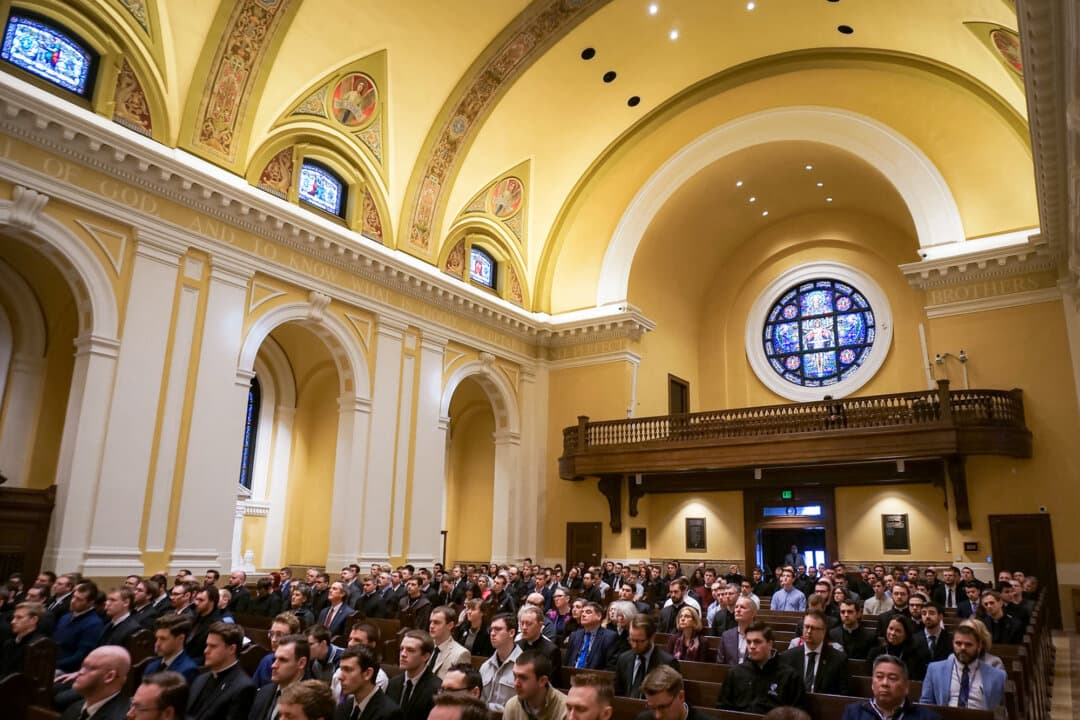
Seminarians, members of the University of St. Thomas community, and school principals participate in a Mass at the University of St. Thomas in St. Paul, Minn., on Feb. 27, 2026. (Giovanna Dell'Orto/AP Photo)
Both the 10th Circuit and Colorado argued that the law was intended to provide special protections for low-income families and students with disabilities.
At oral argument on Nov. 3, the justices will likely ask questions about a separate government program they ruled on in 2021. That case, known as Fulton v. City of Philadelphia, challenged the city’s requirement that Catholic foster agencies work with same-sex couples.
In that decision, the justices said the city couldn’t create exemptions for other groups while not allowing them for Catholic Social Services. Doing so rendered the program not “generally applicable” as required by the First Amendment.
At least three justices—Samuel Alito, Neil Gorsuch, and Clarence Thomas—joined a concurrence urging the court to reconsider Smith and indicated they wanted to overturn it.
Dixon’s group had asked the court to consider overturning the landmark precedent, but it declined.
“Obviously, we were disappointed,” she told The Epoch Times.
“Smith kind of creates a larger problem within the free exercise clause.”

(L–R) Supreme Court Justices Samuel Alito, Clarence Thomas, and Brett Kavanaugh, and Chief Justice John Roberts attend inauguration ceremonies in the Rotunda of the U.S. Capitol on Jan. 20, 2025. (Chip Somodevilla/Getty Images)