
FALFURRIAS, Texas—Mesquite thorns scraped Dr. Michael Vickers’s white ranch truck like nails on a chalkboard as he drove through the underbrush of his South Texas ranch searching for cattle.
The longtime Texas veterinarian has about 100 head at his 1,000-acre ranch just south of Falfurrias, where deer, wild turkey, and javelin—akin to wild pigs—roam freely.
Vultures glide overhead, ever watchful in a blue sky.
Vickers told The Epoch Times that ranches such as his are in the crosshairs of the New World screwworm, which devastated Texas livestock and wildlife in the 1970s.
Vickers, who served on the Texas Animal Health Commission, called the screwworms a catastrophic threat. They began showing up in Central America two years ago and now threaten the U.S. cattle industry and food supply.
He said the United States is ill-prepared to deal with an outbreak.
“We don’t have the facilities to combat it like we did back in the ‘70s,” Vickers said.

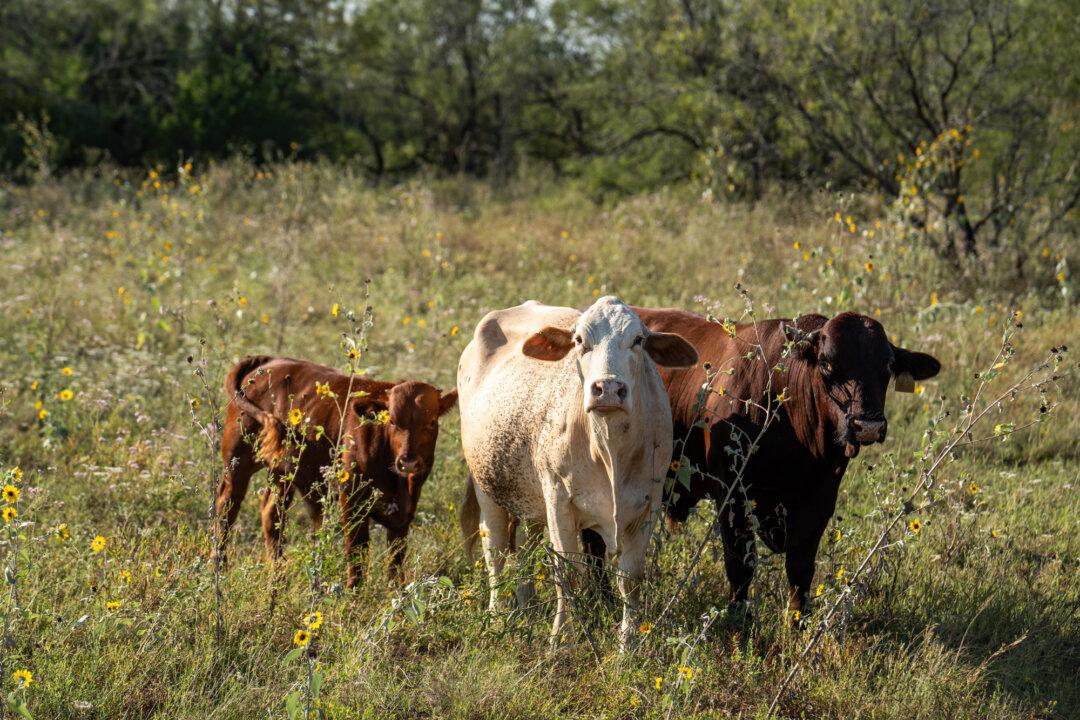
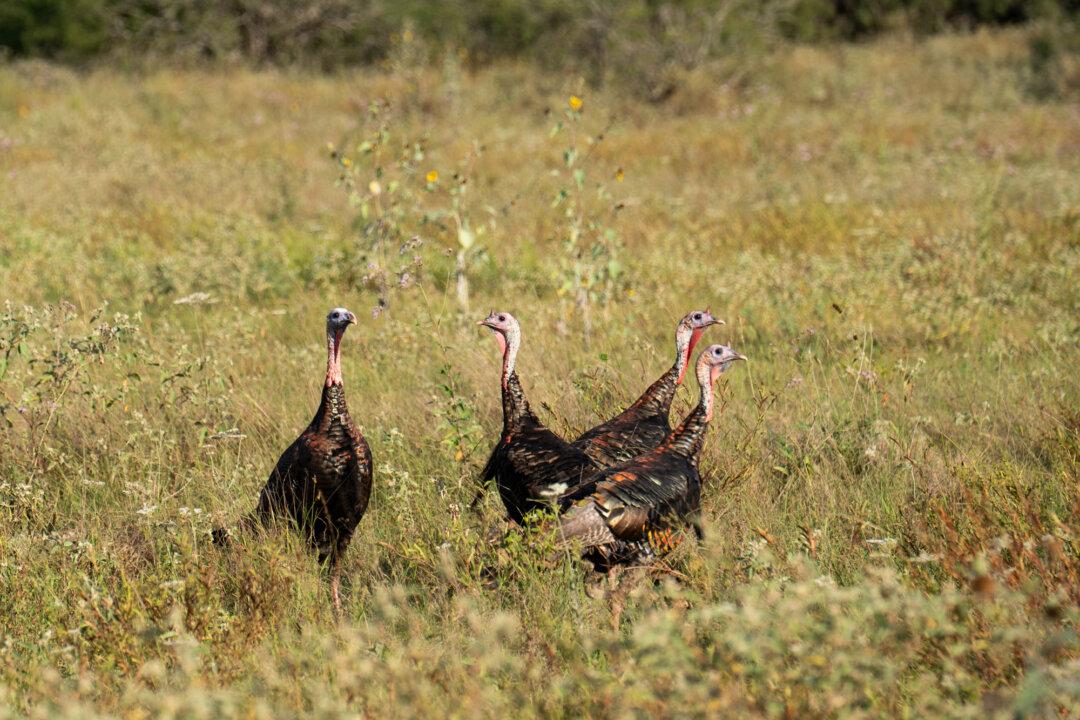
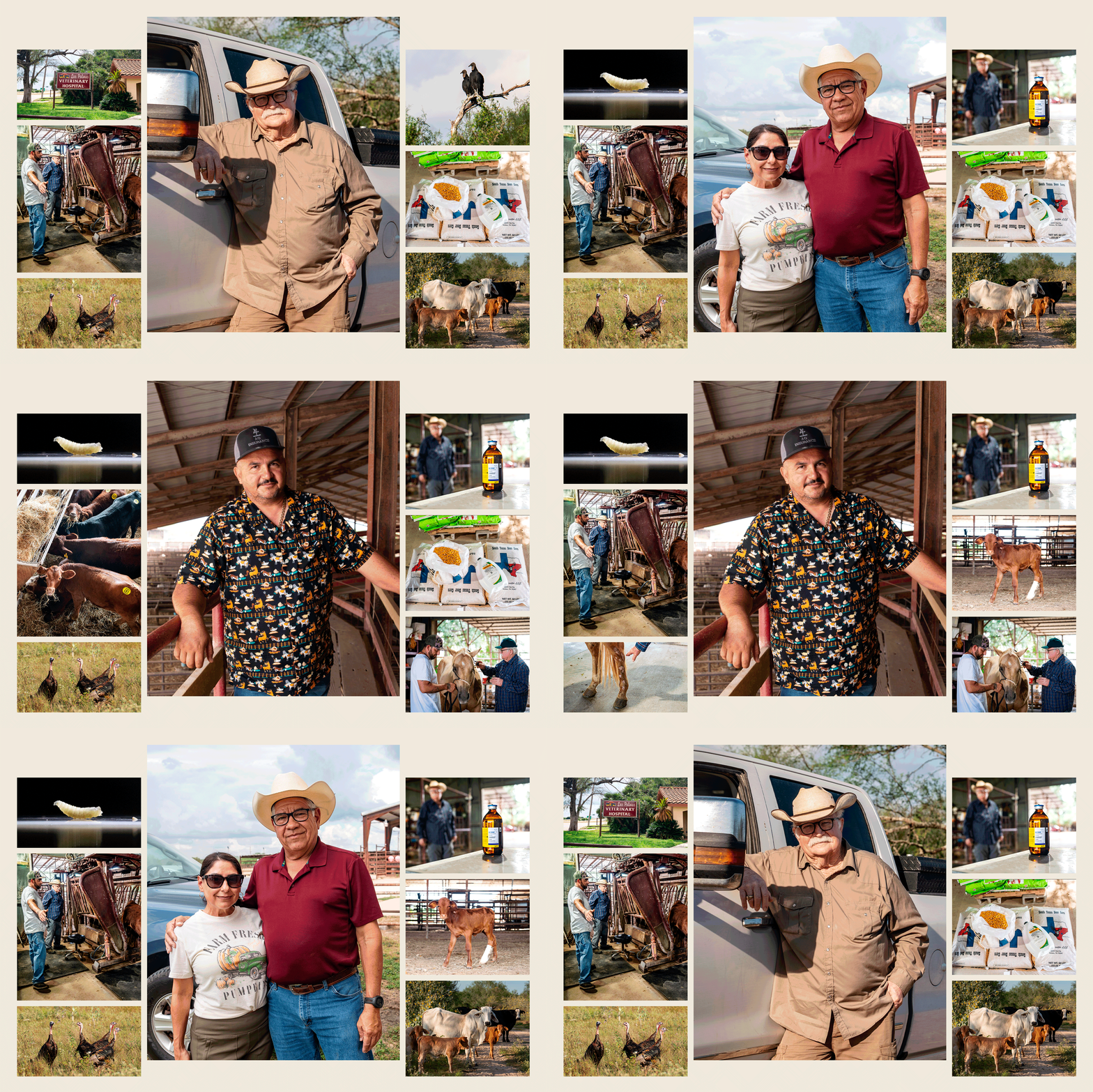
(Top) Veterinarian and rancher Michael Vickers at his ranch in Brooks County, Texas, on Oct. 10, 2025. Vickers said ranches such as his are in the crosshairs of the New World screwworm, which devastated Texas livestock and wildlife in the 1970s. (Bottom Left) Cows at Michael Vickers’s ranch in Brooks County, Texas, on Oct. 10, 2025. (Bottom Right) Wild turkey at Michael Vickers’s ranch in Brooks County, Texas, on Oct. 10, 2025. (Samira Bouaou/The Epoch Times)
Horror on the Range
As a 22-year-old veterinarian fresh out of college, Vickers was thrust into the Texas screwworm crisis. He’ll never forget the stench of rotting flesh from the screwworms.
Livestock, wildlife, and birds were eaten alive—some left with gaping wounds the size of grapefruit.
Screwworm flies will also infect people. Such a case was documented at a Maryland hospital in August after a person returned from a visit to El Salvador.
“We even had some people in some nursing homes here, and some elderly people die from screwworms with the larvae getting in their nostrils and migrating up into their brains,” Vickers said in a previous interview.
The ears of cattle and horses were eaten off, and sometimes the worms would eat into the middle ear, he said. Some had their eyes eaten out.
Vickers would use a dart gun to knock out infected animals so he could kill the worms burrowed into their flesh, then treat the wounds.
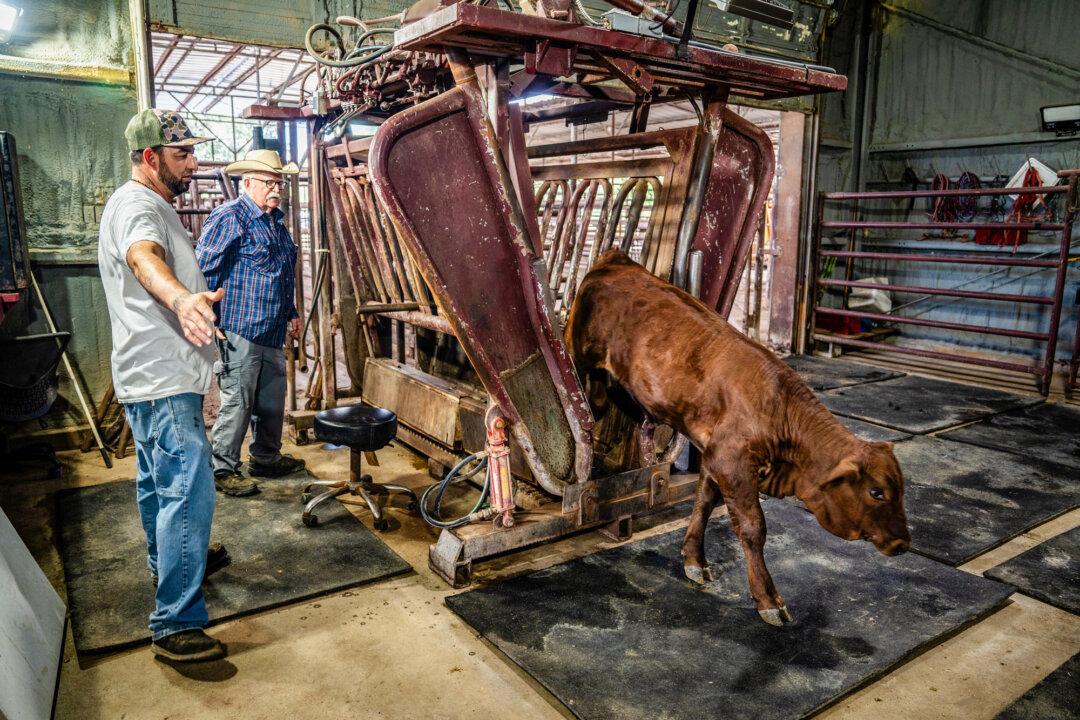
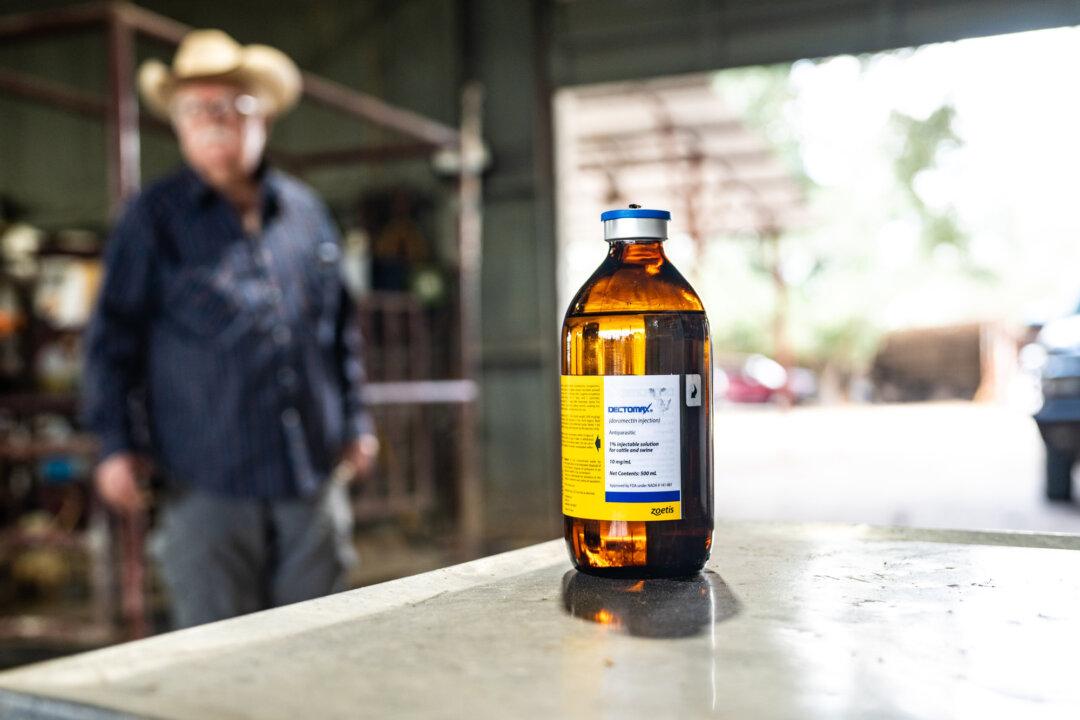
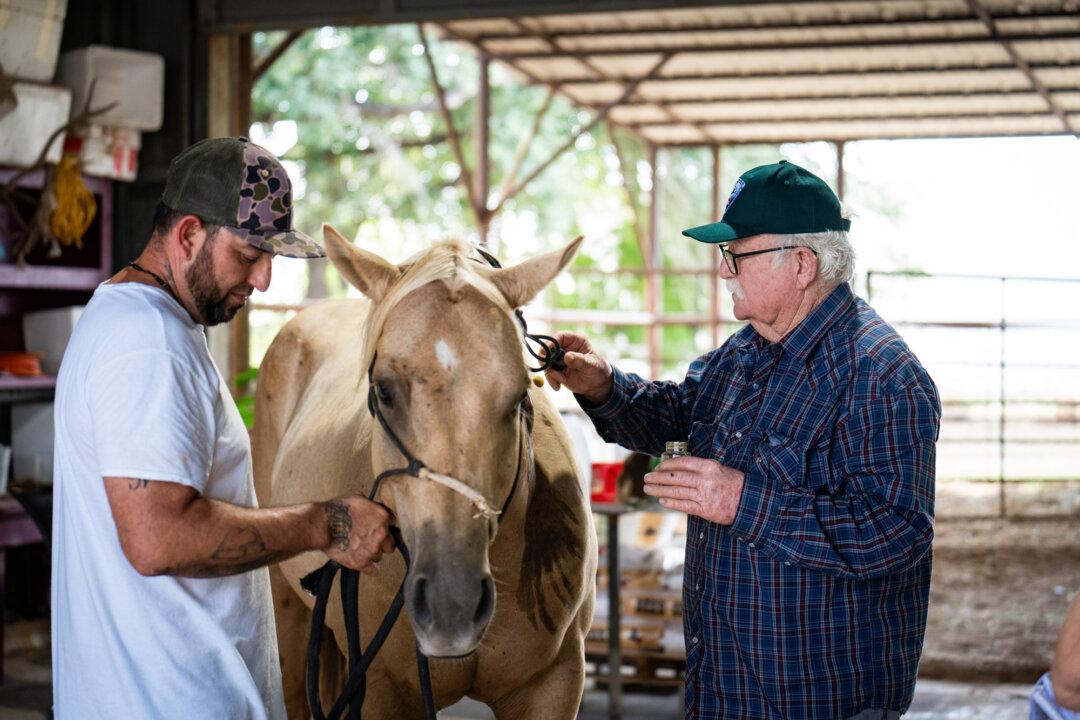
(Top) Veterinarian and rancher Michael Vickers (C) looks on as a cow is released from a chute at Las Palmas Veterinary Hospital in Falfurrias, Texas, on Oct. 8, 2025. Vickers keeps about 100 head on a 1,000-acre ranch just south of Falfurrias. (Bottom Left) Dectomax, an anti-parasitic, at Las Palmas Veterinary Hospital in Falfurrias, Texas, on Oct. 8, 2025. (Bottom Right) Veterinarian Michael Vickers (R) tends to a horse at Las Palmas Veterinary Hospital in Falfurrias, Texas, on Oct. 8, 2025. (Samira Bouaou/The Epoch Times)
In those days, he used Pink Lady, a substance the color of Pepto-Bismol, or a black tar medication called Smear 62. Both contained now-banned pesticides and chemicals, although there is currently an FDA-approved Pink Lady wound dressing on the market.
When Vickers came across animals too far gone, he would euthanize them. Some ranchers shot terminally ill animals to put them out of their misery.
Screwworm infestations begin when a female screwworm fly lays eggs on a wound or the mucus membranes of a mammal, including humans.
A wound as minor as a tick bite can attract a female fly to feed. A single female can produce about 3,000 eggs in a lifespan that can last up to 30 days.
Eggs hatch into larvae, or maggots, that burrow into the flesh of animals and begin to eat. The last major screwworm outbreak in Texas began in 1972 with 90,000 reported cases, and was mostly contained by 1975.
The screwworm’s recent northward advance coincided with a surge of illegal immigrants crossing the Darien Gap, a stretch of jungle between Panama and Colombia, once a natural barrier.
Vickers said he thinks that it’s likely that the deadly parasite will once again invade Texas, bringing a repeat of the grisly scenes he encountered half a century ago.

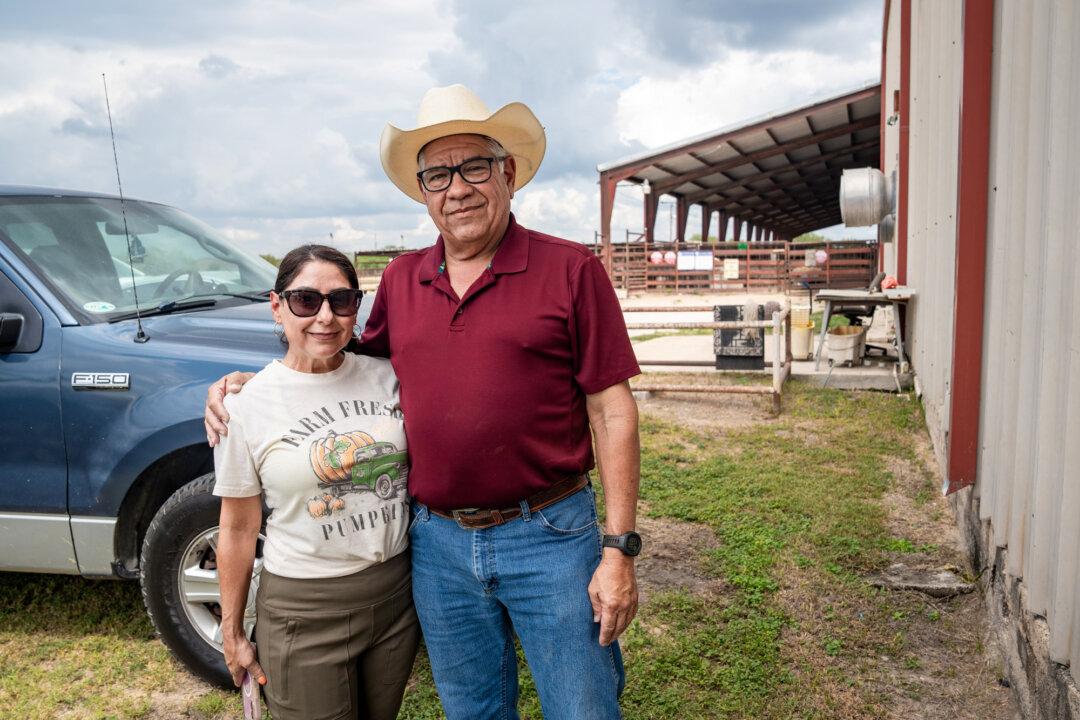
(Top) The location for the Triple G Livestock Auction in Rio Grande City, Texas, on Oct. 10, 2025. (Bottom) Leroy and Brenda Jackson at Triple G Livestock Auction in Rio Grande City, Texas, on Oct. 10, 2025. LeRoy Jackson, 63, runs a small herd of cattle on the La Providencia Ranch near Rio Grande City, Texas, which his family purchased in 1876. (Samira Bouaou/The Epoch Times)
Ranchers and industry leaders are watching closely; a screwworm outbreak could cost Texas billions of dollars.
Last week, as he and his wife, Brenda Jackson, stood outside a Starr County livestock auction, he told The Epoch Times that ranchers are taking precautions.
For them, it means spraying their herd with ivermectin, hoping that it protects against screwworms.
“I’m not going to lose the herd just because I’m being lazy,” he said.
Sterile Flies Needed
The situation became more urgent when the screwworm was found 70 miles from Texas this fall.
Mexico’s Ministry of Agriculture confirmed that the parasite was detected in two unrelated cattle shipments from the Veracruz area of southern Mexico north to Nuevo Leon in September and October.
In a statement, Mexico’s National Service for Agro-Alimentary Health, Safety, and Quality (SENASICA) said the worms were contained before they could develop into flies.
SENASICA said its protocols were effective in mitigating “the risk of [screwworm] propagation.”
The U.S. Department of Agriculture (USDA) has focused on producing sterile screwworm flies to shield the $100 billion U.S. cattle industry. But not enough sterile flies are being produced.
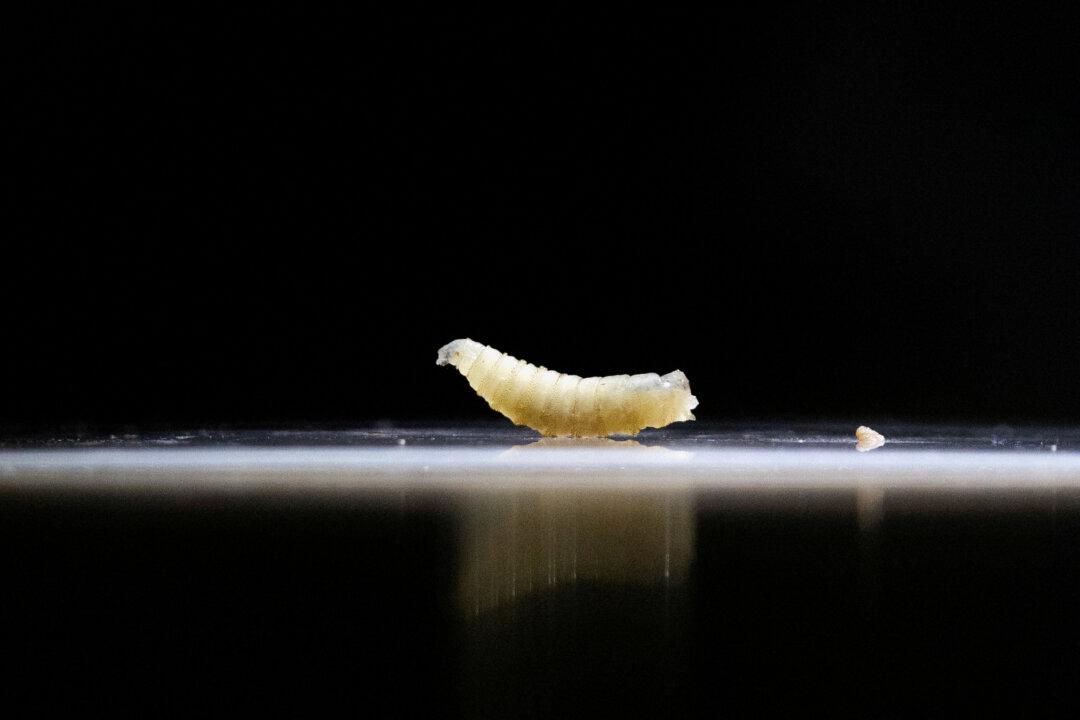
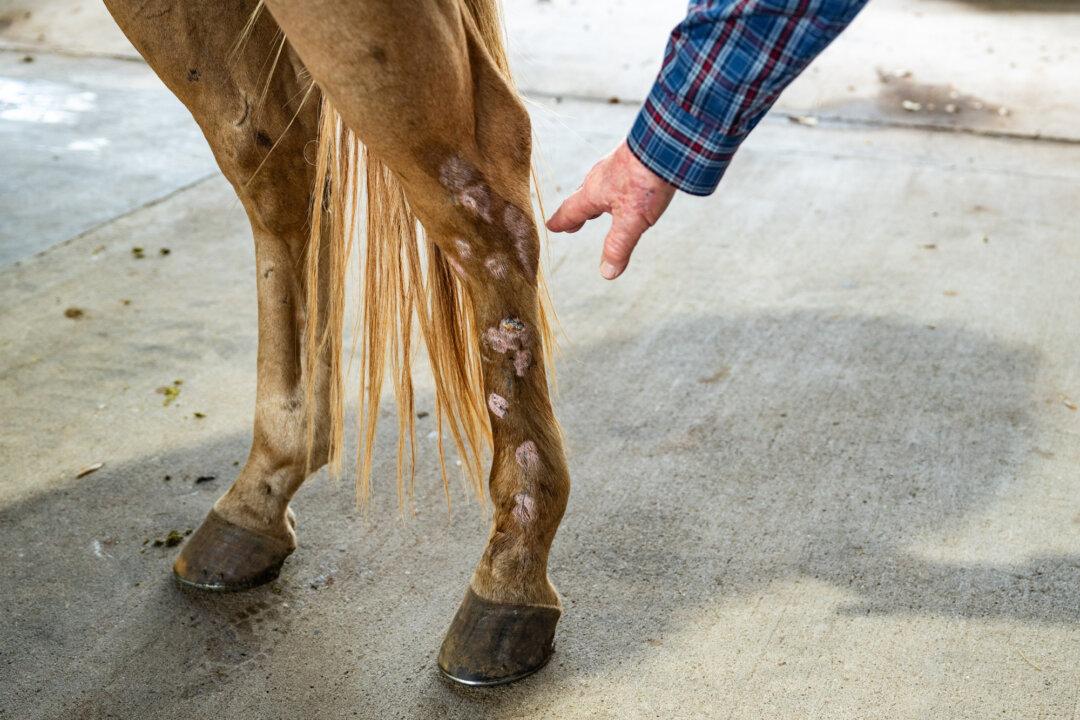
(Left) A sample of screwworms collected in the morning is displayed at the veterinary clinic as the Mexican government and ranchers struggle to control the spread of this flesh-eating pest, in Tapachula, Mexico, on July 4, 2025. (Right) Veterinarian and rancher Michael Vickers points to wounds on a horse’s leg at Las Palmas Veterinary Hospital in Falfurrias, Texas, on Oct. 8, 2025. (Daniel Becerril/File Photo/Reuters, Samira Bouaou/The Epoch Times)
The lone fly-producing plant near Panama City, Panama, produces a maximum of 100 million sterile screwworm flies each week. To push the screwworm flies back to the Darien Gap, the USDA estimates that 500 million flies would need to be released weekly.
Sterile males mate with females, causing them to lay unviable eggs—a key strategy in past eradications.
This summer, the USDA blocked Mexican cattle imports and announced that it would invest $21 million to renovate a fruit fly production facility in Metapa, Mexico, to provide an additional 60 million to 100 million sterile screwworm flies.
Also, 750,000 sterilized flies are being trucked in and dispersed in the Nuevo León region twice per week, according to an X post by U.S. Secretary of Agriculture Brooke Rollins.
Rollins announced the construction of an $8.5 million sterile insect dispersal facility at Moore Air Force Base in Edinburg, Texas, expected to be completed by the end of the year.
Additionally, she announced a $750 million facility at the base that could “boost domestic sterile fly production by up to 300 million flies per week and could complement current production that already exists in Panama and Mexico.”
Fly Bait Debate
Texas Agriculture Commissioner Sid Miller told The Epoch Times that he wants to see more aggressive action. At stake is Texas’s $15 billion cattle industry, not counting billions tied to hunting wildlife. He said an outbreak would increase the cost of beef, noting that 15 percent of feeder cattle comes from Mexico.
Currently, too few sterile flies are being produced to curb the outbreak, he said.
“It nearly wiped out our cattle industry before. Time is of the essence,” he said.
Miller proposed that the USDA use Swormlure-5, a fly bait that mimics the smell of an open wound, combined with a pesticide. He said this strategy worked in past outbreaks.


(Top) Moore Air Base Plant Protection and Quarantine in Edinburg, Texas, on Oct. 8, 2025. (Bottom) Sid Miller (L), Texas Department of Agriculture commissioner, speaks with Roman Balmakov, “Facts Matter” host and director, at the world premiere of The Epoch Times’s original documentary “No Farmers No Food: Will You Eat The Bugs?” in Irving, Texas, on Sept. 22, 2023. (Samira Bouaou/The Epoch Times)
Miller said he believes that putting out a bait and pesticide combination in Mexico could help prevent the screwworms from reaching the United States. However, he said the USDA deemed the plan “environmentally insensitive,” stating that it would also harm beneficial flies.
When questioned about Miller’s idea, the USDA told The Epoch Times in an email that the bait traps Miller suggested underperformed during a test in Panama, attracting only “one single New World Screwworm fly.”
Other potential solutions include a new ivermectin feed additive for livestock and deer populations, and a cattle vaccine being developed to kill screwworm larvae.
Texas plans to monitor the situation by placing fly bait traps in three high-risk zones.
Locations include the Texas–Mexico border west of Laredo to Brownsville, a distance of about 200 miles. Other sites include the Texas Department of Agriculture’s Export Pens in Del Rio, El Paso, Laredo, and Houston, as well as the port regions of Galveston and Corpus Christi.
Still, Miller predicts that all the southern United States will be infested with screwworms within the four years it takes to build a facility to produce sterile flies.
“We’re just sitting around trying to design a fly factory. That’s it. We don’t have any other plan,” he said.
‘A Lack of Cowboys’
“We’re getting ready,” Vickers said, referring to current treatments that might be helpful against the parasite.
Ivermectin, Pink Lady wound dressing, and doramectin, which kills parasites, will be important if the screwworms make it into Texas.
At Las Palmas Veterinary Hospital, Vickers was on the phone with clients last week, letting them know he had plenty of doramectin on hand.
Skeeter Schneider, 68, ranches 3,600 acres in South Texas. He said he will likely use an insecticide for parasites on his cattle. Ivermectin mixed with deer corn could also help protect deer. But there is no way to protect all of the wildlife, he said.
“I think they started way too late,” he told The Epoch Times when asked about the government response.
Presnall Cage, a third-generation rancher who raises cattle on a 43,000-acre South Texas ranch, said the logistical challenges of protecting cattle are daunting.
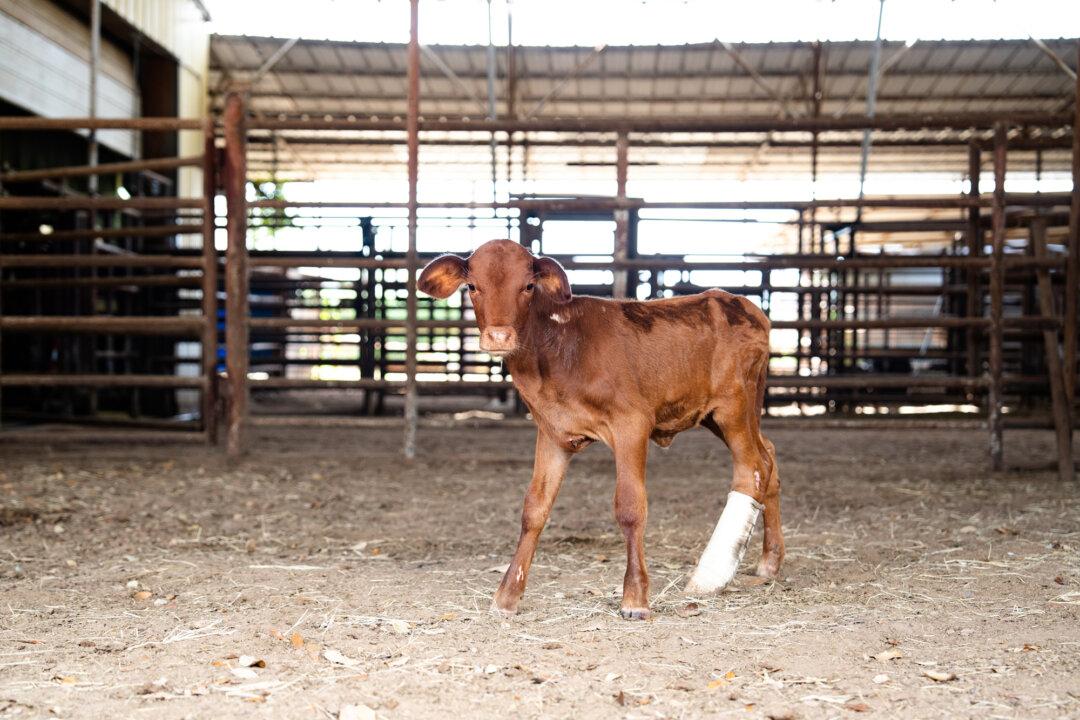
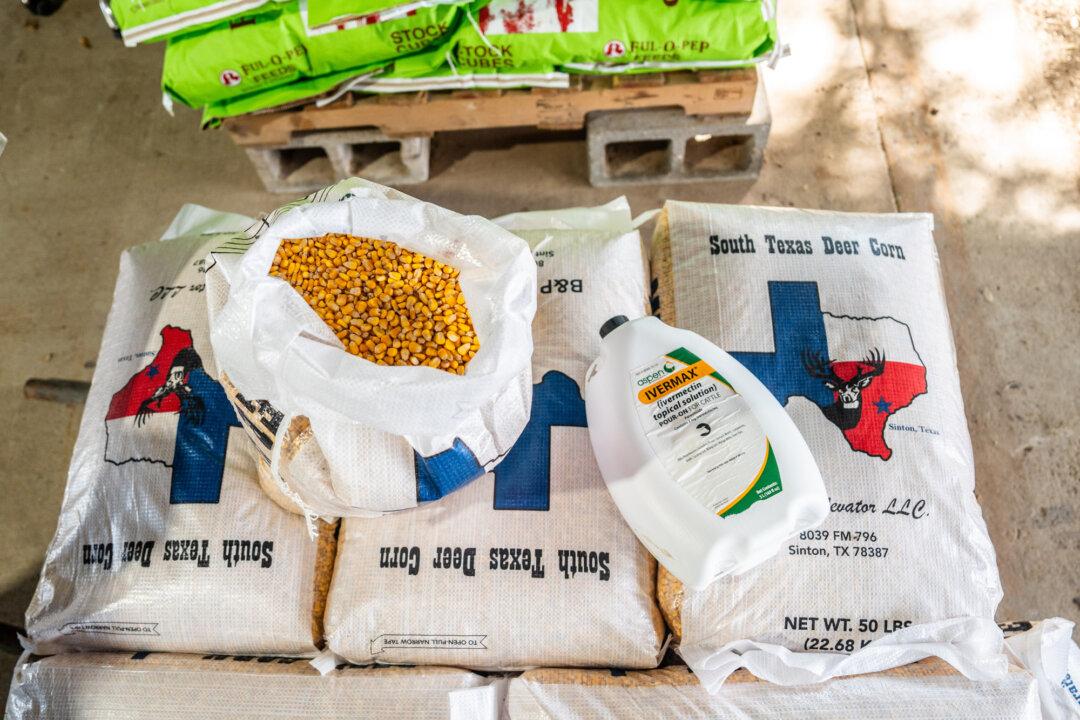
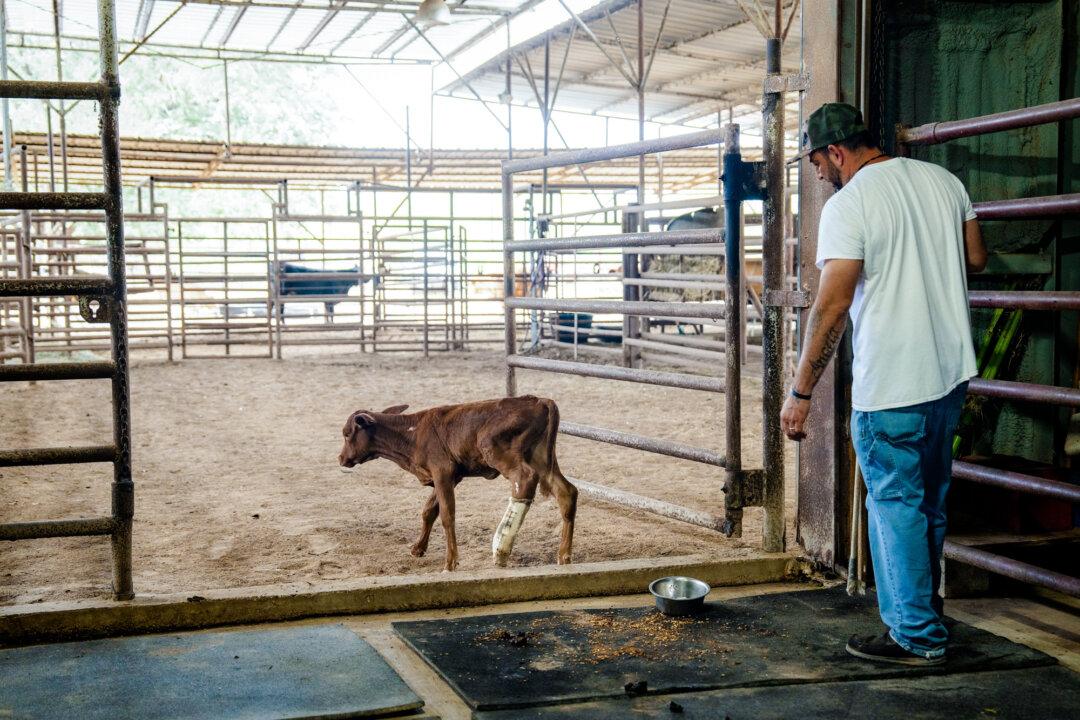
(Top) A calf with a leg cast at Las Palmas Veterinary Hospital in Falfurrias, Texas, on Oct. 8, 2025. (Bottom Left) Deer corn and ivermectin at Las Palmas Veterinary Hospital in Falfurrias, Texas, on Oct. 8, 2025. (Bottom Right) A calf with a leg cast at Las Palmas Veterinary Hospital in Falfurrias, Texas, on Oct. 8, 2025. (Samira Bouaou/The Epoch Times)
After serving in the Air Force, he came home as the screwworm invasion hit in the 1970s, he told The Epoch Times.
At one point, 1,100 cases of screwworms were identified on the ranch in a single year, Cage said.
Back then, the ranch had 10 cowboys who knew what they were doing, working 14 hours a day for a month straight to deal with the outbreak. Maggots would infect the navels of nearly every calf. Their mothers would lick their navels, which helped remove some maggots, but not enough.
“Left untreated, they all would die,” Cage said.
Cowboys worked nonstop, roping calves and tying them to trees so they could be treated and released.
“Black medicine got all over everything, and you would put it on the wound, and it instantaneously killed the worms,” Cage said. “The cowboys would go back every three or four days and re-doctor the calves.”
As winter approaches, cooler weather should help keep the screwworms south of the border, he said. He reckons the real challenge could come this spring if the flies make it into Texas. That’s when the weather warms and calving season begins.
Administering antiparasitics such as doramectin will be a challenge because it lasts only 14 days, which makes it impractical to use when you have 1,500 cows that need to be rounded up, he said.
“The biggest problem we have now is just a lack of cowboys to be able to handle the situation,” Cage said. “That’s what scares me more than anything.”
Nowadays, there are few cowboys left who know their way around a ranch. Most who show up to work are young with no experience.
“Some of the cattle cowboys have never even hardly been on a horse before now,” he said.
Without enough cowboys to deal with a new outbreak, the losses could be significant, he said.
Reality or Hype
Some people think the screwworm threat is overblown.
Lalo Garza, owner of Triple G Livestock Auction near Rio Grande City, called the accounts of the parasites being 70 miles away “fake.”
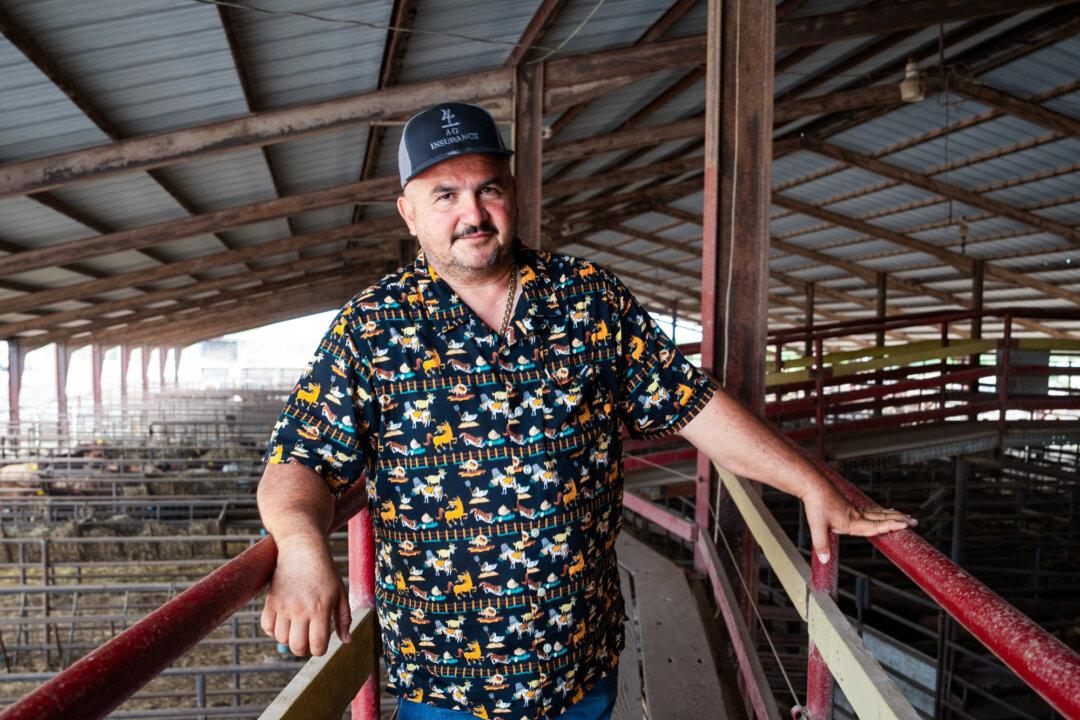
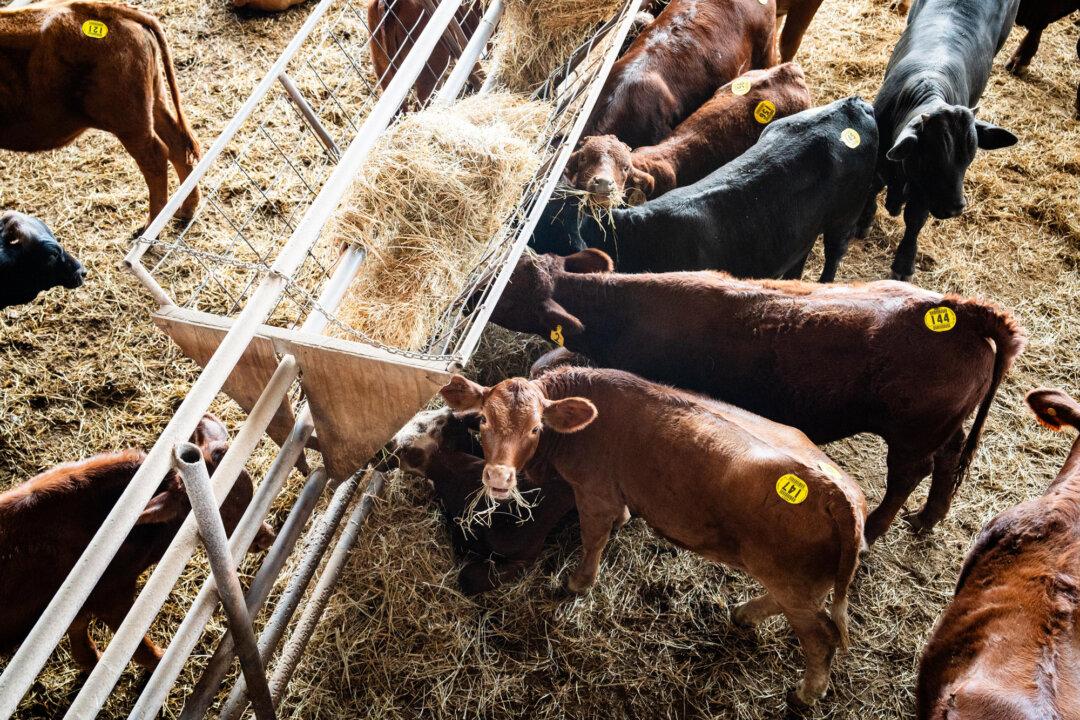
(Top) Lalo Garza, owner of Triple G Livestock Auction, in Rio Grande City, Texas, on Oct. 10, 2025. Garza called reports of parasites 70 miles away “fake,” saying it was a cattle transfer from Veracruz, not a local fly-borne case. (Bottom) Cows at Triple G Livestock Auction in Rio Grande City, Texas, on Oct. 10, 2025. (Samira Bouaou/The Epoch Times)
“It was just a transfer,” of cattle from Veracruz, he said, not a case that appeared organically from flies in the area.
Mike East, 82, who owns the Santa Fe Ranch, once part of the King Ranch, recalls when the screwworms invaded Texas during his childhood.
He remembers the situation back then as “manageable” at times. “Not everything that walked got screwworms,” East said.
But he noted that there was a time when the fly population exploded and ranchers had a hard time containing the spread. That left some to speculate about the effectiveness of the sterile flies being released in the 1970s.
Indeed, documents at the National Agricultural Library indicate questions were raised on the mating incompatibility between lab and wild flies.
As for now, East said he’s not sure how ranchers can prepare until the screwworms make it across the Rio Grande into the United States.
“What do you do until it gets here? I’m waiting on the government to do something,” he said.