

A Minnesota autism center for adults and children, which has been operating for more than 20 years, is facing closure in the wake of the massive fraud scandal in the state that dates back more than a decade and involves more than $9 billion in U.S. taxpayer money.
The Holland Center is one of many legitimate centers in the state, which collectively serve thousands of disabled people. Founder, owner, and CEO Jennifer Larson built the Holland Center for her autistic, nonverbal son, who is now 25 years old.
She said she has recently been forced to put hundreds of thousands of her own dollars into keeping the center afloat because the state didn’t pay a single claim for nearly two months.
Larson said that because of the payment delays, autism centers such as hers are being forced to reduce hours, cut staff, and, in some instances, close. Families are scrambling for help, disabled children and adults are regressing, and parents are leaving jobs to care for their disabled loved ones, she said.
Larson told The Epoch Times that her facility can’t continue much longer.
“The feds say it’s the state. The state says it’s the feds,” she said.
“The kids are going to be the collateral damage.”
The U.S. Department of Health and Human Services paused child care and family assistance funds to Minnesota in early January because of the alleged rampant fraud. The state is appealing.
The Minnesota Department of Human Services told The Epoch Times via email that the federal government’s threat of withholding funds is not affecting the current payment situation.
However, Larson’s center accumulated nearly two months of unpaid claims from Dec. 5 to Jan. 29, totaling more than $600,000.
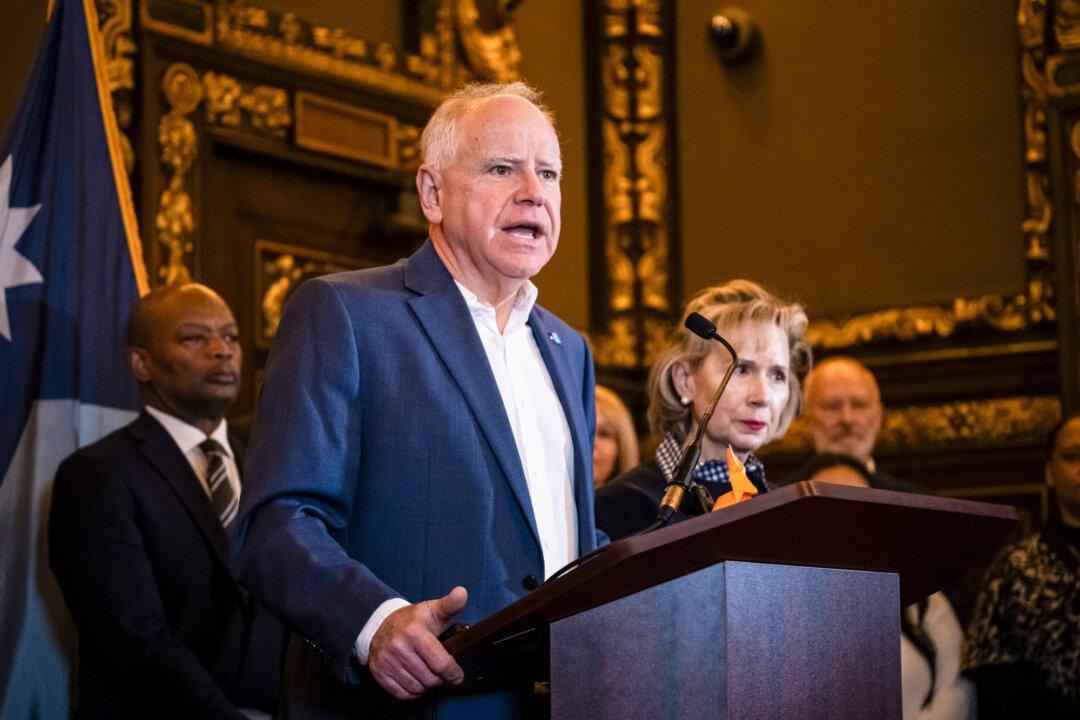
Minnesota Gov. Tim Walz speaks during a press conference at the state Capitol building in St. Paul, Minn., on Feb. 3, 2026. Beginning in late December 2025, the state began using a new pre-payment review vendor called Optum, which uses artificial intelligence in its claims and reimbursement processes. (Stephen Maturen/Getty Images)
‘Everything Was Flagged’
In late December, the state began using a new pre-payment review vendor called Optum, which uses artificial intelligence “at every step” of its claims and reimbursement processes. Minnesota Gov. Tim Walz announced the contract with the new system in October.
“They implemented it because of the fraud,“ Larson said. ”Obviously, the state wasn’t catching the fraud in the 300 or 400 centers that popped up in the last three years.”
She blamed the Minnesota government for turning a blind eye to the “crime ring” involving fraud at Somali-run autism centers on an immense scale.
Neither Walz nor his office could be reached for comment.
Now, Larson said, Optum is causing delays of claims, with few or unclear explanations in the review process.
“The state has failed and lost millions and millions of dollars in the system, so, clearly, the state wasn’t going to be able to tell Optum what to look for because they didn’t know what they were doing,” Larson told The Epoch Times after she recently testified to Congress.
“All of us, for the first round, nobody got anything. Everything was flagged.”
Larson said at a House subcommittee hearing on Jan. 21 that her center and numerous others in Minnesota are facing collapse after becoming collateral damage from the massive fraud scandal.




The Holland Center, an autism treatment center for children and adults, in Minnetonka, Minn., on Feb. 11, 2026. Larson said she recently put hundreds of thousands of her own dollars into keeping the center afloat after the state failed to pay any claims for nearly two months, leaving more than $600,000 unpaid. (Adam Hester for The Epoch Times)
Rep. Tom Tiffany (R-Wis.) asked Larson, “Ms. Larson, none of this would have happened if the fraud did not occur, is that accurate?”
“Yes,” she responded. “What happened in Minnesota had nothing to do with the ethical, long-standing autism providers.”
Larson said in her testimony that the state government’s “clumsy response” to fraud failed to distinguish between criminals and caregivers.
She said abrupt disruption or loss of service can destroy weeks or years of progress for disabled children and adults, causing lifelong consequences.
Payment Process
The Minnesota Department of Human Services told The Epoch Times that it sent the first batch of more than 100,000 claims to Optum for review in late December.
The state agency said that every two weeks, Optum receives batches of claims from the state. The system analyzes and flags any that need further review. Unflagged claims are paid after the initial analysis, it said.
The agency said it will continue sending payments for unflagged claims on regular two-week cycles. A provider will receive an update every two weeks on a flagged or suspended claim, accompanied by reason codes, it said.
“If a claim is flagged, we may need additional information and documents from the provider before payments are made, which may cause further delay,” the Minnesota Department of Human Services stated.
Claims in Optum are listed as suspended until the state reaches a payment decision.
The department did not provide detailed answers regarding why the Holland Center or other similar, long-standing facilities might have their claims flagged.

Jennifer Larson, founder and CEO of the Holland Center, and her son Caden Larson in Minnetonka, Minn., on Feb. 11, 2026. Larson built the center for her autistic, non-speaking son, who is now 25 years old. (Adam Hester for The Epoch Times)
The agency said it did not wish to disclose what kind of identifiers cause it to suspect that someone is billing for services that were not provided, but officials generally look for “patterns of concern—claims that fall outside expected norms,” some of which could be blamed on administrative errors or poor documentation rather than intentional fraud.
In an emailed statement to The Epoch Times, the company said: “Optum helps the state of Minnesota identify potential fraud, waste, and abuse by conducting pre‑payment reviews.
“Optum has no authority to approve, deny, delay, or suspend claims, and payment decisions are made exclusively by [the Minnesota Department of Human Services] and the Office of Inspector General.”
Most claims should be paid within 30 days, and legitimate claims that have been flagged should be paid within 90 days, as required by the federal government, according to the agency.
Financial Hit
Meanwhile, with a payroll of $250,000 every two weeks, Larson has been forced to ask many of her employees to take unpaid leave.
After nearly two months of unpaid claims, her center was partially paid on Jan. 29, bringing the owed amount down to about $300,000, Larson said. She said there has been little to no word from state or health officials as to why her claims were flagged in the first place.
Larson said she doesn’t expect to get another payment for two weeks, putting her in a deficit of hundreds of thousands of dollars that she doesn’t think will ever be rebalanced.
She said she has spent so much of her own money to keep the center’s lights on that she has been forced to cut back on other bills to make ends meet. Larson said that, fortunately, her landlords have been understanding of the situation.

The Holland Center in Minnetonka, Minn., on Feb. 11, 2026. Larson told a House subcommittee hearing on Jan. 21 that her center and numerous others in Minnesota are facing collapse after becoming collateral damage from the massive fraud scandal. (Adam Hester for The Epoch Times)
The Minnesota Department of Human Services said in its email that there is no way to expedite payments to individual providers.
“We know payment delays can cause real challenges for many providers we work with, the majority of whom are legitimate businesses,” the agency stated. “We are committed to making the pre-payment review process as efficient as possible for legitimate providers.”
Larson said there should be a simpler way.
“If they wanted to do it right, they could have said, ‘OK, who are the providers that have been in business ... five years or more, 10 years or more ... who’ve had on-site audits?’” she said.
The Optum platform can’t replace state officials physically looking into autism centers to ensure legitimacy, Larson said.
“It’s not rocket science,“ she said. ”How about you go look? They come into my center every year and do an audit, inspection, and our documentation.
“Clearly, that’s not happening with those other centers.”


(Top–Bottom) The Holland Center in Minnetonka, Minn., on Feb. 11, 2026. With a $250,000 biweekly payroll, Larson said she has asked many employees to take unpaid leave and cut other expenses to make ends meet. (Adam Hester for The Epoch Times)
New Centers
Years ago, when Larson witnessed new autism treatment centers popping up around her area and the state, she was initially relieved because she thought it meant that more help was coming for disabled children and adults.
“There’s a need, and there’s a high prevalence of autism in the Somali community in Minnesota,” Larson said. “And I know that, and I service a lot of the kids, but we can’t take them all. We’ve always had a waiting list.”
A 2023 study by the University of Minnesota showed autism rates in 4-year-olds to be much higher among Somali children compared with children of other races and ethnicities. The report found that one in 18 Somali children had autism, compared with one in 64 for white children, one in 31 for Hispanic children, and one in 30 for non-Somali black children.
But when hundreds of autism centers popped up, it was a red flag for Larson.
“No one wants to talk about it because everyone’s scared of saying anything wrong,” Larson said. “That’s why we’re here. It’s because everyone’s too afraid to say something.”
Independent journalist Nick Shirley, who brought national attention to the alleged Minnesota fraud at day care centers with a viral video posted on Dec. 26, 2025, attended the congressional hearing with Larson.
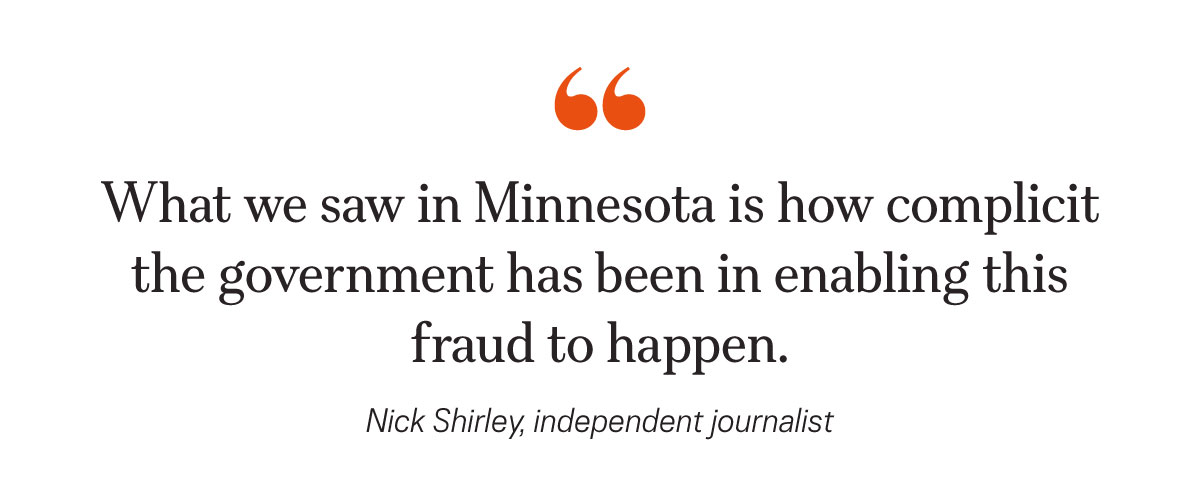
“What we saw in Minnesota is how complicit the government has been in enabling this fraud to happen,“ Shirley said in his testimony. ”Quality ‘Learing’ Center had over 90 violations, yet they continued to give that day care $1.9 million.”
The closure of the Holland Center would dismantle a lifetime of work for Larson that all started with the birth of her son.
“This work is a labor of love for me,” she said. “It’s my son’s legacy.”

Jennifer Larson, founder and CEO of the Holland Center, and her son Caden Larson in Minnetonka, Minn., on Feb. 11, 2026. (Adam Hester for The Epoch Times)