
Minnesota’s fraud cases continue to broaden, federal authorities said Dec. 18, as they announced charges against a half-dozen new suspects. They also revealed that evidence was seized in a fourth type of scandal, and estimated the state’s fraud losses could exceed $9 billion in Medicaid alone.
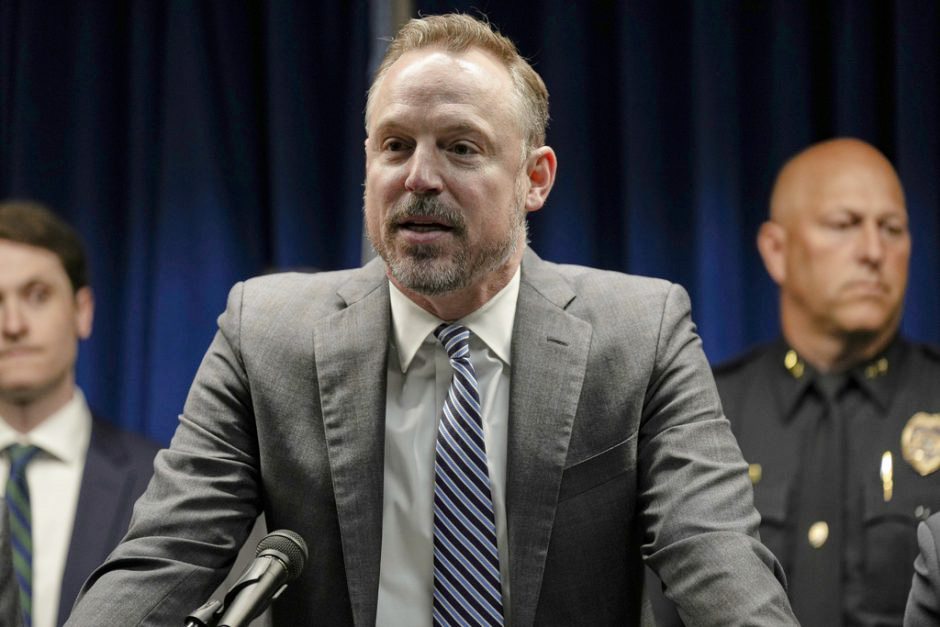
Joe Thompson, first assistant U.S. attorney in Minnesota, disclosed those updates with other federal agencies at a news conference in Minneapolis.
He also said that Medicaid officials are examining $18 billion worth of Minnesota claims dating back to 2018. “Half or more” of that amount could be fraudulent, he said, noting the review is limited to 14 fraud-vulnerable services that are “just part of Medicaid.”
Thompson said investigators are working “around the clock” to dig into “staggering, industrial-scale fraud.”
“Every day we look under a rock and find ... a new $50 million fraud scheme,” he said.
Five more people have been charged in a “Housing Stabilization Services” program; a couple of those suspects had no connection to Minnesota but came to the state after hearing that “easy money” could be made through that program, Thompson said.
That so-called “fraud tourism” is a new phenomenon among the Minnesota fraud cases, he said, although prosecutors have heard of it occurring elsewhere.
It’s a shorthand way of explaining that fraud potential, not tourist attractions, motivated suspects to travel to new destinations.
A sixth person was charged in a separate case, dealing with allegedly fraudulent claims of providing services to children with autism.
The housing and autism services cases both broke with initial suspects charged in September, while an estimated $250 million racket involving a nonprofit called “Feeding Our Future” continued to unfold.
The first charges in the Feeding Our Future case, involving fraudulent claims of feeding needy children, were filed in 2022. Since then, 78 people have been charged, and dozens have been convicted.
Just before new charges were announced in the housing and autism scandals on Dec. 18, a judge unsealed a search warrant related to alleged exploitation of Medicaid’s Integrated Community Supports program, Thompson said. That money is supposed to help people live independently in their own homes, assisting them with “health, safety, and household tasks,” a Justice Department news release explained.
However, the program “has been vulnerable to fraud,” the release said.
The community-supports program, like the housing and autism programs, showed “explosive growth,” a pattern raising red flags for fraud, Thompson said. Payouts totaled $4.6 million when the community-supports program launched in 2021, and it ballooned to $170 million in 2024, the release said.
Also on Dec. 18, Asha Farhan Hassan, 28, pleaded guilty to charges brought against her in September in both the autism and meals-program scandals. She reaped nearly $14.5 million, prosecutors said.
A new suspect in the autism scandal, Abdinajib Hassan Yussuf, 27, is charged with one count of wire fraud.
He and his partners recruited children to receive treatment at a business where he was president and CEO, Star Autism Center.
The business obtained more than $6 million in Medicaid reimbursements. “Many of these claims were fraudulently inflated, billed without providers’ knowledge, and for services that were not actually provided,” a news release said. Further, Star Autism allegedly paid kickbacks to parents who cooperated with the scheme, and financed the kickback costs through Medicaid billing, the statement said.
The news release also gives information on five new defendants charged in the housing-stablization scheme, joining eight previously charged suspects.
A pair of Pennsylvania men, Anthony Waddell Jefferson, 37, and Lester Brown, 53, each face a count of wire fraud. Marketing themselves as “The Housing Guys” at shelters and housing facilities, the pair “repeatedly flew together from Philadelphia to Minneapolis for the purpose of recruiting beneficiaries for their companies.”
They allegedly hired family members, invented fake employees, and “made up fake notes” to satisfy requests for documentation of the services they were supposed to provide, authorities allege. They submitted about $3.5 million worth of claims, purporting to serve 230 people.
Similarly, two other men face wire-fraud charges: Hassan Ahmed Hussein, 28, and Ahmed Abdirashid Mohamed, 27. The charges stem from their operation of a company in St. Paul called Pristine Health.
“Hussein and Mohamed were supposed to provide housing consulting, transitioning, and sustaining services to qualifying people in need,” the news release states, but allegedly were involved in submitting false claims that “significantly overrepresented the services they provided.”
They allegedly spent much of the proceeds “on themselves and to fund personal travel, including to London, Sydney, Dubai, Istanbul, and several destinations in Saudi Arabia.”
Kaamil Omar Sallah, 26, is charged with four counts of wire fraud over activities with a company he owned and operated, SafeLodgings Inc. “In 2024 alone, Sallah claimed to have personally provided more than 3,600 billable service hours,” the release says, adding that he and his company received almost $1.3 million in government funds, and Sallah “diverted much of his fraud proceeds to conspirators,” or investments including almost $150,000 in a cryptocurrency exchange.
The new charges follow a string of significant developments related to the fraud cases—all within the past few days.
On Dec. 12, Gov. Tim Walz appointed an anti-fraud czar.
On Dec. 15, Education Secretary Linda McMahon called for Walz’s resignation over alleged failure to clamp down on fraud in his state, which she says included $12.5 million in government loans to nearly 2,000 “ghost students” who never attended college.
That same day, the U.S. Labor Department announced it was sending a “strike team” to investigate whether unemployment compensation was being abused in Minnesota.