

White House press secretary Karoline Leavitt on Monday defended a second strike on a drug boat in the Caribbean Sea carried out on Sept. 2, amid growing scrutiny of the military operation.
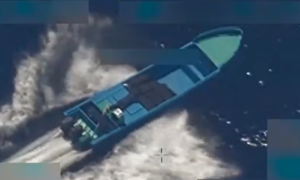
Last week, The Washington Post was the first outlet to report that U.S. forces who had attacked a drug boat on Sept. 2 had ordered a second strike after observing at least two survivors clinging to the wreckage of the destroyed vessel.
The outlet raised the prospect that such a follow-on strike may constitute a war crime, and lawmakers on both sides of the aisle have since vowed to probe the incident.
Initially, President Donald Trump and War Secretary Pete Hegseth denied that a second strike had taken place.
During the Monday press briefing, Leavitt said reporting of a second strike on the vessel on Sept. 2 “is true.”
Leavitt defended the decision, disputing claims that the attack was unlawful.
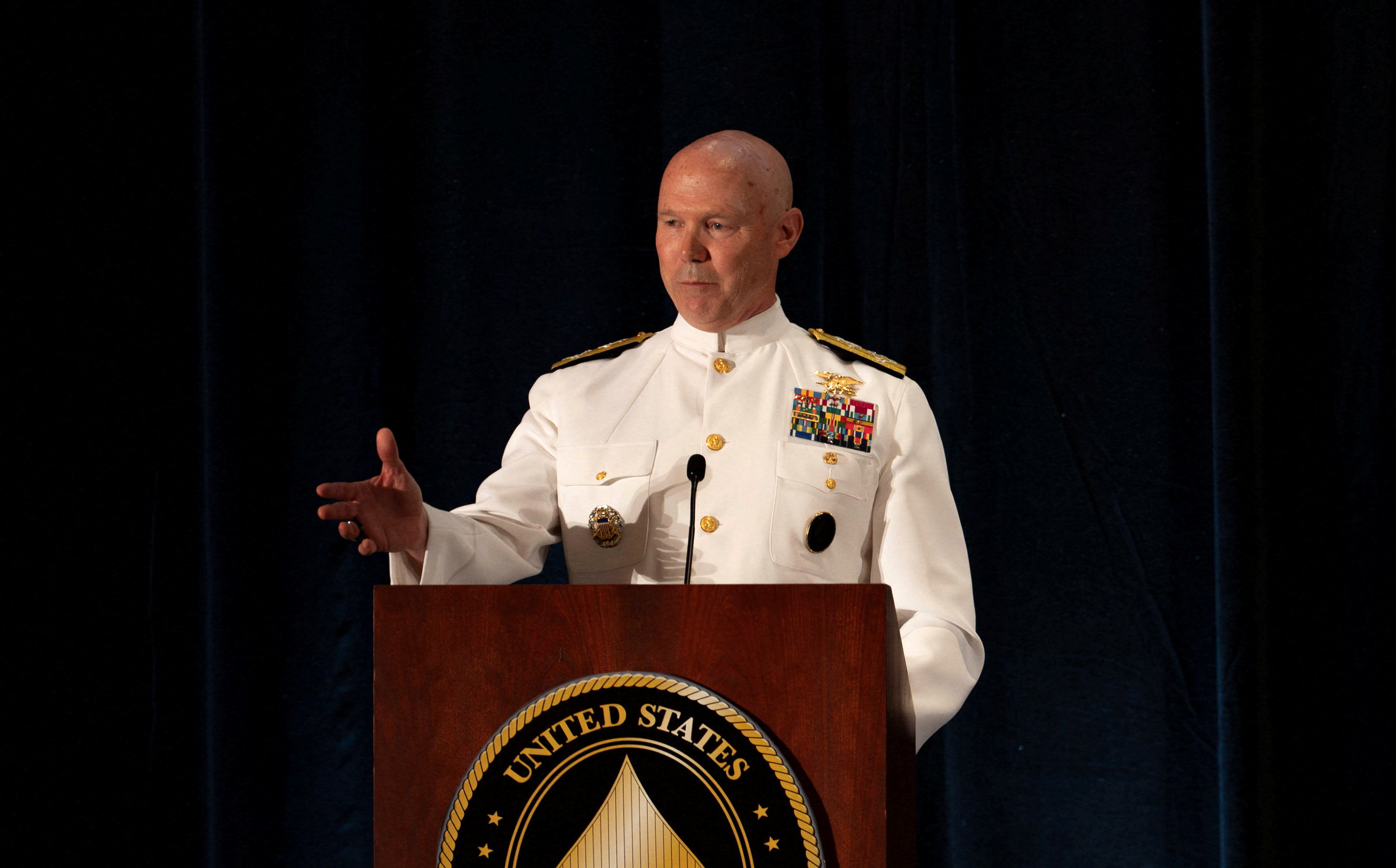
“Secretary Hegseth authorized [Navy Vice Adm. Frank “Mitch”] Bradley to conduct these kinetic strikes,” said Leavitt. “Admiral Bradley worked well within his authority and the law, directing the engagement to ensure the boat was destroyed and the threat to the United States of America was eliminated.”
Reading from a prepared statement, the White House spokeswoman said, “Presidentially designated narco-terrorist groups are subject to lethal targeting in accordance with the laws of war.”
Over the weekend, the Republican and Democratic heads of the House and Senate armed services committees announced plans to probe the Sept. 2 strike.
“We take seriously the reports of follow-on strikes on boats alleged to be ferrying narcotics in the [U.S. Southern Command] region and are taking bipartisan action to gather a full accounting of the operation in question,” House Armed Services Committee Chairman Rep. Mike Rogers (R-Ala.) and ranking member Rep. Adam Smith (D-Wash.) said in a statement shared on X on Nov. 29.
Bradley is set to testify to lawmakers in a classified setting on Thursday as part of the probe, Rogers said. The Alabama Republican reported that he was “satisfied” after his conversations with Hegseth, but wanted to hear from Bradley as well.
“We’ll all have clarity on Thursday afternoon,” Rogers said.
In a post on X, Hegseth defended Bradley.
“Admiral Mitch Bradley is an American hero, a true professional, and has my 100% support. I stand by him and the combat decisions he has made—on the September 2 mission and all others since,” Hegseth wrote.
The Sept. 2 strike was only one of many in the region involving alleged narcotics traffickers.
Some lawmakers have been questioning the legality of the strikes, and The Washington Post’s report reignited these debates.
In a Nov. 28 statement responding to the report by The Washington Post, Hegseth denounced what he described as “more fabricated, inflammatory, and derogatory reporting” meant to discredit the military, saying ongoing U.S. military operations in the Caribbean Sea are compliant with both U.S. and international law.
On Nov. 30, Trump told reporters he would “look into it” when asked about the reports, but said he believed that Hegseth hadn’t ordered the strikes.
When he first announced the Sept. 2 strike, the president said those on board the targeted vessels were members of the Venezuelan transnational gang known as Tren de Aragua. Since the start of the second Trump administration, the U.S. State Department has formally designated Tren de Aragua and other Latin American criminal networks as foreign terrorist organizations.
Emel Akan and The Associated Press contributed to this report.