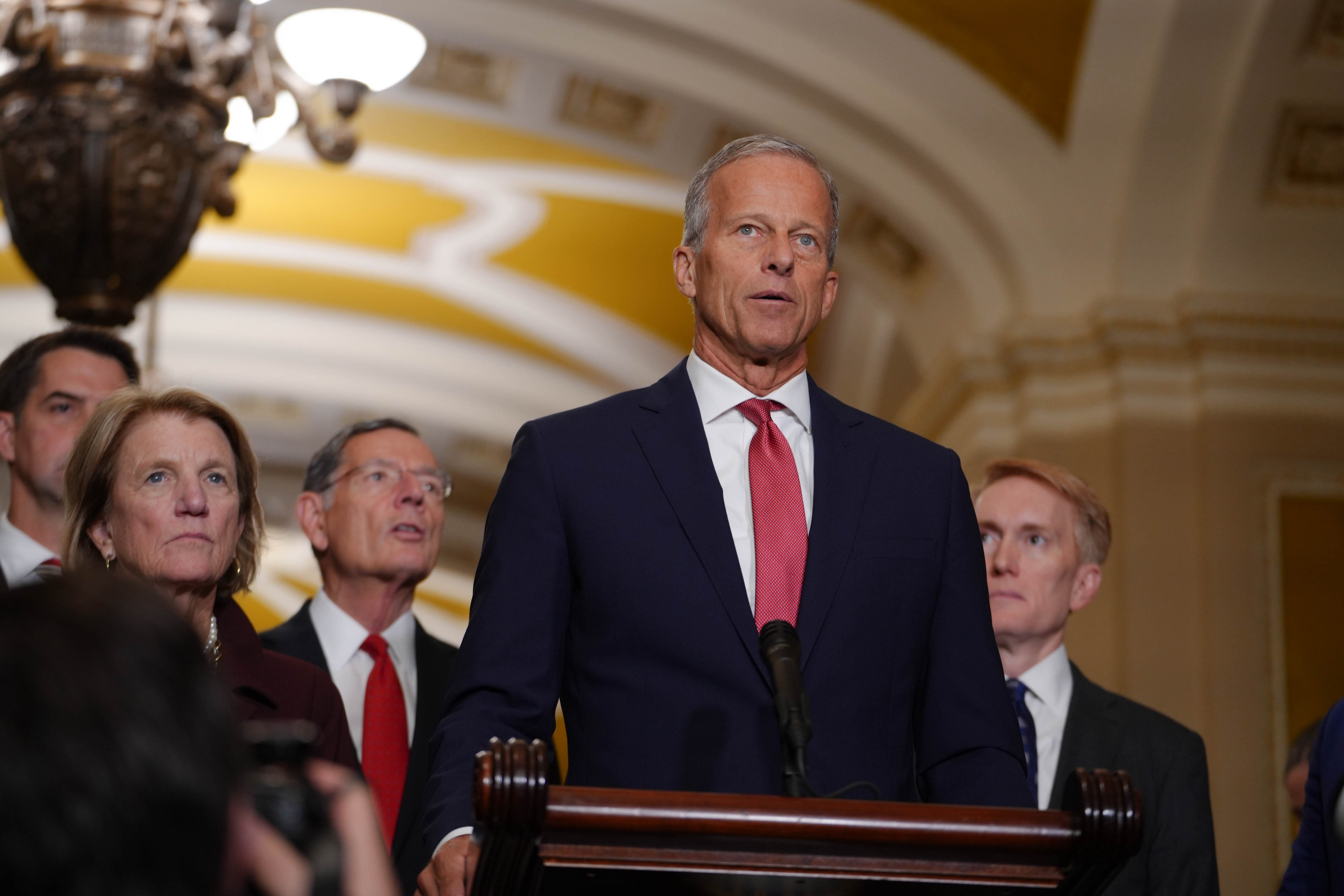

WASHINGTON—The lapse in federal funding has hit another milestone: At 35 days as of Nov 4, it is now tied for the longest in U.S. history.
The sheer duration of the lapse is also forcing a change to a Republican-backed continuing resolution (CR) to fund the government. Its scheduled end date, Nov. 21, is now less than three weeks away, leaving lawmakers little time for the negotiations over long-range funding it was meant to enable.
Senate Majority Leader John Thune (R-S.D.). told reporters on Nov. 3 that he and his colleagues will have to draft a new, longer CR.
Republican senators had differing estimates of how long the new patch might last and whether it was even necessary.
“Honestly, we could actually get this done by the 21st if we went to work on it now,” Sen. Mike Rounds (R-S.D.) told The Epoch Times. He told reporters he would not want to see any new CR “go past December,” naming the first and second weeks of that month.
“November 21st is a dead issue,” Sen. John Cornyn (R-Texas) told The Epoch Times. “We’ve already burned up all that time.”
Sen. Ted Cruz (R-Texas) told The Epoch Times he thinks a new funding patch would have to last “at least till January.”
Sen. Lisa Murkowski (R-Alaska) told reporters she hopes the CR continues through December.
“Make us do our work,” she said.
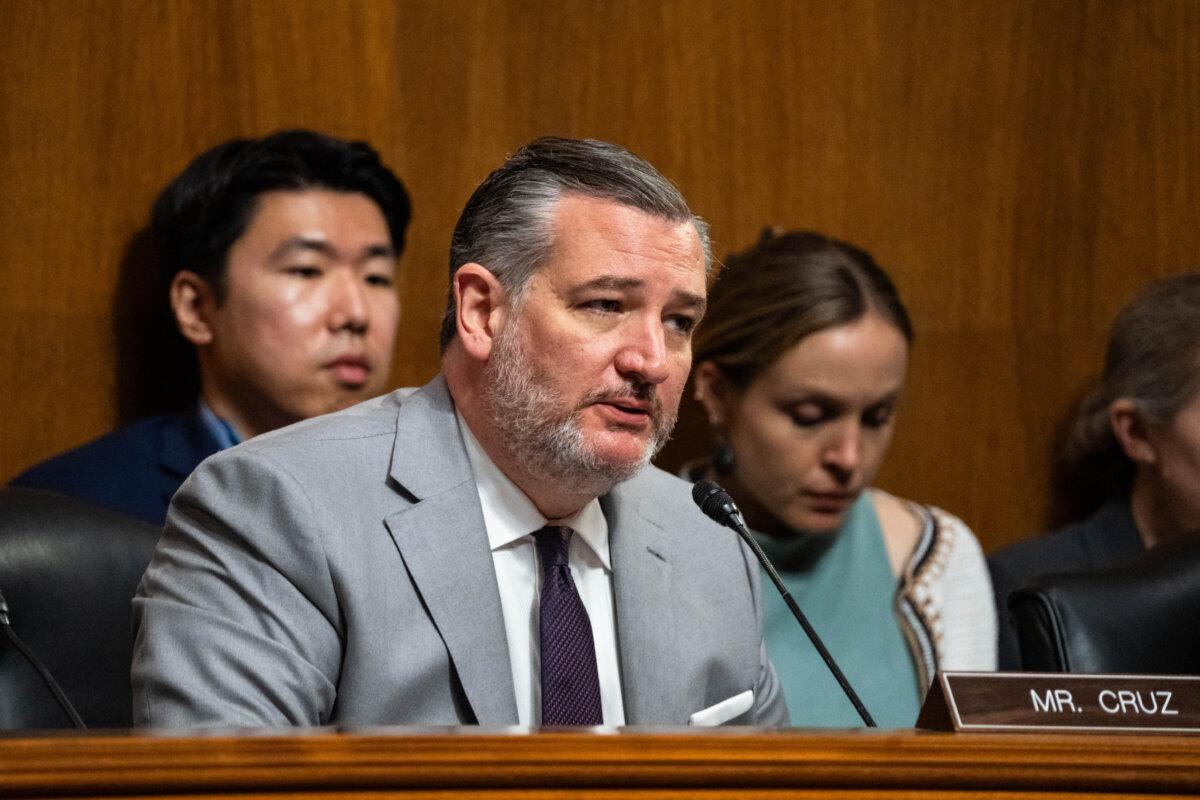
Sen. Ted Cruz (R-Texas) speaks during a hearing on Capitol Hill in Washington on June 25, 2025. (Madalina Kilroy/The Epoch Times)
The ongoing standoff now matches a shutdown that occurred during the first Trump administration, when President Donald Trump and Democrats clashed over border wall funding. Trump ultimately relented in late January of 2019, signing a bill to fund the government for three weeks.
This time, virtually all Senate Republicans have sought to pass a short-term continuing resolution that would effectively maintain spending at current levels without additional policy items. They have met with opposition from almost all of their Democratic colleagues, who have made expiring Obamacare premium tax credits the centerpiece of their resistance.
Republicans have generally maintained that health care issues can be solved once the government is reopened and before those subsidies expire at the end of the year.
Senate Republicans’ proposal secured the support of the entire caucus, except Sen. Rand Paul (R-Ky.), along with three senators who caucus with the Democrats. While that makes for a majority, it has fallen five senators short of the 60-vote threshold needed to advance the bill.
Although conversations between lawmakers have stepped up in the past week, no new Democrats have crossed the aisle to support a GOP-backed continuing resolution—and Senate Republicans have not budged either.
Now, with the stopgap bill’s duration in question, the shutdown is just one day away from breaking the record.
Asked about the milestone, Sen. Roger Marshall (R-Kansas) told reporters that “it'll take some type of outside inflection point or the best negotiator in the world to figure out something.”
Sen. Andy Kim (D-N.J.) told reporters he thinks just such an inflection point was reached on Nov. 1, when open enrollment for health insurance began. Listed premiums have spiked for many Americans.

Sen. Roger Marshall (R-Kan.) speaks during an interview with The Epoch Times in Washington on June 3, 2024. (Madalina Vasiliu/The Epoch Times)
“I literally drove around 500 miles across New Jersey over this weekend, talking to a lot of different people,” he said. “Some of them told me they didn’t realize it was going to be so bad.”
Supplemental Nutritional Assistance Program benefits were set to expire on Nov. 1, sparking legal challenges. In a Nov. 3 filing, the Trump administration said the U.S. Department of Agriculture will fund those benefits at reduced levels.
“I’ve been to multiple food banks,” Marshall told reporters. “I could just feel the intensity there.”
Meanwhile, the Nov. 4 elections—including New York City’s mayoral race—could be seen as a verdict on the two parties in contention.
Those developments appear to have opened up new conversations between lawmakers.
On Nov. 3, Sen. Tim Kaine (D-Va.) named some senators he said participated in discussions. They included Rounds, Sen. Katie Britt (R-Ala.), Sen. Gary Peters (D-Mich.), Sen. Peter Welch (D-Vt.), and Sen. Angus King (I-Vt.).
Yet, Rounds sounded pessimistic about the state of dialogue.
“I think their discussions on this are purely political,” he told reporters. He said a previous discussion “was bipartisan, and it was Democrats talking.”
Blame Traded
During a Nov. 3 press conference, House Speaker Mike Johnson (R-La.) noted that the shutdown was already the second-longest in history.
He, House Majority Leader Steve Scalise (R-La.), and Whip Tom Emmer (R-Minn.) said Democrats are to blame for the impasse.
“Democrats made a deliberate choice to keep the government closed. The shutdown will only end when those same Democrats make a deliberate choice to open,” Johnson told reporters.
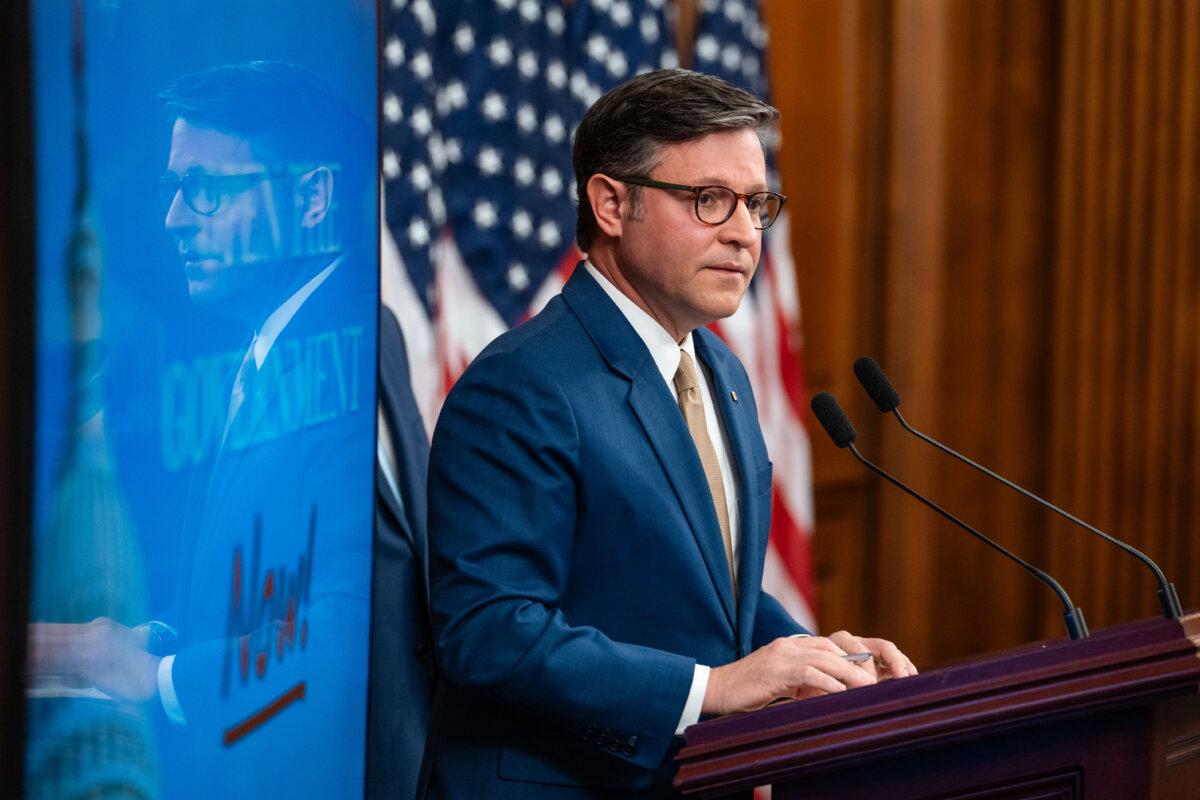
House Speaker Mike Johnson (R-La.) speaks at a press conference during the 34th day of the government shutdown in Washington on Nov. 3, 2025. (Madalina Kilroy/The Epoch Times)
Later in the day, House Minority Leader Hakeem Jeffries (D-N.Y.) told reporters that Republicans were culpable, describing the GOP-backed funding bill as partisan and “dead on arrival.”
“We need to find a bipartisan path forward to enacting the spending agreement that actually makes life better for the American people, but we also have to decisively address the Republican healthcare crisis,” he said.
In a CBS “60 Minutes” interview released on Nov. 2, Norah O’Donnell asked Trump how he was working to bring the shutdown to a conclusion.
“We keep voting,” the president said. “All [Democrats] have to do is raise five hands. We don’t need all of them.”