
Americans will have access to Zepbound and Wegovy at reduced prices starting in 2026.
The popular treatments for diabetes and obesity will be available to consumers at a nearly 90 percent discount in January, under an agreement negotiated by the Trump administration with Eli Lilly and Novo Nordisk.
The drugs will also be sold to the Medicare program at reduced prices in July, enabling expanded coverage. State Medicaid programs will see savings as they opt into the agreement.
More than 16 million Americans have used Wegovy, Zepbound, or a comparable injectable weight-loss drug. Wegovy accounted for more than a quarter of all weight-loss prescriptions in 2024.
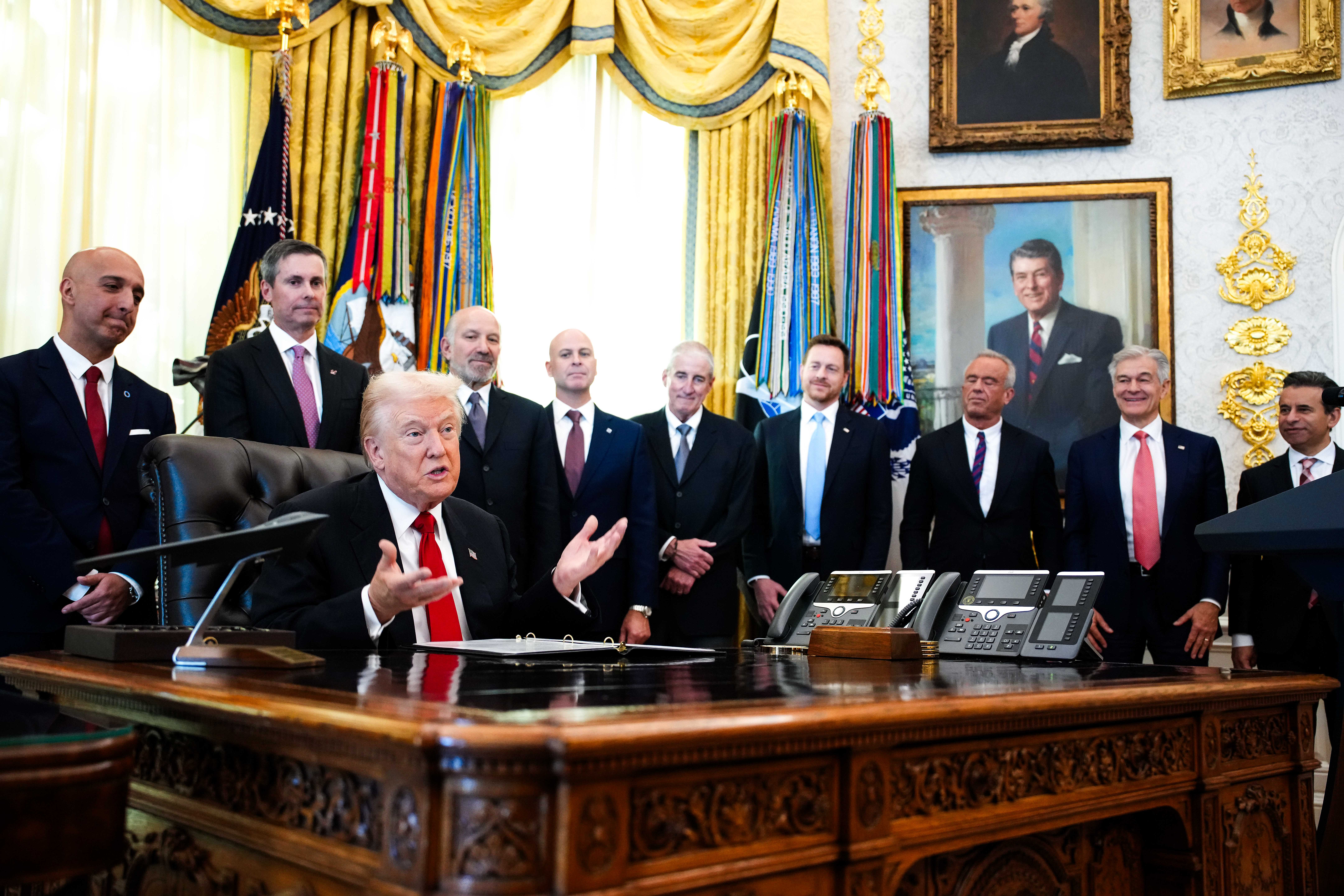
“Eli Lilly and Novo Nordisk have committed to offer Zepbound and Wegovy for Most Favored Nation prices for American patients,” President Donald Trump said in announcing the agreement on Nov. 6.
U.S. customers had been paying as much as 520 percent more for Zepbound than people in Europe and up to 1,400 percent more for Wegovy.
“These are two companies that [are] behind the groundbreaking weight loss drugs that have helped millions of Americans struggling with obesity live better, longer lives,” Trump added.
For customers who buy the drugs directly from the manufacturers, the price for the starting dose of the oral formulation of the drugs will be $149, roughly 11 percent of the current list price.
For direct-pay customers, the average price for all doses, including the injectable form of the medications, will be $350, a discount of about 30 percent from current pricing.
That price will be reduced to $245 over two years, according to a senior administration official.
Medicare and Medicaid programs will pay $149 for initial oral doses, then $245 per month for all other doses. Medicare beneficiaries will make a $50 copayment.
Under this agreement, the Medicare program will cover the drugs for weight loss under certain conditions. State Medicaid programs will have the option to do so.
Currently, 13 states cover drugs in this category, known as GLP-1 medications, for the treatment of both diabetes and weight loss. Another four states cover them only for diabetes, and 34 state Medicaid programs do not cover them.
Under the agreement, Medicare or Medicaid programs will cover Zepbound or Wegovy for weight loss only if the patient has an underlying health condition.
“We want patients to be healthier again, and we are really focused on secondary prevention,” a senior official told reporters on Nov. 6.
About 10 percent of Medicare beneficiaries will qualify.
The expanded coverage will save the Medicare program about $300 billion by reducing the cost of medical care for obesity. Overall, obesity costs Americans more than $1 trillion annually in medical costs, according to the White House.
Medicare patients with a body mass index greater than 27 are eligible if they are diagnosed as pre-diabetic, have had a stroke, have had a stroke or myocardial infarction, or have peripheral artery disease.
Patients having a body mass index above 30 are eligible if they also have kidney disease at stage 3a or higher, heart failure with preserved ejection fraction, or uncontrolled hypertension.
Patients with a body mass index above 35 but no underlying health condition are eligible.
Future drugs released by Eli Lilly or Novo Nordisk in the GLP-1 category would also be available at these prices if approved for the treatment of obesity.
Drug manufacturers are required to provide lifestyle coaching on physical activity and dietary choices for those taking their medications.
Expanding Medicare coverage of these drugs for weight loss is expected to be cost-neutral, officials said, because the savings from discounts for existing diabetes patients will fund coverage for weight loss patients.
Under the terms of the agreement, Eli Lilly and Novo Nordisk also agreed to the four terms of the administration’s Most Favored Nation prescription drug pricing policy.
Those provisions are to provide all covered medications to the Medicaid program at the lowest price available in any developed nation, offer new medications to U.S. patients at the lowest available price, sell medications directly to U.S. consumers at the best available price, and use revenues realized from raising drug prices abroad to lower prices for American patients and taxpayers.
Commercial insurers will also be able to obtain lower prices, which the administration estimated will be 25 percent less than the current cash price of the drugs.