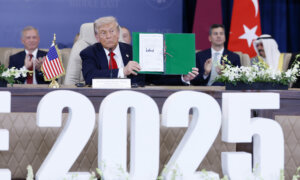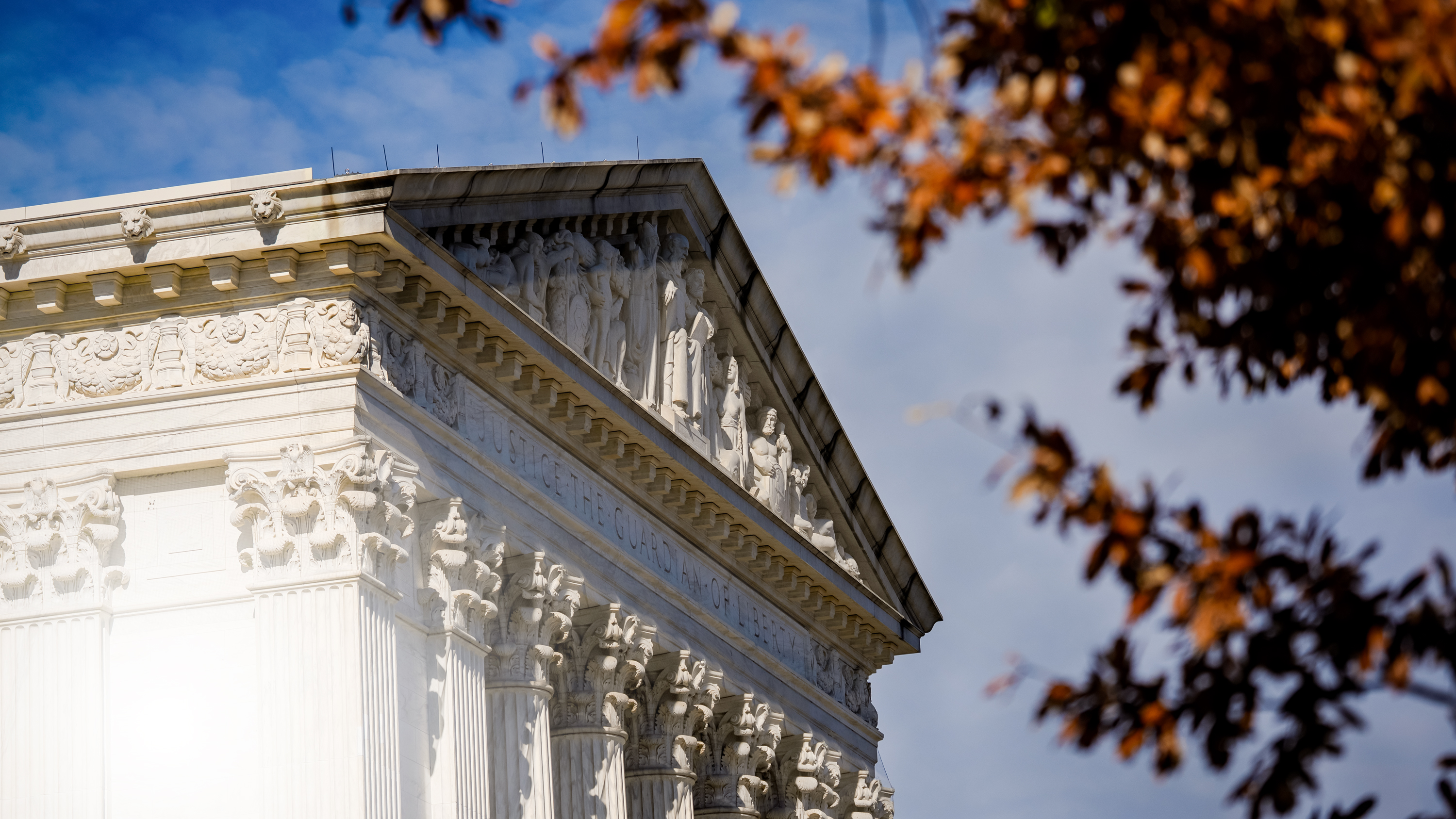

The Supreme Court heard oral argument on Nov. 5 over whether President Donald Trump’s tariffs exceeded the authority Congress granted to presidents.
Overall, the justices seemed skeptical of Trump’s tariffs, which the administration said were to target fentanyl trafficking and trade imbalances with various countries.
The Constitution grants Congress the power to impose tariffs, but there is a question about whether legislators effectively delegated that power in a law known as the International Emergency Economic Powers Act.
That law allows presidents to take a variety of actions during times of emergency, including regulating imports. U.S. Solicitor General D. John Sauer told the court that tariffs were a way of doing just that.
On the other side, a group of states and businesses argued that Trump was reading too much into the law. Neal Katyal, for example, argued that the tariffs were a tax rather than a valid regulation of imports.
Justices Sonia Sotomayor and Elena Kagan seemed to agree with this characterization despite Sauer’s objections. Because the Constitution also gives Congress the power to tax or raise revenue, Katyal indicated it would need to be clear in delegating that authority.
Multiple justices seemed concerned about maintaining the nation’s separation of powers and that accepting Trump’s tariffs would lead to an imbalance between the legislative and executive branches.
Justice Neil Gorsuch, in discussing Congress delegating tariff power, said: “Congress, as a practical matter, can’t get this power back once it’s handed it over to the president.” He added that “it’s a one-way ratchet toward the gradual but continual accretion of power in the executive branch and away from the people’s elected representatives.”
Sauer attempted to characterize the tariffs as a part of foreign affairs and therefore within the realm of issues that presidents typically have more discretion in handling.
Chief Justice John Roberts acknowledged that the tariffs were “foreign-facing” and that the issue “implicates very directly the president’s foreign affairs power.”
However, Roberts also seemed to endorse the view that the tariffs were a tax and noted that the statute didn’t use the word “tariffs.”
Justices Gorsuch and Amy Coney Barrett indicated that another word in the law—“licenses” —was similar to tariffs. Their colleagues, Justices Samuel Alito and Clarence Thomas, seemed the most sympathetic to the administration, fielding hypotheticals seemingly designed to test the limits of the arguments advanced by those opposing the tariffs.
—Sam Dorman
BOOKMARKS
President Donald Trump renewed calls for Senate GOP members to smash the filibuster this week and bring an end to the government shutdown. House Speaker Mike Johnson (R-La.) recently resisted that plan, saying: “If the shoe was on the other foot, I don’t think our team would like it.”
The Supreme Court has agreed to test the Trump tariffs, and they heard oral arguments about the issue for over 2.5 hours on Wednesday. Find out what they said by reading Sam Dorman’s latest report.
Rep. Jared Golden (D-Maine) won’t run for reelection, he said on Nov. 5. “Simply put, what I could accomplish in this increasingly unproductive Congress pales in comparison to what I could do in that time as a husband, a father, and a son,” he said on X.
A federal judge told the Department of Justice it needs to turn over its evidence against former FBI director James Comey by the end of today. Comey’s attorneys allege the prosecutors have been withholding critical information relating to an investigation of his former lawyer.
The BBC is alleged to have selectively edited footage from Trump’s speech on Jan. 6, 2021, which it then broadcast to the public, according to an internal memo. Find out the details by reading Rachel Roberts’ latest report.
—Stacy Robinson