
Even though the United States-China trade war is currently in a one-year truce, pressure remains on China to fulfill its commitments to curb fentanyl precursors, purchase American soybeans, and lift export controls on rare earths.
And the year gives the United States time to ramp up its own supply chain of rare earths.
The sense of urgency to reach rare-earth independence has never been higher. That’s because President Donald Trump used chaos as a strategy to cause Beijing to reveal its best card—rare earths, said Alexander Campbell, a global macro investor who previously worked at Bridgewater Associates.
Chaos favors the strong player in a competitive game, according to game theory, said Campbell. And the weaker player in this case needs predictability for central planning—making unpredictability an existential threat to the authoritarian regime.
It all goes back to “Liberation Day,” when Trump “separated friends from enemies.”
On April 2, Trump imposed reciprocal tariffs on nearly all countries, including China. Many came to the table to negotiate with the United States; China was among the few that retaliated.
Exports are crucial to China. It relies on its $1 trillion trade surplus per year to provide a lifeline of equal size to banks bleeding from the property crisis, said Campbell.
The threat of high tariff rates to Beijing is therefore underappreciated, he added.
A key vulnerability of China is that it wants to appear strong; therefore, through several rounds of escalations, China revealed its best card: rare earths.
Beijing has a near-monopoly on the critical minerals essential for modern manufacturing, from cars and electronics to advanced weapon systems.
On Oct. 9, China announced that it would restrict exports of any rare earth products containing 0.1 percent or more of Chinese rare earth content or manufactured using Chinese technology.
“They overplayed it, because what they did was, instead of keeping this bilateral, they made it global. And they scared the whole world by these new restrictions that were supposed to go into place at the end of the year,” Dennis Wilder, a former senior U.S. national security official on China affairs, told The Epoch Times.
“And that just brings everybody over to the U.S. side. I think that was a big mistake by the Chinese. They should have kept it bilateral.”
In Campbell’s view, Trump baited China into using its rare earth card, showing the world that if China would use it as leverage for tariffs, it could also use it on other issues. Through Beijing’s actions, the pain of being subject to what the Chinese call a “rare-earth chokepoint” has become real.
“I think the West is actually very good at solving acute problems when they are actually perceived as acute,” Campbell added. “Operation Warp Speed on rare earths would not have been possible in January.”
The United States can become self-sufficient with rare earths within two years, Ian Lange, a professor at the Colorado School of Mines and an expert on critical minerals, told The Epoch Times. Trump recently mentioned 18 months.
Washington has more cards, including high-tech restrictions and financial sanctions, said Wilder.
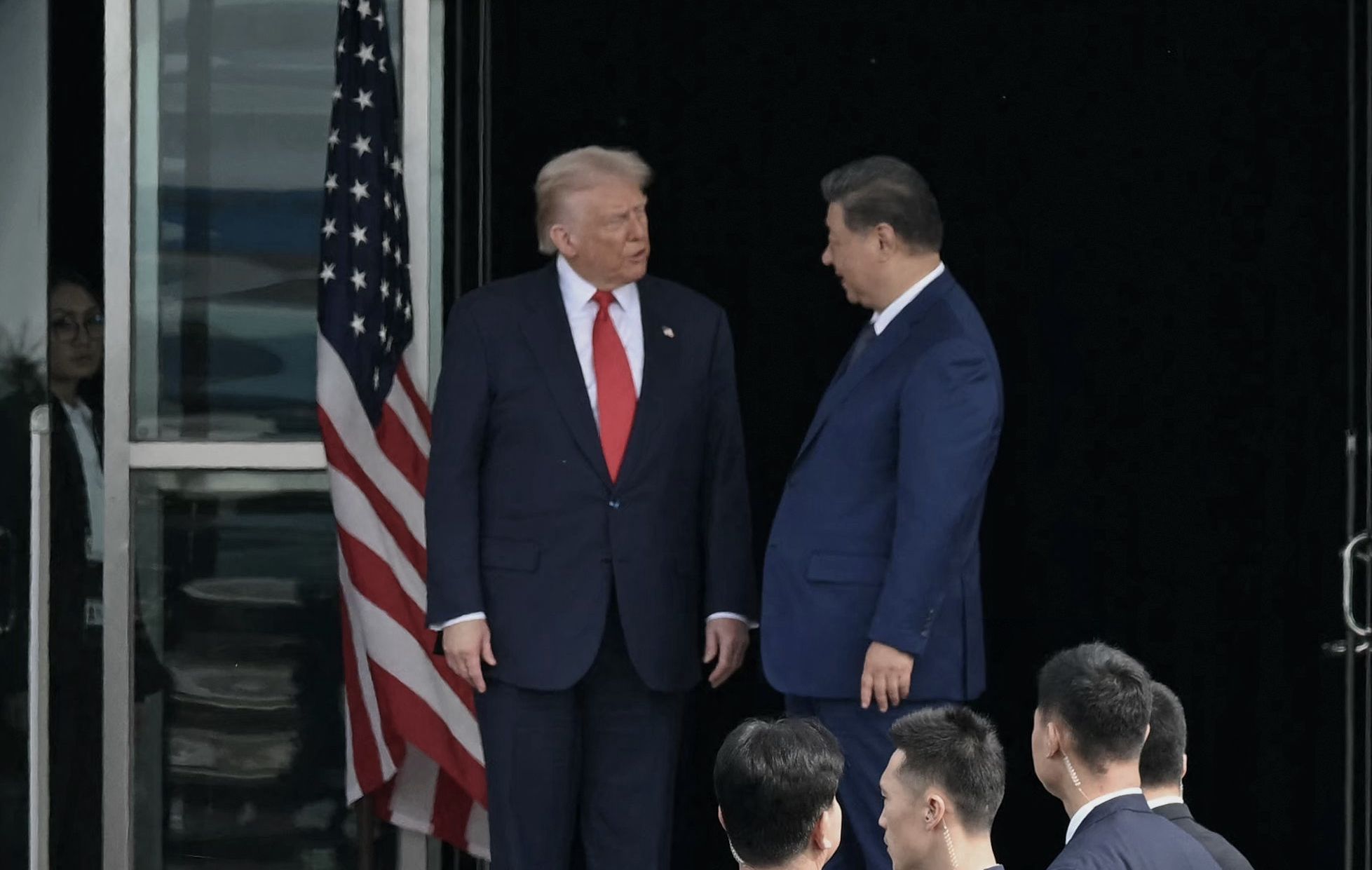
Perhaps that’s why China’s leader Xi Jinping was ingratiating to Trump at their meeting on Oct. 30. Xi referred to Trump as a “helmsman.” Xi also said China’s development is “parallel and not contradictory to” Trump’s “Make America Great Again” campaign.
Wilder called the flattery “quite striking, and it shows that the Chinese are a little scared of Trump and the fact that he doesn’t play by the traditional rules.”
—Terri Wu
BOOKMARKS
The U.S. Supreme Court ruled on Thursday that Donald Trump’s executive order requiring passports to reflect biological gender can stand. Justices Ketanji Brown Jackson, Elena Kagan, and Sonia Sotomayor wrote a dissenting opinion.
Trump struck a deal with the makers of weight loss drugs Zepbound and Wegovy on Nov. 6, and consumers will be able to access them at reduced prices starting next year. Pharma giants Eli Lilly and Novo Nordisk will offer the medications at a nearly 90 percent discount starting in January.
The Epoch Times, and its sister outlet NTD, often face roadblocks when trying to access press events that involve influence from the Chinese government. Read more about this repeating issue in Eva Fu’s latest report.
Rep. Nancy Pelosi (D-Calif.) will not seek reelection, and will depart from Congress after 39 years. “As we go forward, my message to the city I love is this: San Francisco, know your power,” she said in a post on X.
Elon Musk may become the world’s first trillionaire, after Tesla shareholders approved a deal to award him 423.7 million shares of the company over the next decade. To earn them, he must raise the company’s market value from $1.5 trillion to $8.5 trillion by 2035.
—Stacy Robinson