
A federal judge has ruled that the Trump administration unlawfully deployed National Guard troops to Oregon.
In an opinion on Nov. 7, U.S. District Judge Karin Immergut said the administration did not have a “colorable basis for invoking” a federal law that allows the president to federalize guardsmen.
Her decision contained an order preventing further deployment, and followed a three-day trial with testimony regarding conditions at an Immigration and Customs Enforcement (ICE) facility in Portland.
Her ruling was based on 10 U.S.C. Section 12406, which allows presidents to federalize National Guard troops under certain conditions, including an inability to execute the laws, as well as a rebellion or danger of rebellion.
According to Immergut, evidence and trial testimony demonstrated that neither condition was in place when President Donald Trump announced the National Guard deployment in September.
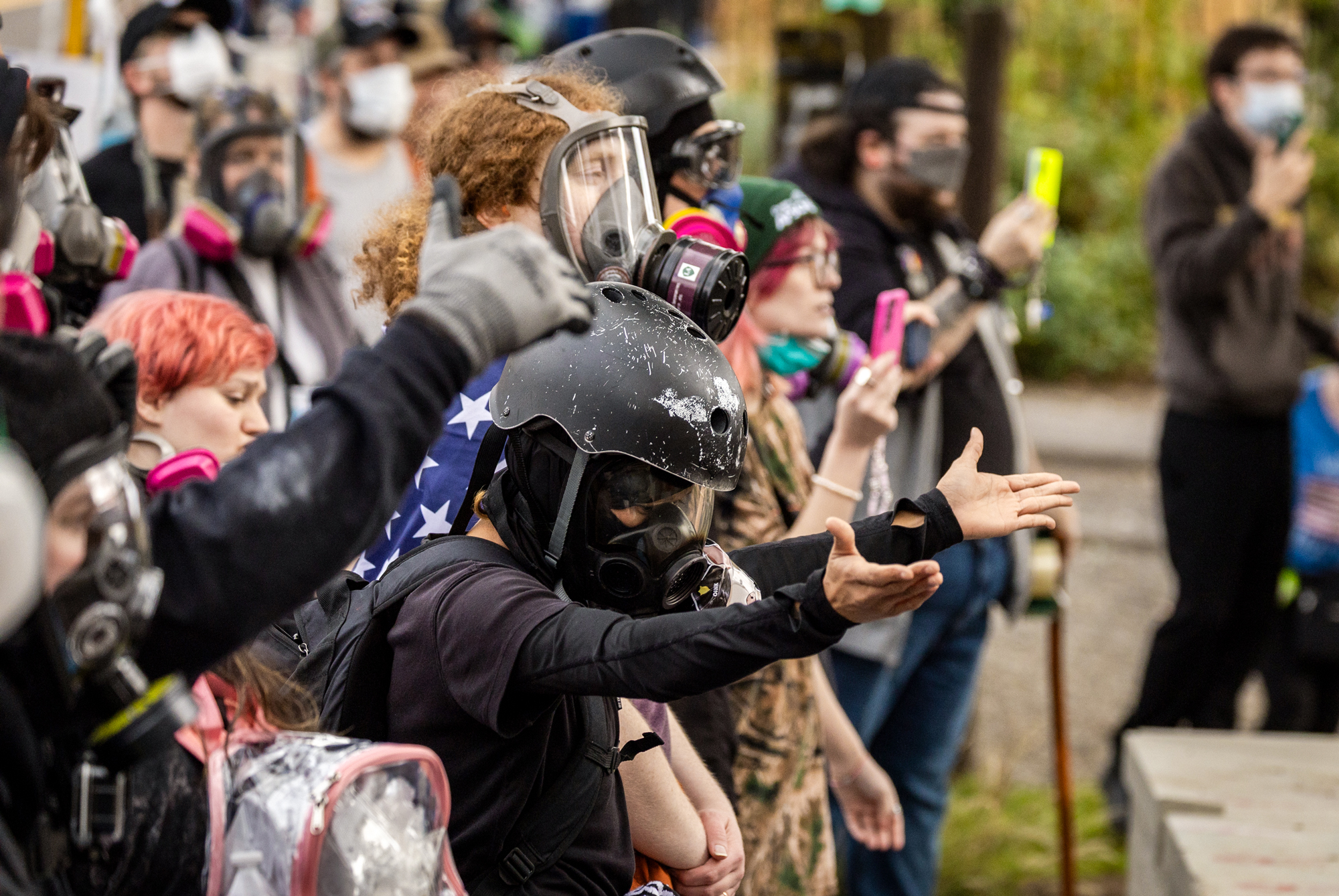
Her decision came after months of demonstrations outside the Portland facility, as well as damage to the building and violence against officers. Immergut’s ruling stated that such activities peaked in June and significantly declined in the months leading up to Trump’s announcement.
“In sum, the trial record showed that although protests outside the Portland ICE building occurred nightly between June and October 2025, ever since a few particularly disruptive days in mid-June, protests have remained peaceful with only isolated and sporadic incidents of violence,” she said.
“The occasional interference to federal officers has been minimal, and there is no evidence that these small-scale protests have significantly impeded the execution of any immigration laws.”
Because Trump invalidly used Section 12406, Immergut said, he also violated Oregon’s sovereignty under the Tenth Amendment.
At trial, the Justice Department leaned on testimony from federal officials, including ICE Field Director Cammilla Wamsley. Wamsley described, among other things, damage to the building and said that she supported federalizing the National Guard because it would remove some of the strain on her staff.
In October, Trump had described the conditions in Portland as deteriorating into “lawless mayhem.” He added that “ANTIFA and the Radical Left have been viciously attacking our Federal Law Enforcement Officers, men and women who are simply doing their job, protecting Federal Property, and enforcing Federal Immigration Laws and the Rule of Law.”
In her opinion, Immergut described Antifa as an “ideology” and cited testimony from Portland police in denying that Antifa was an organized group with membership.
Part of her opinion stated that there was no rebellion, adding that the protesters were neither organized nor attempting to “overtake an instrumentality of government by unlawful or undemocratic means.”
During closing arguments, government attorney Eric Hamilton said the plaintiffs, which included Oregon and the city of Portland, had to clear high legal hurdles in order to secure a judgment against the president. Among them was a certain level of deference that the U.S. Court of Appeals for the Ninth Circuit said should be afforded to determinations presidents make when invoking Section 12406.
However, Immergut said in her opinion that even affording Trump that level of deference would not justify his use of the law.
“This court concludes that even giving great deference to the President’s determination, the President did not have a lawful basis to federalize the National Guard,” she said.
Immergut initially blocked Trump’s deployment of the Oregon National Guard in October. When the administration attempted to draw troops from California and Texas, Immergut blocked that as well.
Her most recent order permanently blocks deployment from various states but contains a 14-day stay before blocking federalization of Oregon National Guard members. This allows the administration to maintain the status quo in which some members of the Oregon National Guard have been federalized but not deployed.
The administration will likely appeal the case, adding to the growing litigation surrounding Trump’s attempts to deploy the guard to multiple locations across the country.
As of the trial’s end, the U.S. Court of Appeals for the Ninth Circuit had issued an order blocking Trump’s deployment of the National Guard. In the past, it has issued differing rulings, including ones that benefited Trump’s use of troops in both California and Oregon.
One of its decisions criticized the way Immergut assessed the conditions in Portland. In an opinion on Oct. 20, it said the district court “clearly erred in characterizing the events in September leading up to and preceding the federalization order.”
The administration has also appealed a California judge’s ruling that Trump’s use of the National Guard in Los Angeles violated the Posse Comitatus Act. That law prohibits troops from engaging in civilian law enforcement.
Yet another judge’s ruling blocking Trump’s deployment to Chicago has made its way to the Supreme Court, which has requested additional briefing on some of the language in Section 12406. More specifically, it’s probing what the term “regular forces” means when the law states that the president can deploy military troops if he is “unable with the regular forces to execute the laws of the United States.”
Immergut said that she didn’t need to resolve that question because the Ninth Circuit had already equated “regular forces” with federal officers. And according to her, federal officers, along with Portland police, were able to contain the situation in Portland.