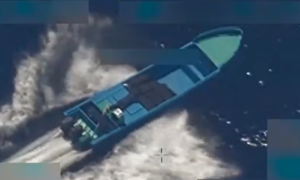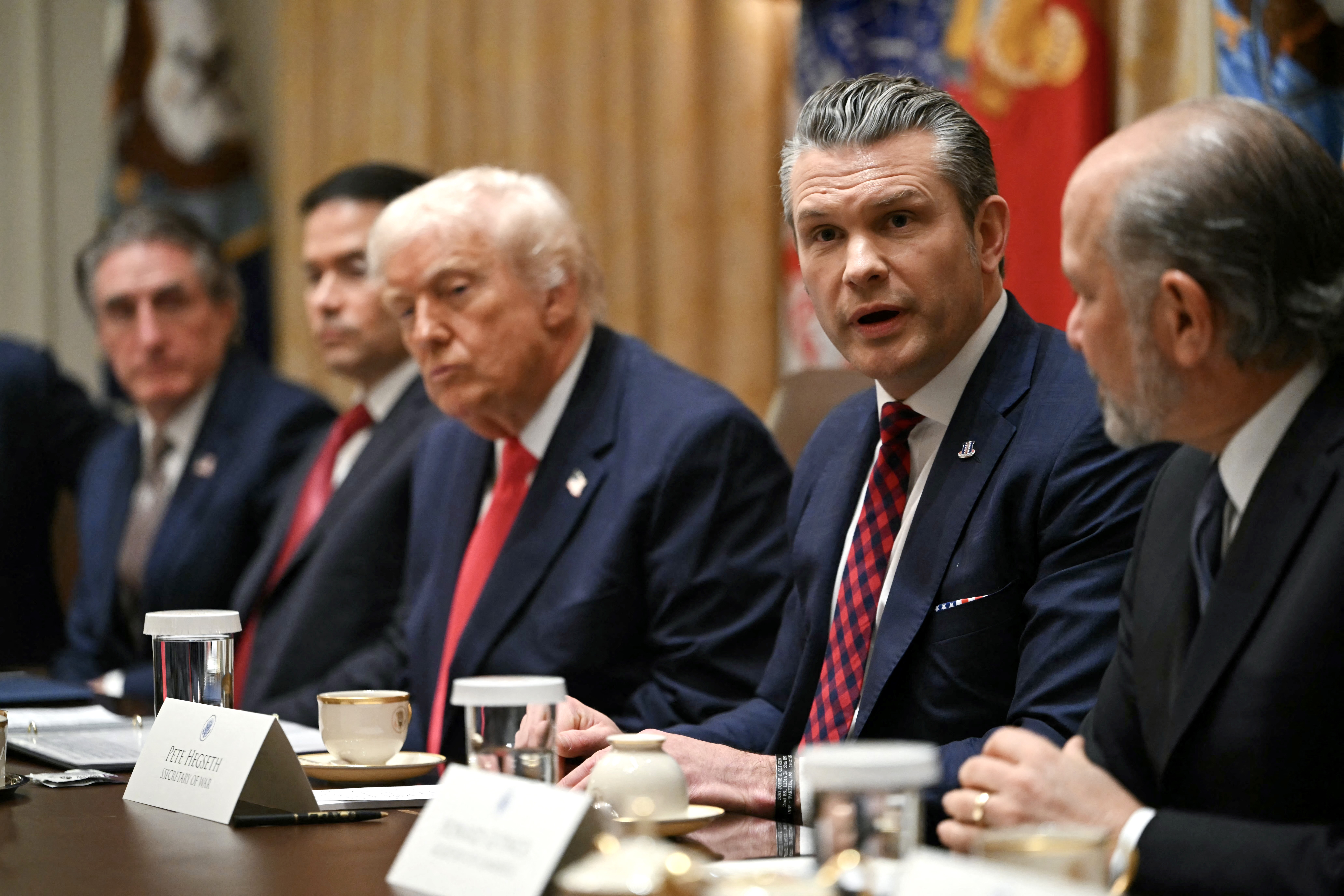

WASHINGTON—Secretary of War Pete Hegseth said he watched the initial strike on a drug boat in early September, but did not see survivors or stick around for a follow-up strike on the damaged vessel.
“I watched that first strike live,” Hegseth told reporters at a Dec. 2 White House Cabinet meeting.
“As you can imagine, at the Department of War, we’ve got a lot of things to do ... so I moved on to my next meeting,” he added.
Hegseth said around two hours after the initial strike in the Caribbean Sea on Sept. 2, he learned that the commander overseeing the mission, Navy Vice Adm. Frank “Mitch” Bradley, had ordered a follow-up strike.
“Admiral Bradley made the correct decision to ultimately sink the boat and eliminate the threat,” he said.
The defense secretary’s remarks followed recent reporting by The Washington Post, alleging he ordered the follow-up strike after at least two survivors were observed clinging to floating wreckage in the water.
Lawmakers and legal commentators have since raised concerns that targeting shipwrecked survivors, as alleged in The Washington Post article, could be considered a war crime.
“I did not personally see survivors,” Hegseth added.
The defense secretary said the targeted vessel was on fire, with smoke billowing about the scene.
“This is called the ‘fog of war.’ This is what you and the press don’t understand. You sit in your air-conditioned offices, or up on Capitol Hill, and you nitpick, and you plant fake stories,” he continued.
Following the initial reporting about the double-tap strike, lawmakers on both sides of the aisle vowed to probe the incident.
Bradley is set to testify to lawmakers in a classified setting on Thursday as part of the probe, House Armed Services Committee Chairman Mike Rogers (R-Ala.) said.
After vowing oversight, Rogers said he was “satisfied” after an initial conversation with Hegseth about the incident, but still wants to hear from Bradley about the Sept. 2 operation.
The Sept. 2 strike was the first in an ongoing series of kinetic strikes on alleged drug smuggling vessels in the waterways surrounding Latin America and the Caribbean.
So far, U.S. forces have carried out 21 separate strike operations.
Since the start of President Donald Trump’s current term, the U.S. State Department has designated several Latin American cartels and drug trafficking enterprises as foreign terrorist organizations.
The administration has routinely characterized those targeted in the recent boat strikes as “narco-terrorists” and said each vessel destroyed, on average, has carried enough illicit substances to kill 25,000 people.
Throughout the ongoing campaign of strikes in the region, the Trump administration has consistently said U.S. intelligence assessments have confirmed members of designated foreign terrorist organizations were operating the targeted vessels.
The Epoch Times has asked the Pentagon whether U.S. forces have conducted post-strike assessments and recovered narcotics from the targeted vessels.
In light of recent reporting on a Sept. 2 strike in the SOUTHCOM area of responsibility, I asked what post-strike measures are being taken with these ongoing strikes, to ensure the accuracy of targeting intelligence. pic.twitter.com/vK3E7ZMhNz
— Ryan Morgan (@R_S_Morgan) December 2, 2025
“I can’t get into right from this podium how we know that ... I don’t want to communicate to the enemy the ways in which we’re carrying out these strikes, but I can tell you that without a shadow of a doubt, every single one of our military and civilian lawyers knows that these individuals are narco-terrorists,” Pentagon press secretary Kingsley Wilson told The Epoch Times at a Tuesday press briefing.
“We know what they’re carrying, where they’re coming from, and where they’re going,” she added.
The Trump administration has linked several of these alleged drug boats to Venezuela.
The Department of Justice has already indicted Venezuela’s President Nicolás Maduro in connection with a Venezuelan cartel enterprise, commonly referred to as the Cartel de Los Soles.
In recent weeks, Trump has increasingly signaled a willingness to transition from strikes on vessels at sea to land-based targets. Last week, he also declared Venezuela’s airspace closed.
Joseph Lord contributed to this report.