
Amid rising tensions with the West, China’s top intelligence agency has issued a new warning to its citizens: be wary of imported devices.
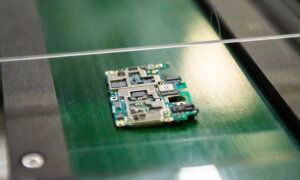
In a July 21 post on its official WeChat account, China’s Ministry of State Security (MSS)—China’s spy agency known for espionage operations in the United States and other countries—cautioned that foreign-made chips, smart equipment, and systems may contain “back doors” that could allow foreign actors to access sensitive information.
“The security of high-tech equipment and information systems affects each of us directly and is tied to national security,” the MSS said. “Citizens must wipe their eyes and stay vigilant.”
The ministry urged companies handling sensitive information to switch to chips and systems designed and produced by domestic firms.
In recent years, the MSS has taken on a higher profile, ramping up warnings to the public as the Chinese Communist Party (CCP) shifted its focus to security, a push that has heightened concerns among foreign businesses operating in the world’s second-largest economy.
The latest call from China’s top spy agency also comes against the backdrop of increasing international scrutiny of the CCP’s espionage activities abroad.
Most recently, two Chinese state-sponsored hacking groups were revealed to be involved in a malicious campaign that exploited vulnerabilities in Microsoft’s SharePoint collaboration software, the tech giant said on July 23. One group, dubbed Linen Typhoon, was accused of pilfering intellectual property, while another, known as Violet Typhoon, was dedicated to espionage, targeting information from former government employees, military personnel, and organizations in human rights, finance, and health sectors worldwide, according to Microsoft.
The MSS’s message echoes a longstanding U.S. complaint that the CCP’s data collection efforts threaten American information security and intellectual property.
In a 2020 advisory, the U.S. Department of Homeland Security (DHS) cautioned American businesses against using software and equipment developed by firms with links to China.
The federal agency cited concerns over China’s legal system, which “blurs the line between government and non-government entities by co-opting [Chinese] firms to act as proxies and tools of the CCP.”
For example, the 2017 National Intelligence Law mandates all Chinese companies to support, assist, and cooperate with the regime’s intelligence service. It means a Chinese firm with access to data from American institutions may secretly share its intelligence with the Chinese regime, the DHS said. Additionally, Chinese firms may be obligated to “create backdoors and other security vulnerabilities in equipment and software sold abroad,” enabling Beijing to gain access to data not controlled by Chinese firms, according to the document.
Such actions present “numerous risks to U.S. businesses and customers, including: the theft of trade secrets, of intellectual property, and of other confidential business information,” the DHS said.