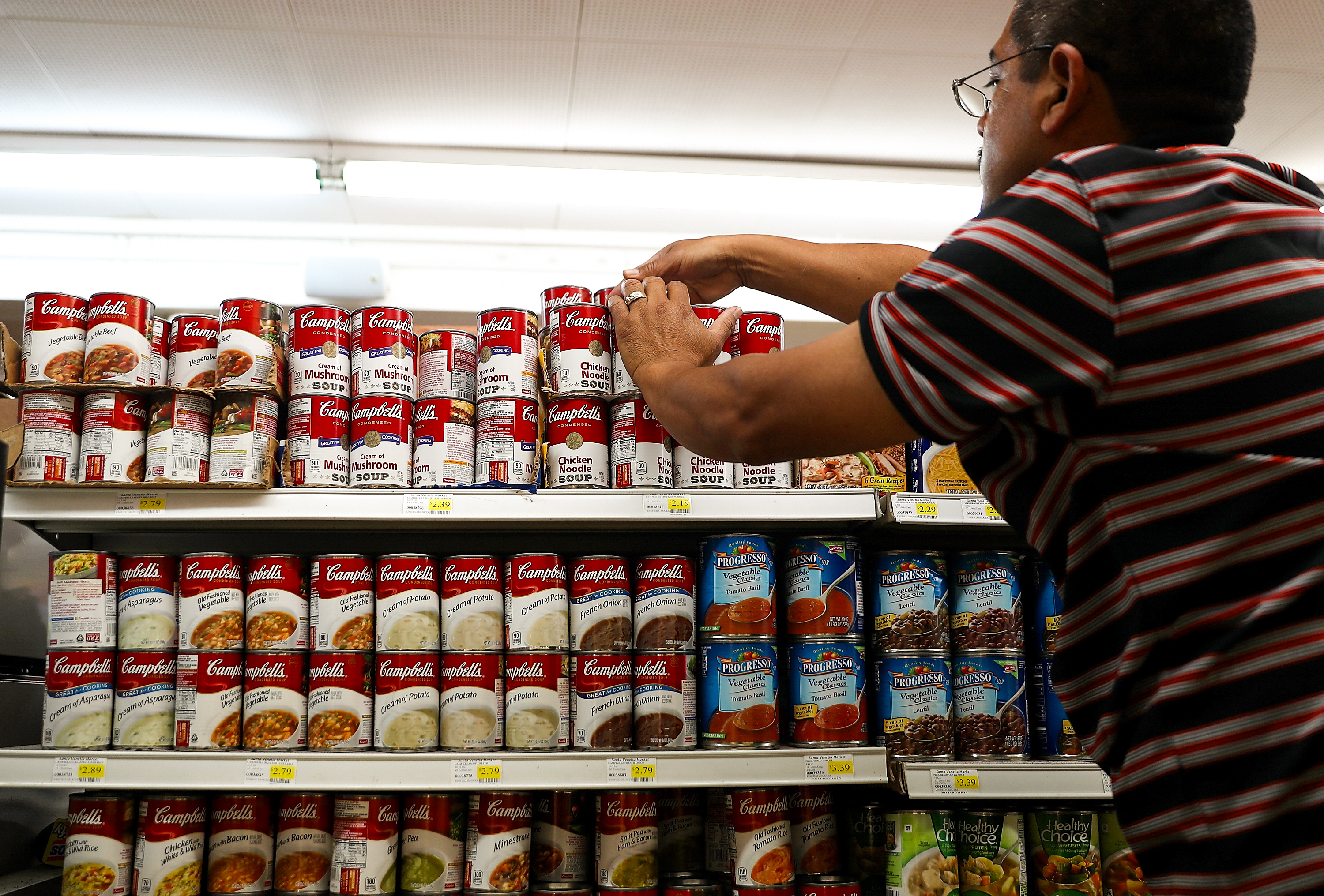

Food manufacturer The Campbell’s Company must face claims in a multidistrict litigation alleging the presence of toxic heavy metals in baby food products manufactured by its former subsidiary, according to an Oct. 29 order by the District Court for the Northern District of California.
The multidistrict litigation, filed against multiple baby food manufacturers, “comprises over 200 actions by Plaintiffs who allege the presence of toxic heavy metals in baby food caused children to develop autism spectrum disorder (‘ASD’) and attention deficit hyperactivity disorder (‘ADHD’),” according to the order.
Six companies—The Campbell’s Company (referred to as “Campbell” by the court), Danone North America, Sun-Maid Growers of California, and Nestlé USA along with two of its foreign parent companies—had filed motions to dismiss the claims.
In her order, District Judge Jacqueline Scott Corley denied Campbell’s motion to dismiss while granting most motions filed by other companies.
The amended master complaint, filed on July 15 last year, was related to California-based baby food seller Plum, which was owned by Campbell from 2013 to May 2021. While owning Plum, Campbell sold baby food under the Plum Organics brand through the subsidiary.
Campbell sold Plum to Sun-Maid in 2021 after the first toxic heavy metal lawsuits were filed, according to the complaint.
“Despite understanding that environmental toxins like heavy metals can cause neurodevelopmental disorders in children, Plum and Campbell/Sun-Maid did very little to ensure that the Plum baby food products marketed for consumption by children are not contaminated with dangerous levels of heavy metals,” the complaint reads.
The lawsuit accused Plum and Campbell of failing to set limits on the amount of heavy metals that could be present in Plum’s baby foods or the ingredients used to make these items.
And when Plum did set certain limits on heavy metal presence, these limits were “several times in excess of what was achievable for most ingredients,” it said.
According to the Oct. 29 order, plaintiffs argued that Campbell employees’ actions with regard to Plum were not limited to typical oversight of a subsidiary by a parent company.
For instance, Campbell’s principal scientist for food safety was accused by plaintiffs of having been personally responsible for setting limits on the amount of toxic heavy metals in Plum’s baby foods. Another Campbell employee was also involved in the food safety of Plum products, the plaintiffs said, with the individual allegedly instructing Plum to stop sourcing rice from China due to concerns about heavy metals, according to the order.
In its motion to dismiss filed on Aug. 15, Campbell said that plaintiffs had not alleged in their complaint that the company assumed a “duty of care” for Plum’s baby foods. Duty of care is a legal obligation requiring an organization to act in a reasonable manner and prevent acts that cause harm.
The complaint “fails to allege Campbell’s direct liability for Plum baby food products, or that Campbell had a non-derivative duty of care relating to Plum’s manufacture and sale of those products,” the motion said.
According to the Oct. 29 court order, Campbell argued that under the standard for parent company liability, Campbell cannot be said to have been involved in any wrongful conduct. The company said that setting heavy metal levels for Plum products was in line with ordinary parent activity, as it was only setting “general policies and procedures” at Plum.
However, the judge dismissed such arguments, observing that the kind of specific manufacturing limits Campbell set for Plum does not come under “general” policies.
The allegations made by plaintiffs “support a plausible inference that Campbell employees were directly involved in the alleged tortious conduct; namely, they set limits for toxic heavy metals, were involved in the decisions of when to test Plum products, and dictated ingredient sourcing,” she wrote, denying the company’s motion to dismiss.
The court granted the motions filed by Danone North America, Sun-Maid, and two foreign parent companies of Nestlé USA.
As for Nestlé USA’s motion to dismiss, the court granted one of the requests, denied another, and postponed a decision on a third request to a future date.
The Epoch Times reached out to Campbell for comment but did not receive a response by publication time.
A 2023 study conducted by nonprofit group Consumer Reports, which tested 14 products consumed by babies, found that the items contained high levels of heavy metals, which posed a risk to their development.
In July, a group of Republican lawmakers introduced the Safe Baby Formula Act, which seeks to ban toxic heavy metals from infant formula, according to a July 23 statement from the office of Sen. Katie Britt (R-Ala.), one of the lawmakers backing the bill.
The bill also requires the Food and Drug Administration to assess the impact of heavy metals in infant formula, it said.
“The health and safety of our children are paramount. They are our future and God’s greatest blessings, and I believe we should take every necessary step to ensure parents are well-equipped to raise strong families,” Britt said.